How AI product design for Pika AI helped build a next-gen search platform
About the project
Design for the next-generation AI-powered search engine
Users abandon search engines when finding relevant results takes too long. Standard search platforms mix links and ads, considerably slowing down the search process for users.
Pika AI fixes this industry gap by indexing curated sources and using AI to surface the most relevant results. Lazarev.agency designed an intuitive interface to highlight AI-powered features at the right moment and shorten the path from query to answer.
A familiar entry point to make transitioning to the platform easy
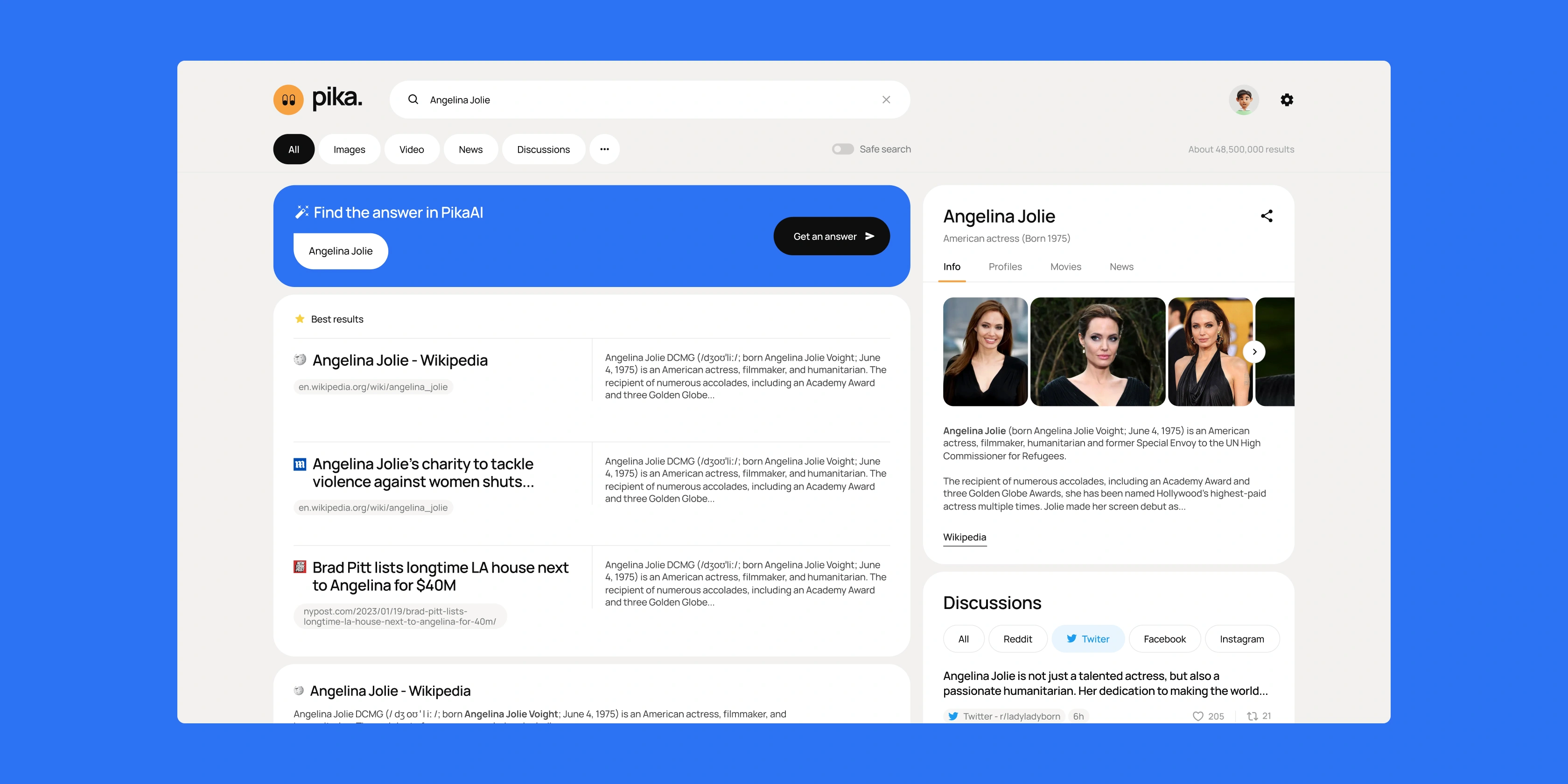
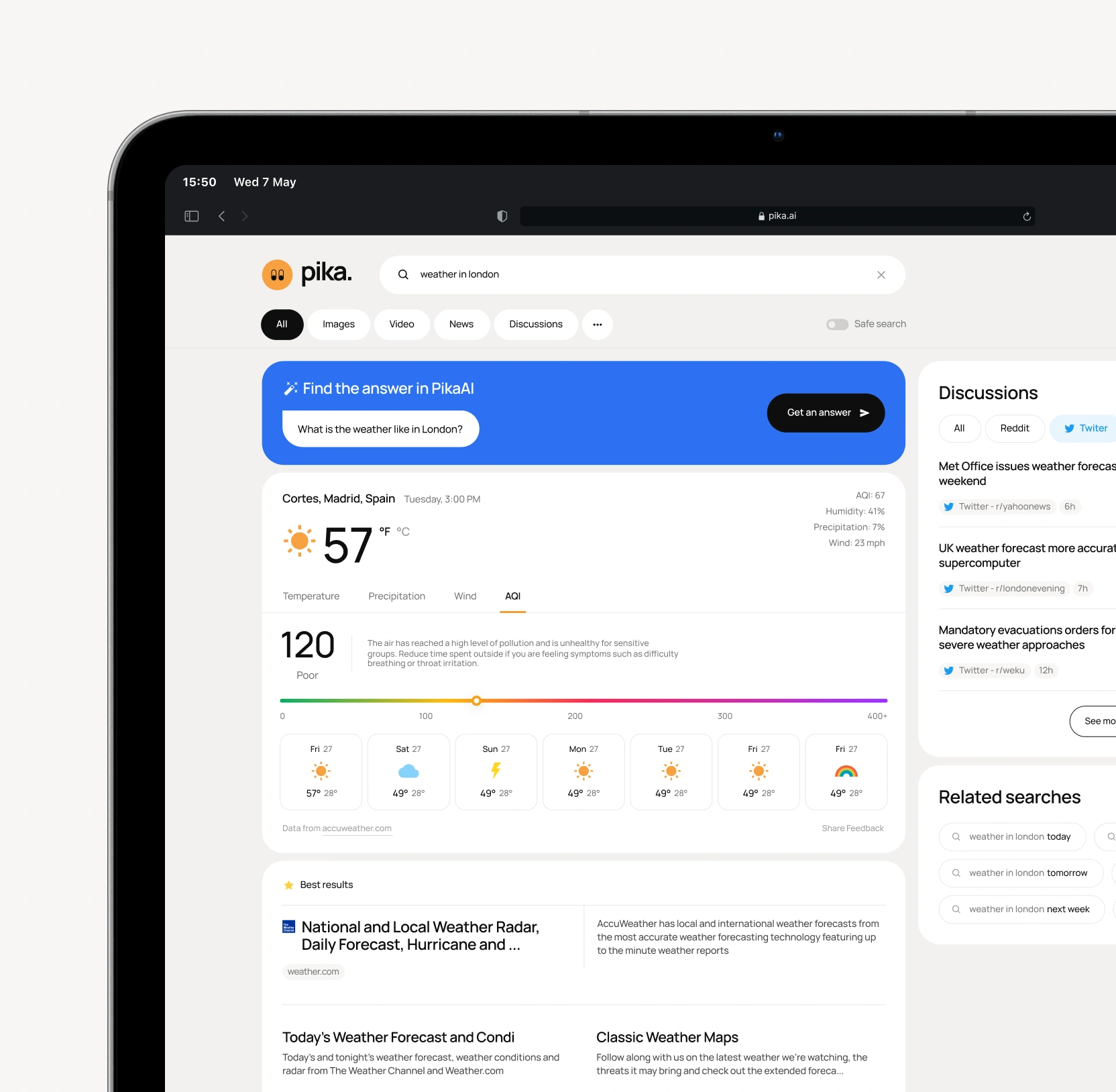
People arrive with search habits built over years, and any interface asking them to relearn the basics creates hesitation before the product can prove itself worthy of users’ time. That’s why we ensured Pika’s home and search screens follow the conventions users already know, such as a single prominent search field with clear paths to images, video, news, and discussions.
A faster read on phone and desktop alike
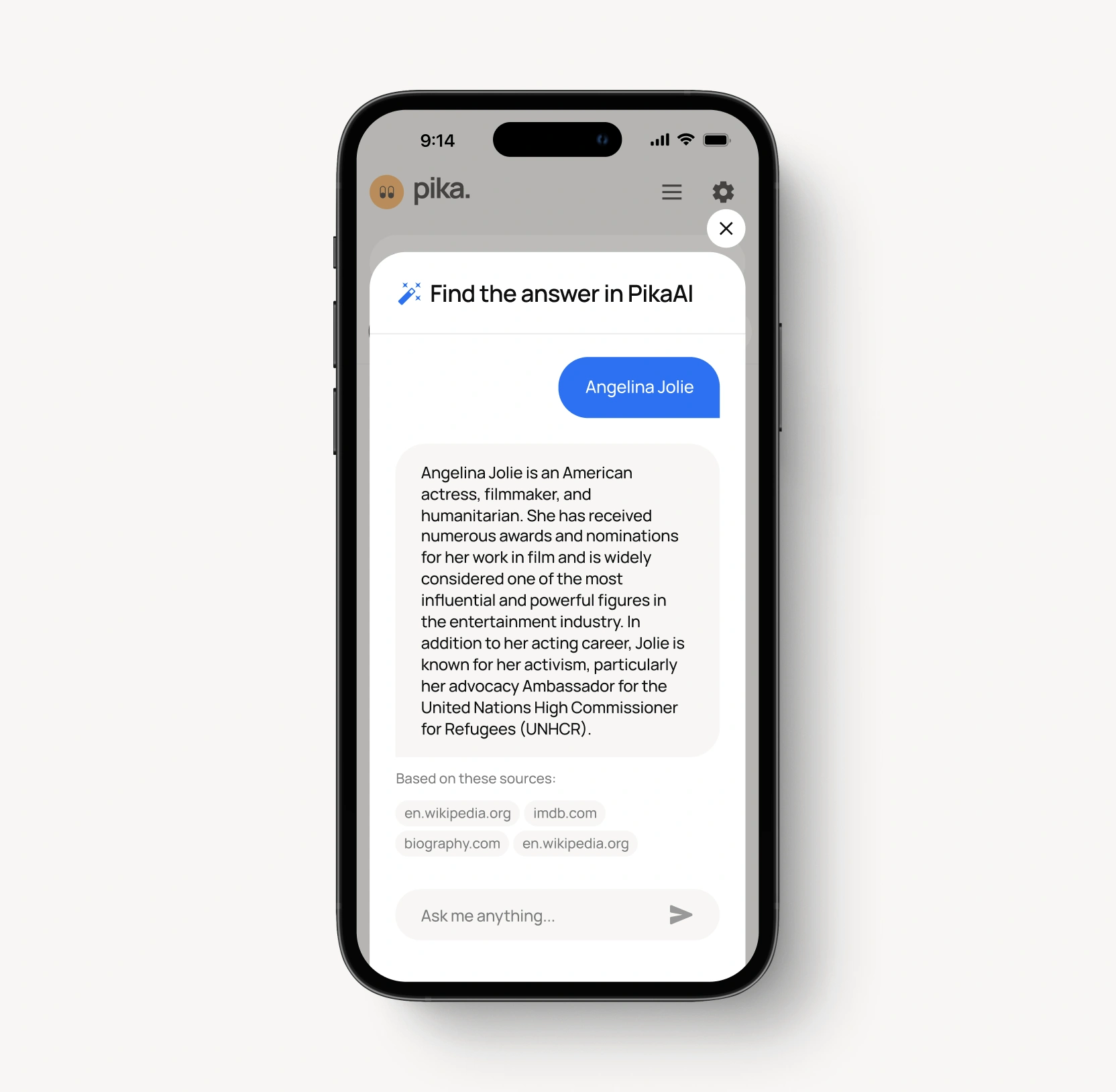
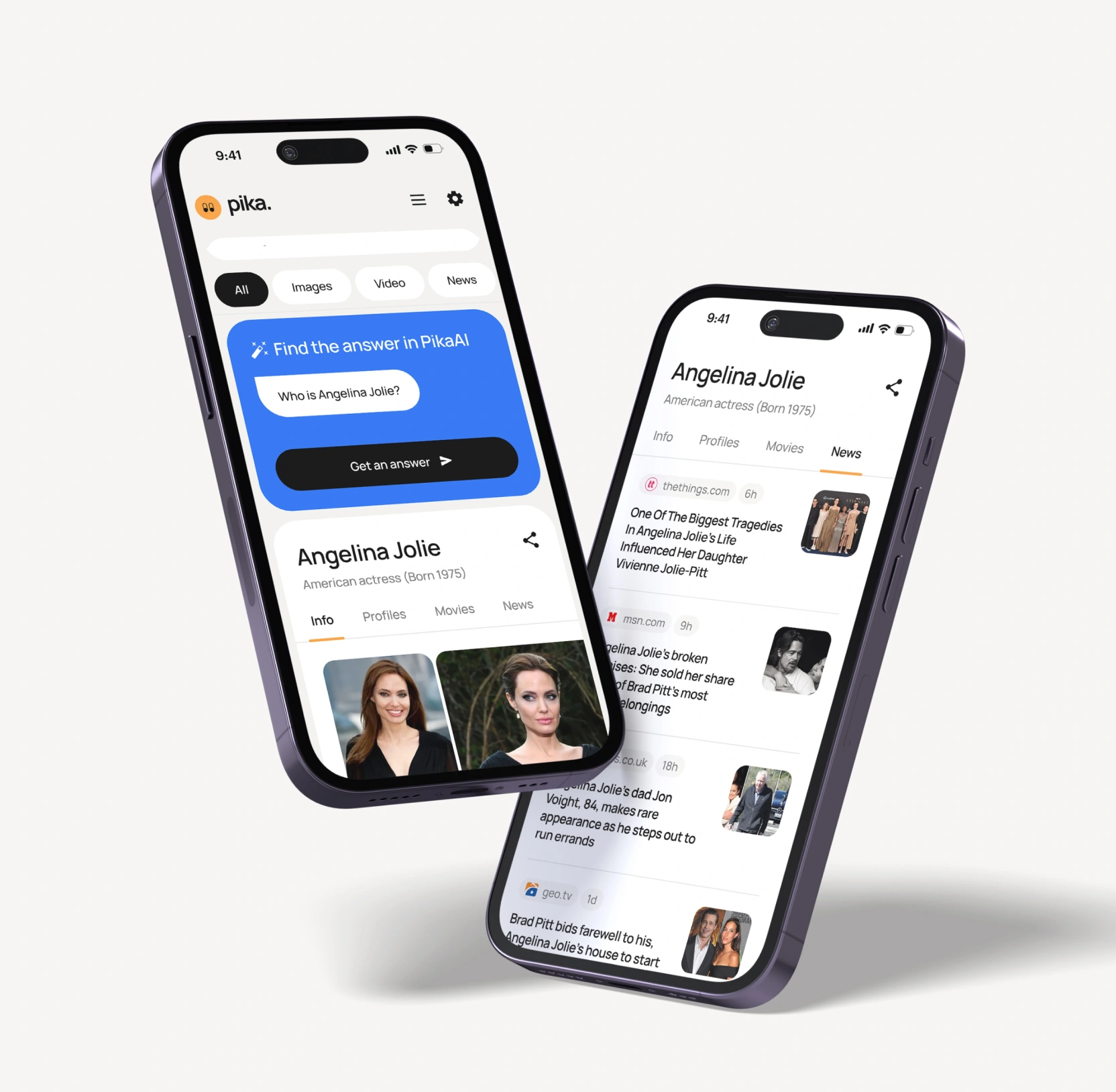
When reading results is slow, users give up before they reach the answer. Mobile users, who make up the largest share of traffic, give up fastest. Pika’s results page is laid out around the natural F-pattern in clear, self-contained blocks, with the same structure on mobile and desktop. People find what they came for immediately, and the habits they build on one device carry straight over to the other.
AI-powered chat to enhance search experience
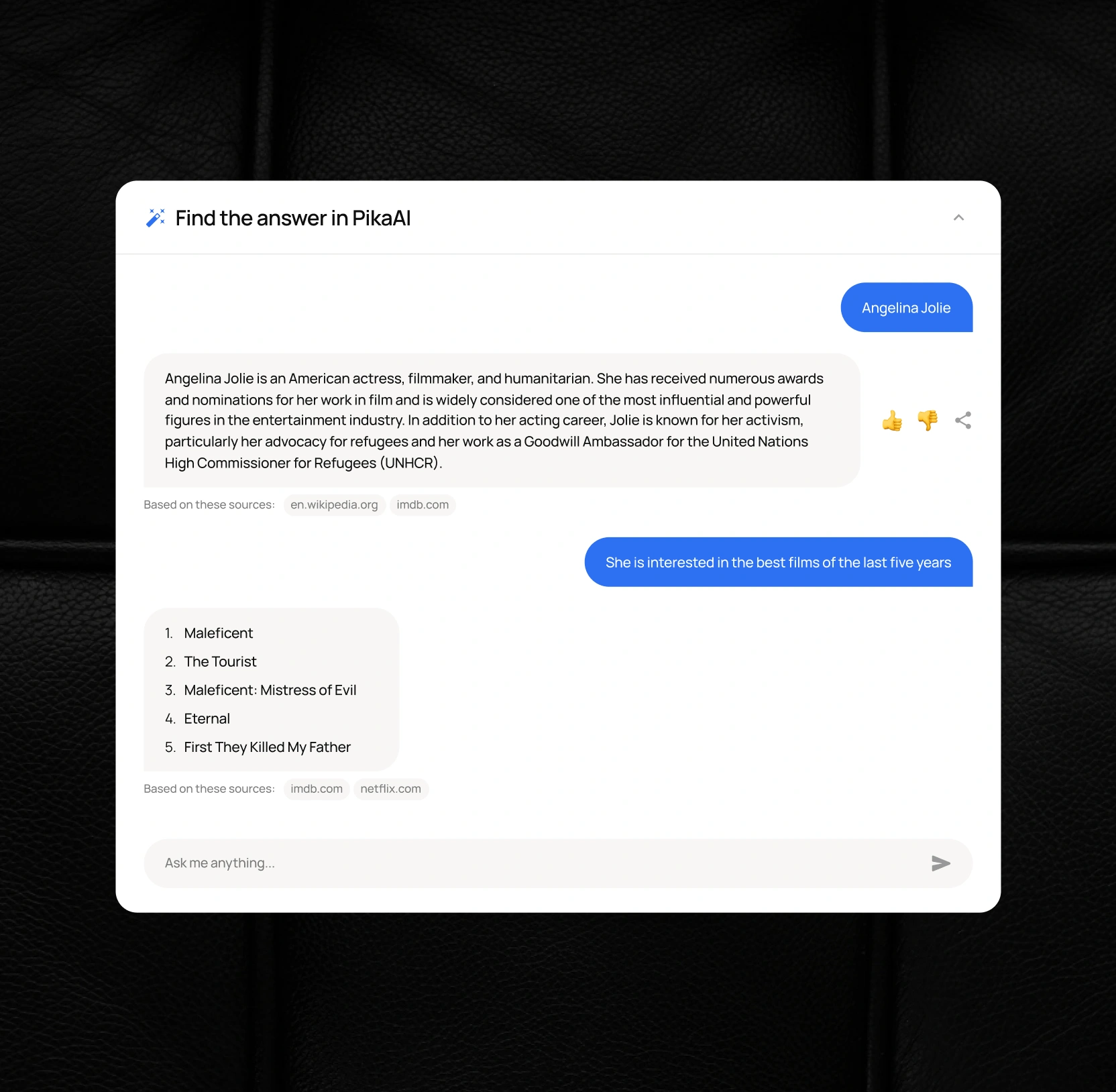
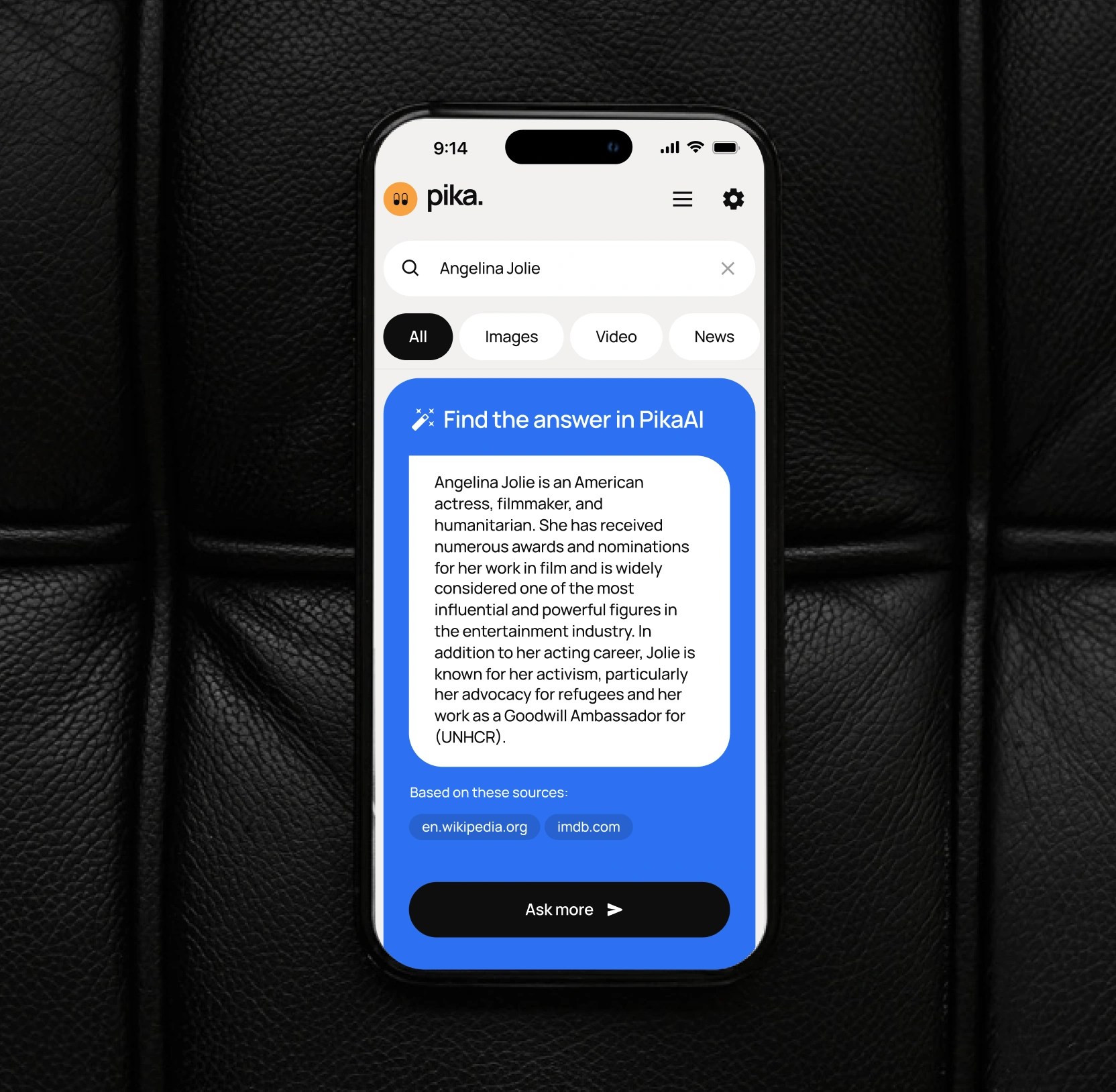
Many new AI features often go unused for a simple reason: no one can find them. They sit lower down the page or inside a menu, so users only notice them after they've already given up or moved on. Pika puts its AI chat right under the search bar, where it's easy to spot and ready to use without getting in the way.
AI dashboard design: 7 principles from live AI products
The right answer format for every query
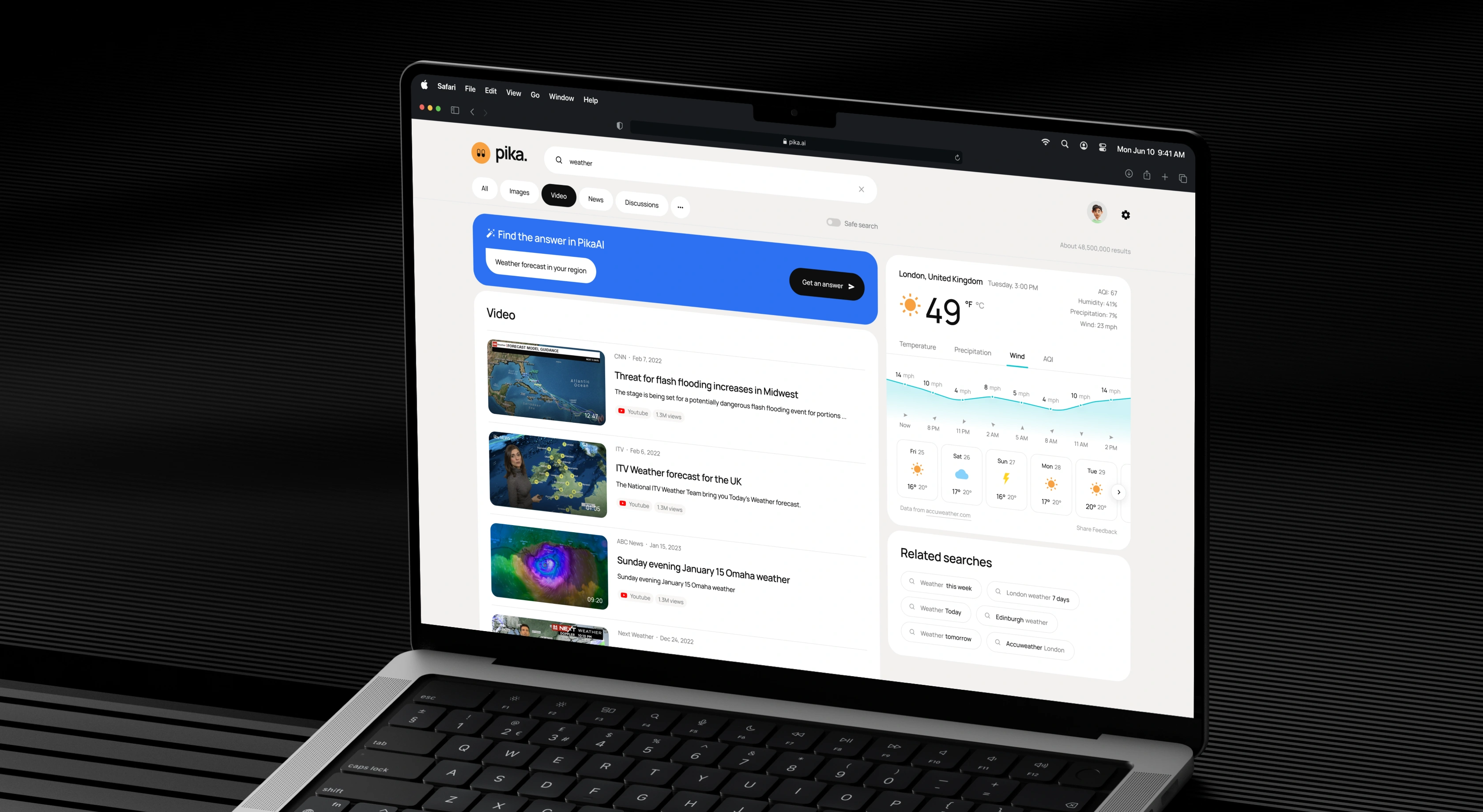
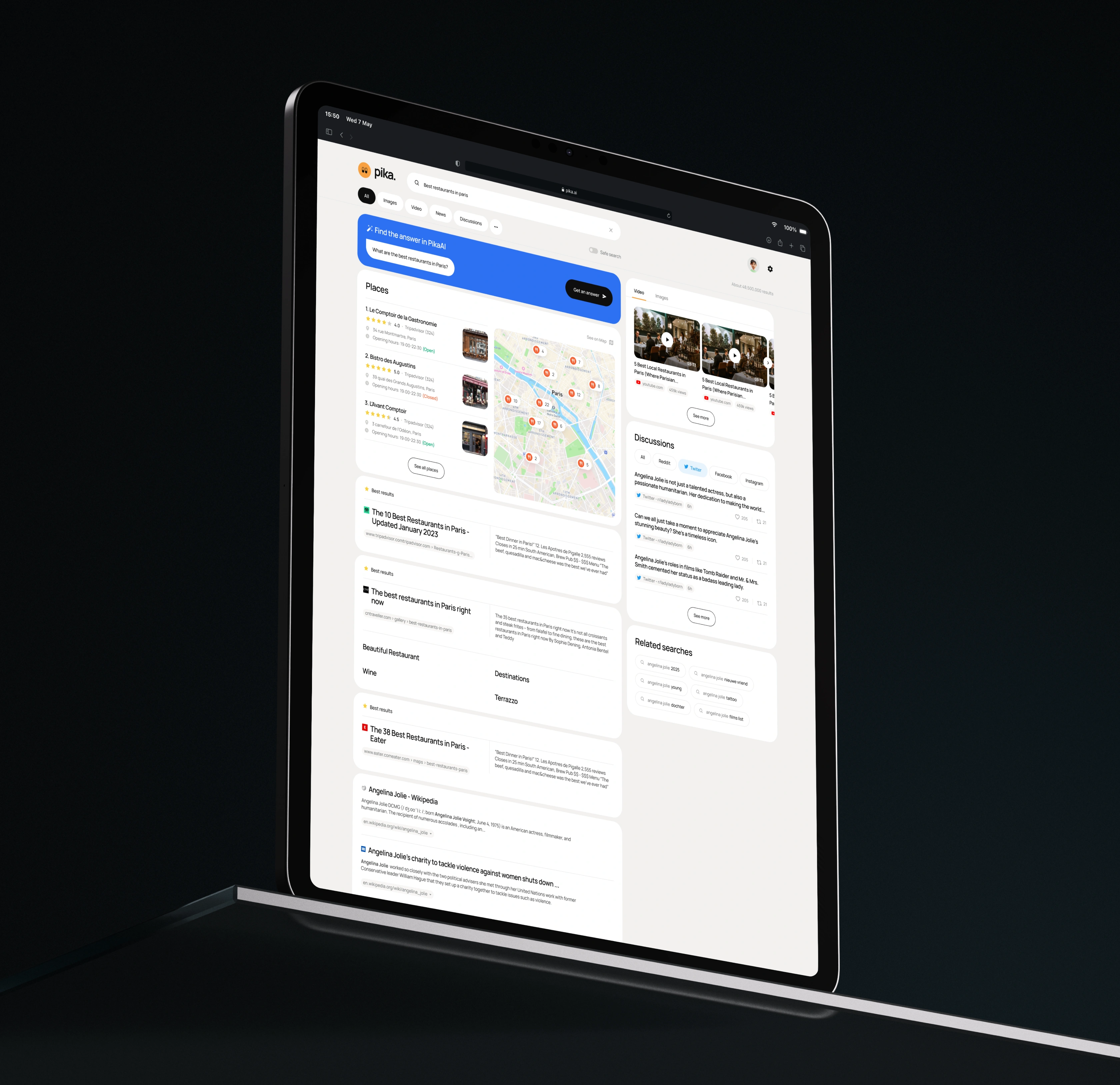
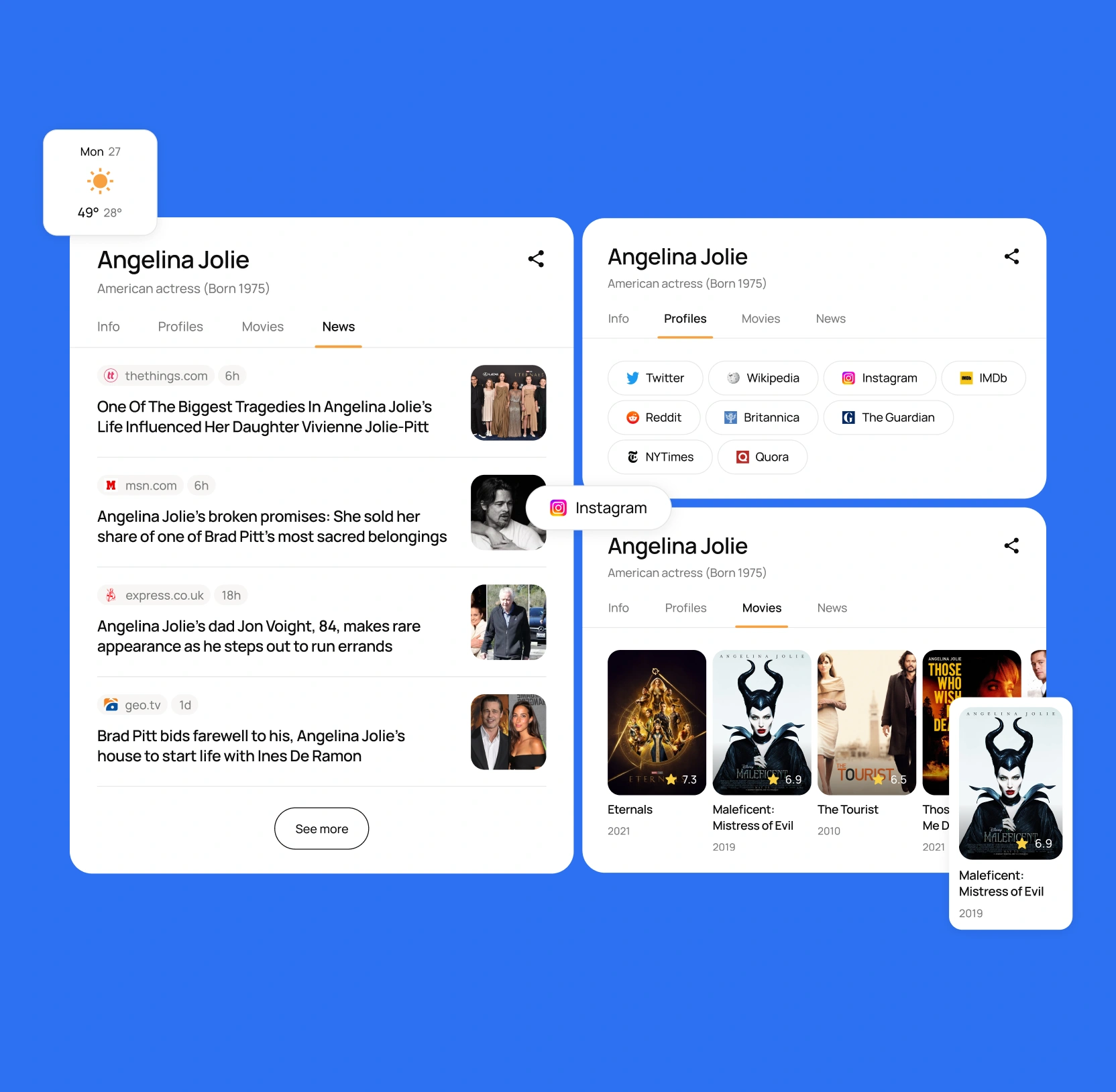
Most search pages show the same list of links no matter what you ask. Pika reads the intent behind each query, chooses the widget that answers it best, and orders everything so the key information sits at the top. Users get what they need without digging, which keeps them coming back.
Frequently asked questions
Common questions
about this topic
How should AI-powered search products be designed to drive user adoption from the first session?
The biggest adoption risk for any new search product is the friction of switching. Users arrive with habits built over years of using existing tools, and any interface requiring behavioral adjustment creates hesitation before the product has had a chance to prove itself. The design answer is familiarity at the entry point: a layout following established search conventions closely enough to feel immediately usable.
What are the most effective UX patterns for introducing AI chat features without disrupting existing user workflows?
AI chat features fail adoption for a consistent reason: they are positioned as secondary options, placed below the fold or behind a menu, discoverable only after users are already committed to standard results. By the time someone finds the feature, they have either solved their problem or given up. The placement decision is a retention decision. In the Pika AI engagement, Lazarev.agency positioned the AI chat widget immediately below the search bar with color and interactivity making it visually distinct without dominating the page.
How does AI product design affect the commercial performance of a search or information platform?
In search, the interface is the product. A search engine returning better results than its competitors still loses users if the experience of retrieving those results feels slower, less familiar, or more effortful. AI product design affects commercial performance at three specific points: first-session retention, feature adoption, and differentiation visibility.
What is the best way to design search results pages for AI-powered platforms serving diverse query types?
Standard search results pages apply the same layout to every query, regardless of what the user is actually looking for. A question about a person, a technical process, and a current event all return the same ranked list of links. The interface treats every search as identical when the information needed behind each one is fundamentally different. The solution applied in the Pika AI project was a personalized widget system: the SERP selects the most appropriate content format for each query and orders widgets by relevance.
How can design agencies help early-stage AI startups build products ready for competitive consumer markets?
Early-stage AI startups typically arrive with strong technology and a clear problem to solve. What most lack is a product interface making the technology's advantage immediately visible to a user who has no context and no patience for a learning curve. Lazarev.agency's role in the Pika AI project was to close this distance: translate a technically sound approach to search into an interface users could evaluate and adopt in a single session.
What should product teams prioritize when designing mobile experiences for AI search tools?
Mobile search behavior differs from desktop in one commercially relevant way: users are less tolerant of friction. A feature requiring two taps to reach on mobile gets ignored. An interface requiring visual reorientation between desktop and mobile loses the behavioral transfer that desktop users have already developed. For product teams building AI tools where mobile is a primary acquisition channel, this consistency is a retention decision. Every point of difference between desktop and mobile is a point where a user's habit can break.
How does AI product design create visible product differentiation in a market dominated by established search engines?
Differentiation in search is hard to communicate in marketing and easy to demonstrate in a product. A results page visibly organized around the user's specific query communicates the product's advantage in the moment of use, without requiring the user to read a features page first. This is the commercial logic behind the personalized widget system Lazarev.agency designed for Pika AI.
More cases like this
Related cases you
might find useful
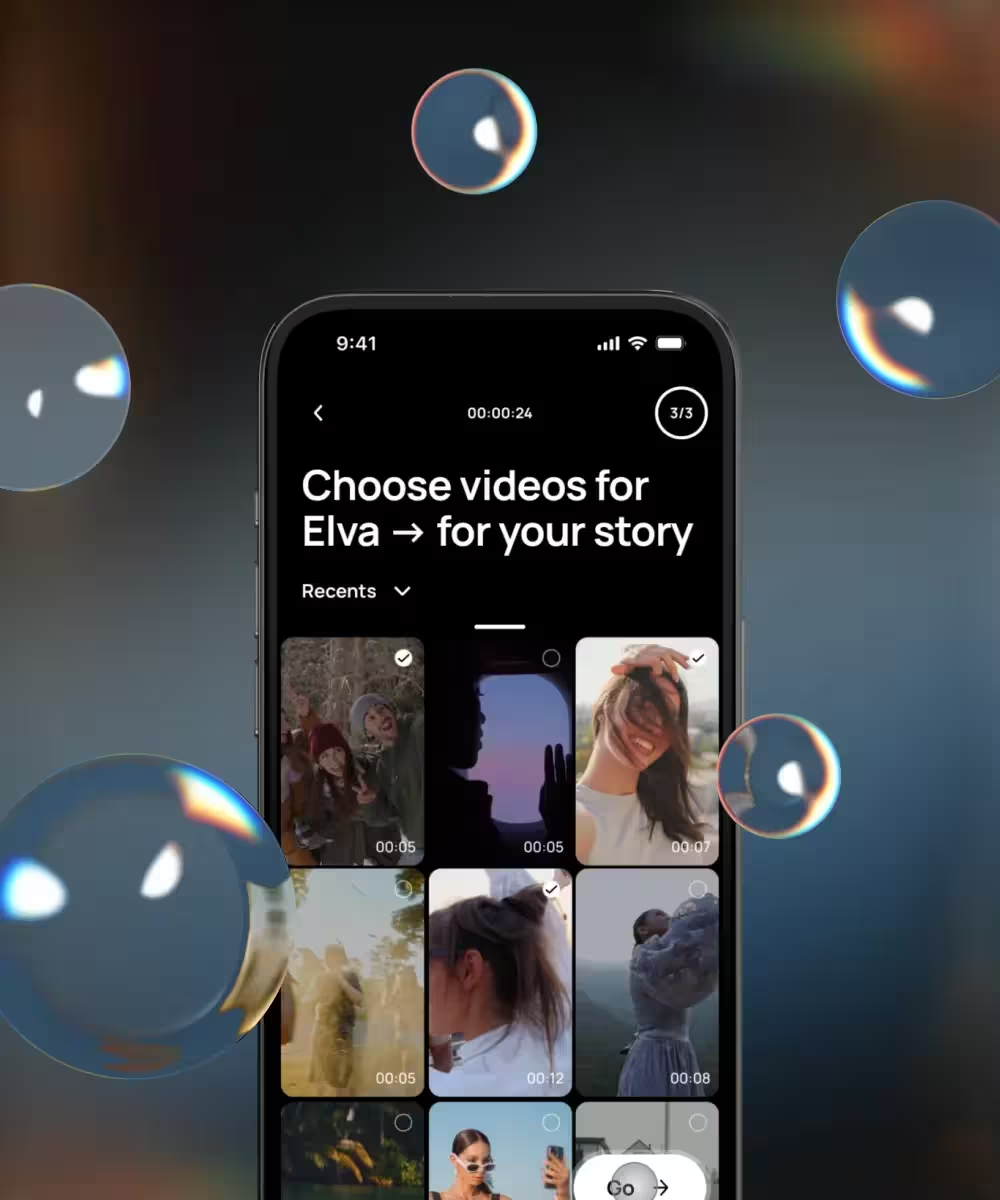
Voice AI video editor app design: how we shipped Elva's brand, onboarding, and agentic editing flow
Lazarev.agency designed Elva, a voice-first AI video editor — brand, UX, UI, onboarding, monetization — as one launch. Webby Winner, Best Visual UI in AI.
How our redesign made Abu Dhabi University's depth clear for applicants and students
Abu Dhabi University had depth, but its digital experience hid it. Lazarev.agency redesigned the platform around the needs of applicants, students, and faculty, transforming a fragmented ecosystem into a unified digital campus where information, services, and opportunities are easier to find and act on.
How we helped a premier fine wine retailer boost add-to-basket rate by 65% with a mobile-first redesign
Explore how Hedonism Wines boosted add-to-basket rates 65% with mobile-first redesign & improved UX.
Let's talk about your AI adoption challenge
Tell us where adoption stalls. You’ll hear back from a senior product and UX lead with a practical action plan.

.avif)