How Ukrainian Power gave 30+ creative agencies a working channel to the international market
Project:
the project
How strategic platform design opens a global pipeline when the local market disappears
The lack of strategic framing is the most common reason strong creative agencies lose international clients. Without a stage where a foreign client can confidently say, "Hold on, I want to work with this team", directories and portfolio grids fall short. Real trust takes context and proof delivered in the right sequence.
After the full-scale russian invasion, Ukrainian agencies lost their local market almost overnight. Seasoned teams with award-winning work suddenly had no pipeline and had to pivot globally. Ukrainian Power was built to do at platform scale what individual agencies couldn't do alone in time: present them to international clients as credible peers, surface their track record, and turn first contact into commercial conversation.
Lazarev.agency delivered the platform end-to-end — strategy, identity, content architecture, and experience design. In the first 30 days, Ukrainian Power crossed 10,000 visitors, onboarded 30+ leading creative agencies, including Fedoriv and Mozgi Group, and earned coverage from Adweek and Cannes.
Turning a repositioning effort into a working sales channel
The proof of the methodology shows up in the early numbers. A platform engineered to convert international curiosity into commercial action gained audience, agency commitment, and earned media within weeks of launch.
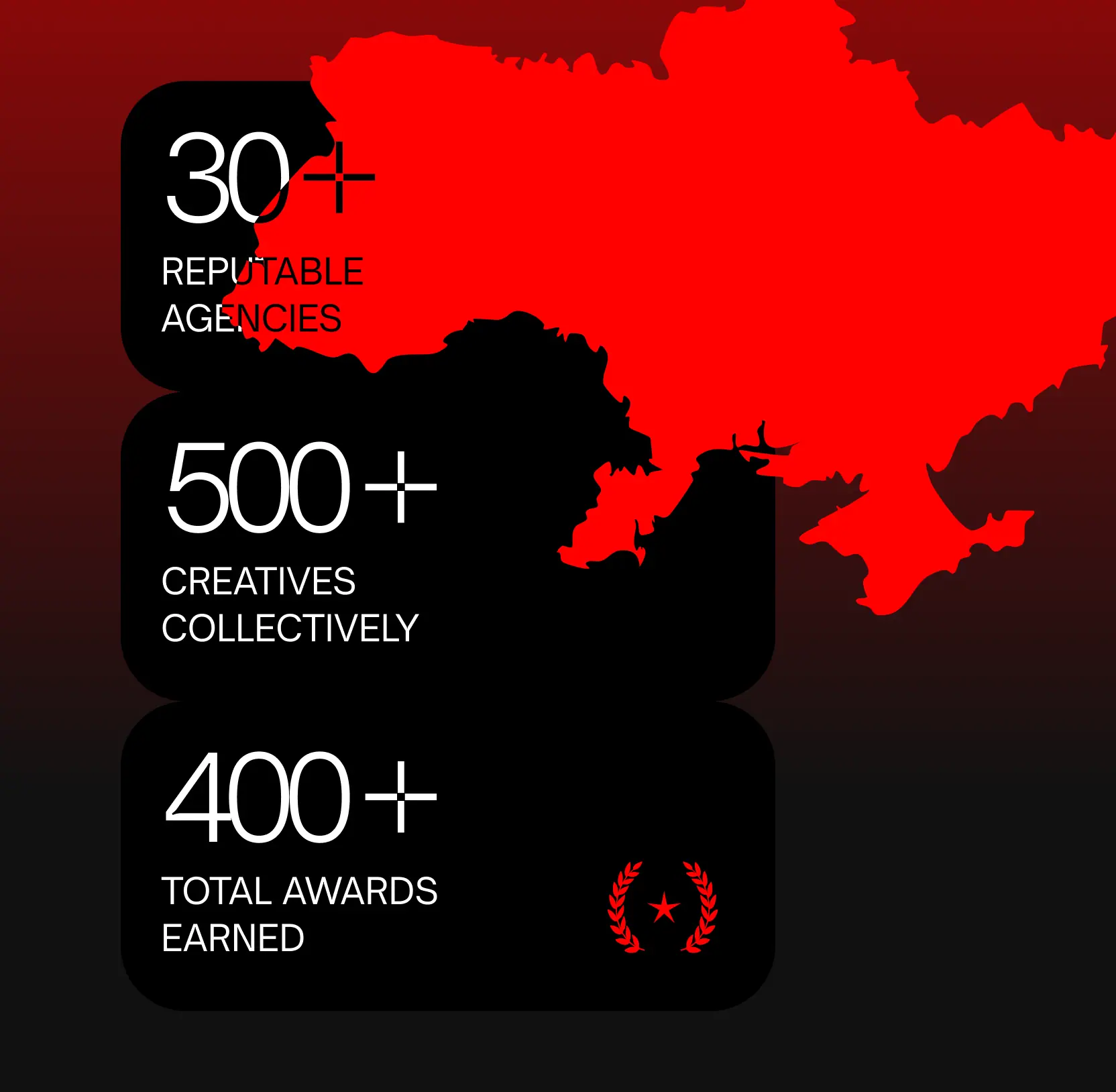
The UkrainianPower site got more than 10 thousand visitors over the first 30 days after site launch.
More than 30 best Ukrainian creative agencies joined the project, including Fedoriv and Mozgi Group.

The Project’s
Discovery Phase
Built the platform around experience design as the core methodology
We made experience design the operating system of the entire product: every section was architected to perform a specific job in the visitor's decision-making journey, from first impression to outbound inquiry.
Visitors arrive curious about a market they've heard about but rarely worked with. The platform converts that curiosity into recognition of capability, recognition into trust, and trust into commercial action.
The business value for the agencies is straightforward: shorter sales cycles, higher-intent leads, and a clear positioning advantage on the global stage. Instead of competing on price or availability against agencies in stable markets, Ukrainian Power gives its members a narrative engine that lets international clients evaluate them as peers and choose them on the strength of their expertise and proven outcomes.
Customer experience design in the age of AI UX
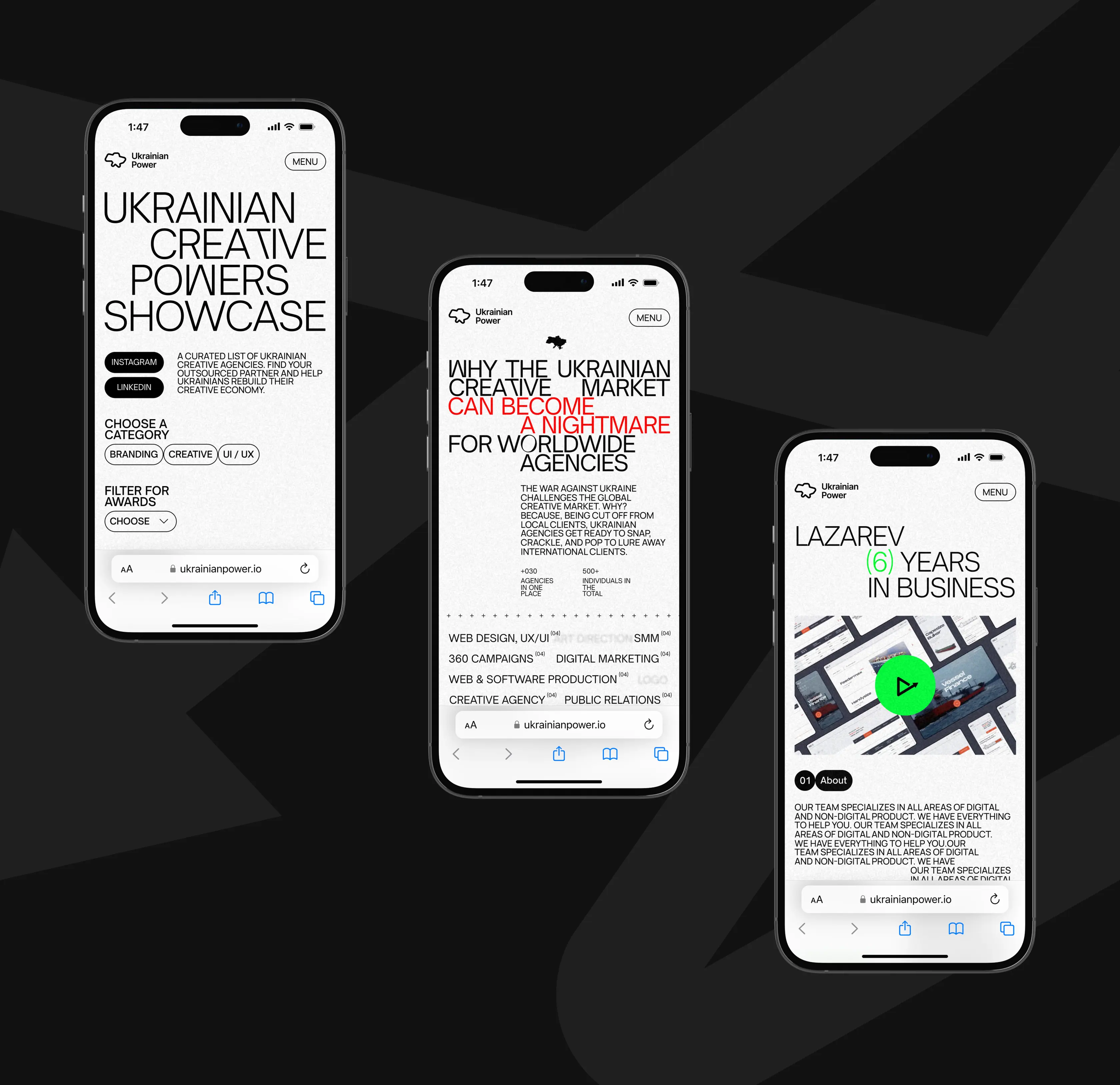
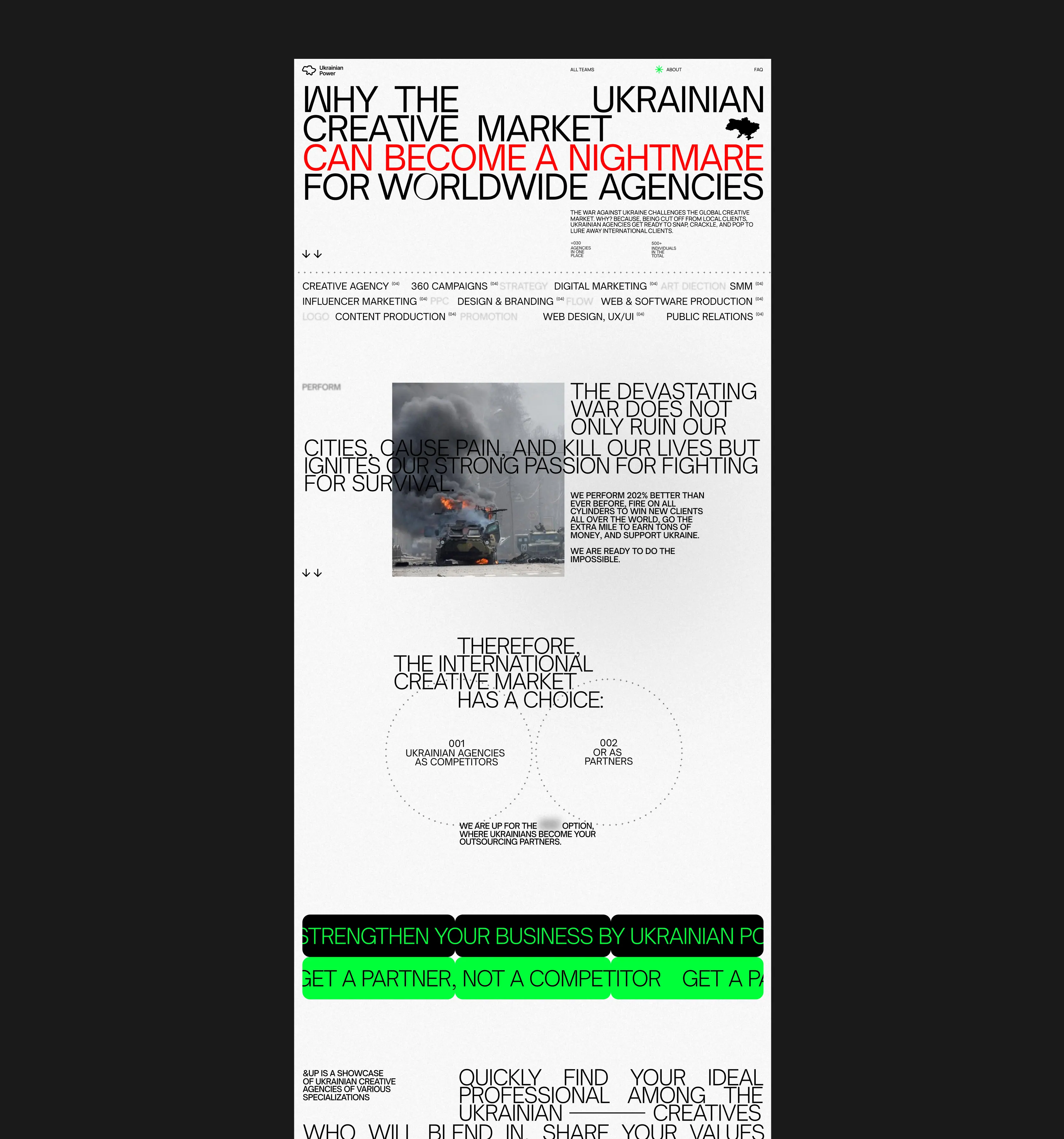
Designed the homepage as a strategic decision engine to move international visitors from awareness to active choice
The homepage carries the heaviest commercial load on the platform. That’s why we engineered it as a conversion architecture. Each section resolves a specific question in the international buyer's mind before handing the visitor over to the directory.
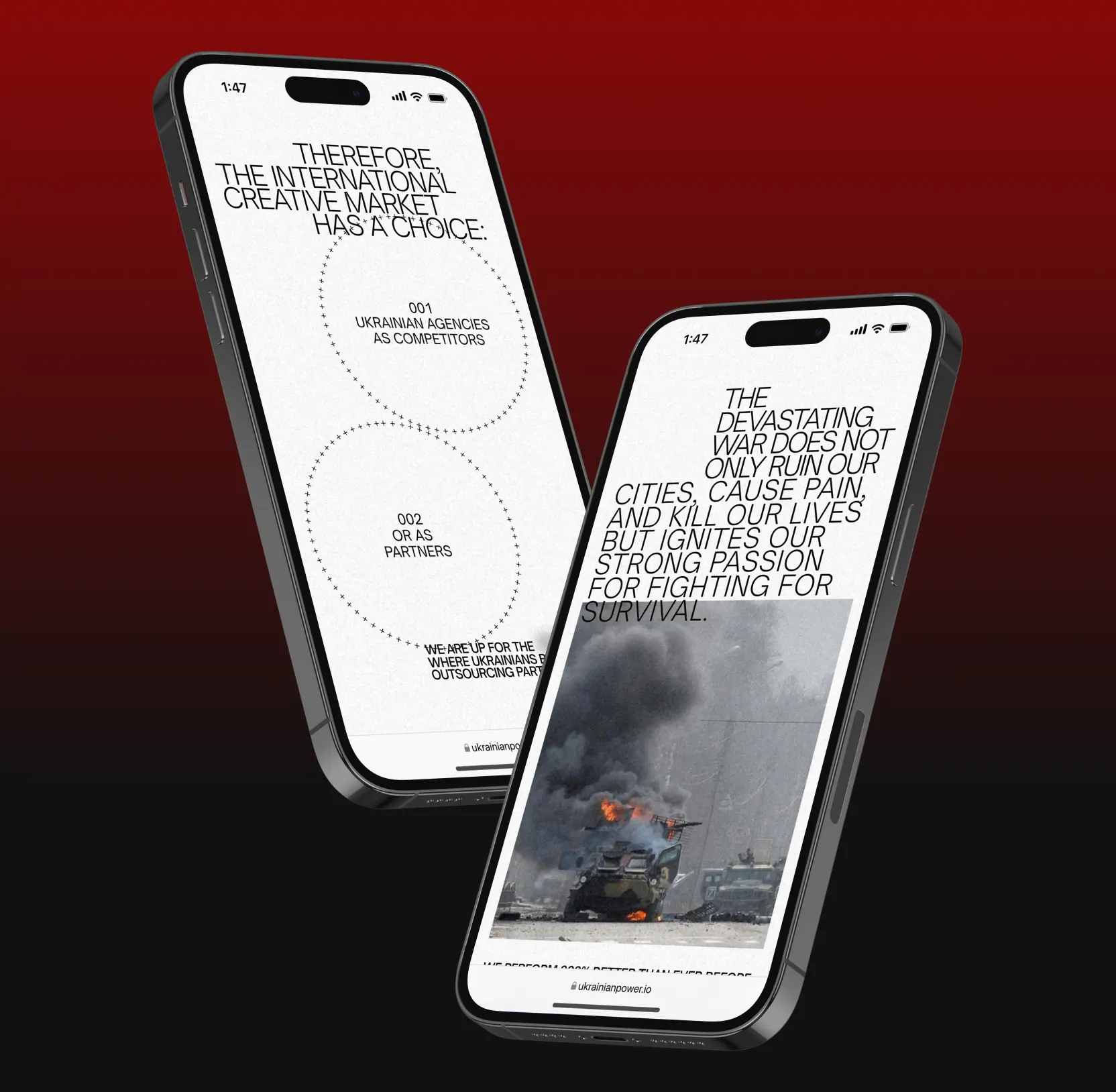
A foreign partner arriving at a directory without context has no anchor for the kind of confidence a serious creative engagement requires. The homepage supplies that anchor. First, it shows the size of the talent pool, the categories of work, and proof of competitive performance up front. Then comes framing the visitor's next move as an open strategic choice: recognize Ukrainian agencies as capable peers on the global stage, or bring them in as partners on the work ahead.
That single reframe shifts the page from a pitch into a moment of agency for the buyer, and repositions the agencies as a force to engage with on commercial terms.
Built the directory as a level playing field for all agencies
The directory had to handle a structural tension: be fair to every listed agency, and useful to every visitor trying to decide between them. Our team designed Ukrainian Power as a flat stage, so visitors encounter each agency on the strength of its work and credentials.
Filtering is structured around the questions prospective clients ask: what capabilities do you offer, at what team size, with what kind of award-winning work behind you. Discovery follows fit rather than hierarchy. Each agency card surfaces a live impression of the work in context, giving visitors a feel for the quality of the output before opening a single profile. The browsing experience stays exploratory, keeping users engaged long enough to reach a confident shortlist.
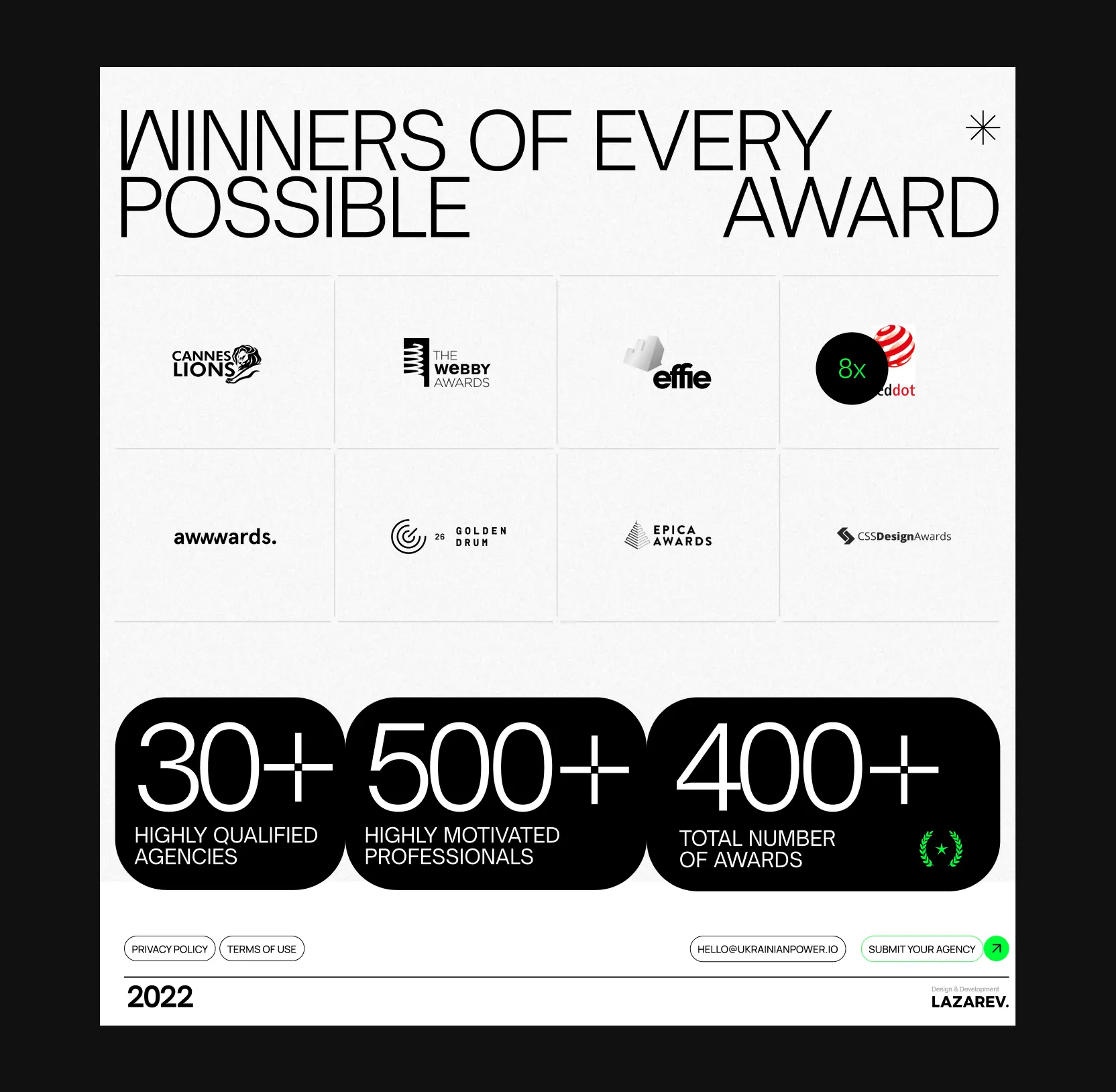
Credentials receive deliberate weight throughout. Awards, project counts, years of experience, and breadth of disciplines are the markers international buyers use to calibrate whether an agency operates at the level they need.
Built individual agency pages as bridges from platform discovery to direct engagement
Each agency page carries a defined commercial job: convert platform-level interest into a real conversation between an international buyer and the agency itself. Lazarev.agency structured the pages around two consecutive moves.
1. Give visitors enough of the agency's work, identity, and global footprint to recognize them as a strong potential partner.
2. Route them to the agency's own site to continue the engagement on the agency's terms.
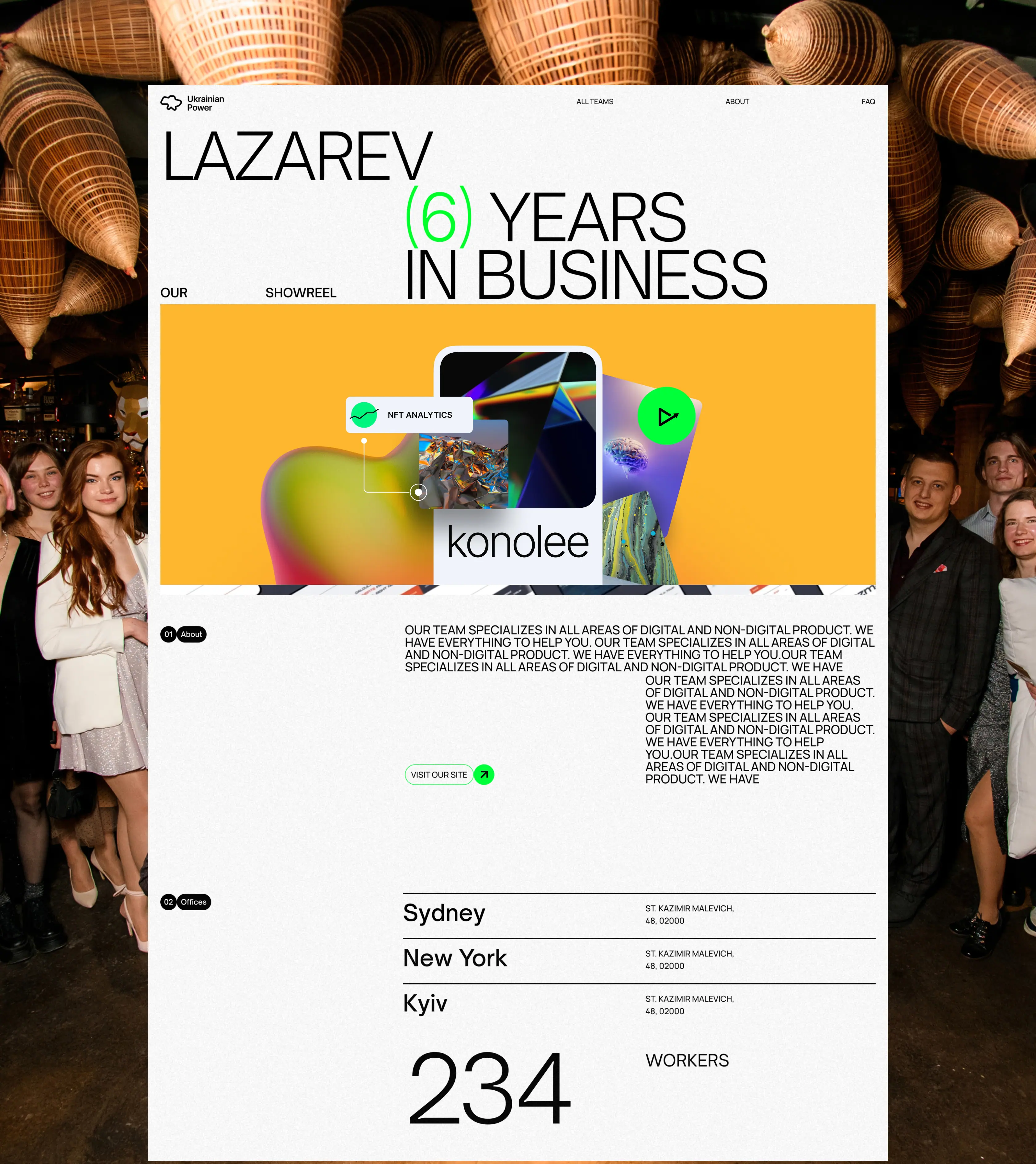
The architecture treats each page as a credibility frame. Showreel of recent work, offices across multiple geographies, team size, years in business, and clear positioning — every element supports the buyer's decision to take the next step.
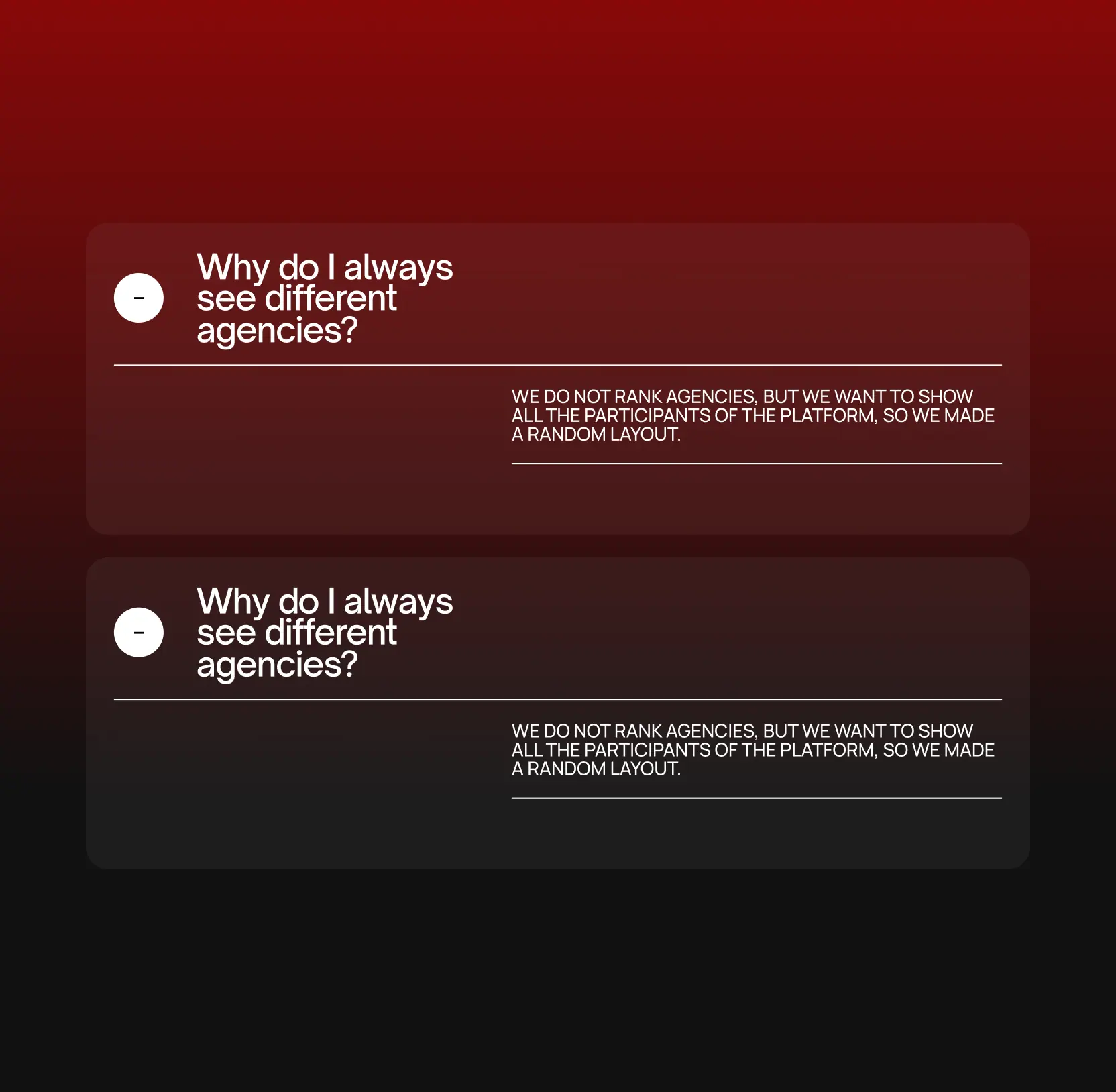
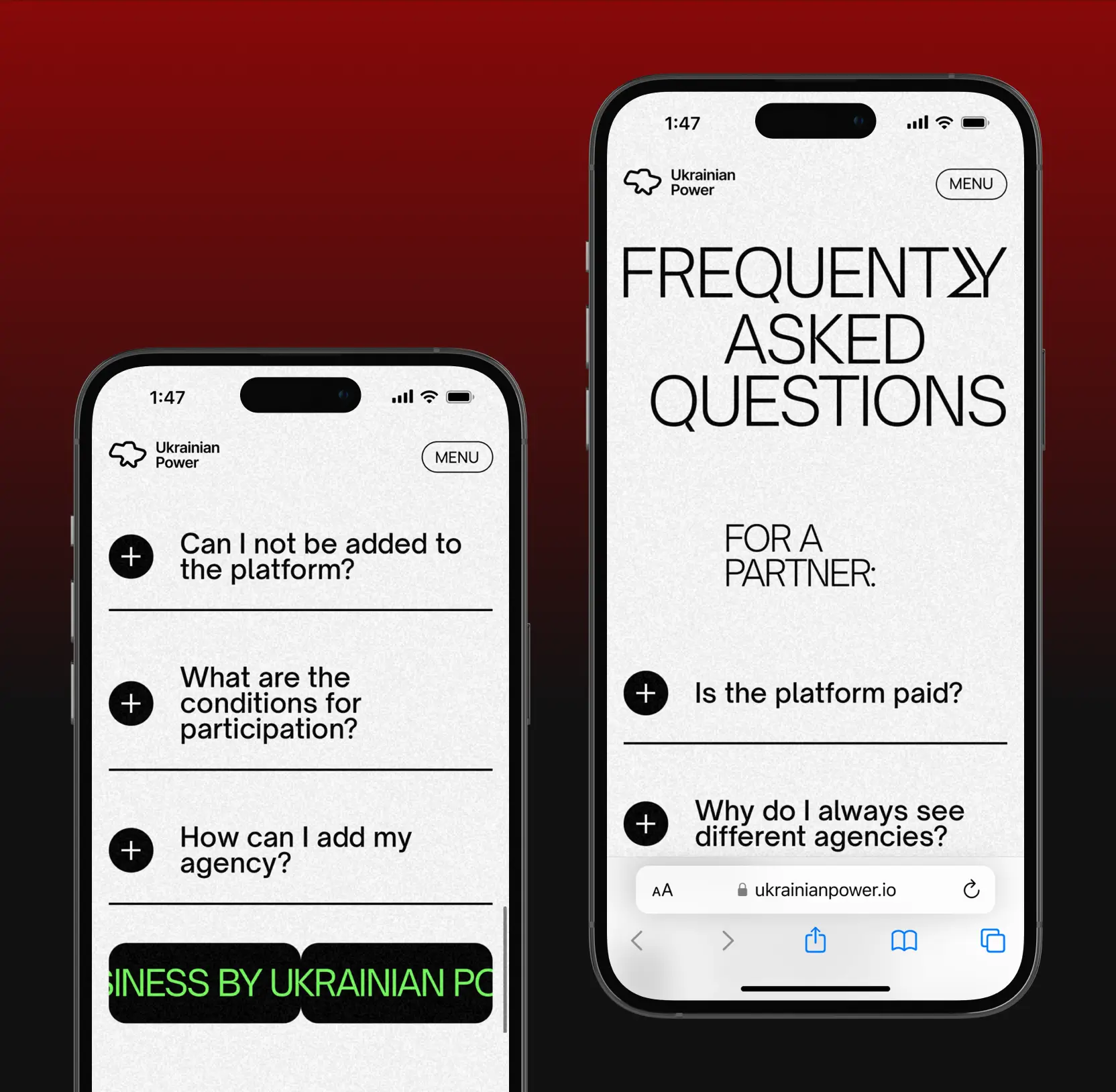
Supporting content across the platform reinforces the same posture: an FAQ that openly addresses how listings work, who can participate, and what the platform is for removes the second-guessing that typically slows cross-border partnerships.
How to build conversion funnels the right way
AI & ML
Lazarev. agency offers comprehensive digital design services. Discover our range of related expertise supported by impactful case studies.
More Startups Cases
FAQ
Does this approach work outside an emotionally charged context like Ukrainian Power?
Yes. Experience design, as we apply it, is about engineering user decisions. The Ukrainian Power story is unusually dramatic, but the underlying method, based on sequencing context, evidence, and call to action against a defined buyer journey, applies to any platform where commercial outcomes depend on moving visitors from awareness to action.
What does the engagement typically look like from our side?
Collaborative throughout. We work alongside founders, marketing leads, and product owners across discovery, strategy, design, and development handoff. You stay close to the decisions that shape the business outcome. We handle the design and delivery weight.
How do you decide what the platform should do?
We start with the commercial job. Before any design work, we map the audience's decision-making journey, the competitive landscape, and the specific outcome each section needs to produce. The architecture comes out of that work and not the other way around.
How do you measure whether the project worked?
On the metrics the business cares about: qualified inbound, conversion lift, shorter sales cycles, brand search growth, and the quality of conversations that start after launch. Design that doesn't move those numbers isn't finished design.
Can you take this approach into an industry you haven't worked in before?
Yes. The methodology is industry-agnostic. Our portfolio spans fintech, logistics, B2B services, creative platforms, and consumer products — and the same operating principle holds across all of them: design as a decision engine.
How do we start a conversation about a project?
Send us a brief outline of what you're building, the audience you're trying to reach, and the outcome you need the platform to drive. We'll come back with whether it's a fit, who would lead the engagement on our side, and what the first phase would look like.