How we helped LegalTech company drive a $400,000 recovery for a law firm
About the project
Navigating eDiscovery (known as Minerva26 since 2025) was increasingly complex, with thousands of new court decisions every year. Law firms need fast, reliable access to relevant case law without wasting hours on research.
eDiscovery Assistant partnered with us to redesign its platform, creating an intuitive, issue-focused interface that streamlines workflows, surfaces critical precedents, and keeps legal teams informed of updates, ultimately improving efficiency and supporting better litigation outcomes.
The solution simplifies complex legal workflows and keeps users informed of new developments through automatic notifications.
75%
reduction in research time with powerful legal insights accessible in just three clicks, transforming eDiscovery workflows.
2min
to find relevant cases versus 45+ minutes with traditional tools, delivering unprecedented efficiency for litigation teams.
Optimized navigation for faster legal decision-making
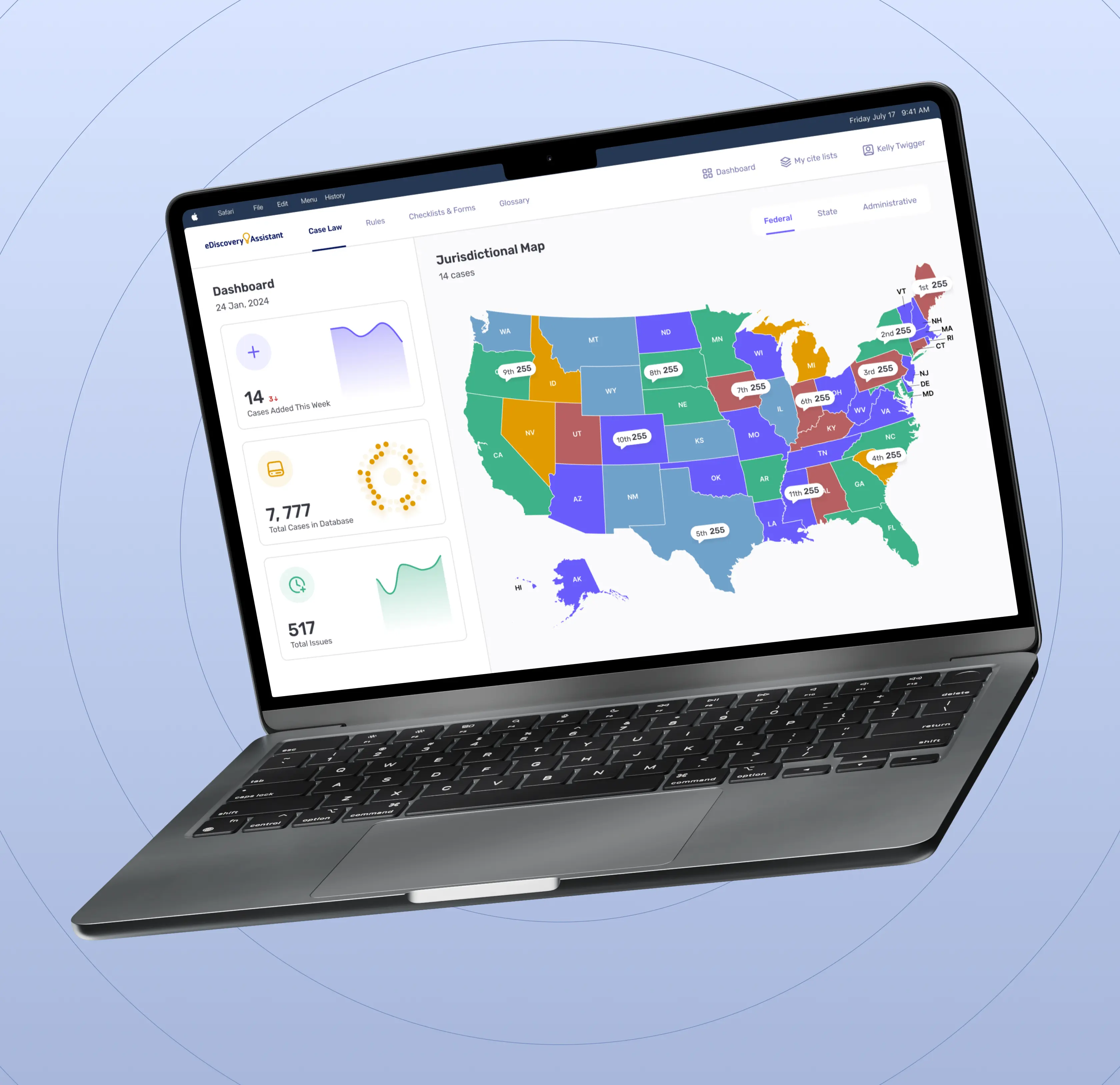
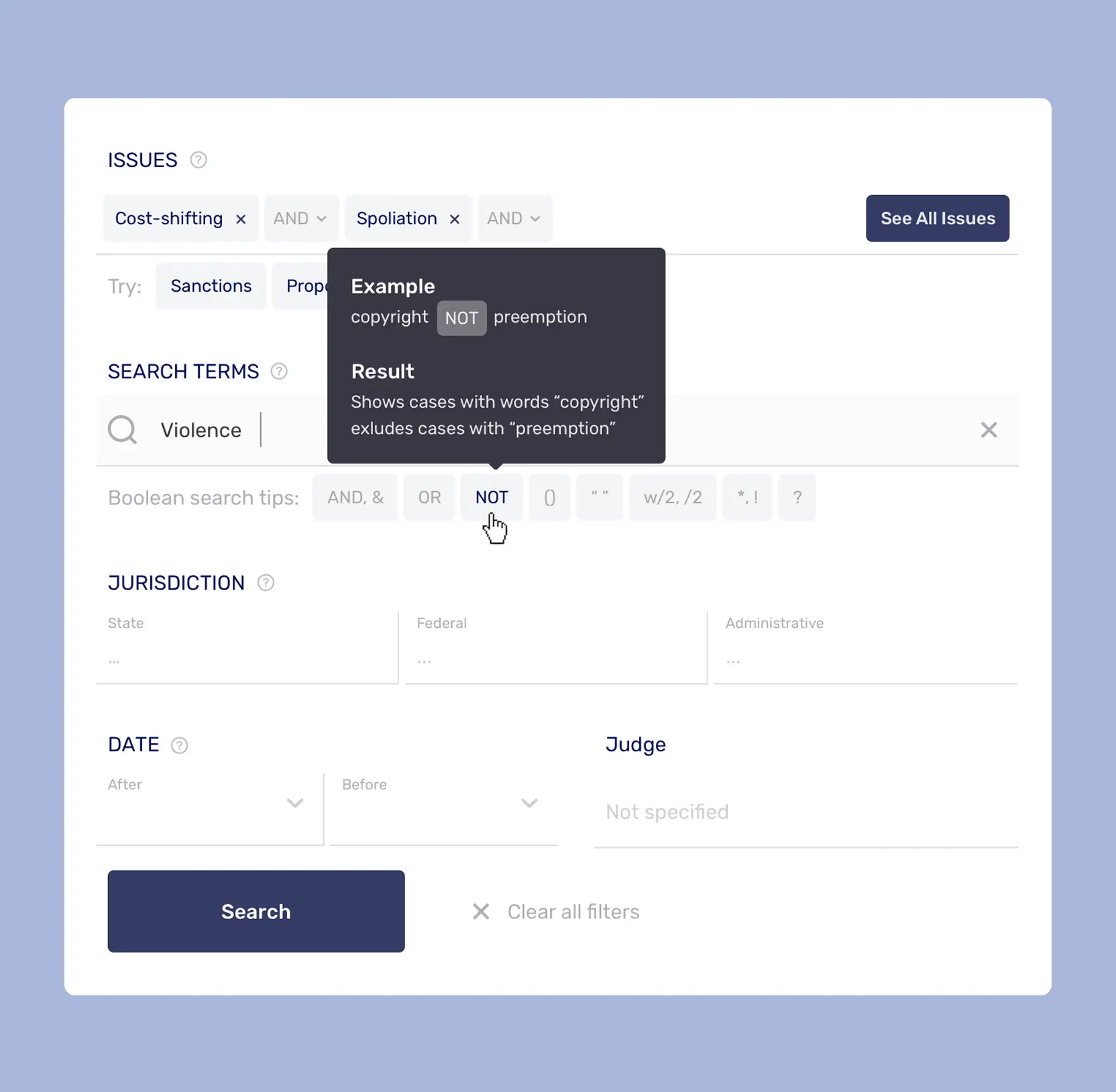
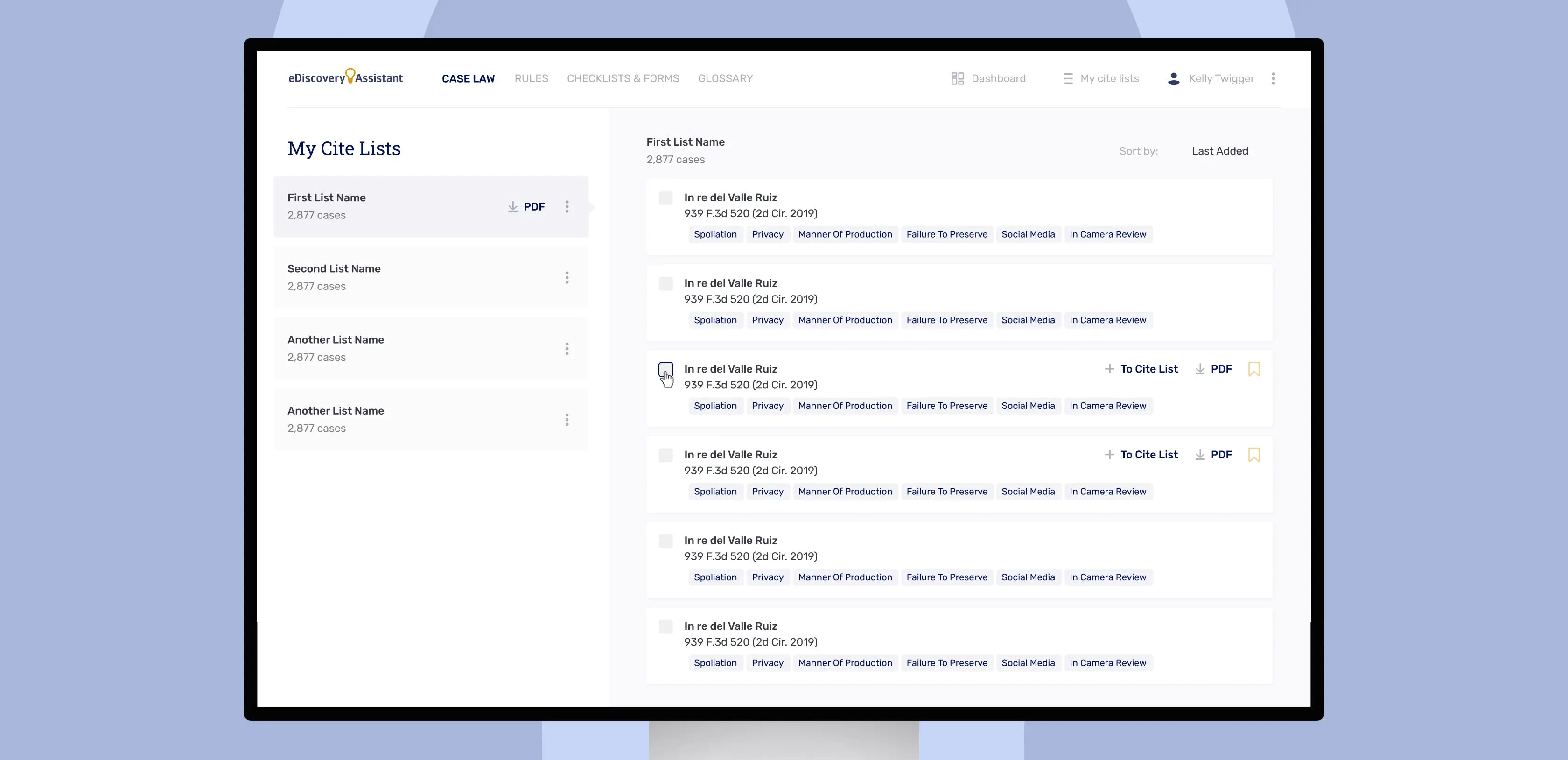
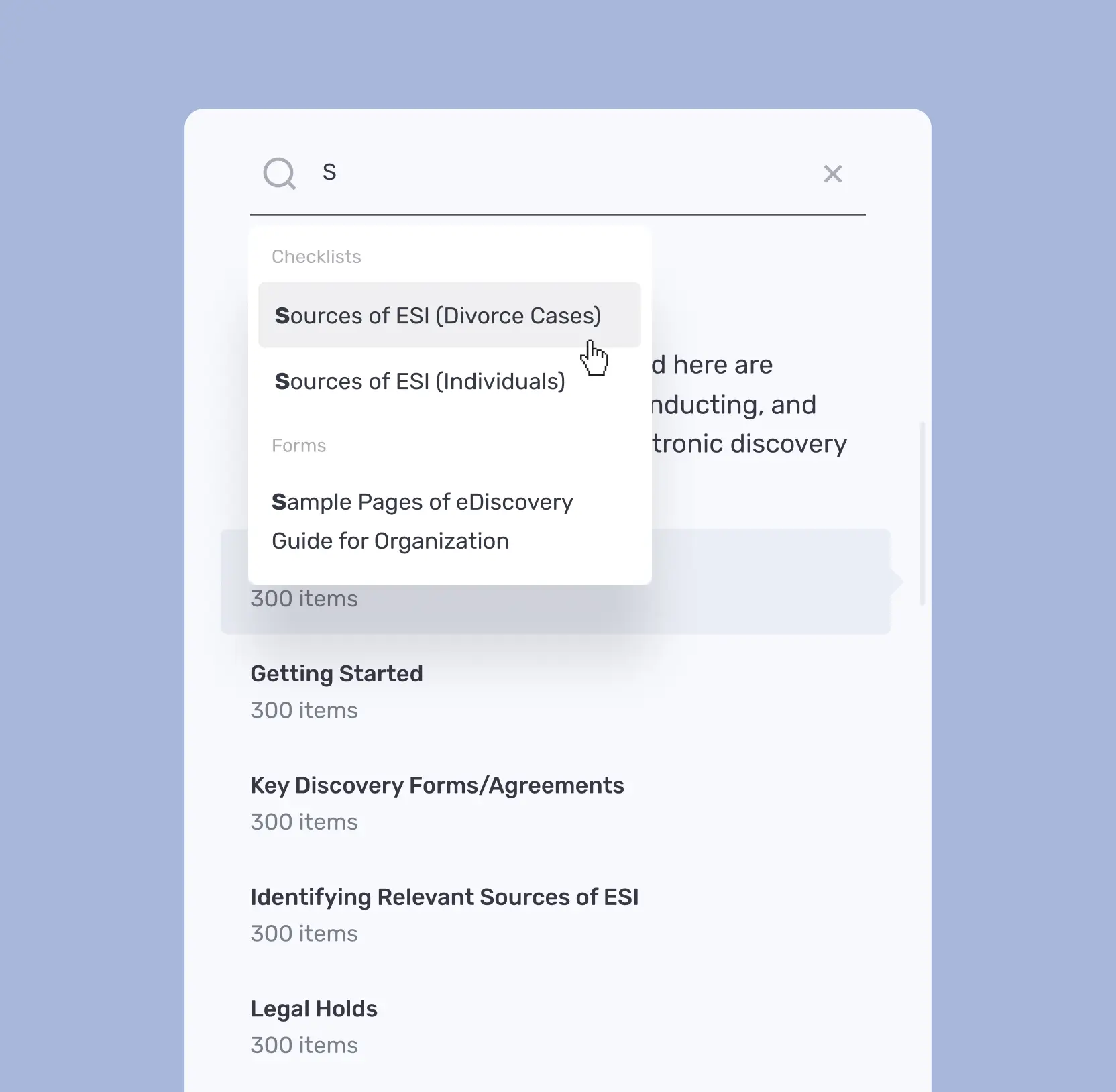
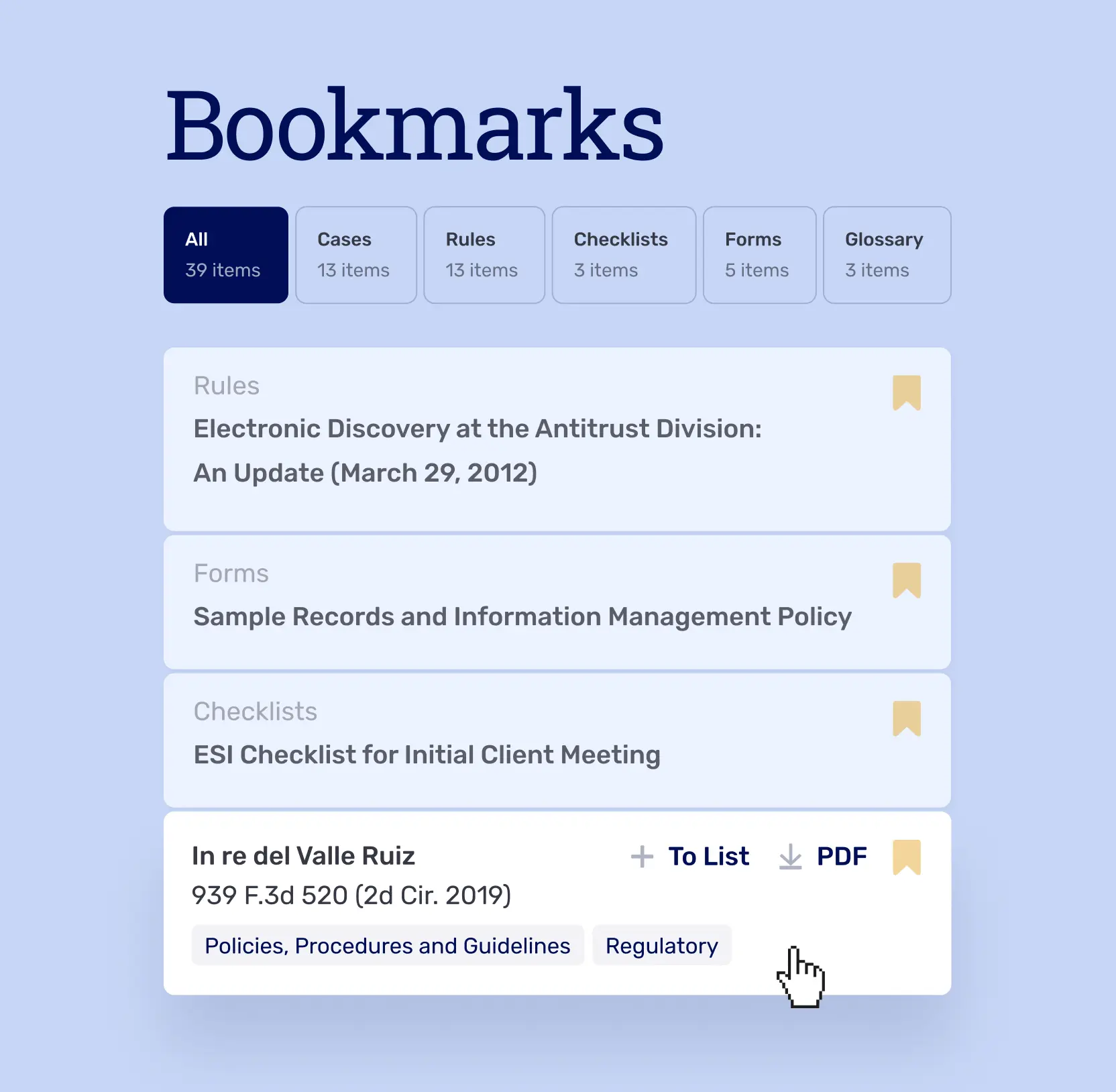
We created a dashboard that organizes all 94 eDiscovery issues with a 2-tier menu and advanced filters: jurisdiction, date range, judge, and court level. Saved cases and weekly alerts are accessible in one place, enabling attorneys to stay current without leaving the platform.
Standardized workflows to save time and reduce errors
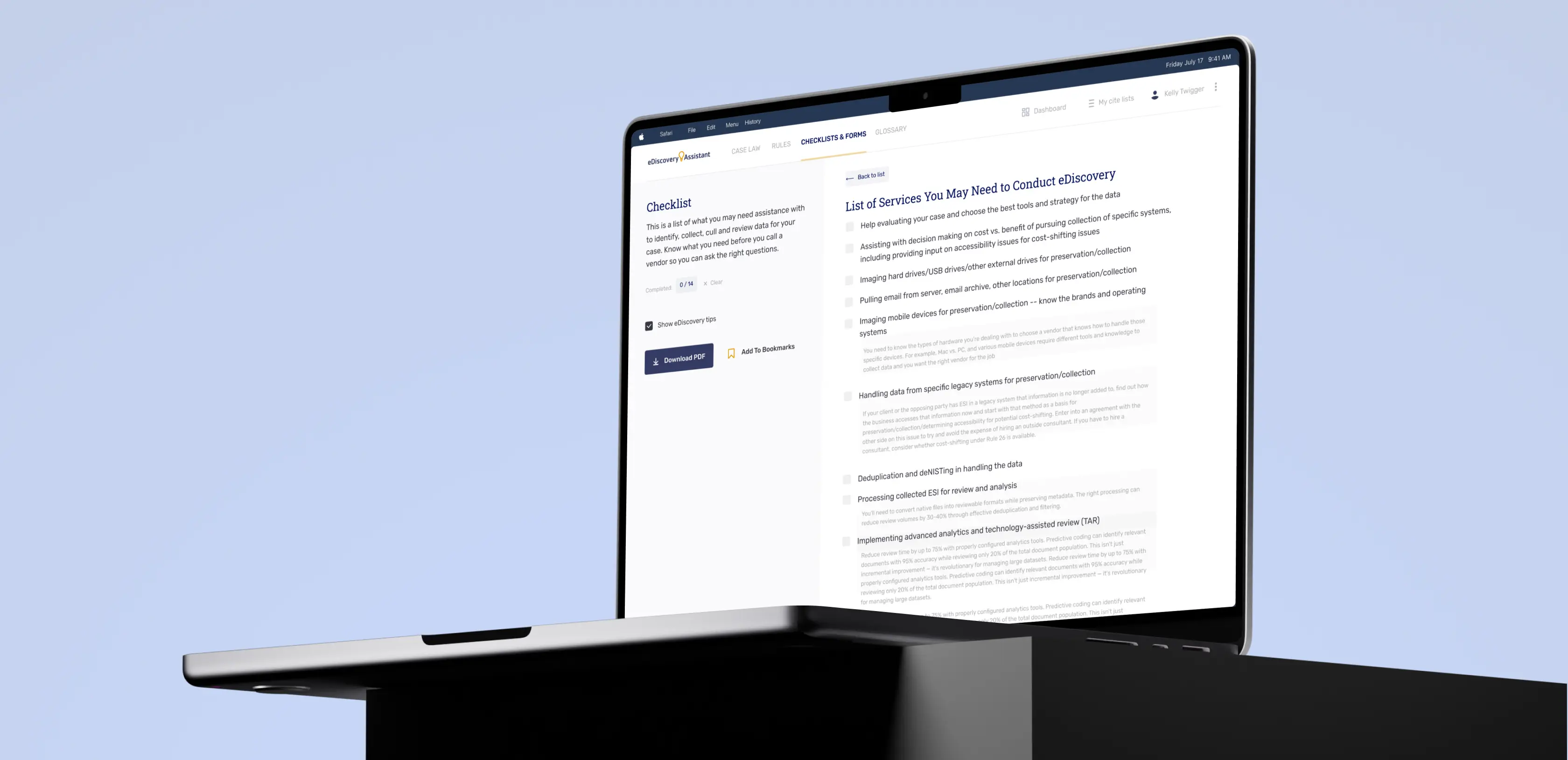
Attorneys often spend up to 40% of their time recreating standard documents. We integrated pre-built templates for discovery requests, responses, and motions directly with the case database. This unified approach reduces preparation time, ensures compliance with jurisdiction-specific rules, and allows teams to focus on high-value work.
6 UX/UI Design Principles in Legal Tech Backed By Examples
Structured information architecture to eliminate chaos
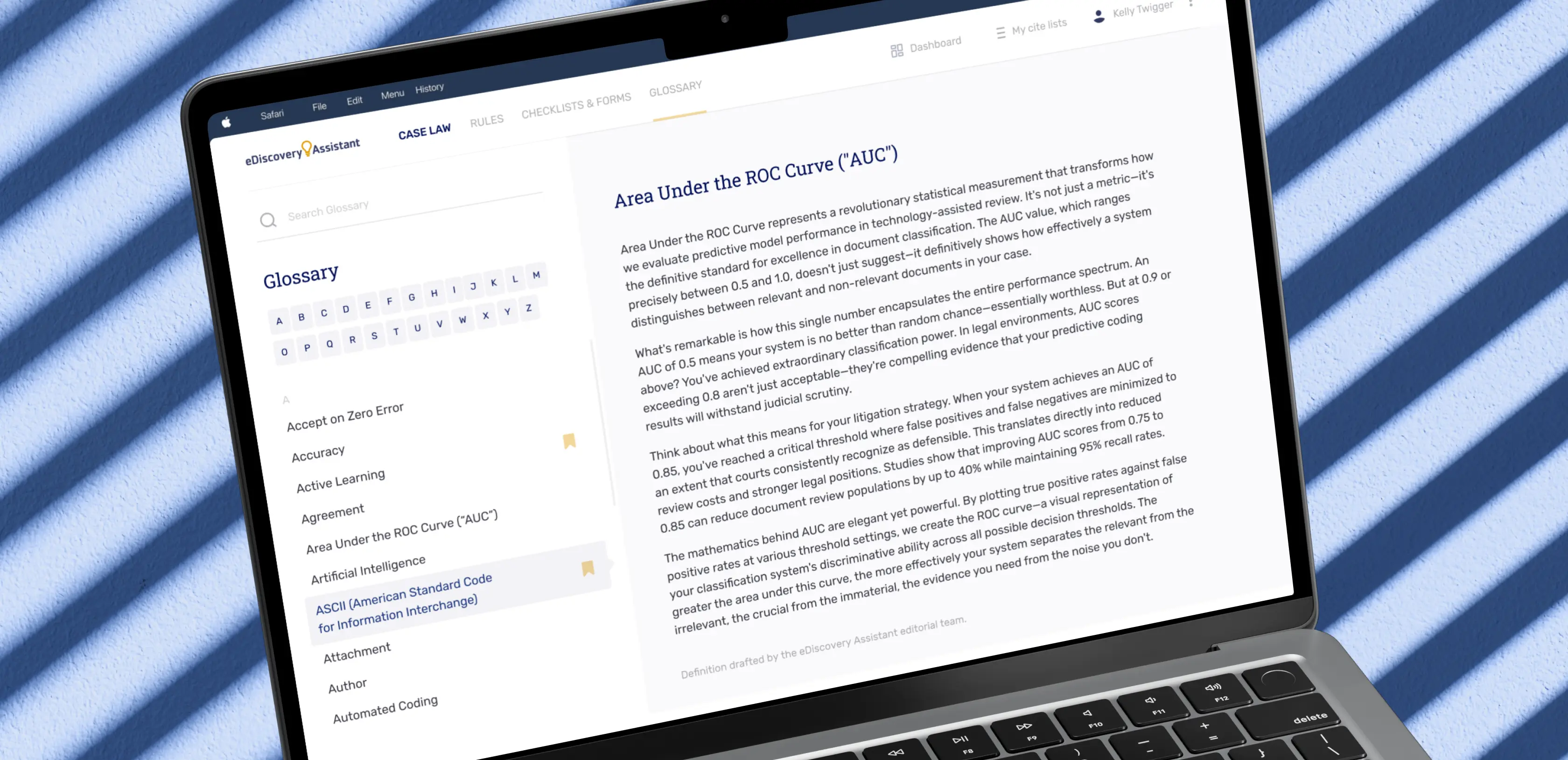
Fragmented legal data creates inefficiency. Our proprietary tagging system organizes 33,000+ cases across 360+ issue tags, centralizing rules from all 94 federal district courts and including a 500+ term glossary. Personalized bookmarks and AI-generated summaries make information actionable, turning overwhelming data into a searchable knowledge base that supports confident, timely decision-making.
Frequently asked questions
Common questions
about this topic
What UX strategies work best for high-volume legal research tools?
Simplicity wins. For this LegalTech platform, we structured information around user intent creating filters, tagging systems, and contextual navigation that let legal teams find exactly what they need, fast. The result is a product that scales with complexity without becoming complex.
How can legal teams save time on documentation and compliance tasks?
Provide them with pre-built, editable tools. We equipped eDiscovery Assistant with tailored forms and checklists, accessible by jurisdiction and use case. This design choice shortened prep time and standardized best practices across legal teams, a major ROI win for enterprise firms.
How does AI improve the legal research experience?
It’s all about speed and clarity. We implemented AI-generated case summaries to help users quickly grasp the essence of long court opinions. These smart summaries save hours and make scanning large databases manageable, especially for busy litigators.
What makes a LegalTech platform credible in the eyes of legal professionals?
Trust is built through structure and relevance. Lazarev.agency focused on a clean UI, reliable categorization, and accurate content surfacing. Every detail, from typography to tagging logic, was tuned to meet the precision lawyers expect.
What should LegalTech founders look for in a product design partner?
Deep understanding of information architecture, user roles, and decision-critical workflows. Our work on eDiscovery Assistant shows how design can directly improve legal outcomes by reducing friction, surfacing insight faster, and supporting confident decision-making in complex domains.
What are the best ways to streamline the eDiscovery process for legal professionals?
A fragmented experience slows everything down. For eDiscovery Assistant, Lazarev.agency designed a unified interface that merges 33,000+ cases, rules, checklists, and forms into a searchable legal knowledge base. It eliminates the need to jump across sources, everything users need is one click away, organized by real legal issues.
How can LegalTech products deliver timely updates without overwhelming users?
Smart, contextual alerts beat email overload. Lazarev.agency introduced a real-time notification system in eDiscovery Assistant that keeps users informed about new case law and rules without disrupting their workflow. Updates are categorized and pushed directly through the platform.
More cases like this
Related cases you
might find useful
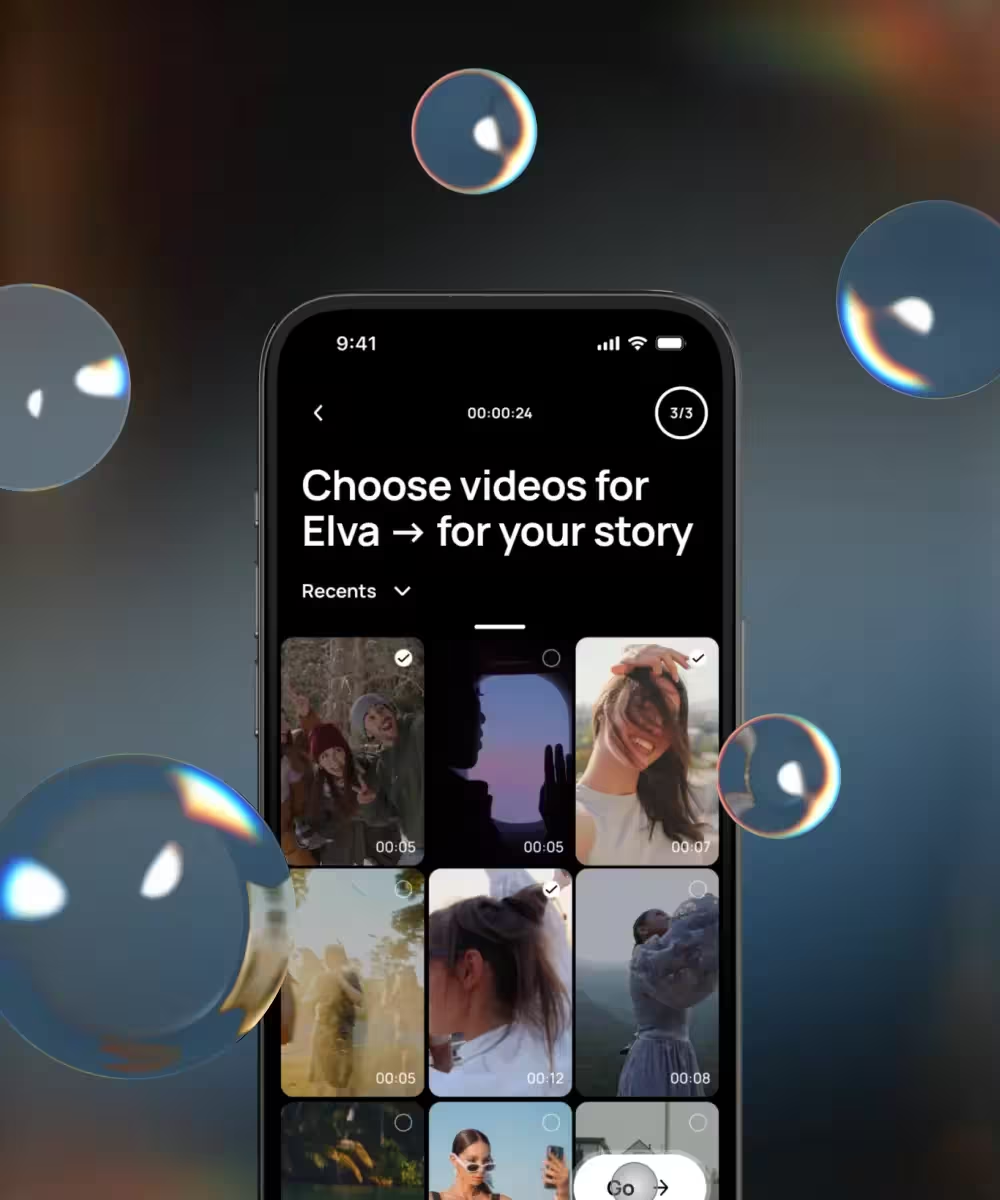
Voice AI video editor app design: how we shipped Elva's brand, onboarding, and agentic editing flow
Lazarev.agency designed Elva, a voice-first AI video editor — brand, UX, UI, onboarding, monetization — as one launch. Webby Winner, Best Visual UI in AI.
How our redesign made Abu Dhabi University's depth clear for applicants and students
Abu Dhabi University had depth, but its digital experience hid it. Lazarev.agency redesigned the platform around the needs of applicants, students, and faculty, transforming a fragmented ecosystem into a unified digital campus where information, services, and opportunities are easier to find and act on.
How we helped a premier fine wine retailer boost add-to-basket rate by 65% with a mobile-first redesign
Explore how Hedonism Wines boosted add-to-basket rates 65% with mobile-first redesign & improved UX.
Let's talk about your AI adoption challenge
Tell us where adoption stalls. You’ll hear back from a senior product and UX lead with a practical action plan.