AI brand identity design for Elva — a content-first system built on glass and chromatic aberration
Project:
the project
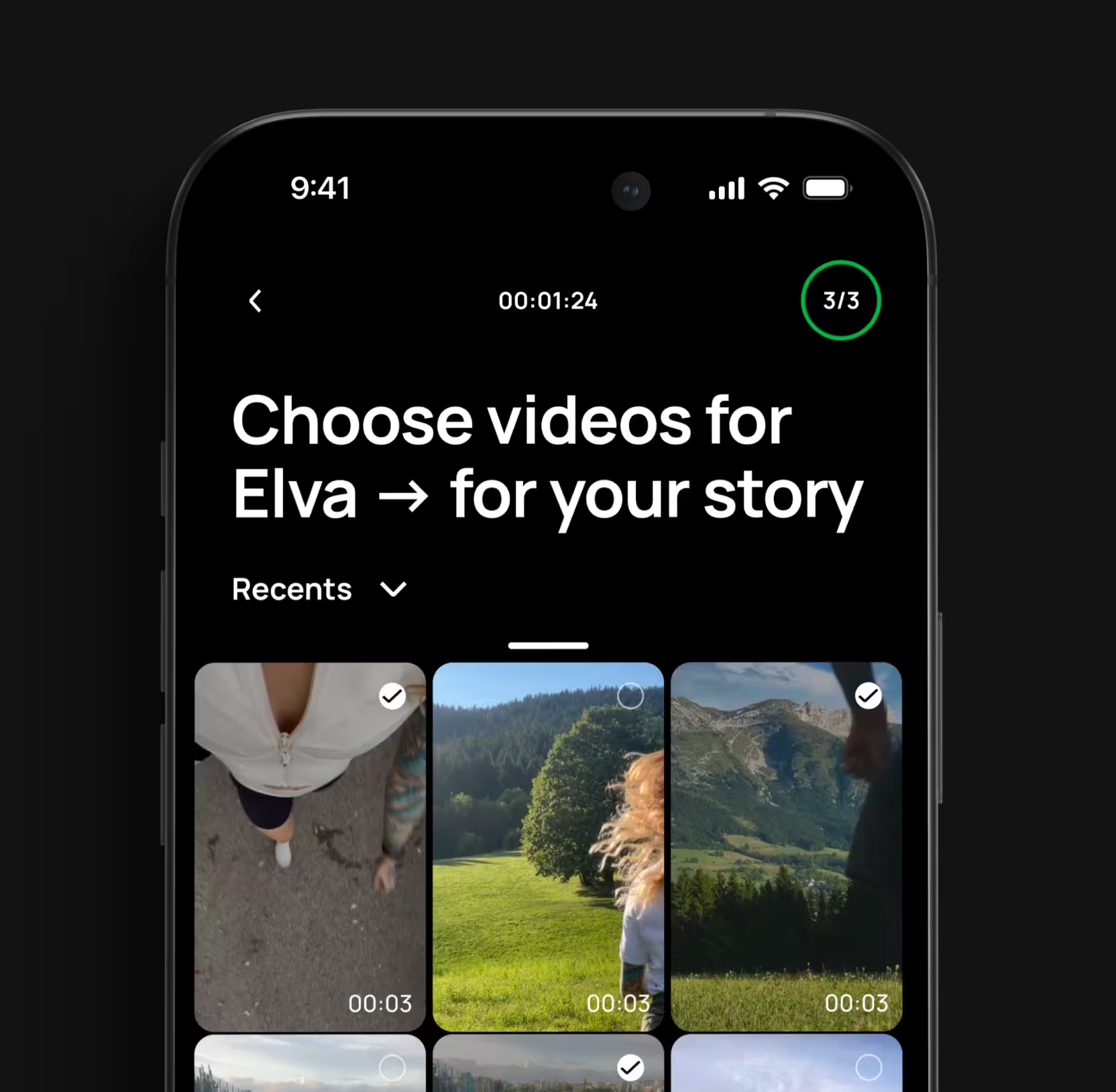
Elva is an AI video director for mobile — a fully agentic editor that produces finished, social-ready clips from raw camera-roll footage without a single manual edit. But the branding problem underneath the product is a different shape from the product problem. Elva lives inside other people’s content. She edits travel videos, birthday compilations, behind-the-scenes reels. Every color, mood, and visual style passes through her daily.
A conventional brand identity with heavy color blocking and strong visual decoration would compete with that user-generated content. It would make the interface feel branded rather than personal. The mandate was the opposite: build an identity that carries unmistakable character while staying transparent enough to let user footage take center stage.
In short: a brand that disappears when you don’t need it, and carries all the personality in the world when you do.
That’s where Lazarev.agency came in. We delivered the full brand system — logo, AI persona, typography, color language, conversation design, app icon, and App Store creatives — built around a single idea: Elva is made of glass, and her palette comes from whatever passes through her.
The Project’s
Discovery Phase
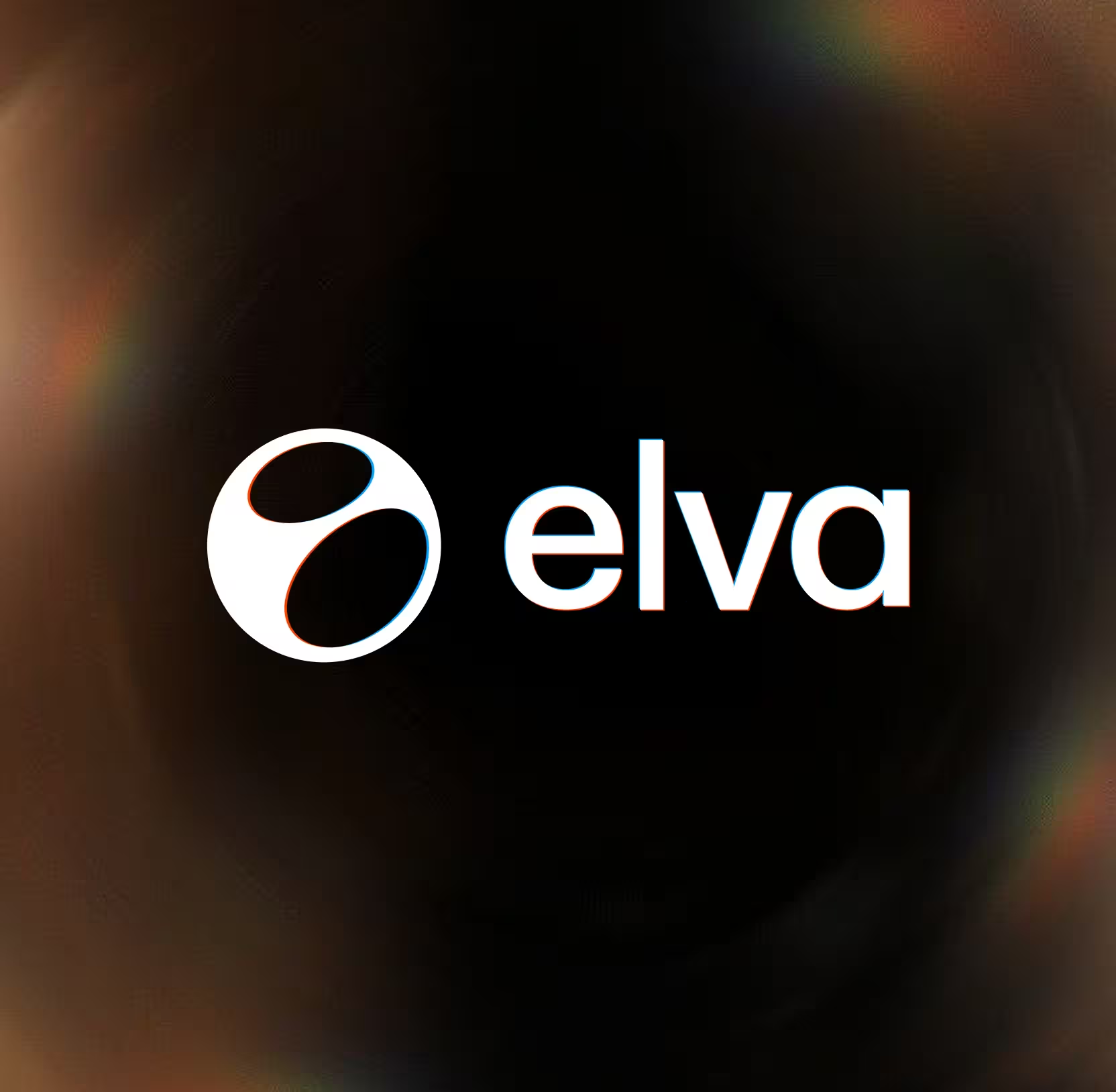
Designed a logo that reads as a lens
Elva is not a brand that wants to be noticed first. She is a brand that wants to be useful first and recognized second. The logo had to honor this order.
We designed a flat, minimal symbol that unmistakably evokes the distortion you see when looking through curved glass — a subtle warp captured in a single shape. It’s black and white by default because the brand stays neutral against any content. No gradients. No color fills. No decorative elements. The distortion is the identity. When users see it, they immediately associate it with a lens refracting light, which is exactly what Elva does: she absorbs raw footage and refracts it as something polished. The symbol works as a small app icon and a large brand mark with equal clarity.
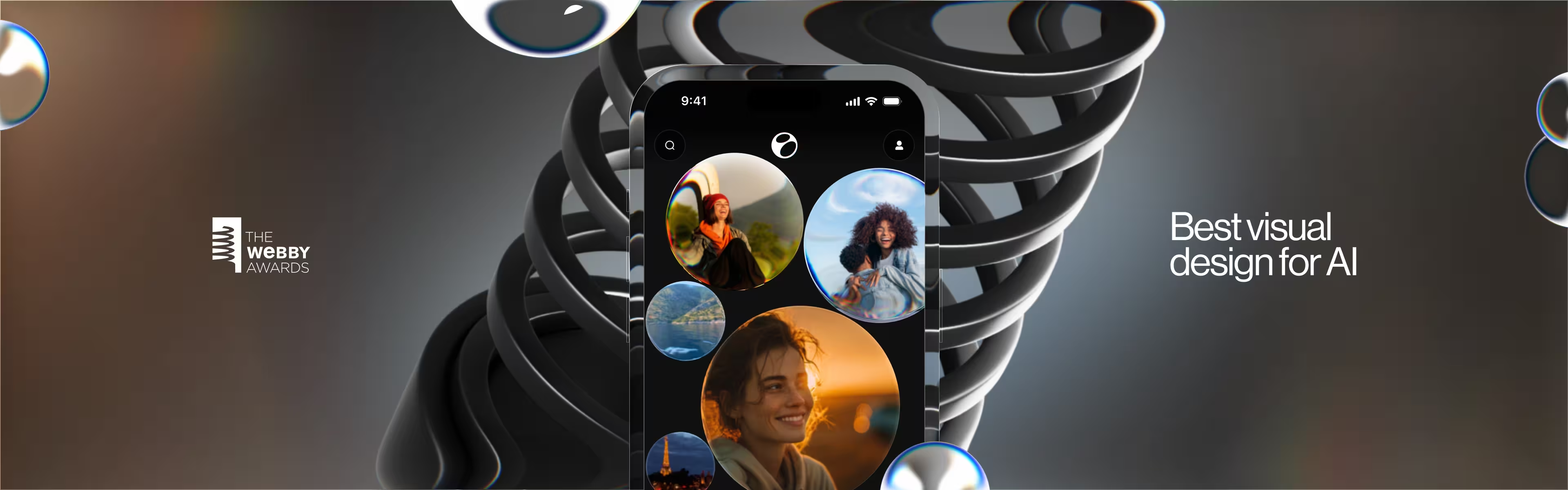
Lazarev.agency takes its 4th Webby in 4 years for best visual UI in AI
Made typography the primary brand surface inside a chat-based UI
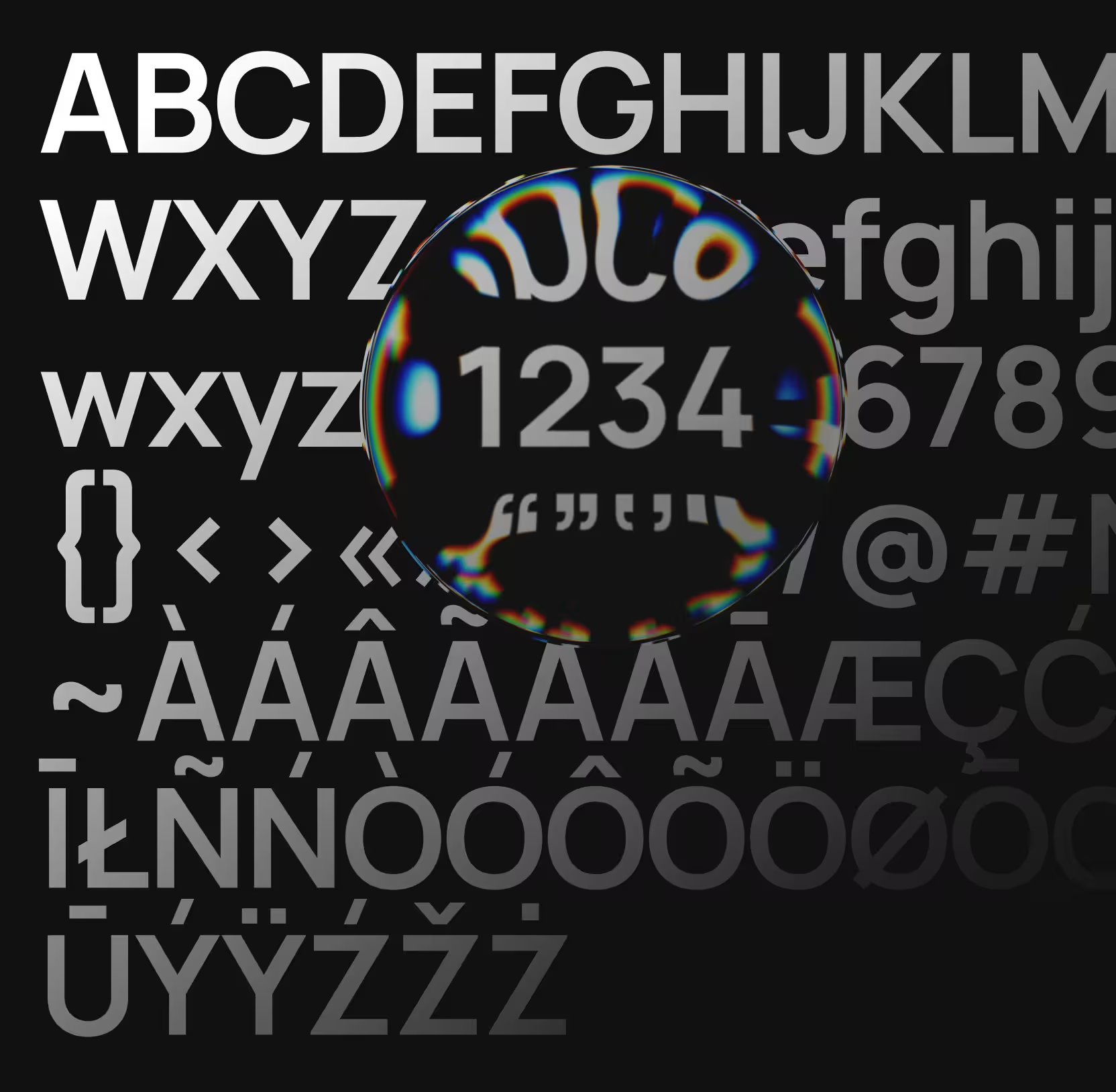
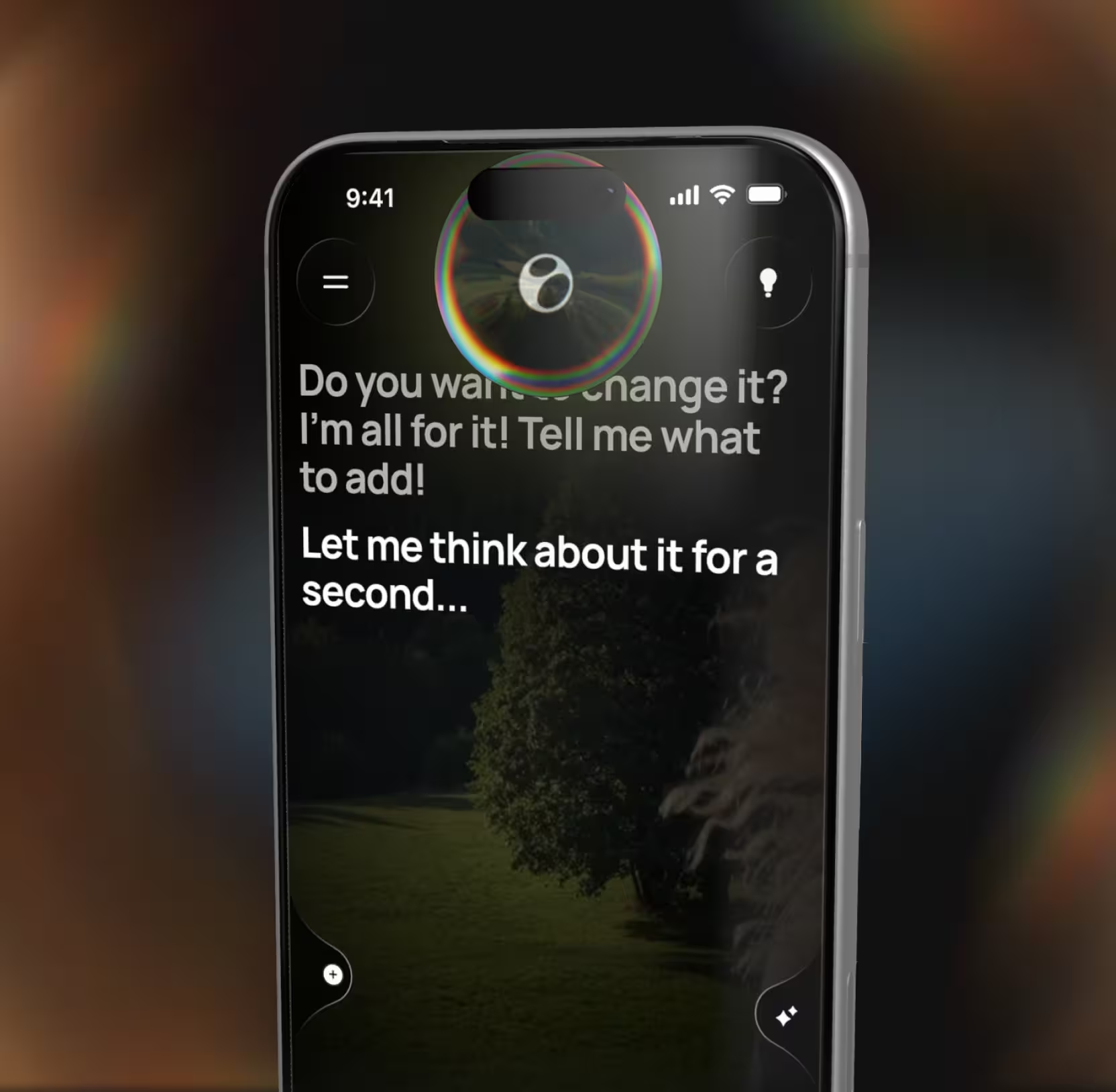
Elva’s entire in-app experience is conversation-based, which means typography does most of the heavy lifting. Every message she sends, every subtitle she generates, every prompt she surfaces lives in text.
We selected a typeface with strong character at large sizes that still reads cleanly at small ones, because Elva’s voice needs to feel both stylish and legible. The type system carries brand recognition across the interface: when users see Elva’s messages, the weight, spacing, and rhythm of the text tell them it’s her speaking. The result we got is a chat-based UI where the typography itself is the brand — no logos, badges, or decorative frames needed inside the conversation.
Built a color system from chromatic aberration, so the palette comes from the user
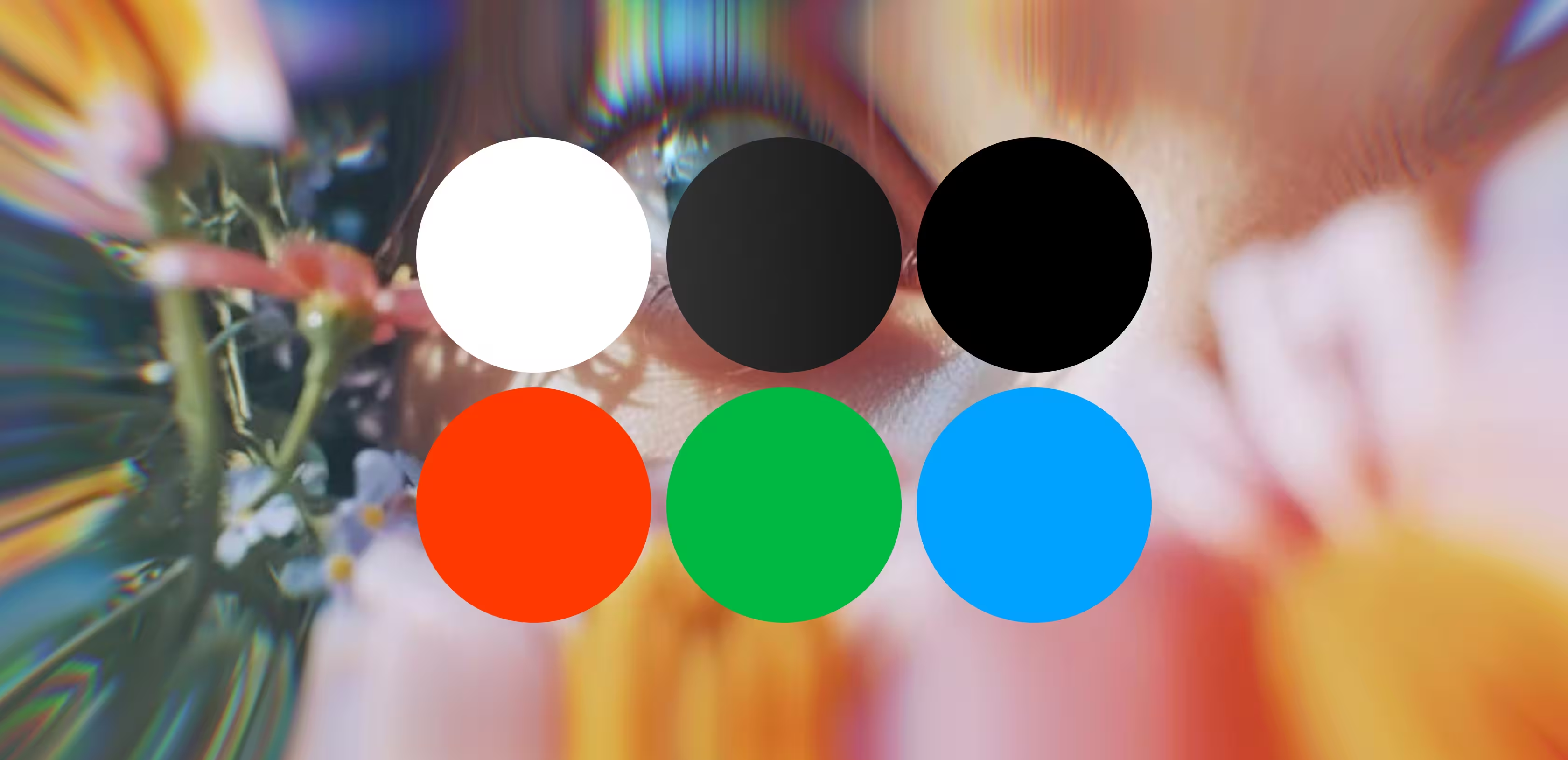
Every brand has a color palette. Elva’s palette is technically infinite — because it is generated from whatever the user films.
The color system starts with a strict foundation: black backgrounds, white text, white UI elements. That’s the base. Everything else comes from chromatic aberration — the prismatic color fringing that happens when light passes through curved glass. We made this the signature visual element of the whole brand. In practice, the colors users see in the interface are enhanced, slightly more saturated, subtly distorted versions of their own uploaded footage.
A beach video produces warm amber and turquoise halos. A city nightscape throws electric blue and magenta. The brand adapts to whatever passes through it, and that’s the point: Elva’s identity is agnostic by design. She takes on the color of your content.
Translated glass and personality for an App Store listing built to stop scrolls
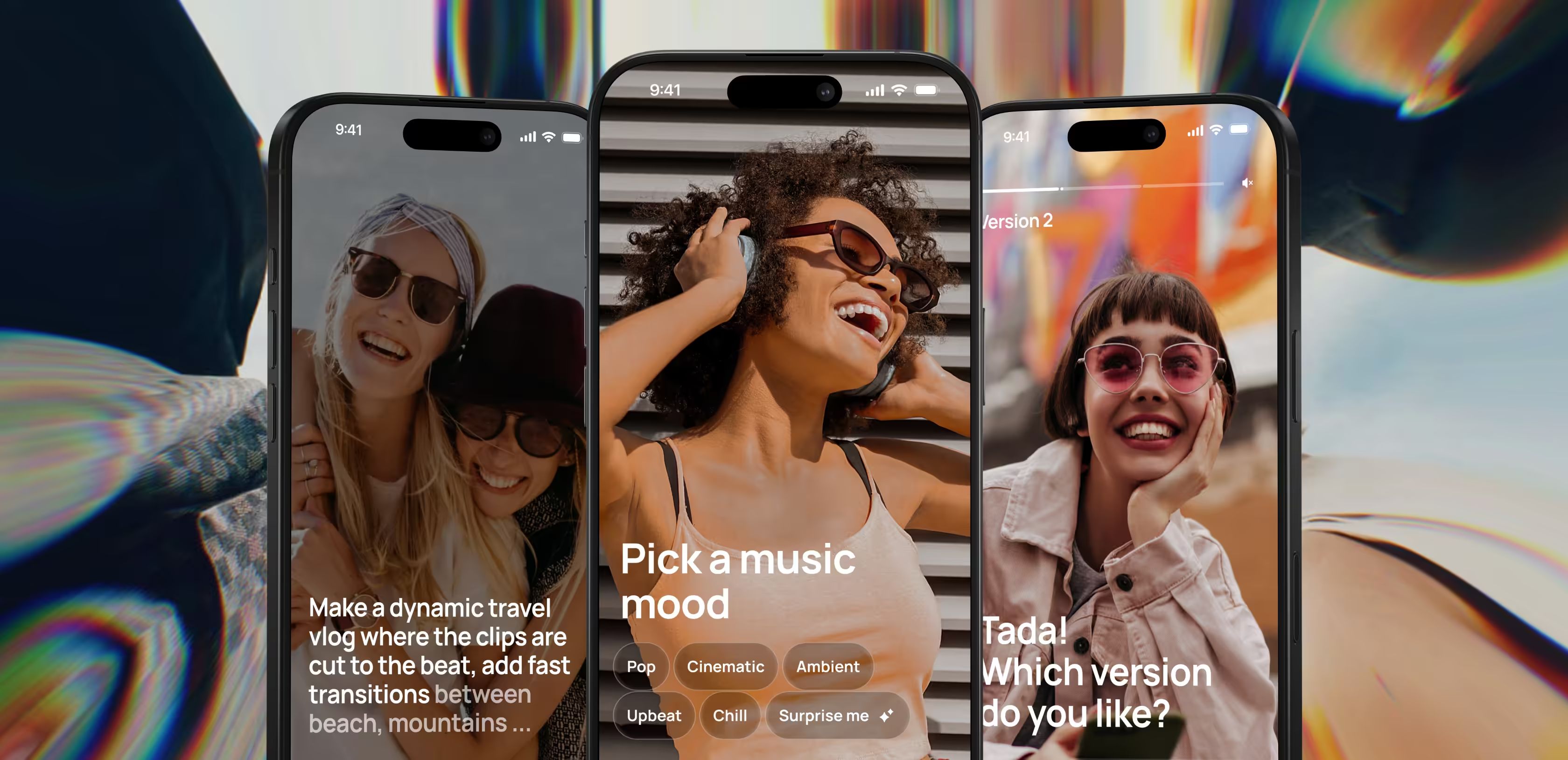
The App Store listing is where the brand system meets its hardest test: communicating Elva’s identity in static screenshots to someone who has never heard of her.
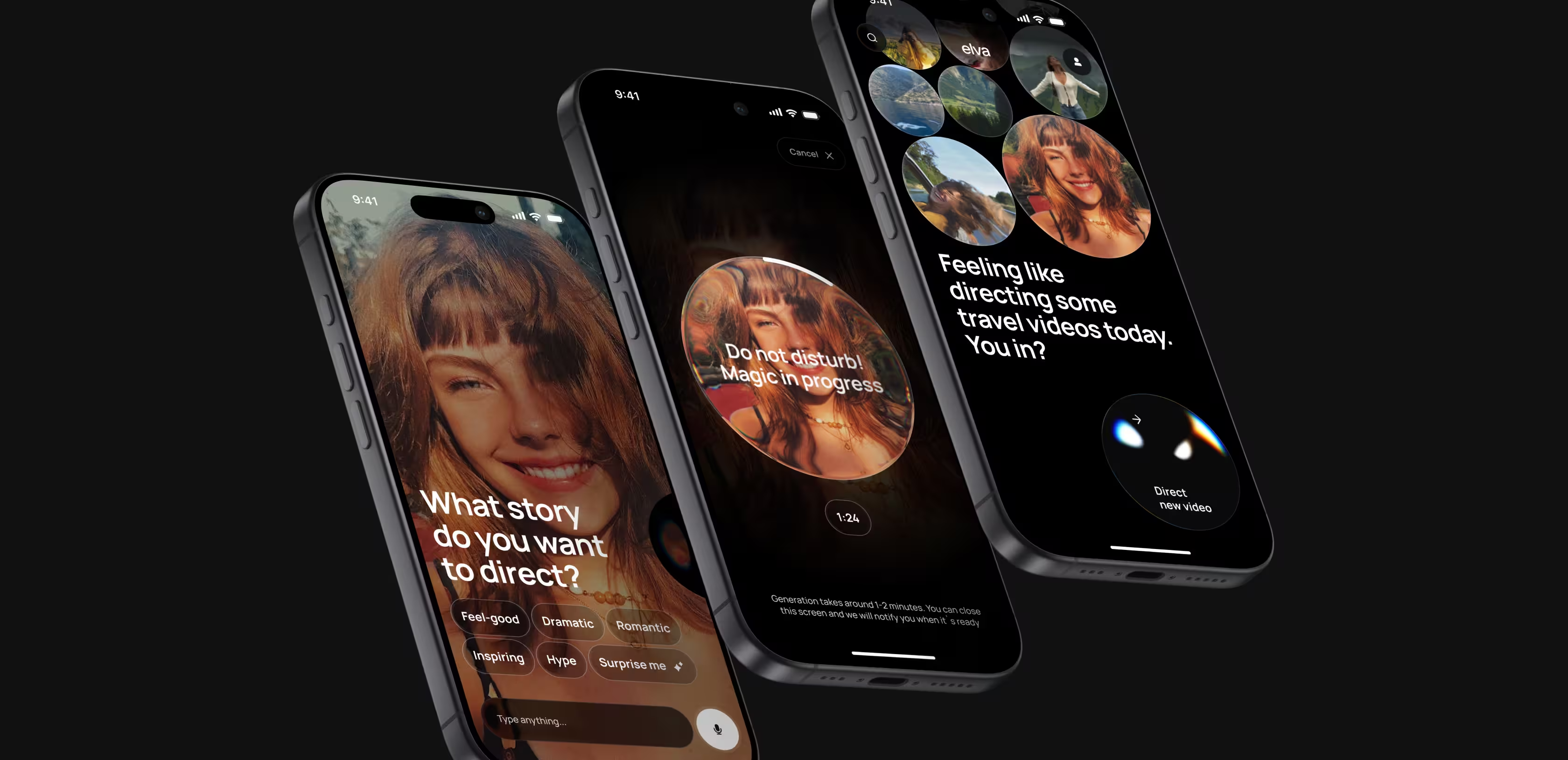
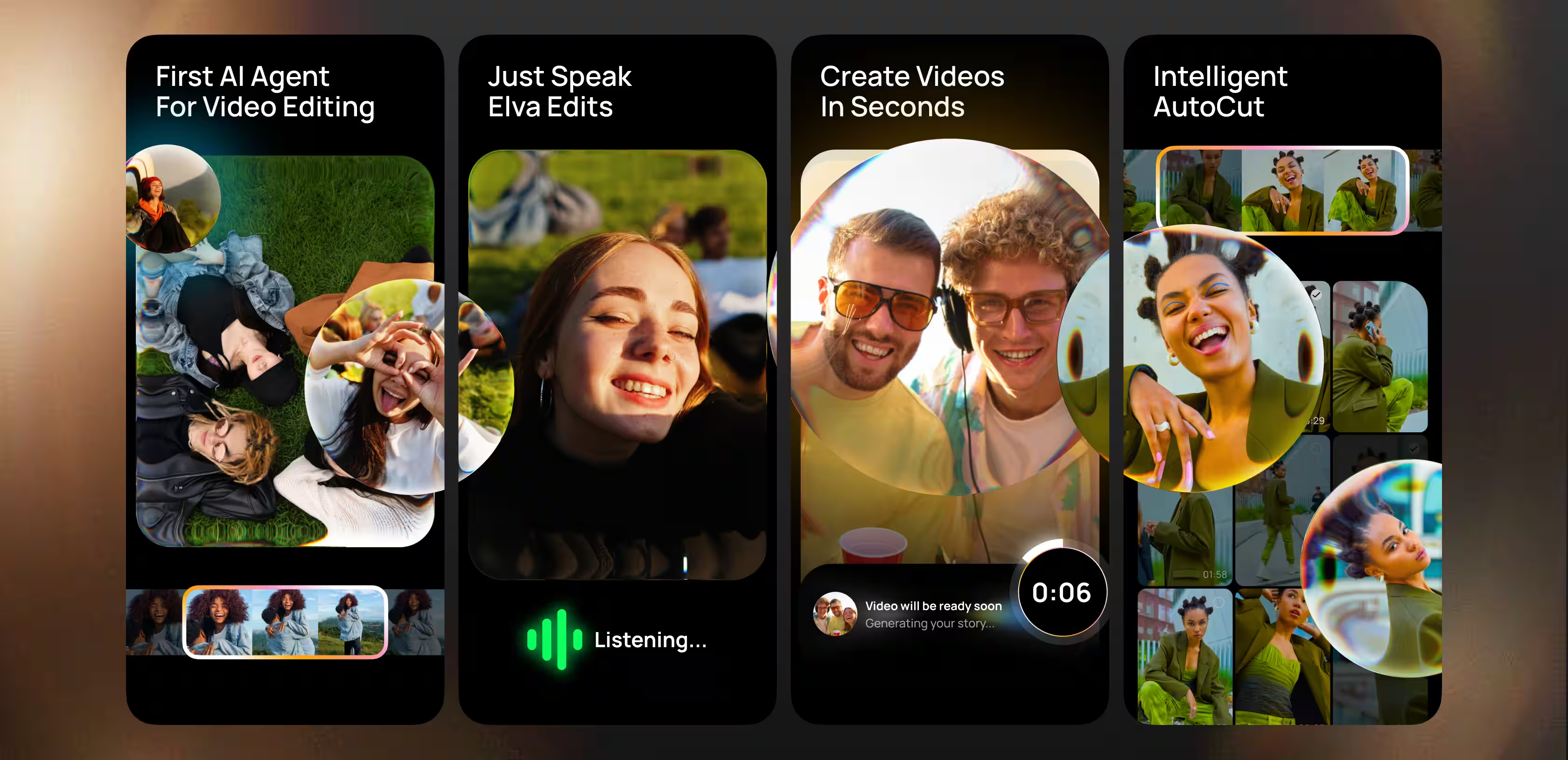
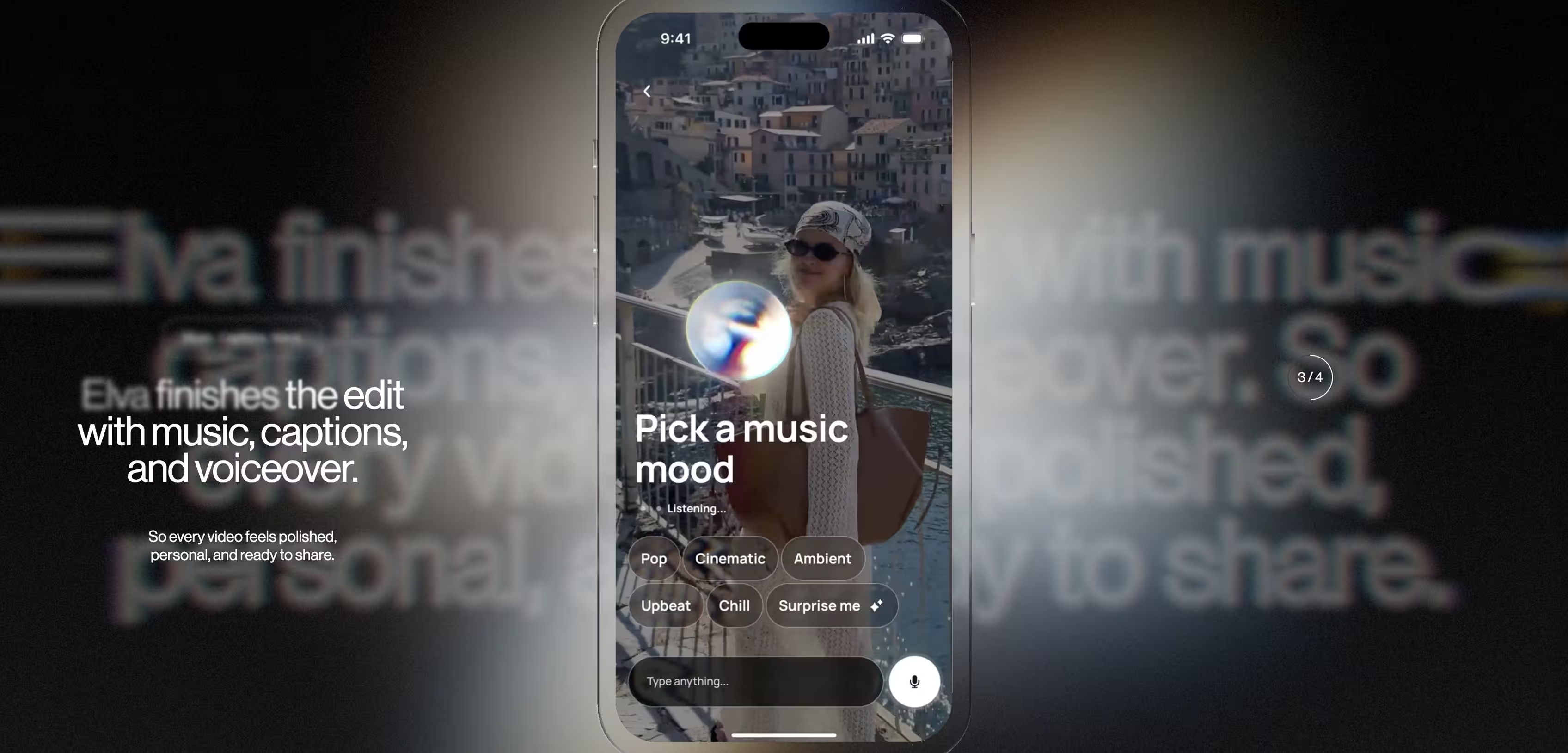
We designed screens that lead with the glass blob and chromatic aberration, establishing a visual language that looks unlike any other video editor in the store. The screenshots show Elva in action — the blob reacting to footage, the conversation interface mid-flow, the before-and-after of raw clips becoming finished videos — all on the signature black background with text-driven UI. The goal was a single reaction from someone scrolling the store: this doesn’t look like an editing app. This looks like something new.
Built a website where user content is the hero and the brand is the frame
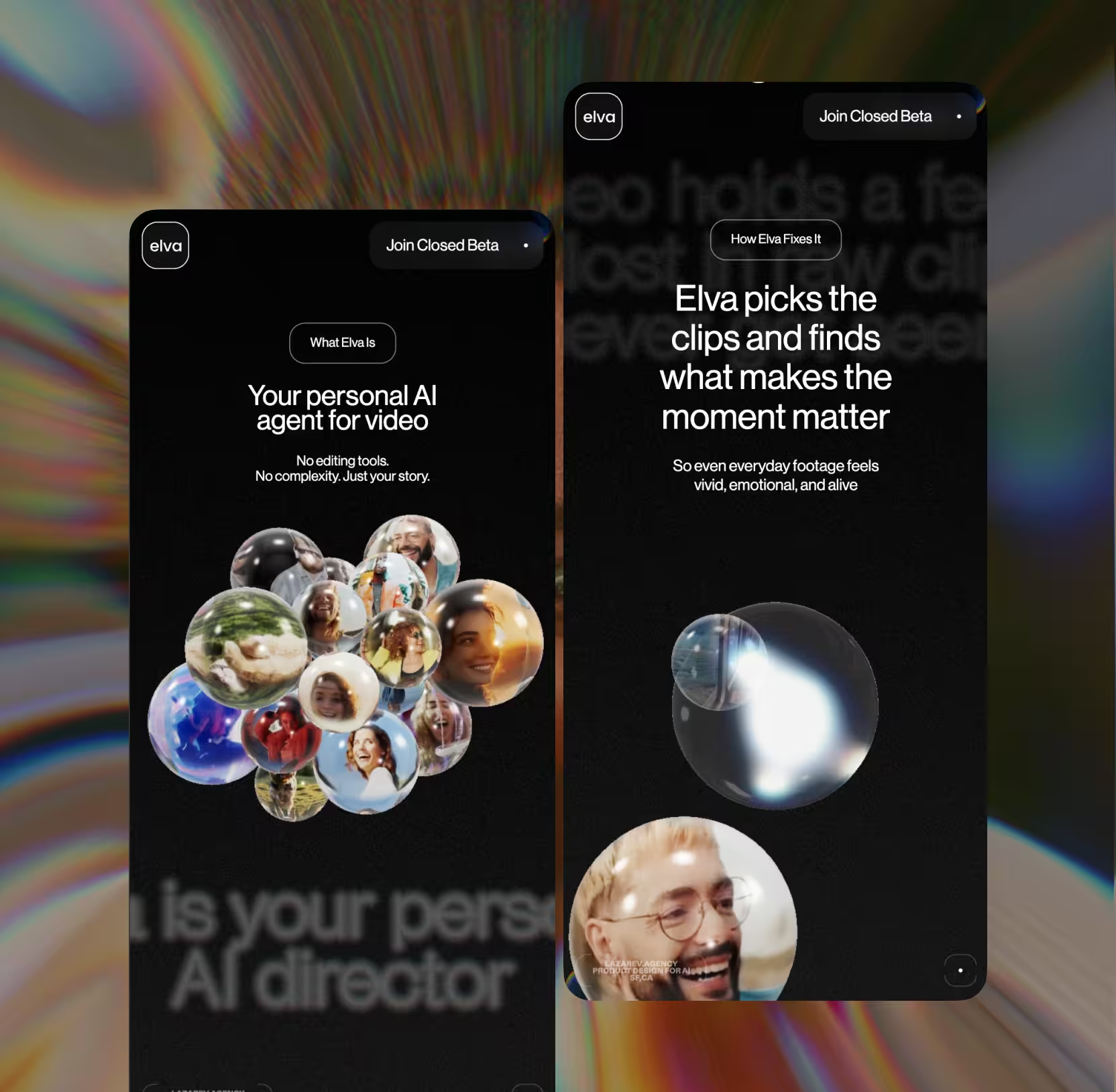
The website (elva-labs.com) had to prove something specific: that Elva's content-first brand philosophy could scale from a six-inch phone screen to a full-width marketing page without losing its nerve.
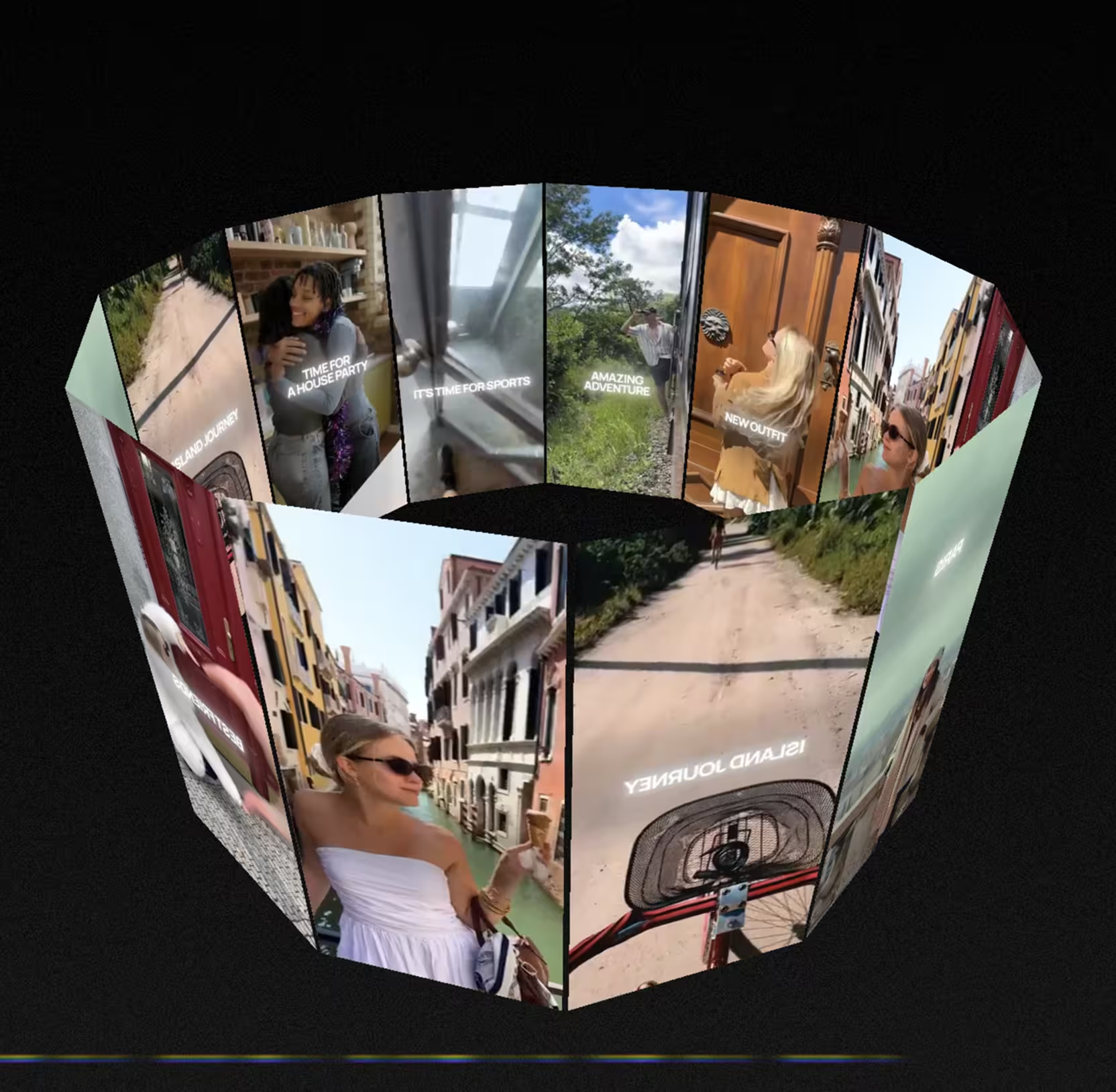
We designed the site as a gallery of real user-style footage rather than a traditional marketing page. Autoplay clips run continuously throughout — a beach vlog here, a birthday montage there, a behind-the-scenes reel below — each one an example of what Elva produces when a user hands her a camera roll. The brand system wraps that content instead of competing with it: the black base, the glass blob reappearing as a cursor companion and scroll marker, the chromatic aberration edges that make every video feel refracted through Elva's lens.
The effect is that the website IS the product. Visitors don't read about what Elva can do; they watch what Elva has already done, looped. The intelligent camera features — Pose Mirror, Real-time Guidance, Flow Arcs, Lighting Spot, Scene Sense — each earn a showcase block that reads like a mini product demo, the kind of proof that earns a beta signup from a casual scroll.
Every decision on the site points back to the principle we shipped in the brand system: Elva's identity carries personality and makes space. The site is this philosophy in scroll-through form. The user footage is the space.
AI & ML
Lazarev. agency offers comprehensive digital design services. Discover our range of related expertise supported by impactful case studies.
More Startups Cases
FAQ
What does brand identity design for an AI product include?
For a consumer AI product, brand identity design goes beyond logo and color. It covers the AI persona (how the model appears visually inside the product), the behavioral system that governs how the persona moves and reacts, the conversation design that shapes the AI’s voice and tone, the interface typography and color system, and the marketing assets — App Store creatives, social, promo — that carry the brand outside the app. For Elva, Lazarev.agency delivered every layer as one connected system so the brand behaves consistently whether the user meets Elva in the App Store, in the onboarding flow, or mid-conversation inside the product.
How do you design a brand identity that doesn’t compete with user-generated content?
The answer is a content-first system. A strict neutral base (for Elva: black, white, and glass), no fixed color palette, and a visual signature that comes from refracting or reacting to the user’s own material. The brand should be present when the user looks for it and invisible when they don’t. This is how Elva’s identity can carry strong personality while still letting travel reels, birthday videos, and behind-the-scenes footage take center stage on the screen.
What is AI persona design and why does it matter for a consumer AI app?
AI persona design is the system that gives an AI a visible, consistent identity inside a product — how it looks, moves, and communicates. For a consumer AI app, persona is the difference between users feeling like they are prompting a black-box model and feeling like they are collaborating with a partner. Elva’s persona is a glass blob with 30+ behavioral states: she listens, thinks, celebrates, and nudges. That consistency builds trust quickly, which is the single biggest driver of activation and retention in AI products.
Why design an AI persona without a face?
A face locks a persona to a specific age, gender, and cultural read. Elva is meant to sit naturally inside any user’s life, from a teenager filming their friends to a grandparent editing family holidays. The glass blob carries personality through motion, material, and sound rather than features, which keeps the persona expressive without being prescriptive. The material — glass — also reinforces the product promise: the AI refracts what you give her.
How does typography carry a brand in a chat-based AI app?
Chat-based AI apps remove most traditional brand surfaces. There’s no nav to theme, no card grid to style, no hero illustration to repeat. All that’s left is text. That makes typography the primary brand carrier. For Elva, we picked a typeface that reads as both stylish and legible across sizes, built a rhythm and spacing system that makes Elva’s messages instantly recognizable, and let the chat UI go frame-free. The type is the brand inside the conversation.
How do you make an App Store listing stop scrolls for an AI product?
AI apps face a specific App Store problem: most of them look the same. A hero screenshot with a chat bubble, a feature grid, a before-and-after. To break that pattern for Elva, we led with the visual signature the rest of the category does not have — the glass blob and chromatic aberration — on a pure black background. The screenshots don’t try to explain the product feature by feature. They establish a vibe that reads as “this is something new” in under a second of scroll time.
Why work with Lazarev.agency for AI brand identity design?
Brand identity for an AI product isn’t a logo project. It’s a system that has to hold up in the App Store, in onboarding, inside a chat interface, and across dozens of behavioral states of a moving persona. Lazarev.agency ships that system end to end — logo, persona, type, color, voice, App Store — as one connected decision. For founders launching a consumer AI product, that coherence is the difference between a brand that photographs well on Dribbble and one that converts installs into daily active users.