Who this is for
Founders, CMOs, and Heads of Product/Marketing at AI and B2B companies with a real product and real customers, heading into bigger enterprise sales, fundraising, or a new market where perception now affects revenue.
Anyone can spin up a product in weeks. Anyone can apply a clean UI on top. What they can't copy is your story — the positioning, the voice, the perception that makes someone choose you before the demo even starts. We help AI companies find that story, then build every surface that communicates it: brand, website, and demo.
This is not a logo refresh or a prettier homepage. This is the work that changes how the market thinks about your product — the narrative, the visual identity, the website, the demo, the pitch. All of it built as one coherent system, because disconnected touchpoints tell a disconnected story, and disconnected stories don't close enterprise deals. We sit at the intersection of product, story, and perception — for AI companies ready to stop being the best-kept secret in their category.
Founders, CMOs, and Heads of Product/Marketing at AI and B2B companies with a real product and real customers, heading into bigger enterprise sales, fundraising, or a new market where perception now affects revenue.
A single, coherent story for your product, expressed across brand identity, website, demo, and pitch. Positioning, narrative, visual system, site, demo flows, and decks all built as one system instead of disconnected assets.
Stronger win rates against better-known competitors, higher close rates and pricing power, more qualified inbound from the website, and a clearer, more compelling story for investors and enterprise buyers.
4–8 month engagement. We lead narrative, brand system, site, and demo design; your founder/CMO and design lead stay in the loop for high-leverage decisions. Everything is built to live inside your existing product and design stack.
Should you choose this service?
Bring us your product and the story you're currently telling.
A few years ago, having a great-looking product was a real advantage. Then every startup hired a Figma-fluent designer, every template marketplace got better, and clean UI stopped being a differentiator. Today every AI product has sharp visuals, a dark-mode website, and a demo that technically shows the features. The visual bar is the baseline. What separates the companies people remember is their story — the specific, ownable, true thing about what they do and why it matters.
Most AI companies don't have that story. They have a feature list dressed up as a value proposition, a website that explains what the product does without making anyone feel why it matters, and a demo that's technically impressive and emotionally inert. The problem isn't the product. It's that no one has done the work of figuring out what the product actually means — and building every surface around that meaning.
"You've got to start with the customer experience and work backwards to the technology. You can't start with the technology and try to figure out where you're going to try and sell it." — Steve Jobs
Jobs didn't just build great computers. He made you feel something about them — through the font, the packaging, the keynote, the retail store, every surface. Not because aesthetics were the goal, but because every touchpoint communicated the same thing: this is different. This is the future. This is worth paying for. That's a story decision first. Design just carries it.
This is what we do. We find the story that's already true about your product — the insight that's sitting in your best sales calls and your founder's whiteboard explanations and your customers' renewal conversations — and we build the systems that express it everywhere. Visual identity, website, demo, pitch materials. One coherent perception. One consistent signal, from first impression through closed deal.
When it's done, your product doesn't just work. It stands for something. And the market can see exactly what that is.
Every AI company thinks they're different. Few can explain how, in a sentence, to someone who just landed on their website. That gap is where deals are lost — before the demo, before the call, before your sales team ever gets involved. Enterprise buyers make decisions emotionally and justify them rationally. Your story is the emotional layer, doing work in every room you're not in.
Most branding agencies build assets.
We help you figure out what you want people to feel when they encounter your product — then we build every surface that creates that feeling. Here's what the engagement covers.
Before we design a single screen, we find your story. What your product changes for people, who it's genuinely for, why it exists now, and why you — specifically — are the ones building it. We work through this with your founding team in structured sessions, pulling apart what you pitch on a whiteboard versus what the website says, until we find the version that is already true and hasn't been said clearly yet. This narrative brief becomes the brief every other deliverable is measured against.
The visual language that lives everywhere your product lives. Typography, color, motion principles, iconography, and photography direction. Built as a connected design system — not a mood board exercise or a brand guide that exists in isolation from the product. The goal is that your marketing site, your product interface, and your pitch deck feel like they came from the same world, because they do.
We design the site the way we design products — starting with who's visiting, what they need to understand, and what action we want them to take. Information architecture first. Wireframes second. Visual design third. Copy is written in parallel with design, not dropped in at the end. The enterprise buyer, the investor, and the design-literate founder all read your site the same way: if it feels sharp, the product probably is too. You get build-ready specs your engineering team can work from.
The moment where everything has to perform under pressure. We treat the demo as a product design problem: what's the journey, what's the sequence, where does value land, and what does the person watching feel at the end? The result is a demo flow that makes your product's best moments feel inevitable — not impressive only to people who already understand the space, but obvious to everyone in the room.
The narrative, visualized. Pitch decks and sales materials designed with the same visual logic and story arc as the site and demo. So the investor who read your website, watched the demo, and is now looking at your deck feels one single coherent point of view — not three different interpretations of who you are. Your sales team can run these materials without you in the room.
We hand off a complete brand system your team can actually use. Usage documentation, design tokens, component libraries, editorial voice guidelines, and a brand bible that becomes the operating manual for how your company shows up in the world — in every hire, every channel, every future product surface. Not a PDF that ages in Google Drive. A living reference that scales with you.
Real results from AI and B2B companies that came to us with a product worth believing in — and left with a story the market could finally see.
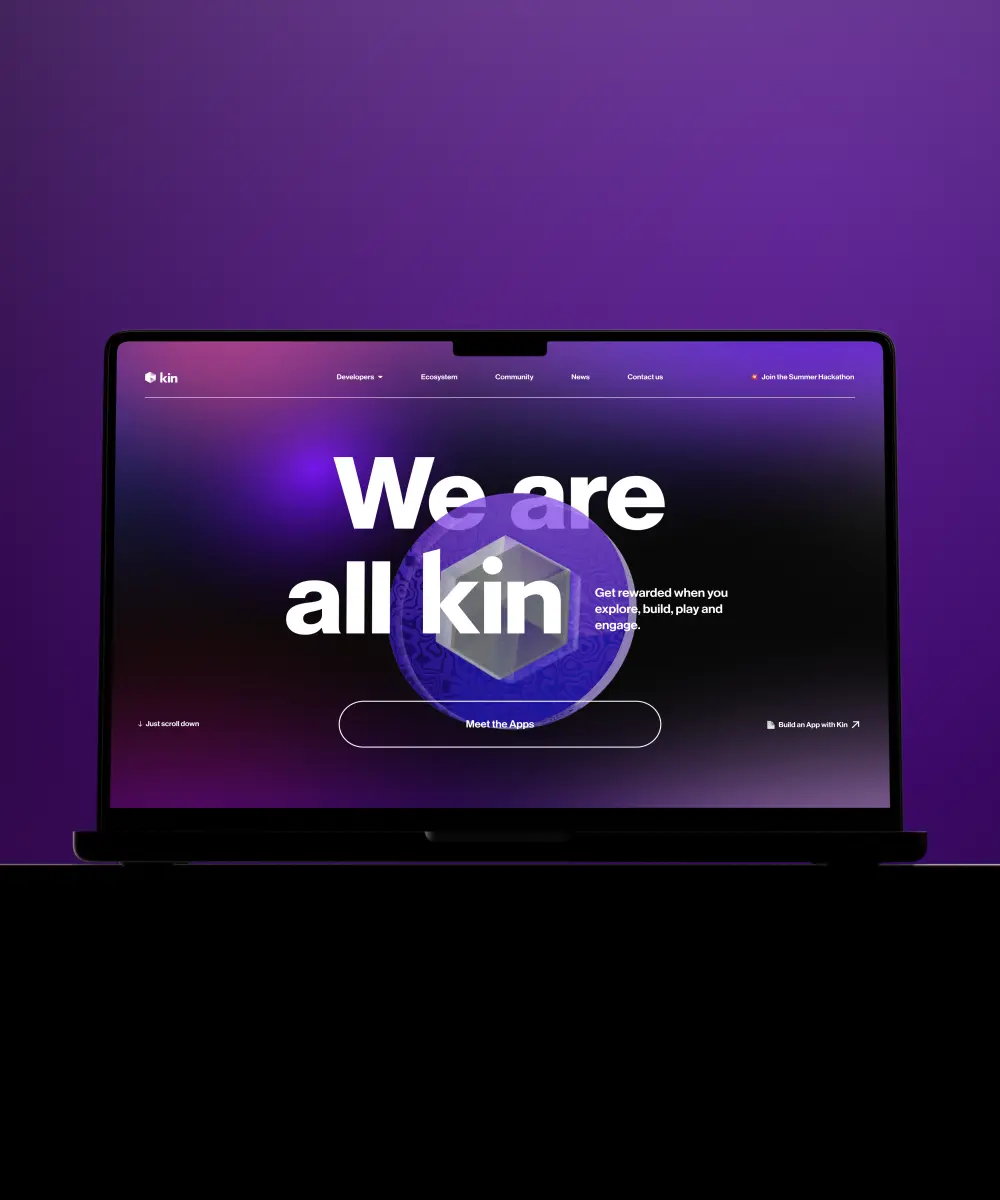
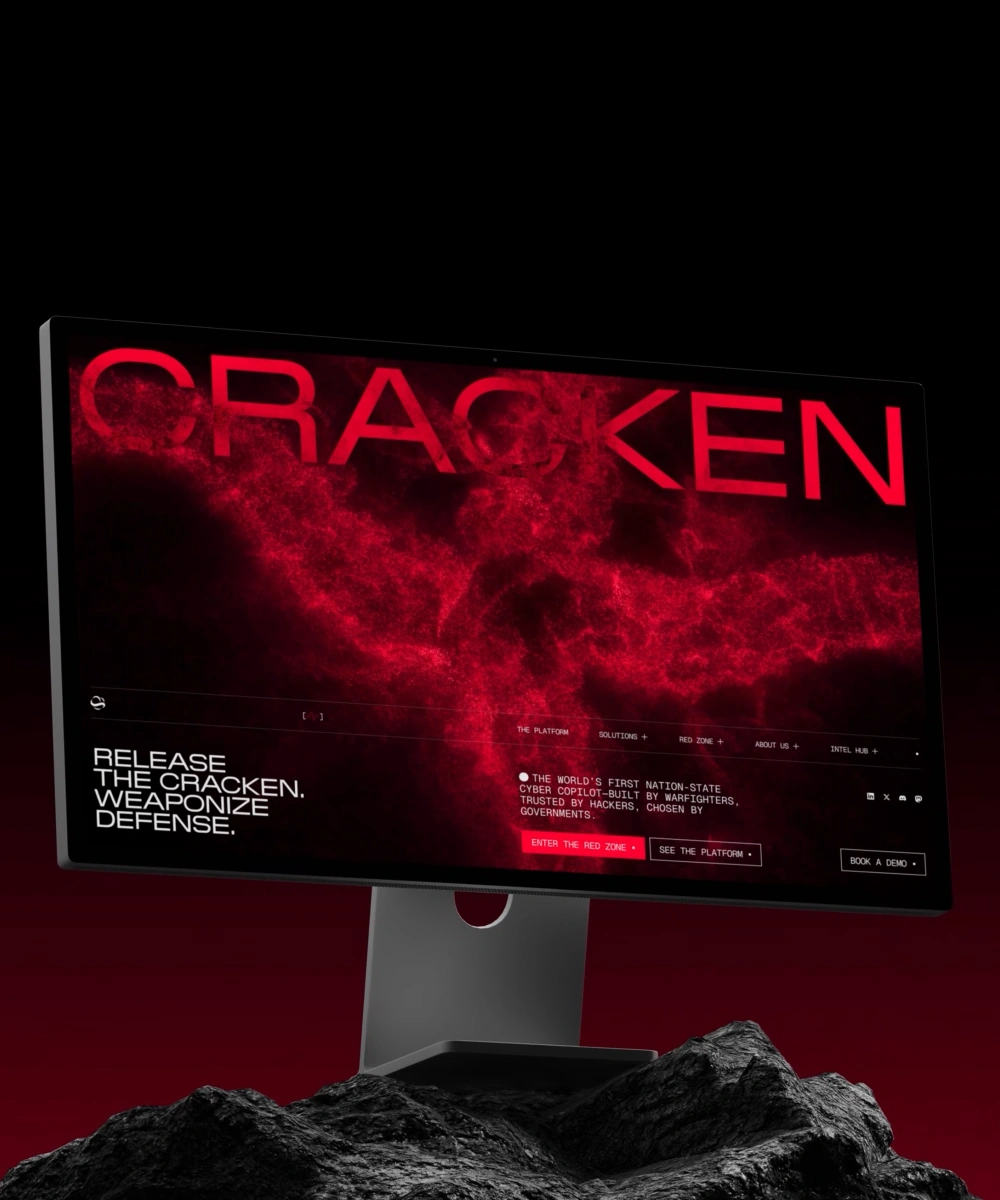
Cracken introduced a bold new category in AI cybersecurity. Lazarev.agency designed a website that made agentic AI feel tangible, helping technical buyers and executives understand, trust, and adopt an offensive security mindset from the first interaction.
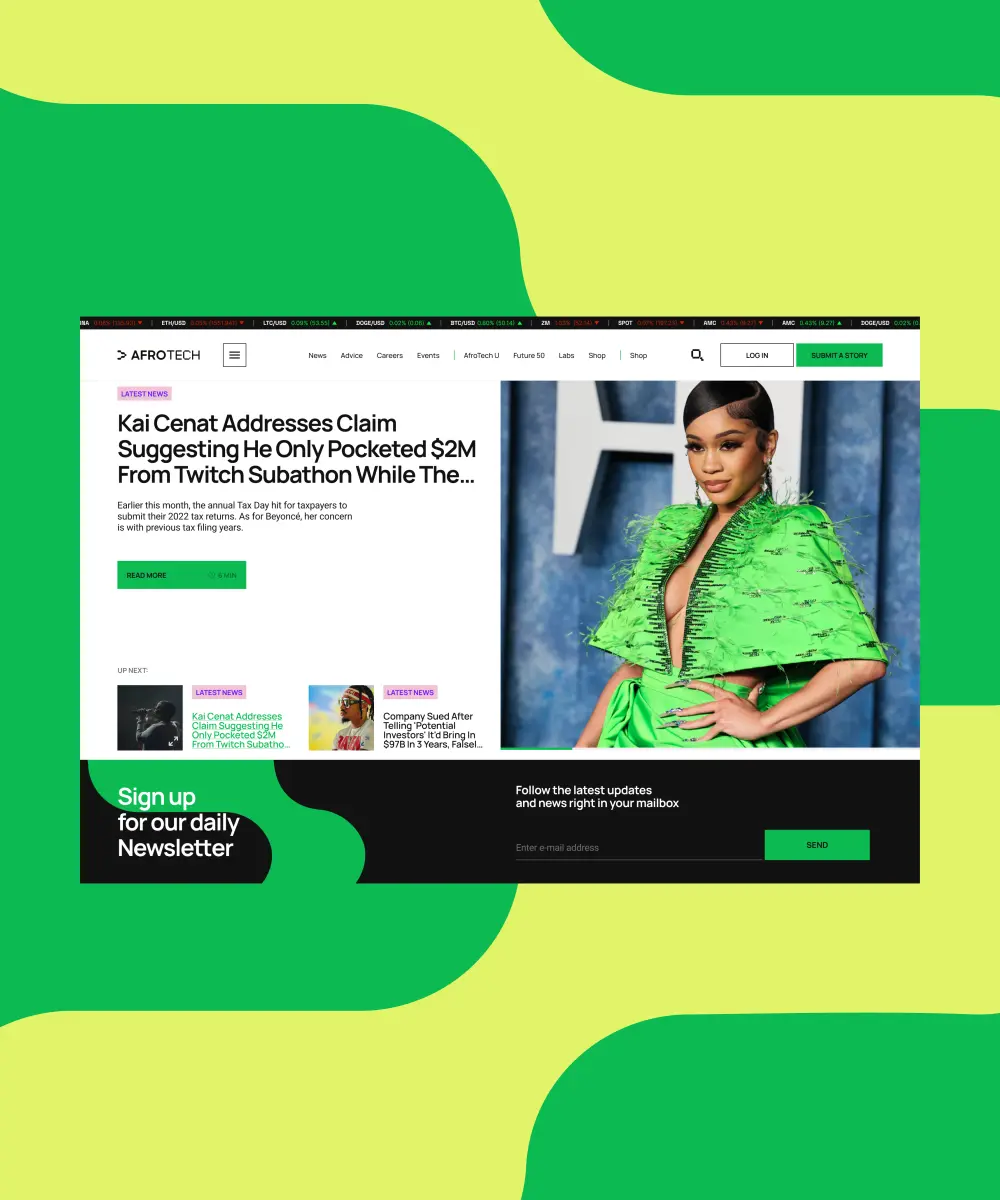
AfroTech evolved from a media platform into a thriving technology community. Lazarev.agency designed a scalable digital ecosystem that helped grow the audience from 500 to 20,000 members while supporting new media formats, events, and five sub-brands under one unified experience.
A structured engagement with a single accountable lead, clear milestones, and a bias toward decisions.
Find the story that's already true
We start with the people who built the product and the people who buy it. What do your best customers say after they finally "get it"? What does the founder pitch on a whiteboard that never makes it to the website? What objections kill deals, and what moments close them?
We pull this apart across structured sessions with your founding team, sales, and — where accessible — key customers. By the end of Phase 1, we have a narrative brief: your positioning, your core message, your voice, and the story that every other deliverable will be built around. Your whole team should be able to read it and say: yes, that's us.
The visual language your product deserves
We translate the narrative into a visual system. Color, typography, motion, iconography, photography direction. This is not a "3 logo options" exercise — it's the construction of a design language that works everywhere your brand lives: website, product interface, pitch decks, social, conference materials.
Everything is connected. Nothing is decorative for its own sake. Every choice traces back to what you decided in Phase 1.
Built for every buyer on the page
We design the site from the audience in. Who is visiting, what do they need to understand, what action are we driving? We start with information architecture, move to wireframes with copy, and finish with visual design — all of it grounded in your brand system and your product's actual story.
You get a site that works for the enterprise buyer doing due diligence, the investor skimming before a first call, and the founder who will evaluate you on feel before they evaluate you on features. Handoff includes full build-ready specs.
Where your story performs
We design the demo flow and the materials your sales team runs in the room. The demo is a product design problem: sequence, pacing, emotional arc, exit feeling. We make the right moments land for the right people — not just the technical evaluator, but the executive who will sign the contract.
Pitch decks and sales collateral follow the same visual and narrative logic as the site and demo. One coherent story, from awareness through close.
A system your team can own and extend
We hand off a complete brand system — documented, organized, and built for a team that will extend it without us in the room. Brand bible, design tokens, component libraries, voice and editorial guidelines, website specs. Everything your designers, engineers, and future hires need to make consistent decisions from day one.
We stay engaged through launch — reviewing staging, supporting QA on brand application, and ensuring the vision that started in Phase 1 arrives intact in production.
You built the AI.
We're not here to replace your designer or take over your narrative. We're here to bring the senior strategic layer that turns what your team already knows into something the market can actually see.
Engagements are scoped around what your product and market moment actually require.
Ready to stop looking like a legacy company in an AI world?
We deliver brand, UX, and product design for teams in AI, fintech, healthcare, logistics, and other complex industries — with a focus on clarity, credibility, and measurable market impact.
We help long-standing companies reshape and amplify their positions by implementing Web3 technologies. As well as we collaborate with emerging startups to launch innovative Web3 products that make a splash in the market.

Designing digital experience for an AI and ML product, we focus on creating unique differentiators to set your product apart. Our expertise lies in developing intuitive UX while also ensuring that the AI models perform optimally with minimal iterations.
We holistically advocate for a convenient user experience and design digital real estate websites to convey the physical world. By creating user-friendly digital design, we refine the way people perceive your property business.

How we work, scale, and deliver measurable outcomes.
Probably — if your designer is managing product, brand, site, pitch, and motion simultaneously, they're not doing any of them at the level this market demands. We come in as the senior brand and narrative layer that gives their work a foundation to build from, not a replacement for what they're already doing.
Most branding agencies don't understand AI products, enterprise B2B sales cycles, or how a demo flows into a board meeting. We do — because we've designed the products and the pitches, not just the logos. We're not a creative studio interpreting your brief. We're a product and brand partner who speaks both languages.
Both — and the connection between them is the point. A brand identity that exists separately from the website is just an asset library. We design the brand and the site together, so the visual language, the copy voice, and the information architecture are built as one coherent system, not handed off between teams.
The most valuable input you can bring is the story you tell in your best sales meeting — not the polished version from the website, but the one from the whiteboard. We'll take that raw material and help you turn it into something the market can receive. Everything else — research, competitive context, visual direction — we build together.
High-involvement in Phase 1 — we need the people who can speak to vision and truth. After that, your time is high-leverage decisions between strong alternatives, not day-to-day management. Expect 2–3 structured sessions in the first few weeks, then weekly or bi-weekly reviews through the rest of the engagement.
If you have clear conviction about what you're building and who it's for — yes, this is the right time. Getting brand right before launch is dramatically cheaper than correcting a wrong story after it's been in the market for a year. If you're still discovering what you're building, come back when you have real customers.
Ready to be the product people remember?