How Lazarev.agency's redesign raised Fractal Protocol's usability by 165%
About the project
Fractal Protocol runs lending and borrowing on-chain: people open subaccounts, take loans against collateral, and watch positions move toward margin calls in real time. Dense numbers are the product. But when a platform carries this much data, hesitation costs money. A borrower who cannot read their exposure quickly delays a repayment, misjudges a margin call, or moves capital to a venue they trust more. Experienced traders will accept density; they will not accept ambiguity, and a platform loses deposits to whichever competitor reads faster.
Lazarev.agency redesigned Fractal Protocol's DeFi lending and borrowing platform, giving traders a faster read on their positions without removing the depth they came for. We restructured how information is ordered and surfaced, kept the patterns experienced users already recognize, and validated every decision with real users before release.
165%
improvement in usability
33%
boost in user satisfaction
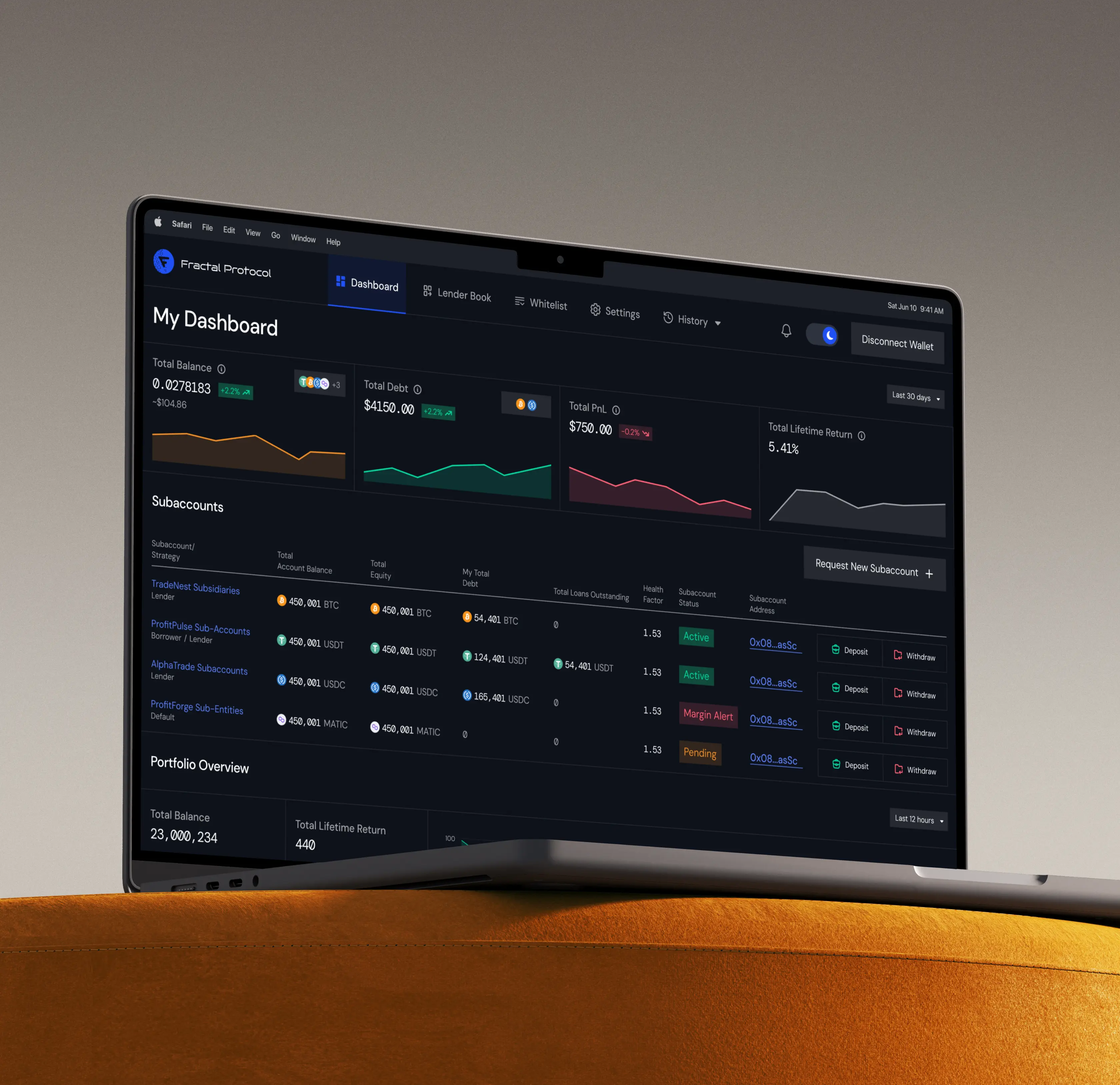
A portfolio dashboard traders can act on
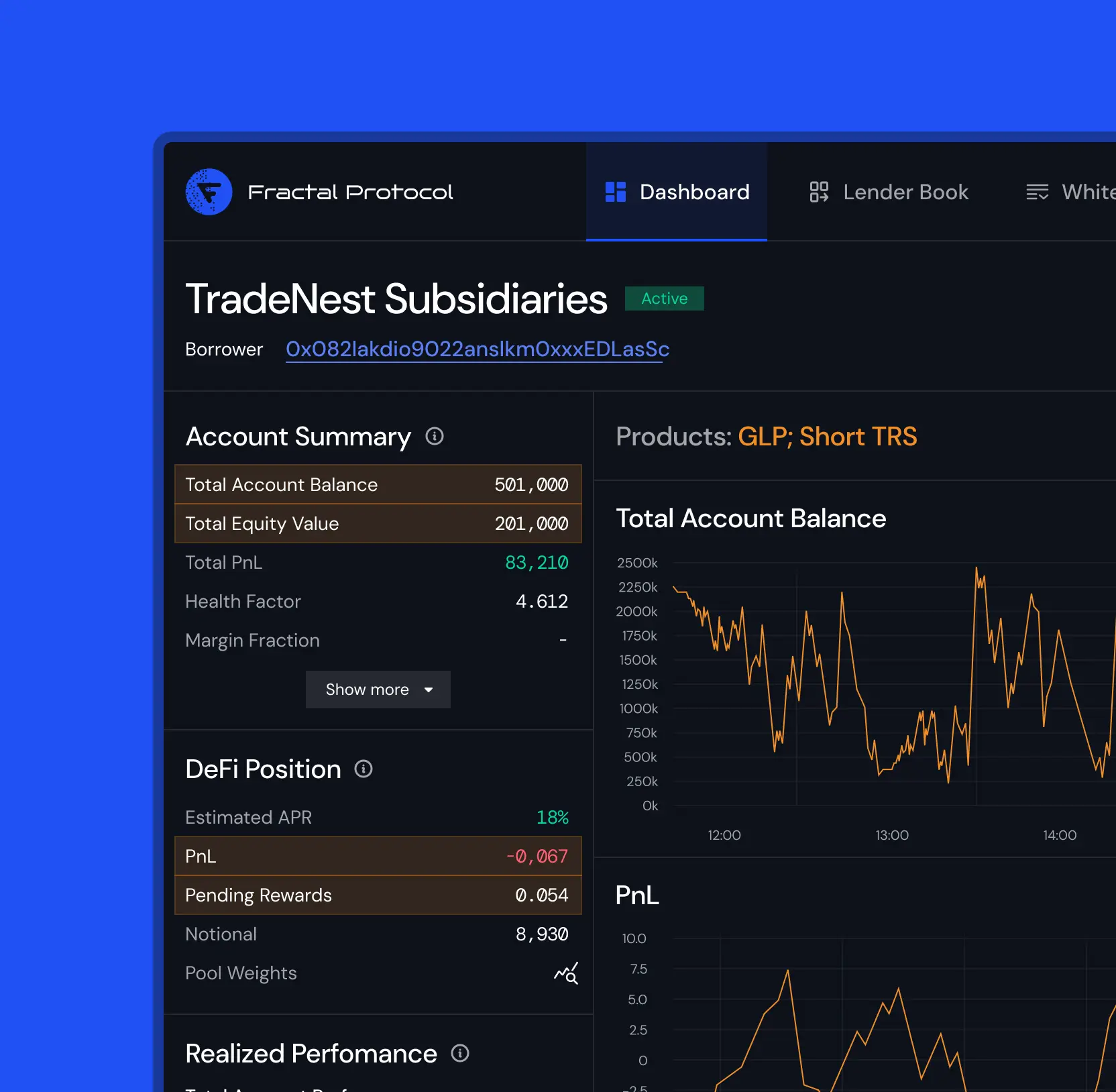
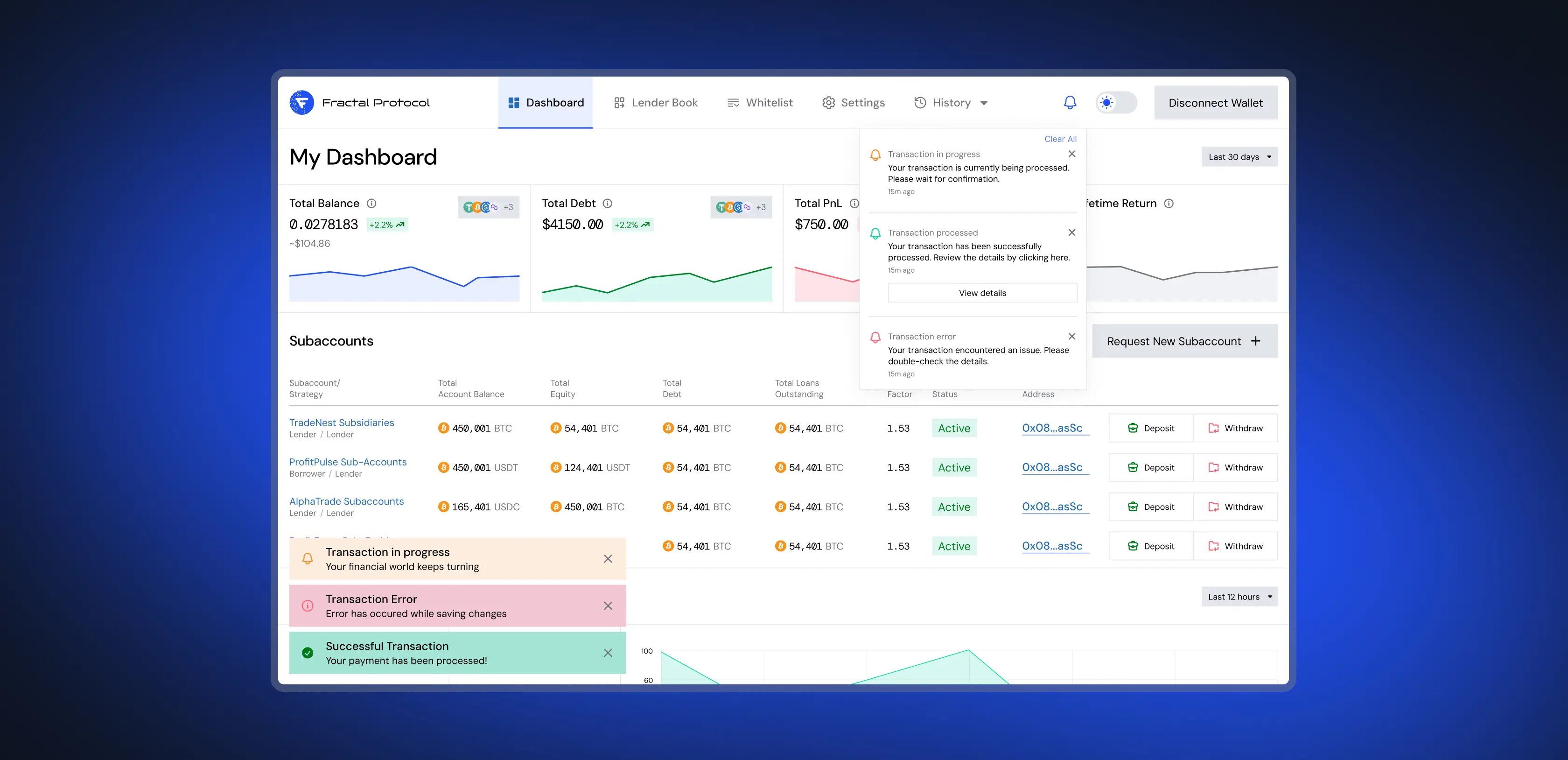
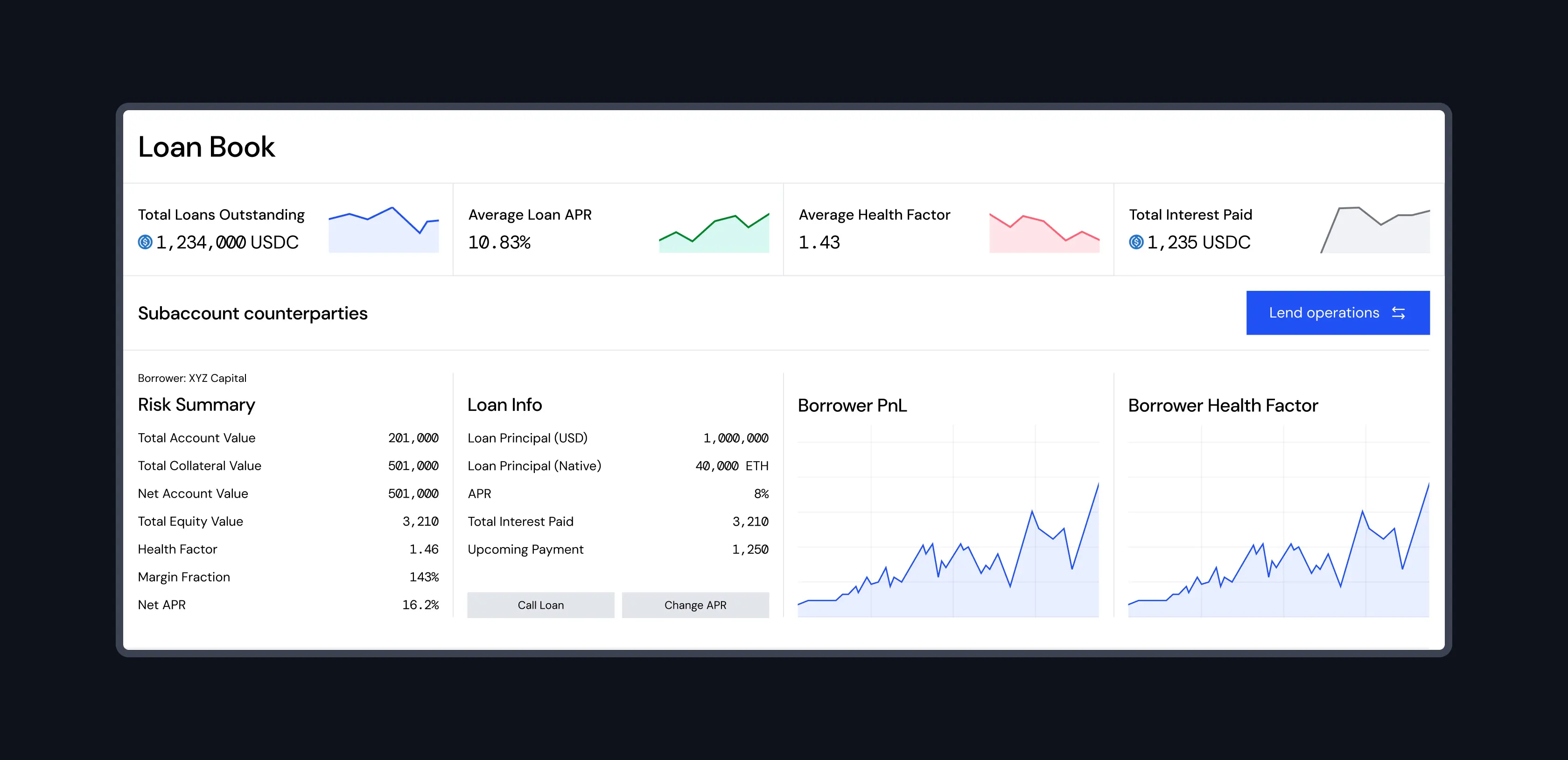
Lazarev.agency built Fractal Protocol’s interface from one repeating set of blocks, so the portfolio view, a single subaccount view, and a live chart all behave the same way and teach each other. A borrower checks the health of every account, opens the one needing attention, and finds the deeper numbers waiting in a layout they already know.
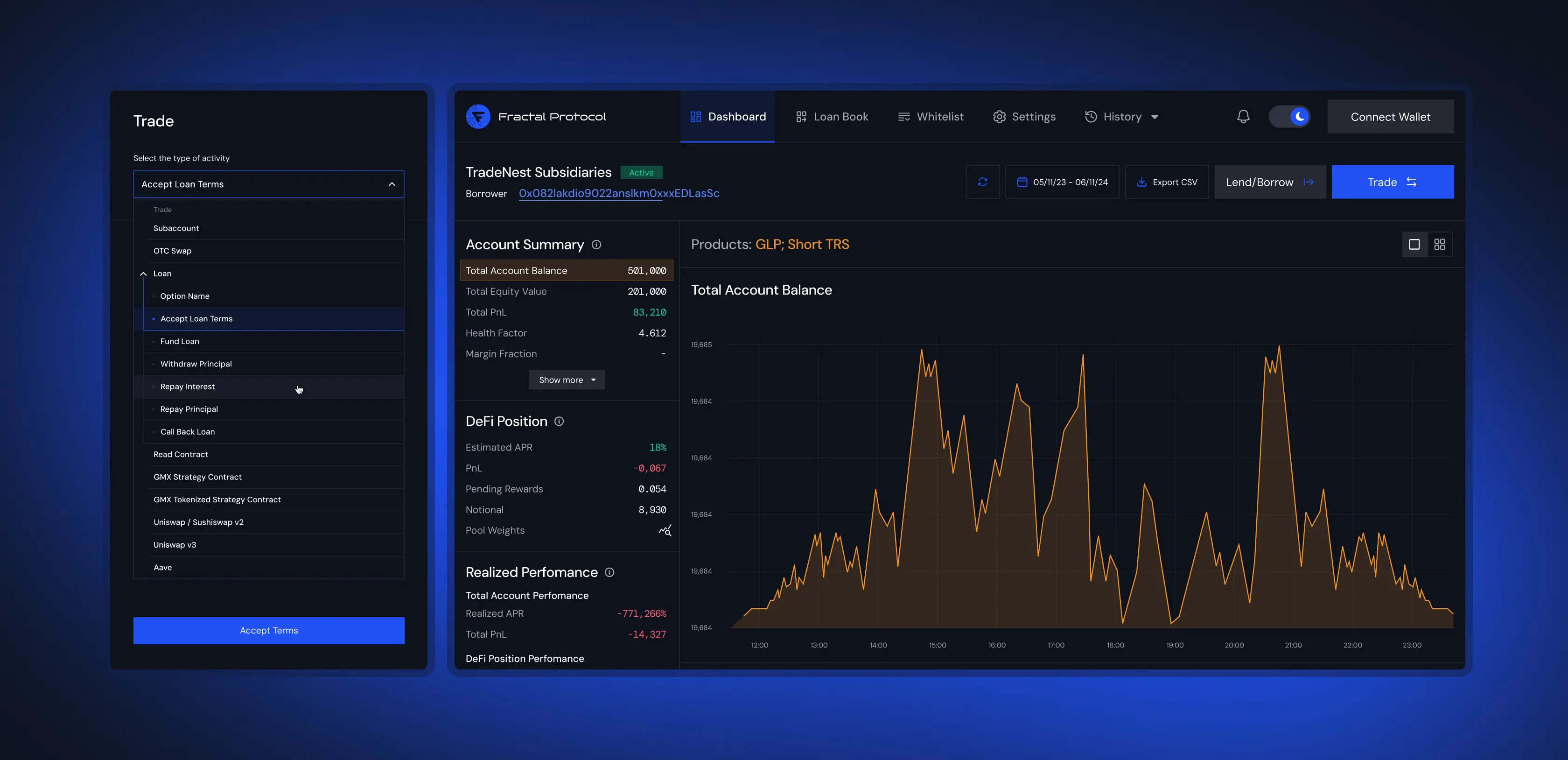
Hovering a chart gives an exact value at an exact moment, so a decision to repay or post more collateral rests on a figure a trader can trust. As a result, usability across the redesigned platform rose 165%.
Developed a modern visual system supporting flexibility and scalability
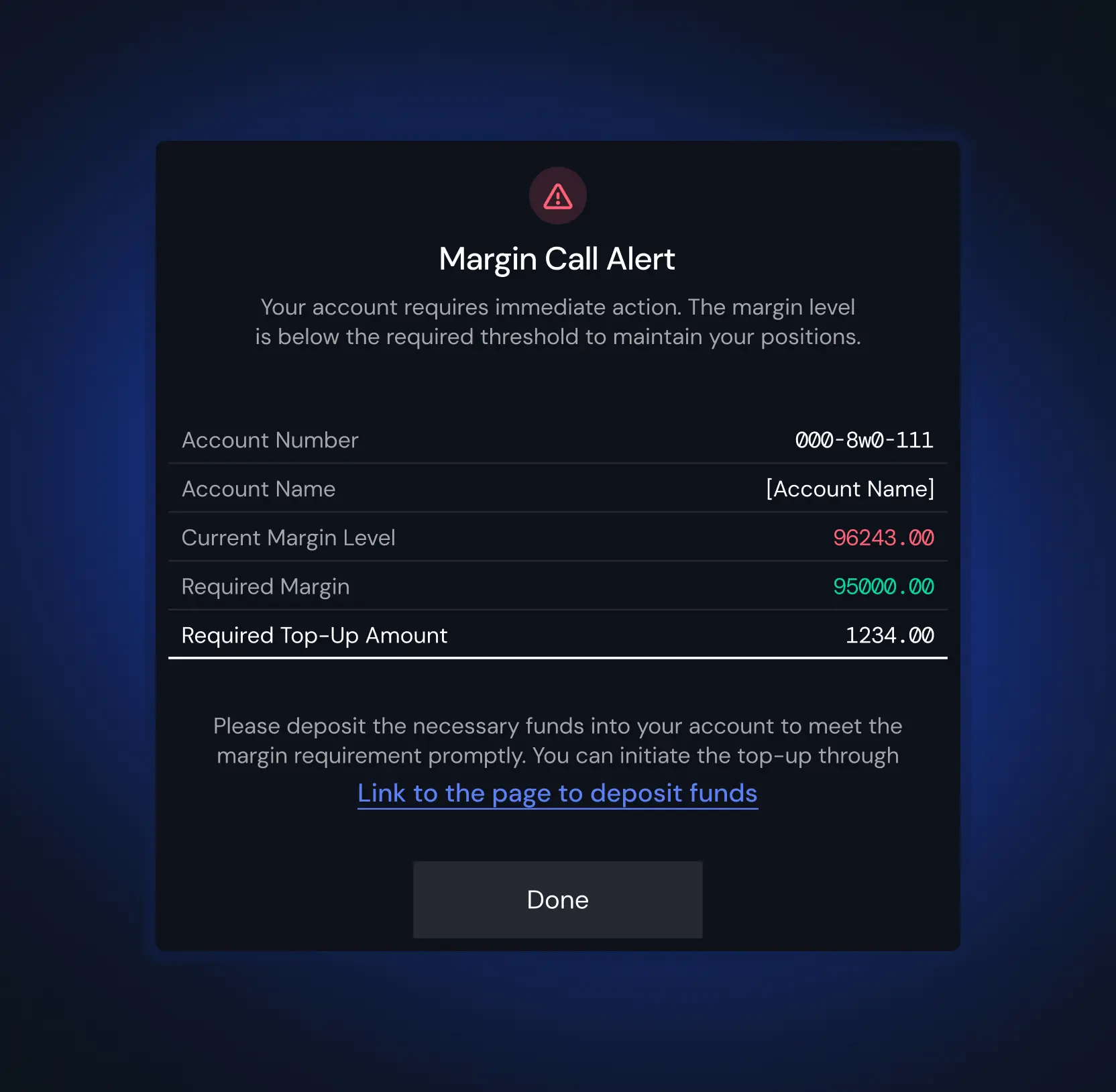
On Fractal Protocol, a margin call is where a borrower loses money fastest, since a position can be liquidated while they are still working out how much to add. Our team built an alert naming the exact top-up amount and linking straight to the deposit page, so answering a call takes one move.
Every loan action sits in a single panel beside the account it affects, covering a loan from accepted terms through to repayment. Borrowers who run positions through outside protocols reach those from the same panel, so the whole operation stays on Fractal Protocol.
Customer experience design in the age of AI UX
Every decision tested with real DeFi traders
Lazarev.agency tested Fractal Protocol's redesigned lending platform with DeFi-native traders before release, and watched them find subaccount data, read charts, and take a loan through approval.
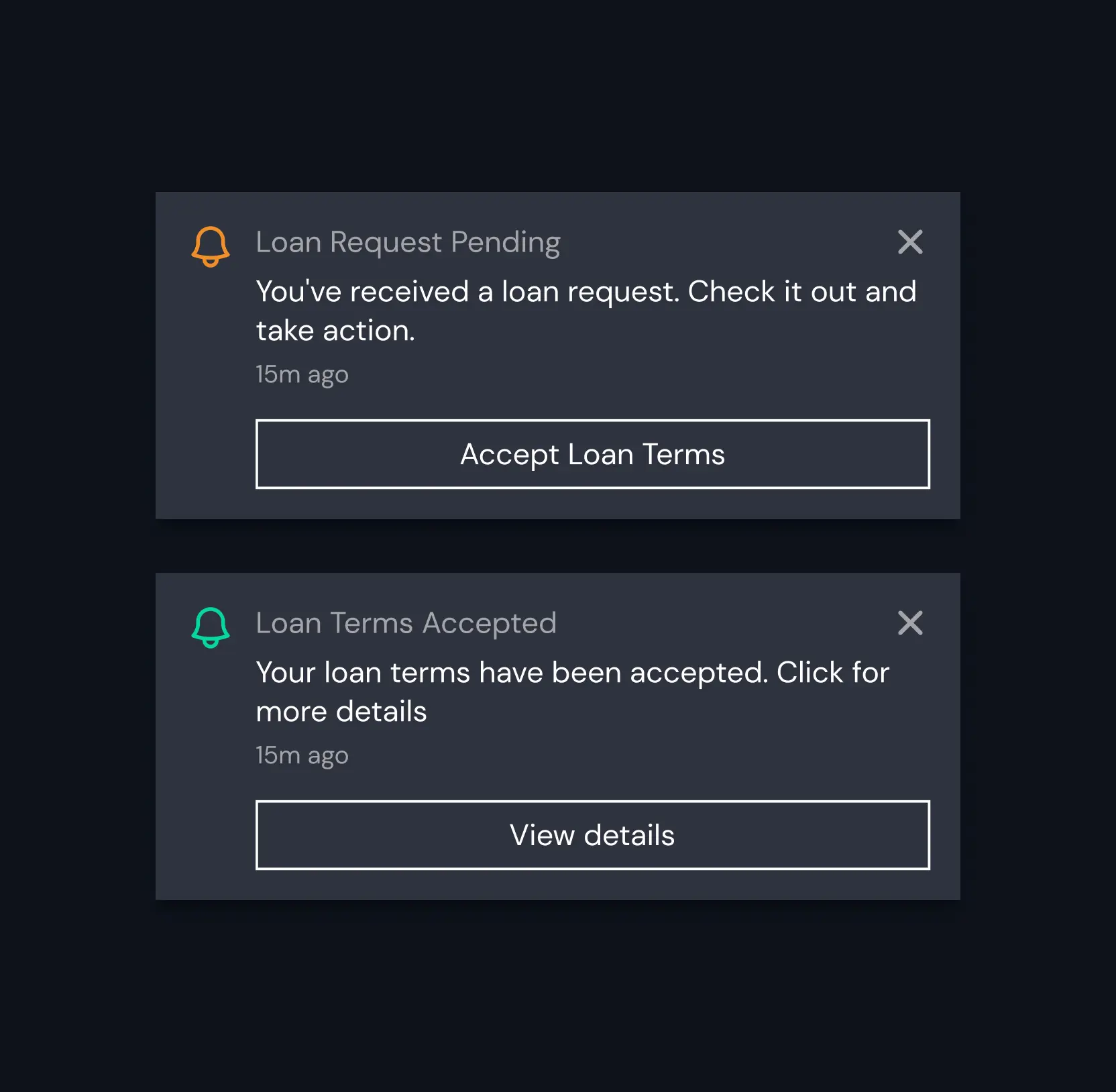
In lending, a design misread is expensive, since a wrong number can cost a position. Testers wanted proof their money had moved, so Fractal Protocol gained status notifications confirming each step of a loan and clearer marking of live positions. Newcomers got in-context help where the numbers run densest, which shortens the climb for a trader opening their first subaccount.
One system serving every desk and every hour
Fractal Protocol's users split between crypto-native traders working late and institutional desks working under office lighting, and a platform serving only one group narrows its own market.
Lazarev.agency treated the second mode as a reach decision and rebuilt the information hierarchy for each one, so the same screen holds up wherever it opens, a screenshare with a counterparty included. Rebuilding beat inverting, since a mode carrying its own hierarchy ranks every number the same way and nobody relearns the interface on switching.
Fractal Protocol keeps a single system to maintain, and new capability reaches both modes together. A trader who can work comfortably through a long session stays on Fractal Protocol during the hours when positions move, which is when a lending platform earns its fees.
Frequently asked questions
Common questions
about this topic
What does a DeFi lending platform redesign cover?
A DeFi lending platform redesign covers every place money moves. For Fractal Protocol, Lazarev.agency reworked the portfolio dashboard, per-subaccount views, loan actions from accepted terms through repayment, margin call handling, and a second interface mode for daytime desks.
What results did Fractal Protocol see after the DeFi platform redesign?
Fractal Protocol measured a 165% improvement in usability and a 33% boost in user satisfaction after launch. Both figures follow a redesign validated with DeFi-native traders before release.
How do you redesign a data-heavy DeFi dashboard without losing depth?
No data was removed from Fractal Protocol; what changed is the order information appears in and how far a trader travels to reach it. Lazarev.agency built the interface from one repeating set of blocks, so the portfolio view, a single subaccount, and a live chart all read the same way.
How does UX design lower liquidation risk on a DeFi lending platform?
On Fractal Protocol, a margin call alert names the exact top-up amount and links straight to the deposit page, so a borrower can answer before a position is liquidated. Every loan action sits in a single panel beside the account it affects, which keeps the whole operation on Fractal Protocol.
How does Lazarev.agency validate design decisions for financial products?
Lazarev.agency tested Fractal Protocol's redesigned platform with DeFi-native traders before release and watched them find subaccount data, read charts, and take a loan through approval. Testing produced status notifications for loan steps, clearer marking of live positions, and in-context help, all feeding the 165% usability gain measured after launch.
More cases like this
Related cases you
might find useful
How we helped Accern design an AI research product that powered $40M growth and acquisition
Discover how we helped Accern build a powerful AI research tool for analysts and VCs, setting new UX standards now used by AI leaders across industries.
How Lazarev.agency helped Dynascale attract new leads and build an engine for profit growth
See how Dynascale overcame growth challenges with strategic brand revamp & enterprise-grade UX by Lazarev.agency.
How we helped a complex AI SRE tool website boost customer acquisition
See how Lazarev.agency transformed Bacca AI's complex tech into a compelling story that boosts SRE platform sales.
Let's talk about your AI adoption challenge
Tell us where adoption stalls. You’ll hear back from a senior product and UX lead with a practical action plan.