

Think about the moment when a product almost understands you. You pause, expecting it to guide you… and nothing happens. That tiny void, the place between user intent and system response, is exactly where customer experience design does its most important work.
Customer experience (CX) exists to close that gap through intuitive and responsive digital solutions. And the target keeps moving. Users expect products to adjust to them on the fly. Their needs shift by the minute, and CX needs to evolve just as quickly.
That’s where AI CX comes in. It’s reshaping how digital products think and support people. In this article, our Lazarev.agency’s AI design team breaks down what this digital revolution actually looks like.
By the end, you’ll have a clearer view of how to build user experiences that stay relevant and resilient even as customer expectations evolve faster than ever.
Key takeaways
- AI is now the core CX engine. Customer experience design relies on predictive intelligence, adaptive flows, and agentic assistance.
- Most CX problems come from outdated frameworks. Lazarev.agency’s experience-backed maturity ladder shows where your team stands and which gaps block growth.
- CX differs by industry. SaaS, fintech, e-commerce, and edtech each require their own architectures, trust signals, and AI UX patterns.
- A system-level CX process drives ROI. Insight extraction, opportunity modeling, and AI integration ignite actual business gains.
Why your customer experience design strategy matters
“Customers don’t want to experience just a sense of delight from using your product. That’s a bare minimum,” says Kirill Lazarev, CEO at Lazarev.agency. “Users expect a digital product to understand them from half a word. And if your CX doesn’t push the user forward automatically, you’re already behind.”
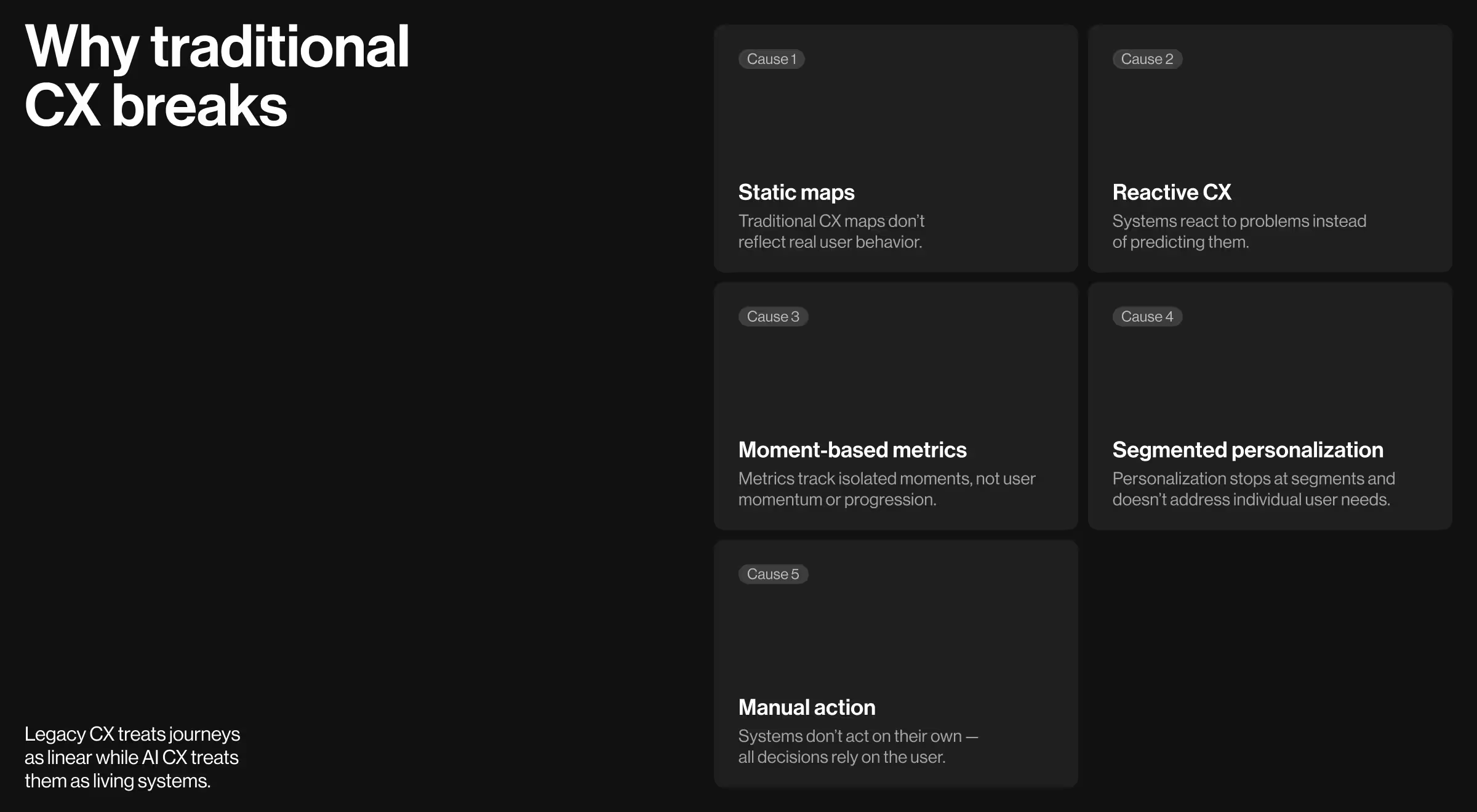
Most CX models rely on static journey maps and isolated performance metrics. They treat customer experience as a sequence of steps instead of what it really is: an adaptive decision system.
AI is now rewiring that system. The resulting seismic shift in how people interact with products across every industry makes the old, linear view of CX look about as modern as a fax machine.
Here’s a snapshot of changes reflective of AI transformation:
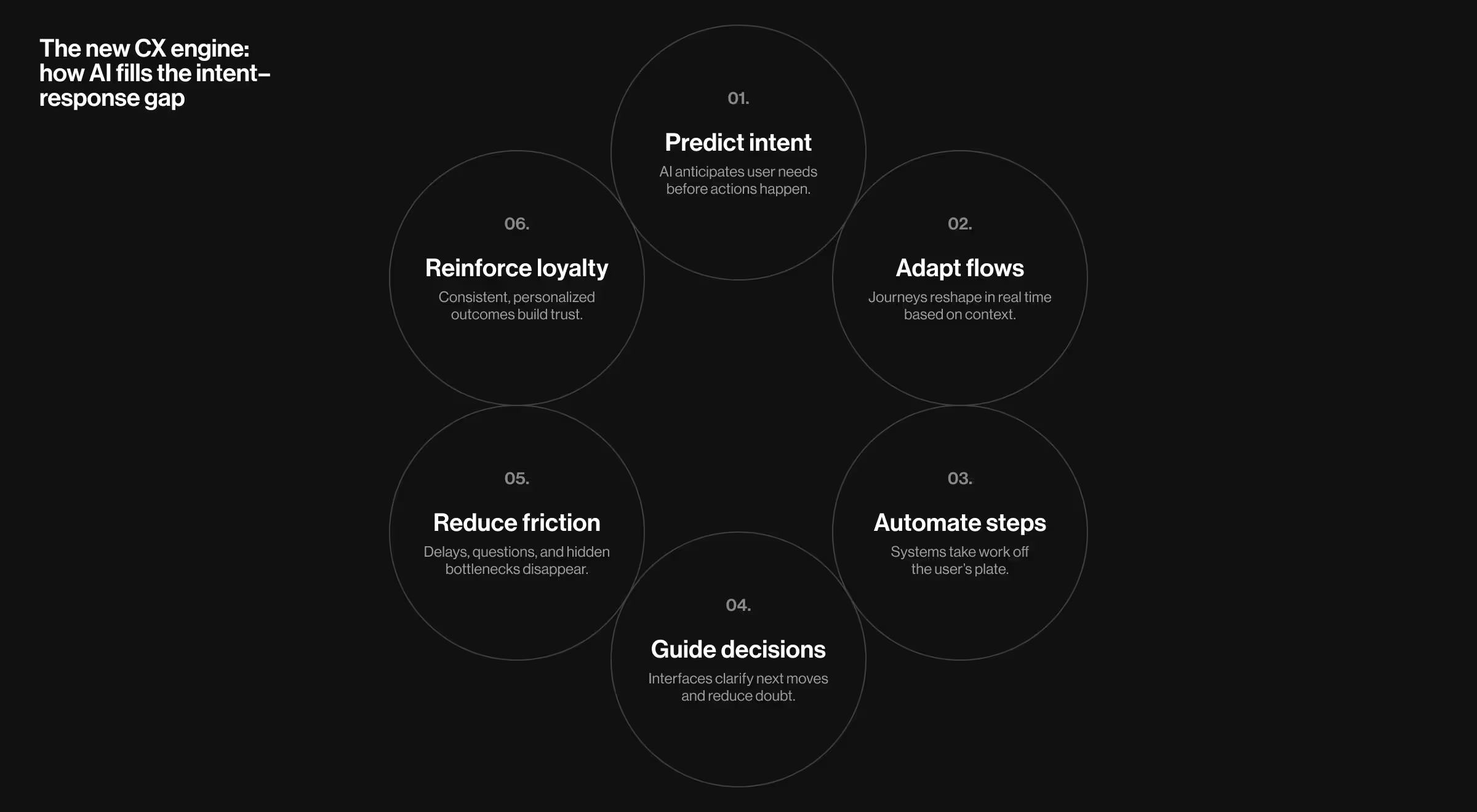
- AI is the core CX engine. 78% of companies now use gen AI, which signals that customer journeys are increasingly shaped by machine intelligence.
- AI is taking over frontline service. By 2025, 80% of support teams will use generative AI, shifting CX from reactive support to proactive problem-solving.
- AI removes delays. Automation cuts first response time by 37% and resolution time by 52%.
- AI strengthens customer loyalty. Merchants using automation see a 36% increase in repeat purchases — a clear mark of improved retention.
- AI makes personalization mandatory. 71% of consumers expect personalized interactions. This means generic CX is now a liability.
- AI-driven personalization fuels revenue. High-growth companies generate 40% more revenue from personalization.
Despite this shift, most companies still design CX as if users behave linearly. They don’t.
Modern CX is defined by:
- Predictive intelligence: what the user is about to need.
- Adaptive flows: journeys that reshape based on context.
- Agentic assistance: AI that performs actions for users.
Customer experience maturity ladder
Traditional CX frameworks feel dated. And that’s the root cause for most CX problems.
A company might believe it’s personalizing experiences because it sends segmented emails, while its product still treats all users the same.
Another company might say their CX design is “proactive” when in reality it’s simply less chaotic.
This is why a CX maturity model matters. Treat it as the filter that reveals:
- Where your team stands.
- Which problems you’re solving in the wrong order.
- Which investments will produce the biggest lift.
- Why your CX fails in subtle, repeatable patterns.
- What level of intelligence, automation, and AI UX you’re truly ready for.
At Lazarev.agency, a top AI UX design agency, we’ve built a realistic CX maturity framework based on hundreds of product designs and AI-driven projects.
And here’s how to use this ladder as a practical diagnostic tool for your business.
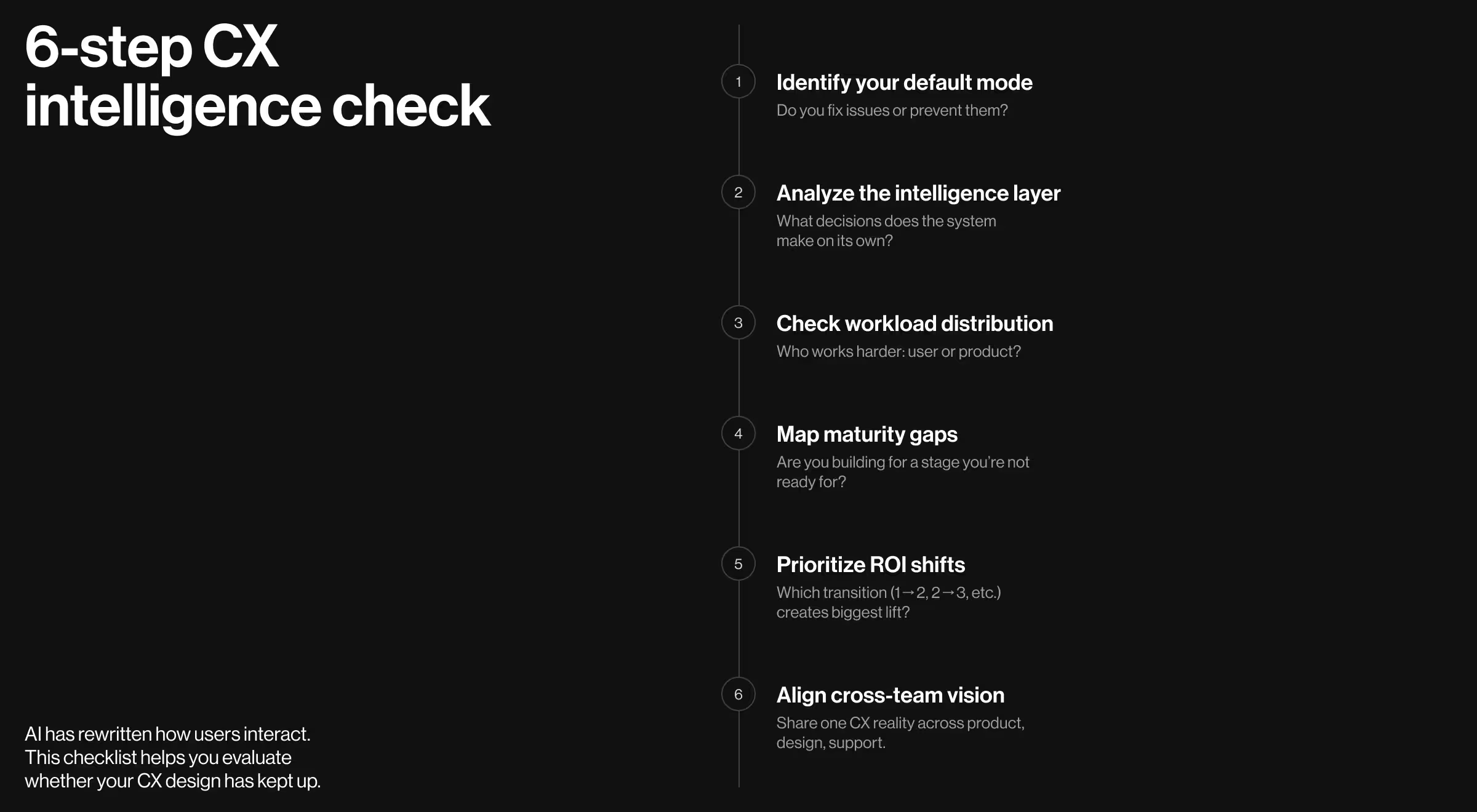
Step 1. Identify your default operating mode
Ask: “What happens today when a user runs into friction?”
🟥 If the answer is, “They submit a ticket and we fix it”, you’re at stage 1 (reactive CX), no matter how advanced your tech stack looks on paper.
Step 2. Analyze your intelligence layer
Instead of asking how much customer data you collect, ask “What decisions does our system make automatically?”
🟥 If the answer is “almost none”, you’re somewhere between stage 1 and 2.
🟩 If your product adapts flows or content dynamically, you’re approaching anticipatory design.
Step 3. Look at your workload distribution
Ask: “How much work does the user do vs. the system?”
🟥 If the system only offers responses, you’re in predictive CX.
🟩 If your system performs steps on behalf of users, you’re in agentic CX.
Step 4. Map the gaps
Teams often aspire to be at stages 4–5 but build processes suited for stages 1–2. This gap explains slow releases, repeated UX flaws, fragmented customer journeys, and inconsistent personalization.
The ladder helps reveal that misalignment and act on it.
Step 5. Prioritize changes based on ROI
Each jump between maturity levels produces different business gains:
- 1 → 2 = fewer support tickets.
- 2 → 3 = higher retention, better CLV.
- 3 → 4 = massive usability lift and lower cognitive load.
- 4 → 5 = self-healing CX systems.
You use the ladder to decide which transition generates the most leverage today.
Step 6. Use it for cross-team alignment
Share the ladder with product managers, CX designers, and the customer support team. When everyone sees the same CX reality, you stop building disconnected tactics and start building coherent experiences.
How AI CX design differs across industries: insights from Lazarev.agency’s portfolio
Different industries require different information architectures. A SaaS sales funnel doesn’t look anything like an e-commerce one. And the way you build trust in healthcare is very different from how you do it in fintech.
This is where many businesses stumble, because they treat CX as a one-size-fits-all discipline. Below is what CX looks like across product categories.
SaaS CX
In the SaaS industry, CX is about speed.
Critical CX goals:
- Reduce time-to-value with SaaS customer training: Help users reach their first meaningful outcome as fast as possible by clarifying next steps and minimizing cognitive load.
- Support activation and adoption: Stick to a clear UX-optimized SaaS sales strategy to convert early interest into sustained engagement.
- Guide users through feature-heavy systems: Build intuitive, progressive pathways that surface the right features at the right time without overwhelming the user.
AI UX patterns:
- Predictive onboarding
- Task automation
- Feature discovery prompts
- Intelligence dashboards
- Personalized adoption paths
💡 Practical insight from Lazarev.agency’s portfolio:
Our work on Rentcredit shows how strong CX transforms a raw SaaS concept into a product users navigate with confidence. The founders came with fragmented use cases. Our team turned them into a structured, two-sided experience that drives action from the first interaction.

Here’s a snapshot of what we achieved:
- Reduced time-to-value by designing linear, distraction-free flows for listing properties, documenting conditions, and sending deposit requests. Users reach their first meaningful outcome — a created listing or submitted deposit — within minutes.
- Increased activation by building separate landlord and tenant journeys that eliminate unnecessary decisions. Landlords get clear prompts to list, inspect, and request deposits. In parallel, tenants get a clean path to review terms and submit payments.
- Simplified a heavy feature set using progressive disclosure. Property listings, inspection checklists, and deposit actions all surface only when they matter.
The result: a product that clarifies next steps, accelerates key actions, and reduces cognitive load for two different user groups. This way, the redesign demonstrates exactly how an effective CX revamp makes complex SaaS workflows exceed customer expectations and stimulate user progress.
Fintech CX
Fintech users don’t tolerate confusion. Anxiety kills conversions the moment it appears.
CX priorities:
- Clear decision architecture: Design every flow so users always know what to do next, why it matters, and what the safest, smartest choice is.
- Transparency: Provide full visibility into fees, risks, timelines, and outcomes.
- Low cognitive load: Structure information and interactions in a way that minimizes customer effort.
- Regulatory clarity: Translate compliance requirements into actionable guidance so users don’t feel buried in legal details.
Trusted UX patterns:
- Real-time risk communication
- Predictive fraud alerts
- Verification guidance
💡 Practical insight from Lazarev.agency’s portfolio:
Our work on Accern.Rhea is a clear example of how AI UX rewires, oftentimes excessively elaborate, fintech user journeys into a predictable customer experience. Our role was to design AI interactions that remove ambiguity, surface the valuable insights instantly, and align every action with regulatory safety and user intent.

- Clear decision architecture: We built a hybrid GUI + prompt interface that guides analysts through research tasks. Multi-purpose input fields, contextual commands, and structured response formats help users understand exactly what the AI will do next.
- Transparency through explainable AI: The interface exposes sources, references, datasets, and extraction logic directly in the UI. By showing where key insights come from (e.g., financial statements, news sources), we created the transparency analysts require to trust AI-generated outputs.
- Low cognitive load for complex research: Rhea handles massive datasets and market reports, yet the experience remains simple because AI does the heavy lifting. Adaptive natural-language communication and automated generation of reports minimize mental effort while speeding up workflows.
The result: We’ve engineered a fintech-grade AI research platform that helped Accern raise over $40M during our partnership and move from Series B to acquisition.
E-commerce CX
In e-commerce, repeatability matters more than a good first impression.
CX levers:
- Adaptive recommendation engines: Use flexible algorithms to tailor product suggestions to customer intent and context and, as a result, increase conversions.
- Anticipatory design: Build predictive interfaces to suggest the next best action before the user goes looking for it.
- Loyalty-driving nudges: Incorporate subtle UX cues like personalized savings reminders or exclusivity signals to encourage shoppers to return, repurchase, or deepen their brand loyalty.
- Habit loops: Work on recurring experience patterns that minimize cognitive effort and turn repeat purchases into automated behaviors.
💡 Practical insight from Lazarev.agency’s portfolio:
Our redesign of Riptide’s e-commerce experience shows how intentional CX directly drives revenue in highly competitive retail environments. The brand had strong products, but its website failed to communicate value, guide shoppers, and convert interest into purchases.
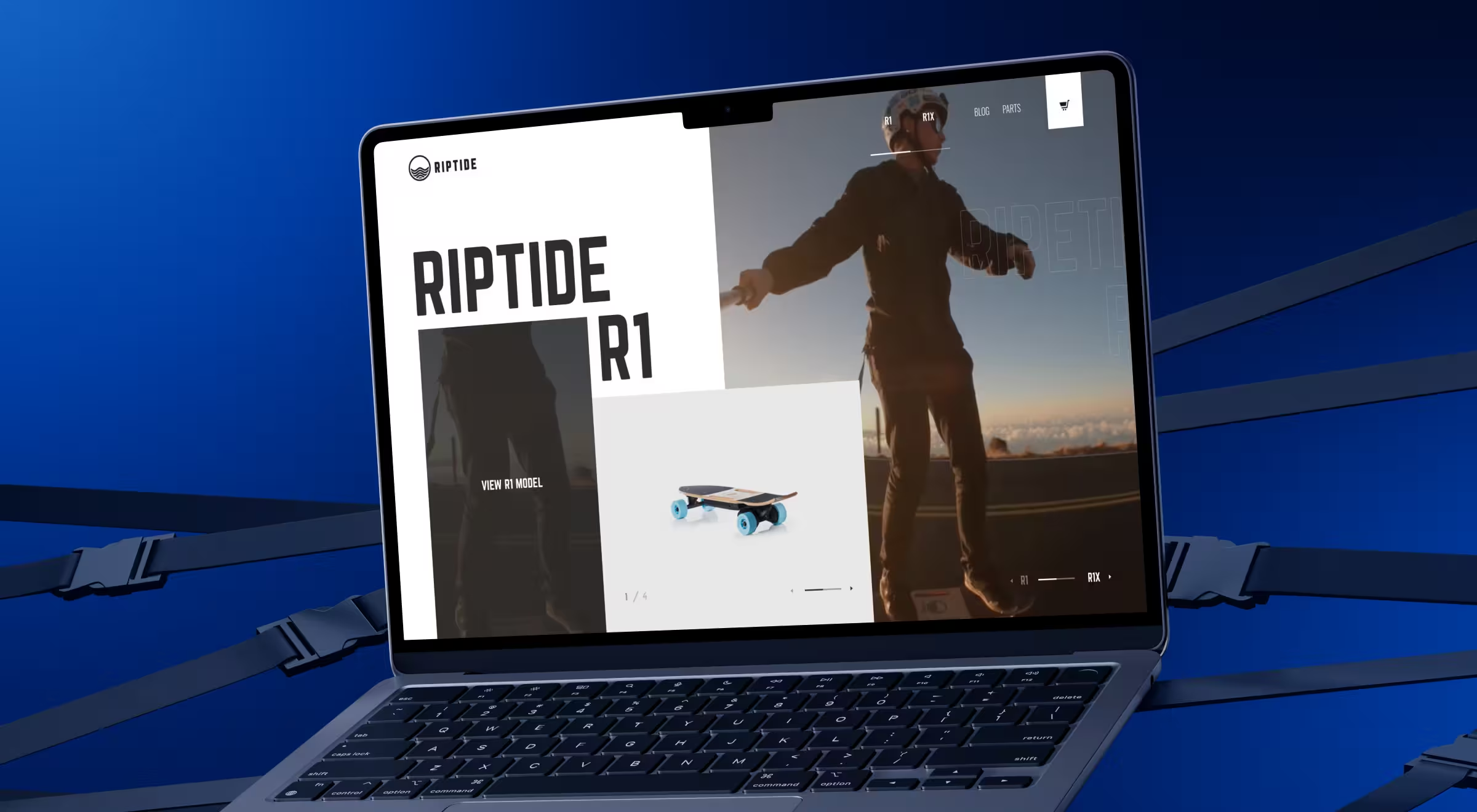
Here’s what the redesign achieved and by what means:
- Increased conversions by spotlighting the product immediately. We placed dynamic visuals, motion videos, and clear spec breakdowns to help shoppers understand differences between models without cognitive overload.
- Introduced anticipatory decision-making by letting users switch between R1 and R1X models directly in navigation, compare details instantly, and move through the page in an intuitive content flow.
The result: Riptide sold out $500K of inventory in two months, ranked among the top 10 skateboard brands in the U.S., and ultimately achieved a successful acquisition.
Edtech CX
Edtech serves students, teachers, and admins. Each user group has a unique mental model.
CX requirements:
- Multi-journey mapping: Design unique yet interconnected paths for students, teachers, and administrators so each user enjoys an experience aligned with their goals and responsibilities.
- Adaptive difficulty: Adjust content and learning tasks per learner’s performance to keep them challenged but not overwhelmed.
- Motivation mechanics: Structure the product around progress cues and feedback loops that sustain engagement and encourage learners to return and advance.
💡 Practical insight from Lazarev.agency’s portfolio:
Our work on Teachchain demonstrates how effective EdTech CX design aligns three different user types: contributors, students, and sponsors. The founders had no clear product structure, so we built one from the ground up, centered on user engagement and learner progress.
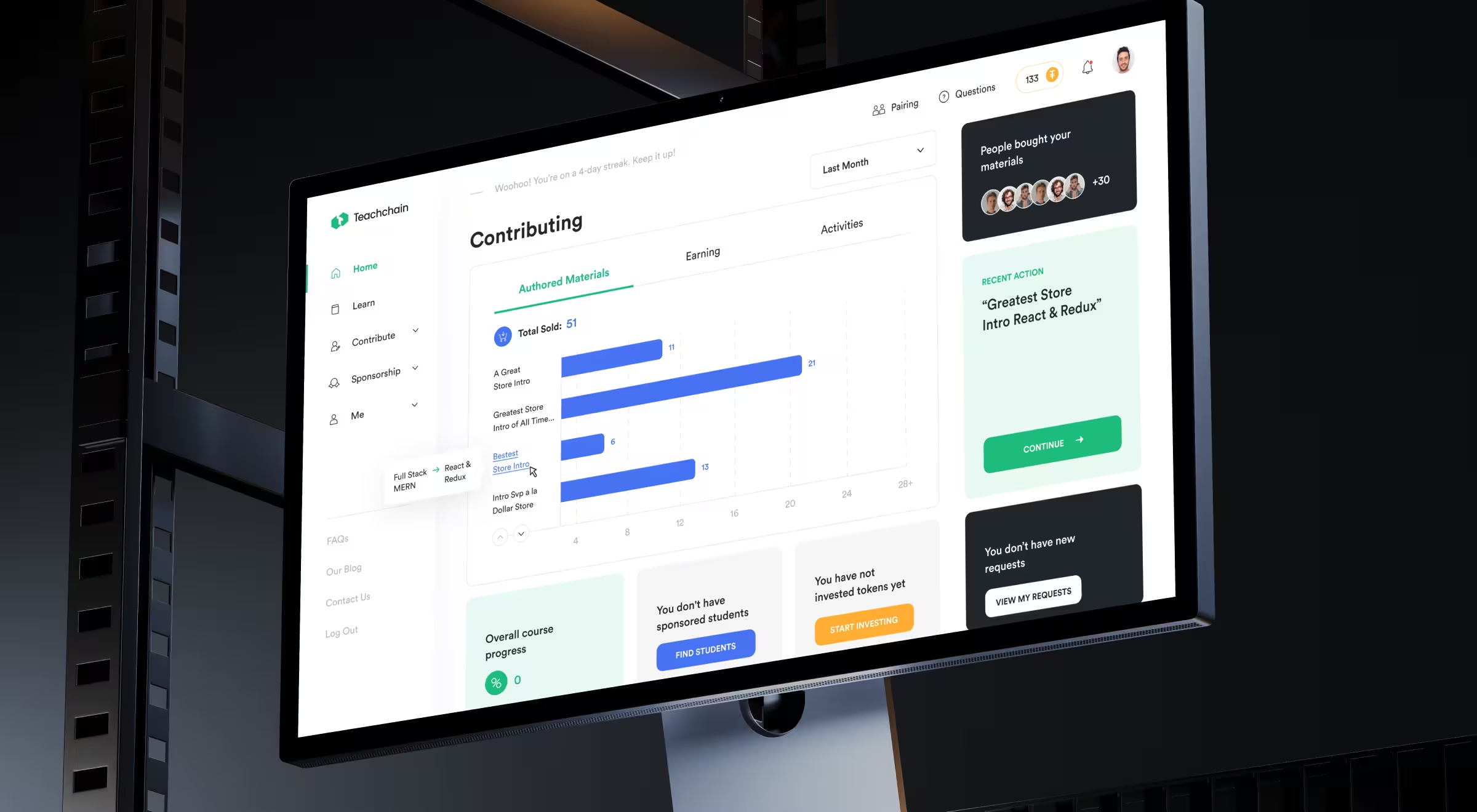
- Multi-journey mapping: We designed fully independent yet interconnected flows for contributors (content creation and validation), students (learning and progress tracking), and sponsors (funding and impact insights). Each UX persona got a dedicated interface aligned with their tasks.
- Adaptive difficulty: We added skill-verification quizzes and structured content authoring steps to ensure submitted learning materials match the right difficulty level.
- Motivation mechanics: Student profiles feature progress bars, stats, skill showcases, achievements, and sponsorship visibility. These gamified feedback loops turn learning into a momentum-building journey that encourages students to return and complete modules.
The outcome: a structured edtech platform designed for multiple customer personas where every user moves through a tailored experience that supports both learning progress and platform growth.
Behind the scenes of Lazarev.agency’s customer experience design process
CX is a coordinated architecture of user insights, business goals, product strategies, and now AI-powered design. When these components are misaligned, cracks appear in the CX.
At Lazarev.agency, an AI product design agency, we build CX at the system level. Use our framework to understand where your organization currently sits, where the bottlenecks are, and which improvements produce the highest ROI.
Build CX that anticipates and converts
Here’s a direct call to teams serious about modernizing their customer experience strategy.
The shift toward AI means your product must move beyond linear maps and react-and-fix workflows. You need a team that understands how to architect predictive flows, integrate intelligent assistance, and translate user intent into progress.
That’s where Lazarev.agency stands apart. Our approach is rooted in AI UX expertise and product experience design. We’ve applied these frameworks across SaaS, fintech, e-commerce, and edtech, and the results speak for themselves.
If you’re ready to build a CX ecosystem that anticipates needs, adapts in real time, and increases conversions, start a conversation with us.