How AI marketing platform redesign helped Fieldstream secure $3,8M in pre-seed funding
Project:
the project
A powerful backend held back by a broken product layer
Fieldstream is a B2B SaaS platform that helps marketers measure the impact of past campaigns and make sharper decisions about future budget allocation. Powered by an AI-driven algorithm, it brings data analysis, forecasting, and scenario planning into a single workspace.
The backend was solid: historical data, forecasting, scenario modeling, all in one system. The product layer was what got in the way. Non-technical users couldn't move cleanly from analysis to planning, navigation kept interrupting the flow, and teams ended up exporting everything to work outside the platform.
Lazarev.agency redesigned the product around one goal: make budget decisions faster to reach and easier to execute without ever leaving the platform.
What happens when the product layer stops getting in the way
Once marketers could move from analysis to planning without leaving the platform, the numbers followed. The redesign translated into stronger results for Fieldstream's customers and a clear signal of confidence from investors.
The platform has demonstrated its effectiveness, with businesses reporting an average 30% increase in marketing ROI after using Fieldstream’s analytics solutions.
After the launch of the redesigned platform, Fieldstream secured $3,8M in pre-seed funding.
The Project’s
Discovery Phase
Rebuilt the dashboard as a structured decision-making tool
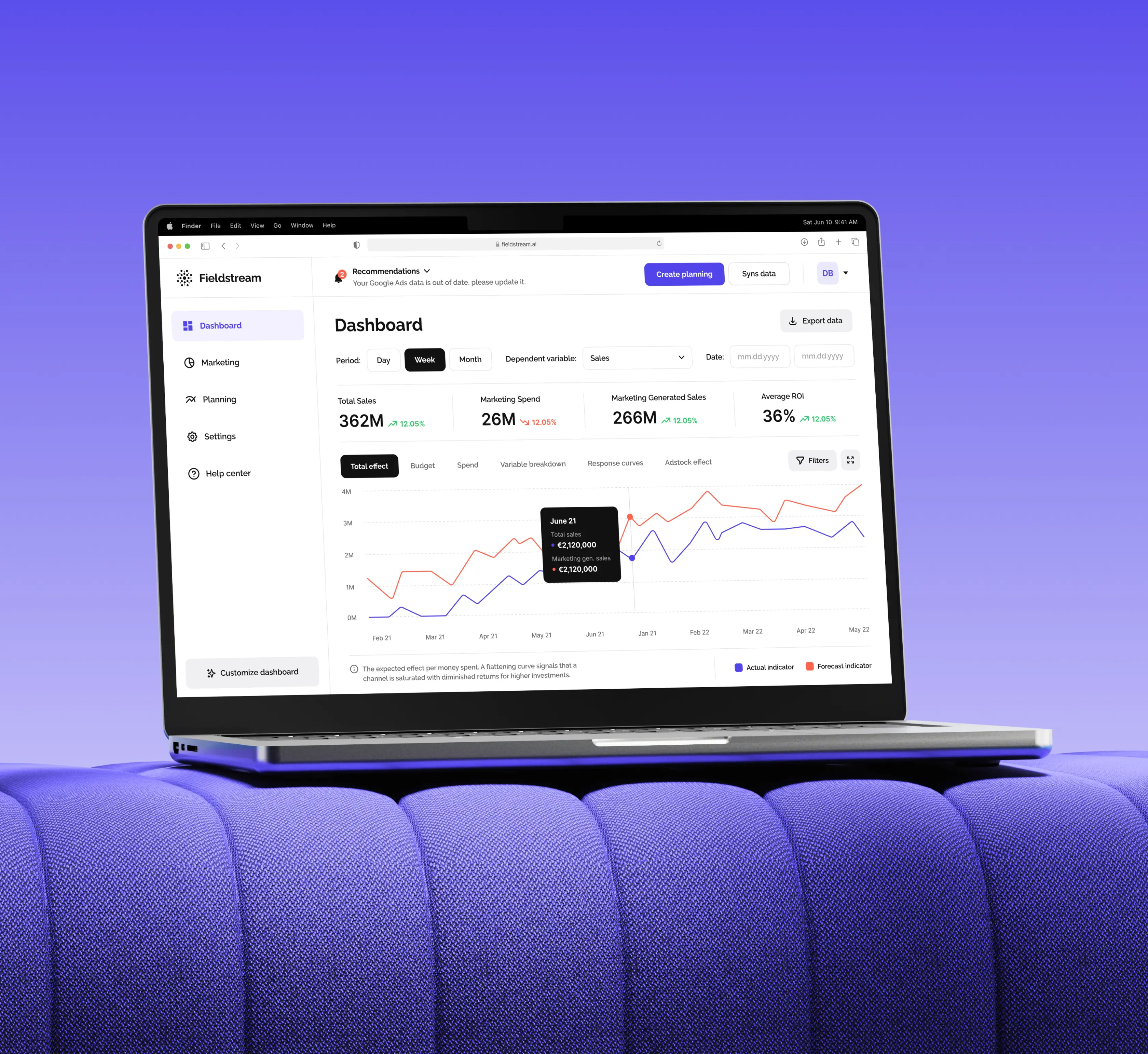
Based on the UX audit, we redesigned the dashboard as a system-level layer of the product by developing a unified design system to minimize visual clutter and make the screen predictable to scan.
Period and dependent-variable controls sit between the two layers, so a single filter change propagates across both, and nothing has to be reset when the question shifts.
The dashboard now works as a decision-making tool. Summary metrics illustrate how the business is performing, the tabs explain why, and the recommendations surface what to do next.
How to turn UX audit findings into product wins
Structured marketing analysis into clear, actionable views
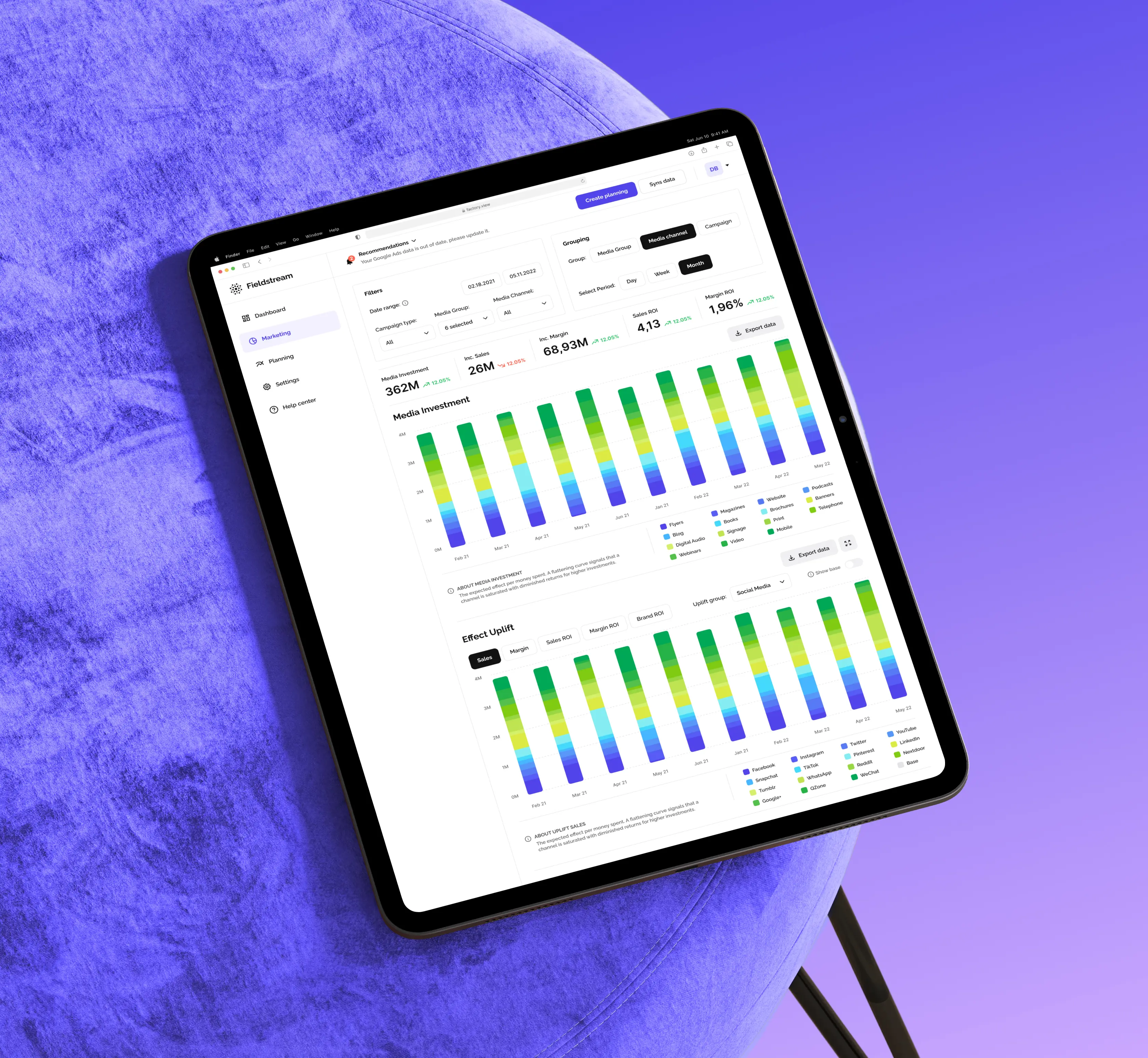
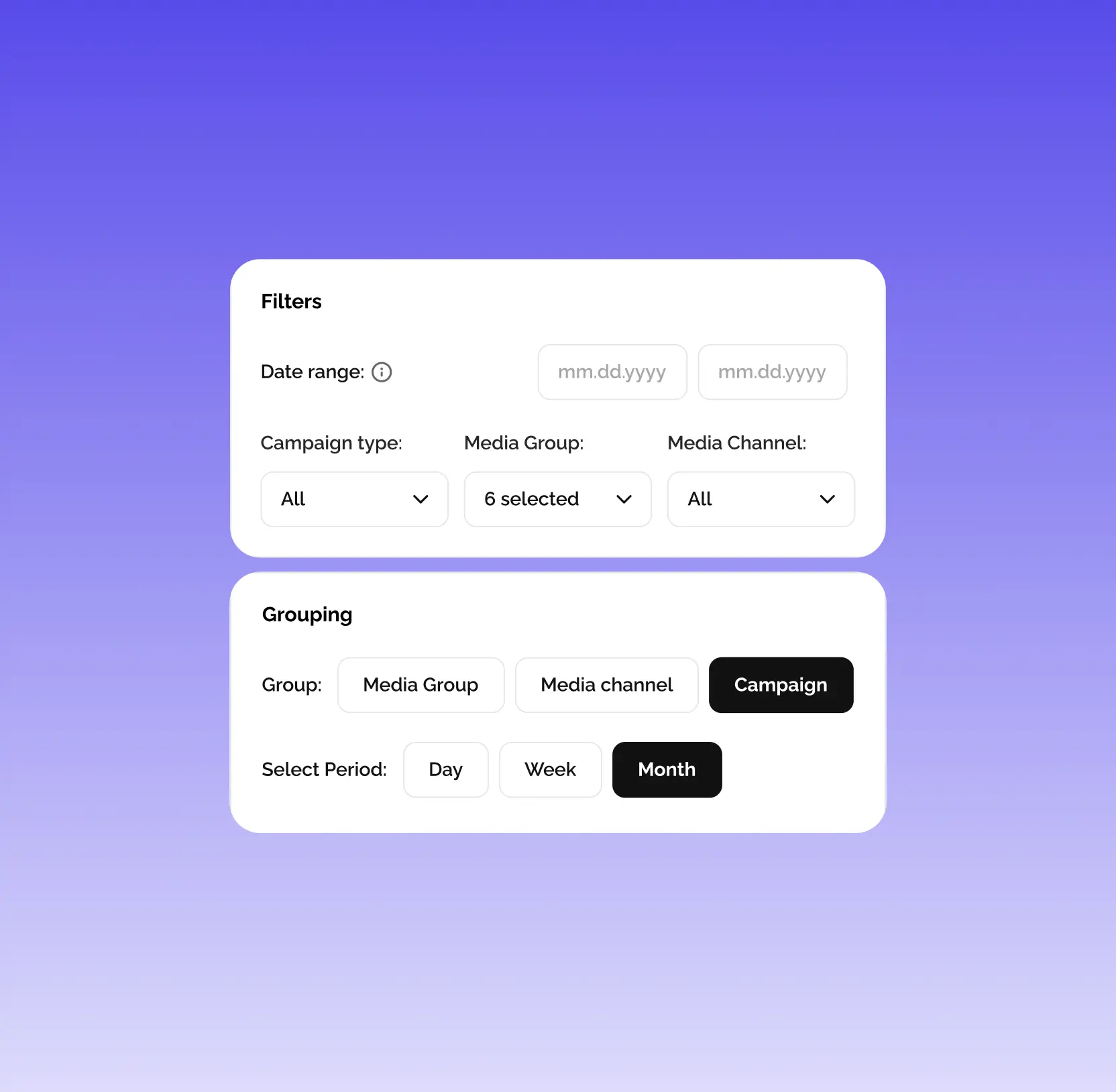
We rebuilt the logic for working with marketing data so the relationships between controls and the charts they affect are visible at a glance. Filters and Grouping were consolidated into a panel at the top of the screen, which means the marketer immediately sees which settings shape every visualization on the page.
We removed hidden dependencies between blocks to enforce one grouping principle across the screen. Every chart now responds to the same input, lowering both the cost of a wrong read and the cost of explaining the dashboard to a new team member.
The Effect Uplift block was rebuilt as a metric-aware analytical surface:
1. The block was split into separate tabs to allow the user to focus on one metric at a time instead of decoding several layers stacked into a single chart.
2. An Uplift group selector narrows the view into a channel family like Social Media, and an inline explainer beneath each chart demonstrates the analytical interpretation that used to require a call with an analyst.
Designed a step-by-step planning flow
We structured planning as a sequential workflow with three named stages (Create planning → Add constraint → Choose the plan) visible at the top of the screen. The complex logic of the underlying model becomes a workflow the marketer can follow without prior modeling knowledge.
The planning flow now moves through three controlled stages:
1. Create planning asks only for what the model needs to start. The user defines what to optimize for without first learning how the model works.
2. Add constraint turns business rules into structured rows. All rules are entered in the same format and can be added or removed individually, which keeps even multi-channel, multi-period scenarios legible.
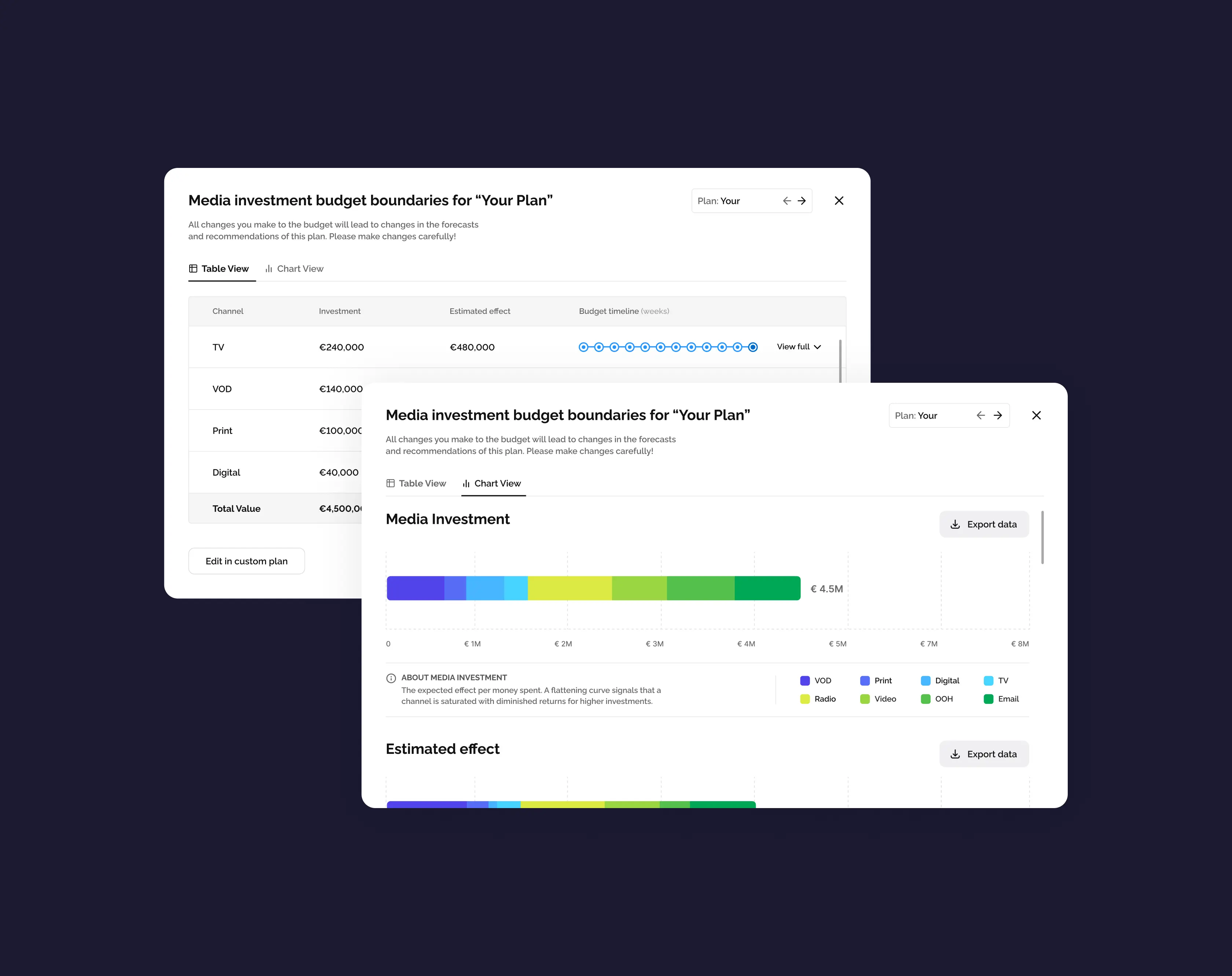
3. Choose the plan presents the model's options side by side, letting the marketer compare alternatives before committing.
A "Create custom plan" path lets the user fork from any system-generated option and reallocate the budget manually, with the projected effect updating against every move. Planning is now scenario selection, with each option backed by a probability band and a per-channel allocation the marketer can defend to a CFO.
AI & ML
Lazarev. agency offers comprehensive digital design services. Discover our range of related expertise supported by impactful case studies.
More Scaleups Cases
FAQ
What are the best ways to improve decision-making in an AI marketing platform?
The most effective approach is to connect data analysis directly to action. For Fieldstream, we rebuilt the dashboard as a structured decision layer, simplified how users interact with data, and introduced a guided planning flow. Instead of switching between tools, users can analyze performance, test scenarios, and make budget decisions in one place.
How can UX design increase adoption of a marketing analytics platform?
Adoption increases when non-technical users can operate the product without training. We removed fragmented workflows, unified navigation, and made interface behavior predictable. As a result, the platform expanded beyond analysts to marketing managers and CMOs. AI marketing platform UX design should lower the entry barrier.
What UX changes help marketing teams manage multi-channel budgets more effectively?
Clear structure and visibility matter more than more features. We introduced a consistent way to set constraints across channels and budgets, along with interactive views that show how changes impact forecasts. The solution allows teams to adjust allocations and immediately see the outcome, instead of relying on static reports or spreadsheets.
How do you turn complex marketing data into actionable insights?
Data becomes actionable when users understand what drives it. We aligned filters and visualizations so every control has a clear effect, removed hidden dependencies between charts, and split overloaded views into focused sections like Sales, Margin, and ROI.
What are common UX problems in AI-driven marketing platforms?
Most platforms struggle with fragmented interfaces, unclear navigation, and disconnected workflows between analysis and planning. Before, users had to export data to make decisions. By restructuring the product into a unified system, we eliminated these gaps and kept the entire decision process inside the platform.
How can scenario planning improve marketing budget allocation?
Scenario planning allows teams to compare different investment strategies before committing a budget. We built a step-by-step planning flow where users define constraints, generate scenarios, and evaluate outcomes side by side. Now, trade-offs are visible and help teams choose the most effective allocation based on projected results.
What makes a strong AI marketing platform UX design for enterprise teams?
Enterprise teams need clarity, speed, and control. A strong AI marketing platform UX design provides structured dashboards, predictable data interactions, and guided planning tools. Those elements helped teams move from reviewing performance to making confident investment decisions without leaving the platform.