How our redesign of Level All drove activation, retention, and completion
Project:
the project
A redesign to move students from sign-up to real progress
Level All is a digital learning platform for students, high schoolers, and recent graduates preparing for college. It brings video lessons, articles, quizzes, and interactive tools into one place.
Its problem will sound familiar to any edtech team scaling a content library: the more it offered, the more fragmented the experience became. Onboarding captured too little to personalize the product. Dashboards did not show what to do next. Students drifted away before reaching their goals, and every lost student equaled lost growth.
Level All reached out to Lazarev.agency to rebuild the core architecture around one goal: to carry each student from sign-up to real progress. We rebuilt onboarding into an intent-capturing engine, reshaped the dashboard into a command center, and gave students editable profiles for personalization that keeps pace with them.
Here is the redesign digest: what we changed, and what it helped Level All achieve.

The Project’s
Discovery Phase
A consistent system to deepen every session
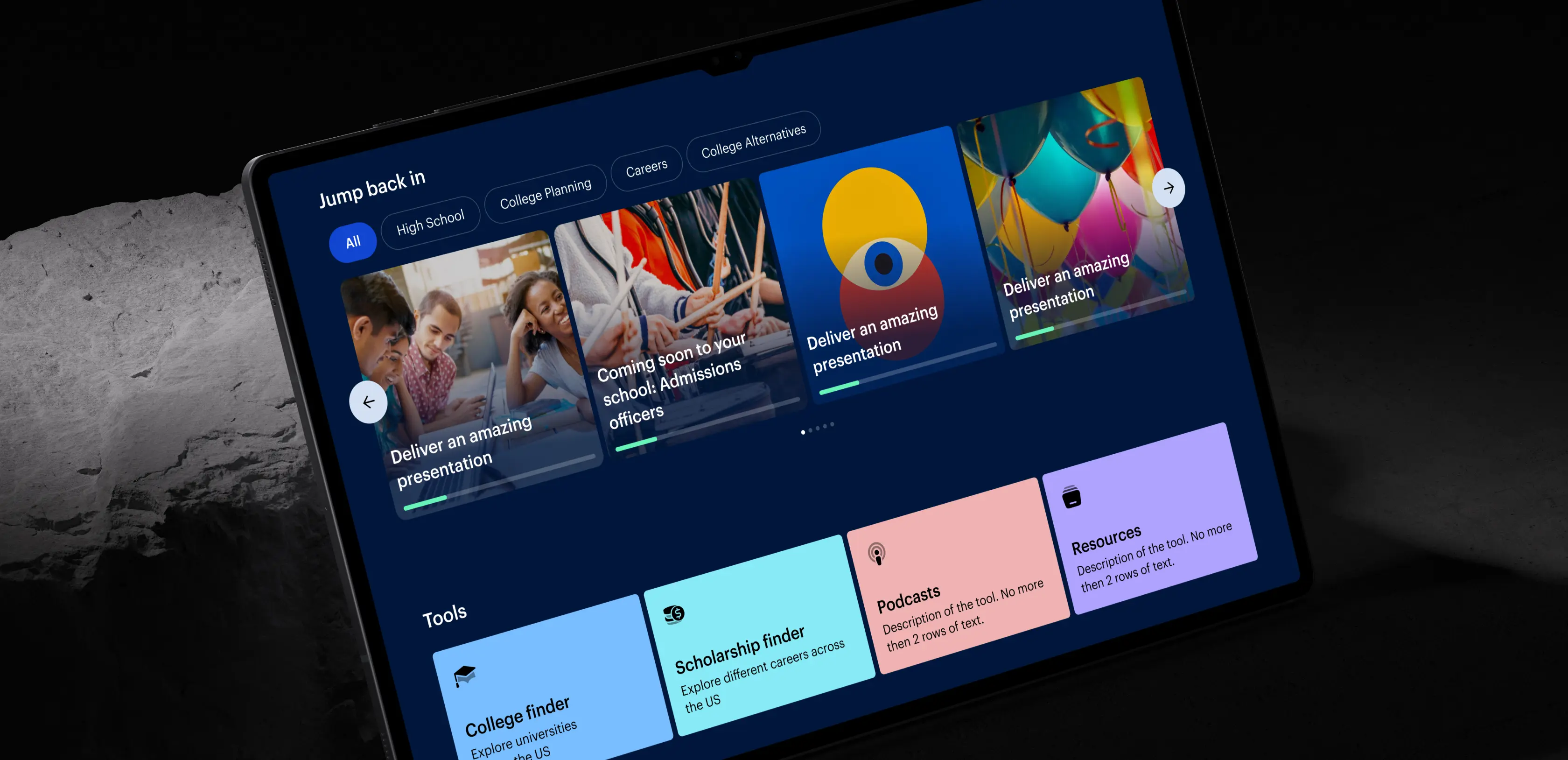
As Level All's content library grew, the product splintered. The same actions looked and behaved differently across screens, and students had to relearn where things lived each time they switched between desktop and mobile.
We rebuilt Level All on a shared set of components. Navigation, deadline widgets, and content cards are consistent while each learning path stays visually distinct. Students move through the product without stopping to reorient, and smoother navigation holds them in longer sessions.
Design systems 101: why every growing product needs one
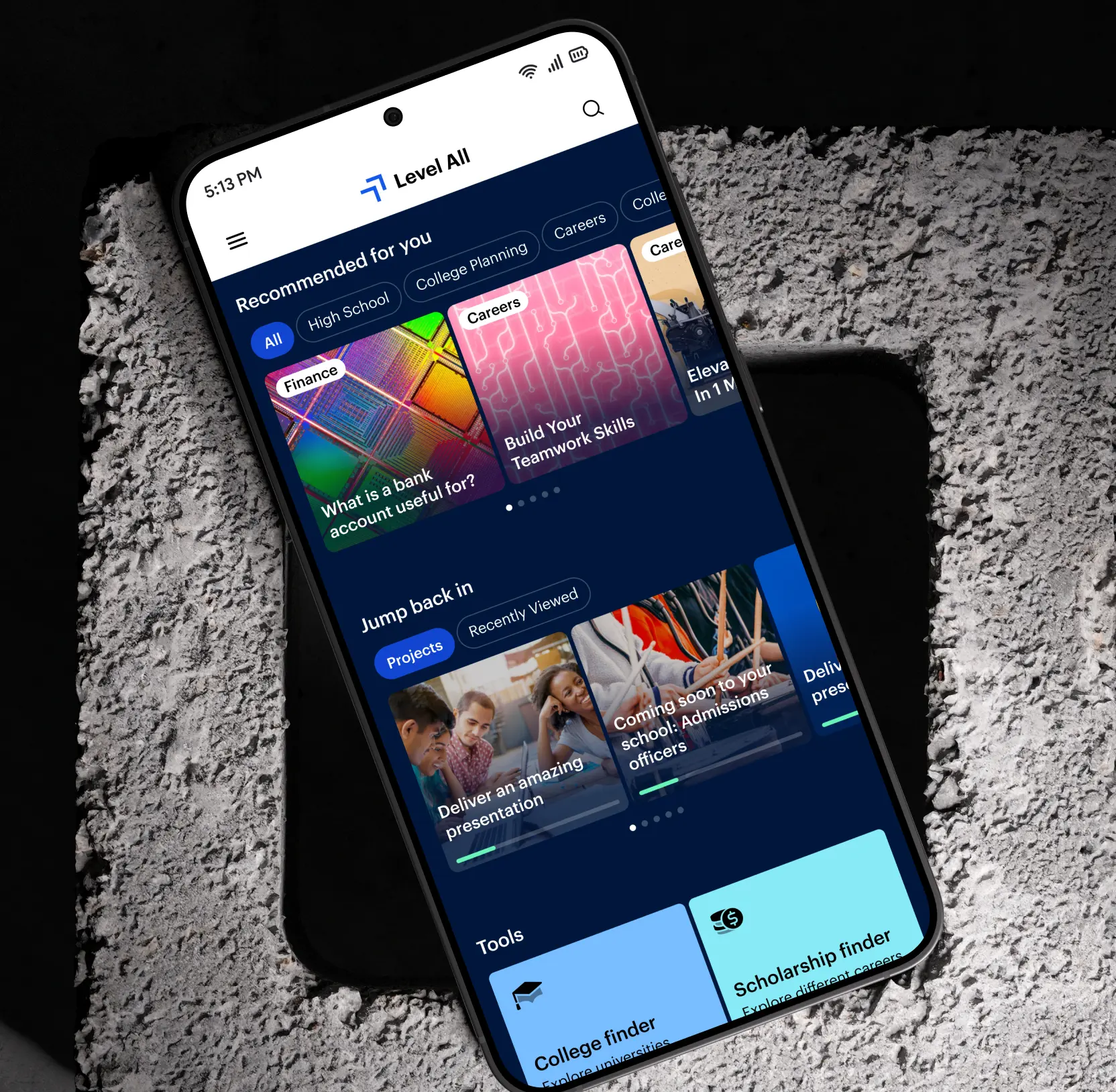
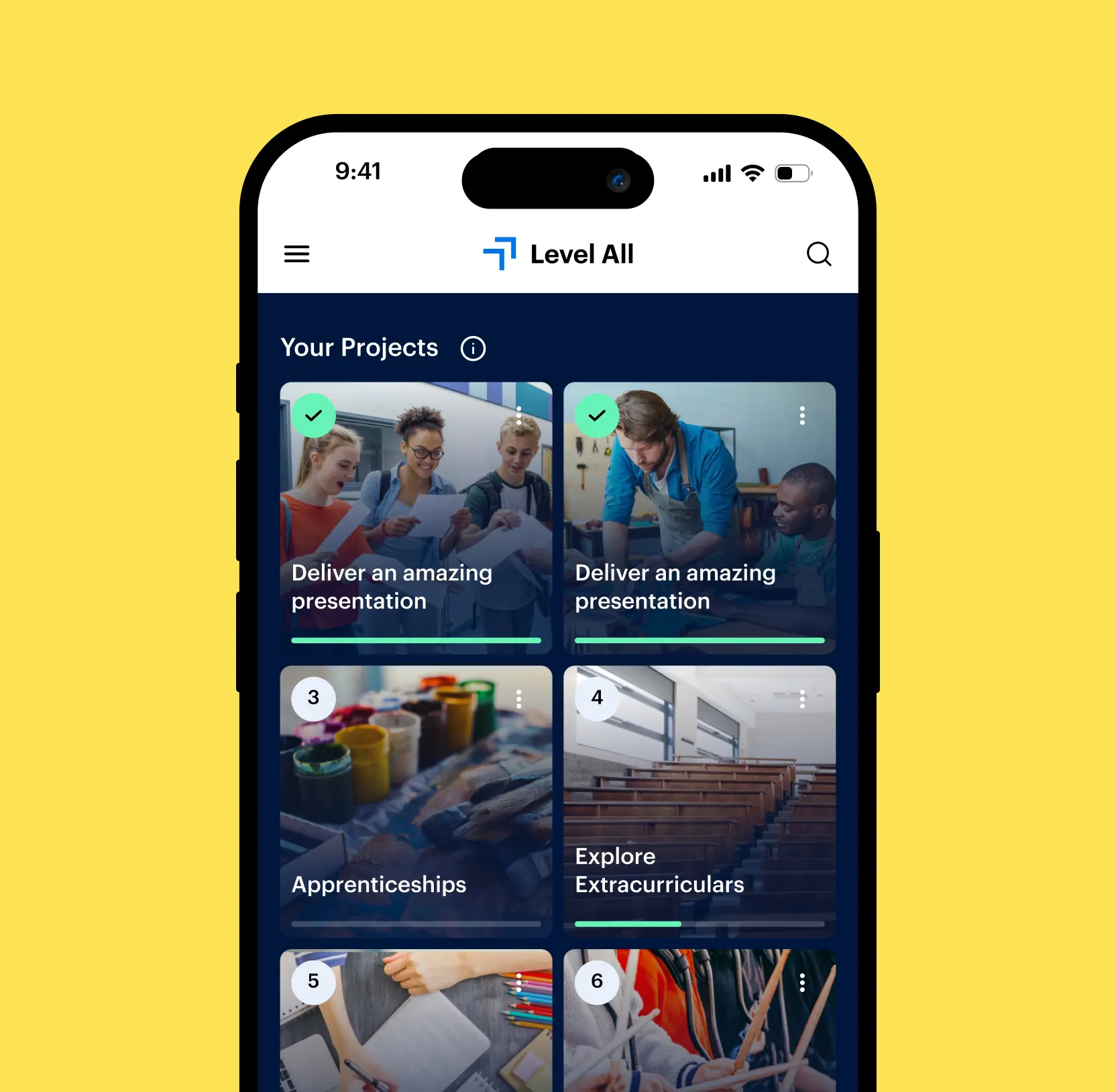
A home screen built to bring students back
Once a student closed Level All, little pulled them back. The product did not show what they had accomplished or what deserved attention next, so returning depended on memory and motivation, and retention leaked between sessions.
Our team redesigned the home screen as a command center. Every visit opens on visible progress and an obvious thing to do next, giving students a reason to come back and protecting the retention the content was meant to build.
Onboarding to make the first session pay off
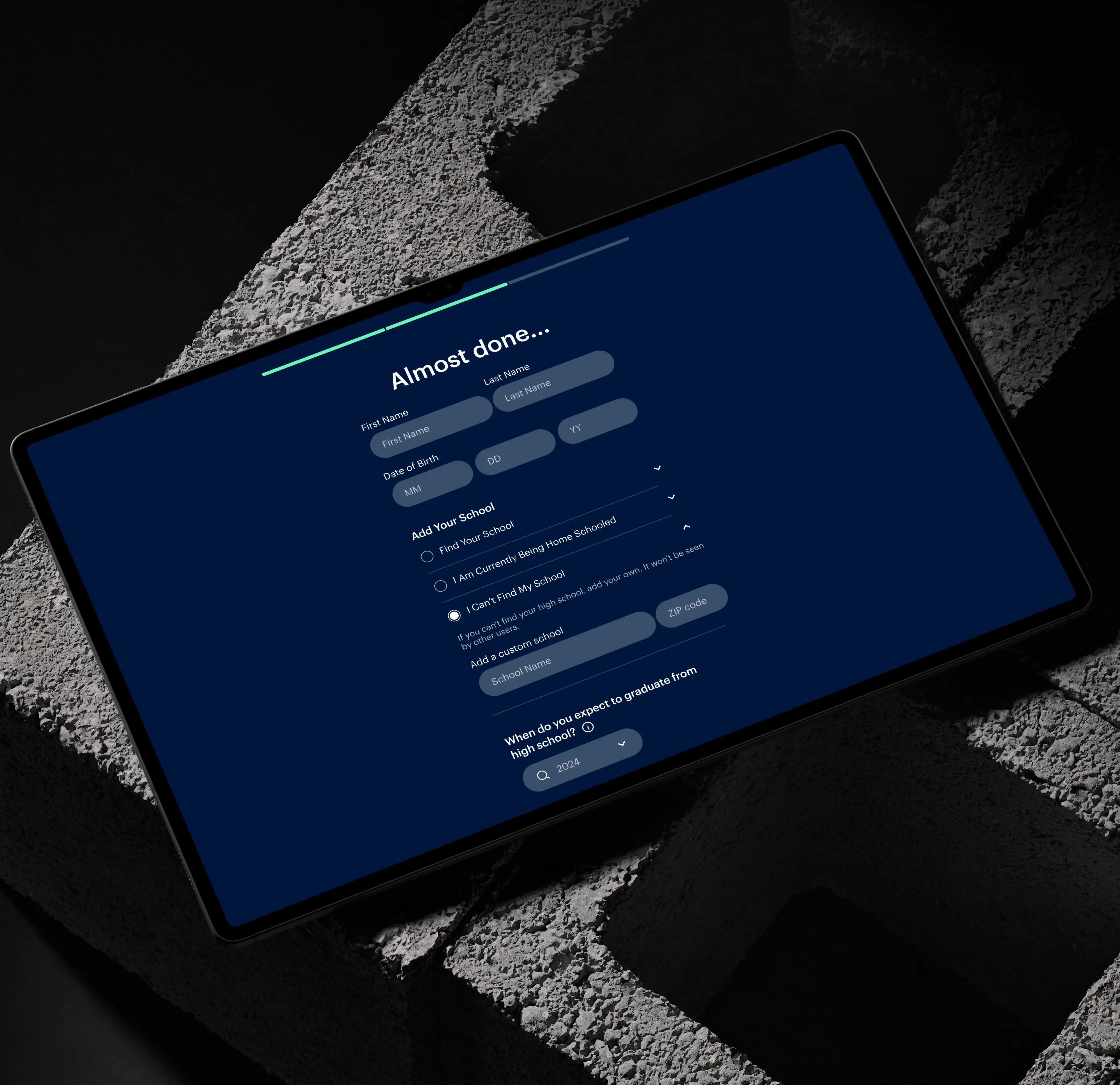
Level All's original onboarding was a welcome sequence. It captured too little to personalize, so the first session served generic recommendations, and many students left before the product showed its value, driving early churn.
We rebuilt onboarding as an intake step focused on capturing real user intent: academic stage and school, expected graduation year, and the goals each student is working toward.
With this signal in hand, Level All builds a relevant learning plan from the first session. As a result, students see the product's value early, and the platform gains lower early churn and stronger first-week engagement.
How to design new customer onboarding that gets users to value fast?
Editable profiles to keep recommendations relevant
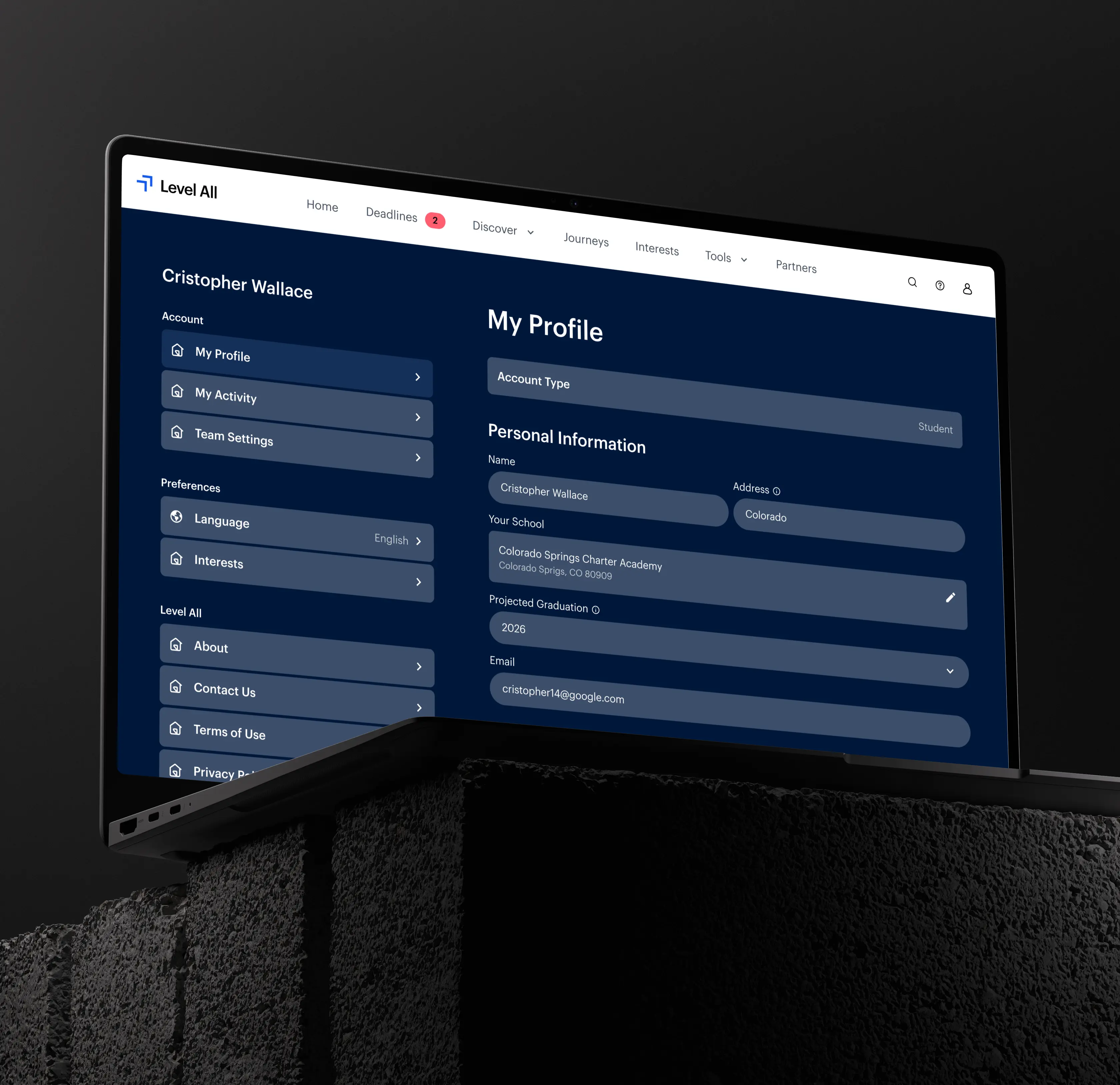
Students evolve quickly. A sophomore focused on engineering may shift toward law by junior year, develop new interests, or change schools entirely. Personalization fixed at signup cannot keep up, and the moment recommendations fall behind a student's current goals, the content reads as generic.
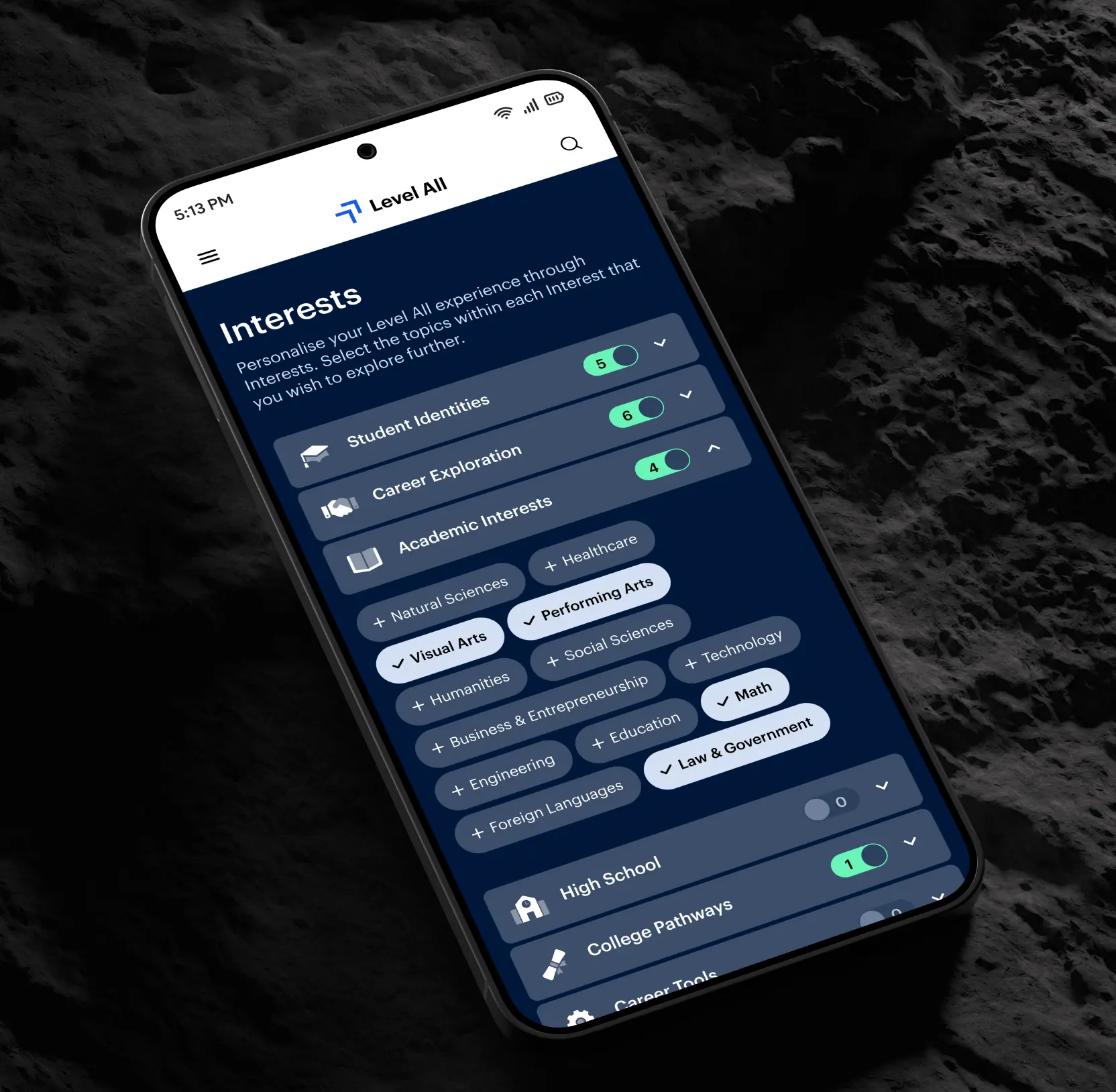
We placed each profile under the student's control. Users can update their schools, revise their projected graduation, and modify career-related interests. Every edit immediately redirects recommendations, so Level All stays aligned with each learner across the full academic lifecycle.
Learning journeys to carry students from the goal to the finish
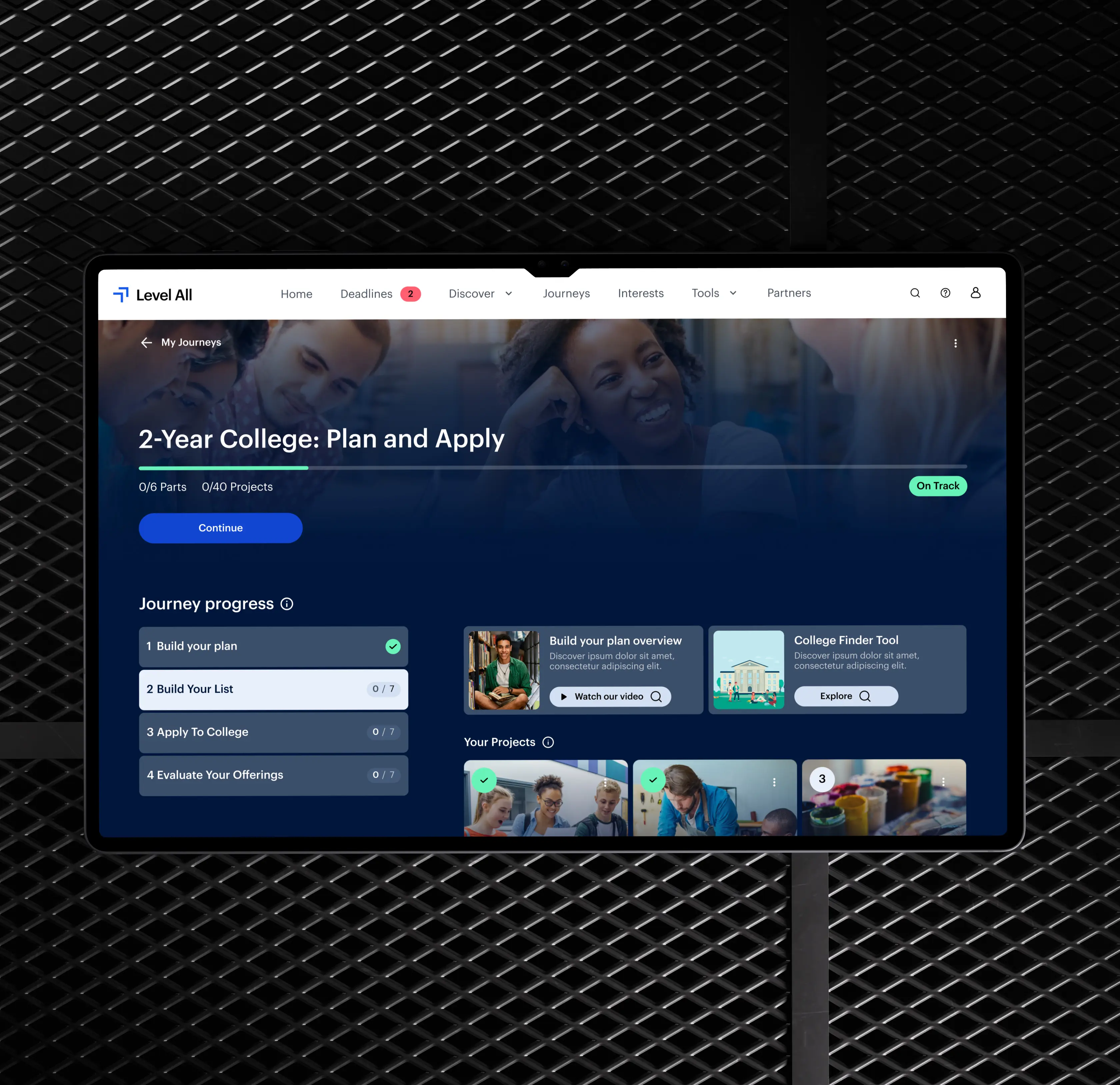
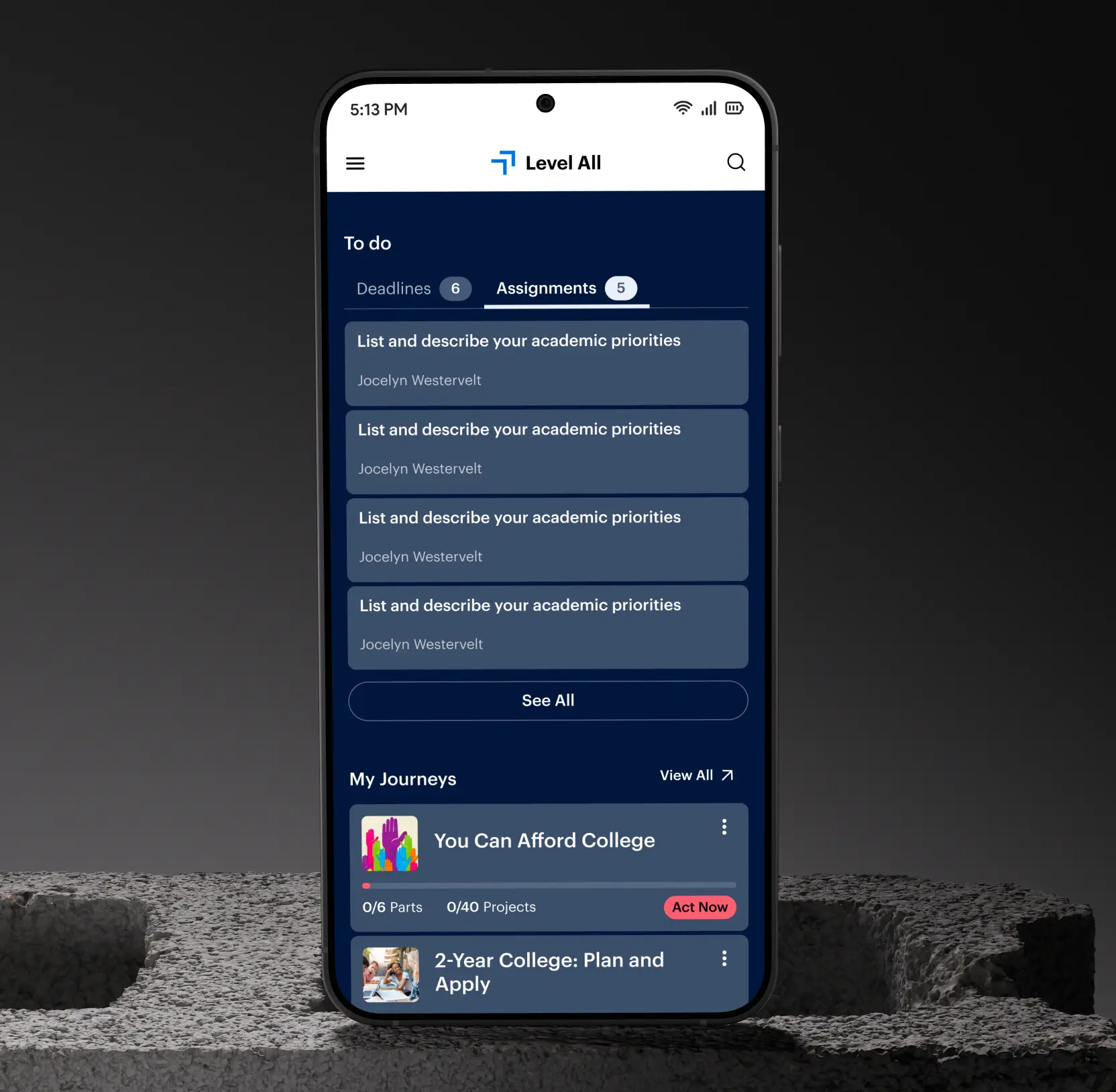
Students engaged with Level All's content but did not have a roadmap connecting daily work to long-term milestones, like getting into and affording college. Without a visible path from where they stood to the goal, effort dispersed from what mattered most.
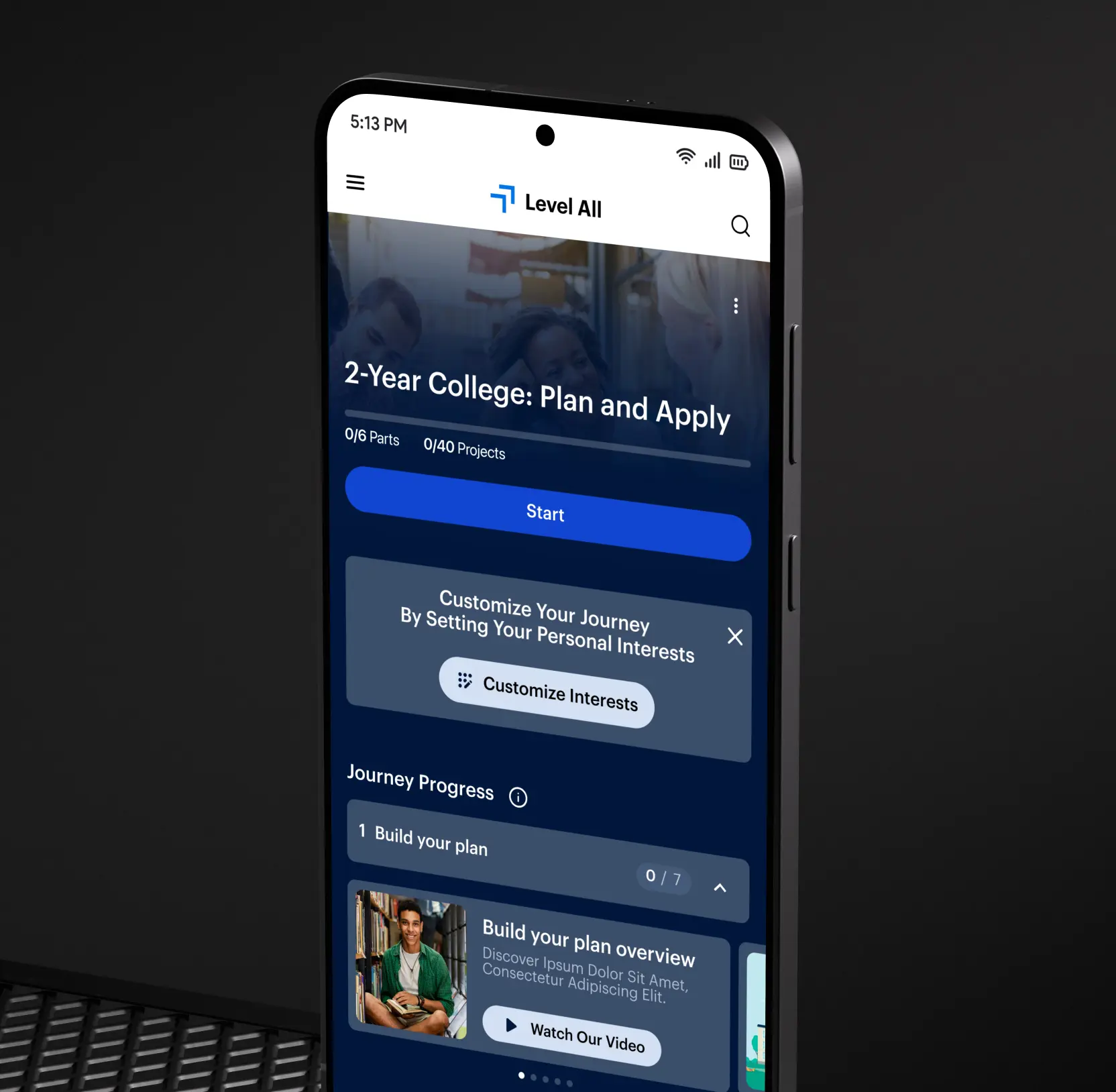
We reconstructed the My Journey feature into a goal-management framework. Every task connects to a milestone the student can watch closing, sustaining momentum across months and lifting the completion rates schools and partners care about.
An accountability layer to win school adoption
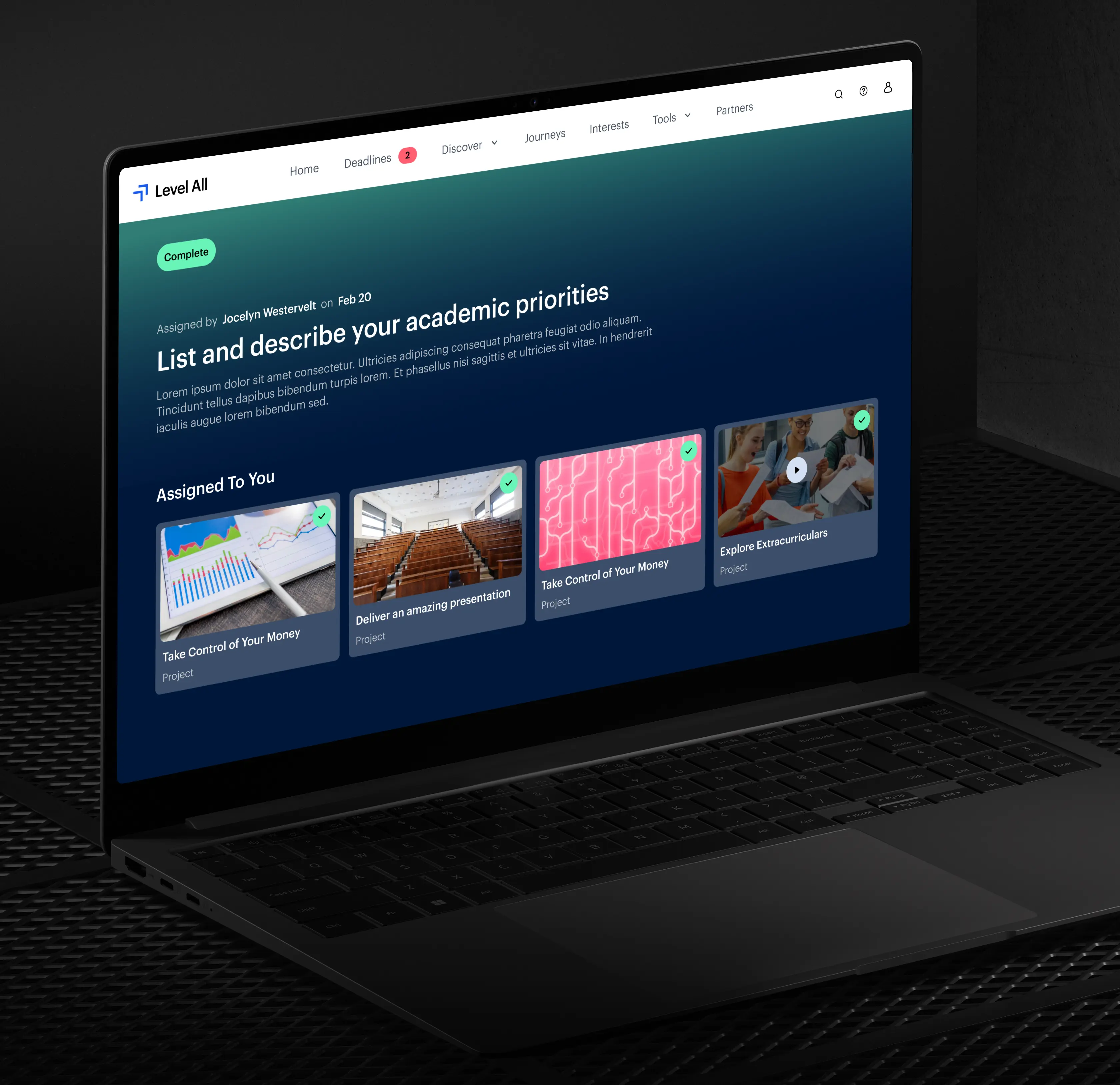
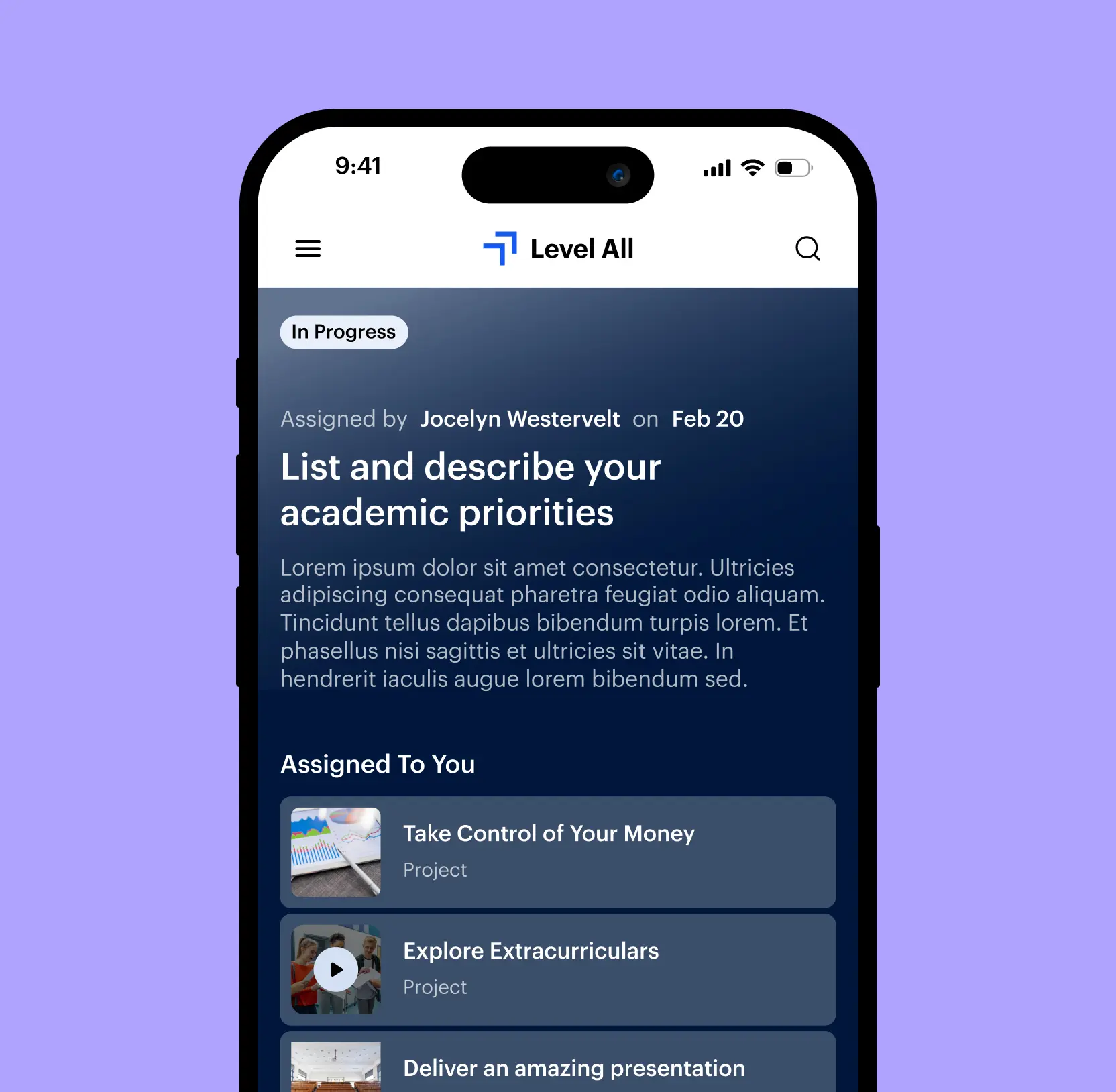
Until this point, Level All's value rested entirely on each student's self-motivation. Counselors and schools had no way to direct work or confirm it was done, making the product’s functionality limited to personal use only.
We added an assignment layer to connect counselors and students. A counselor assigns a task, the student then finds it in a single To-Do hub beside their Deadlines, and each item carries a clear status. Completion no longer depends only on the student’s input, and counselors have a reason to roll Level All out across their schools.
AI & ML
Lazarev. agency offers comprehensive digital design services. Discover our range of related expertise supported by impactful case studies.
More Scaleups Cases
FAQ
How does edtech platform design impact student activation rates?
Edtech platform design directly influences activation by determining how quickly users perceive value. By restructuring onboarding to capture meaningful intent data and immediately generate personalized learning plans, activation quality improves, and early churn decreases.
What dashboard elements improve retention in an edtech platform?
Retention improves when dashboards clearly prioritize progress tracking, deadlines, and personalized next actions. A structured dashboard architecture reduces decision fatigue and strengthens engagement continuity between sessions.
How can edtech platform design increase learning completion rates?
Completion rates increase when learning paths are structured around visible goals and milestones. Integrating goal-based journeys within the platform creates measurable progress loops that reinforce motivation and accountability.
Why is personalization critical in modern edtech platform design?
Personalization ensures that content aligns with each learner’s stage and objectives. Without adaptive personalization, platforms risk delivering generic experiences that weaken engagement and retention.
How does onboarding influence long-term retention in digital learning products?
Onboarding sets the foundation for personalization accuracy. A strategically designed onboarding flow captures intent signals that power recommendations, improving content relevance and strengthening long-term engagement.
What are the key components of scalable edtech platform design?
Scalable edtech platform design includes structured information architecture, dynamic personalization logic, cohesive design systems, progress tracking mechanisms, and goal-based learning frameworks that support long-term growth.
When should an education company invest in edtech platform design optimization?
Optimization becomes critical when engagement plateaus, completion rates decline, or content growth creates structural complexity. Strategic edtech platform design improvements can unlock retention gains and lifecycle value without increasing marketing spend.