01
Map every step before designing screens
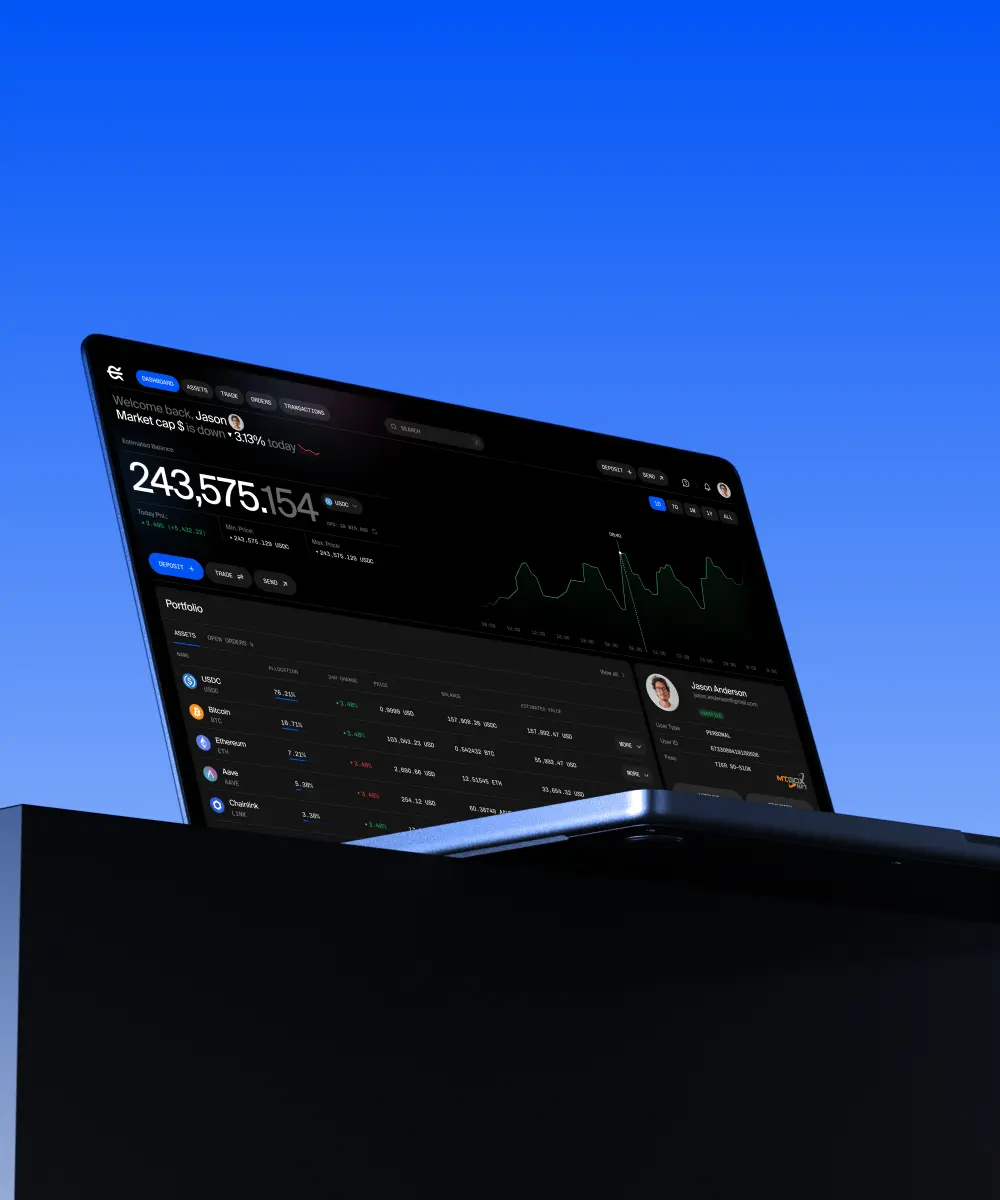
We document the complete user journey. What triggers the flow? What decisions do users make? Where do they get stuck? For EllipX KYC, we mapped verification from account creation through trading unlock.
Users drop off in complex flows? Simplify with interaction design services to boost completion and reduce friction.
We've built flows for products where completion rates jumped 40%+ after redesign.
We document the complete user journey. What triggers the flow? What decisions do users make? Where do they get stuck? For EllipX KYC, we mapped verification from account creation through trading unlock.
Don't show everything upfront. Reveal options as users need them. For Dollet Wallet, we introduced crypto concepts gradually. Basic wallet setup first, then seed phrase backup with explanation why, then advanced features after users gained confidence.
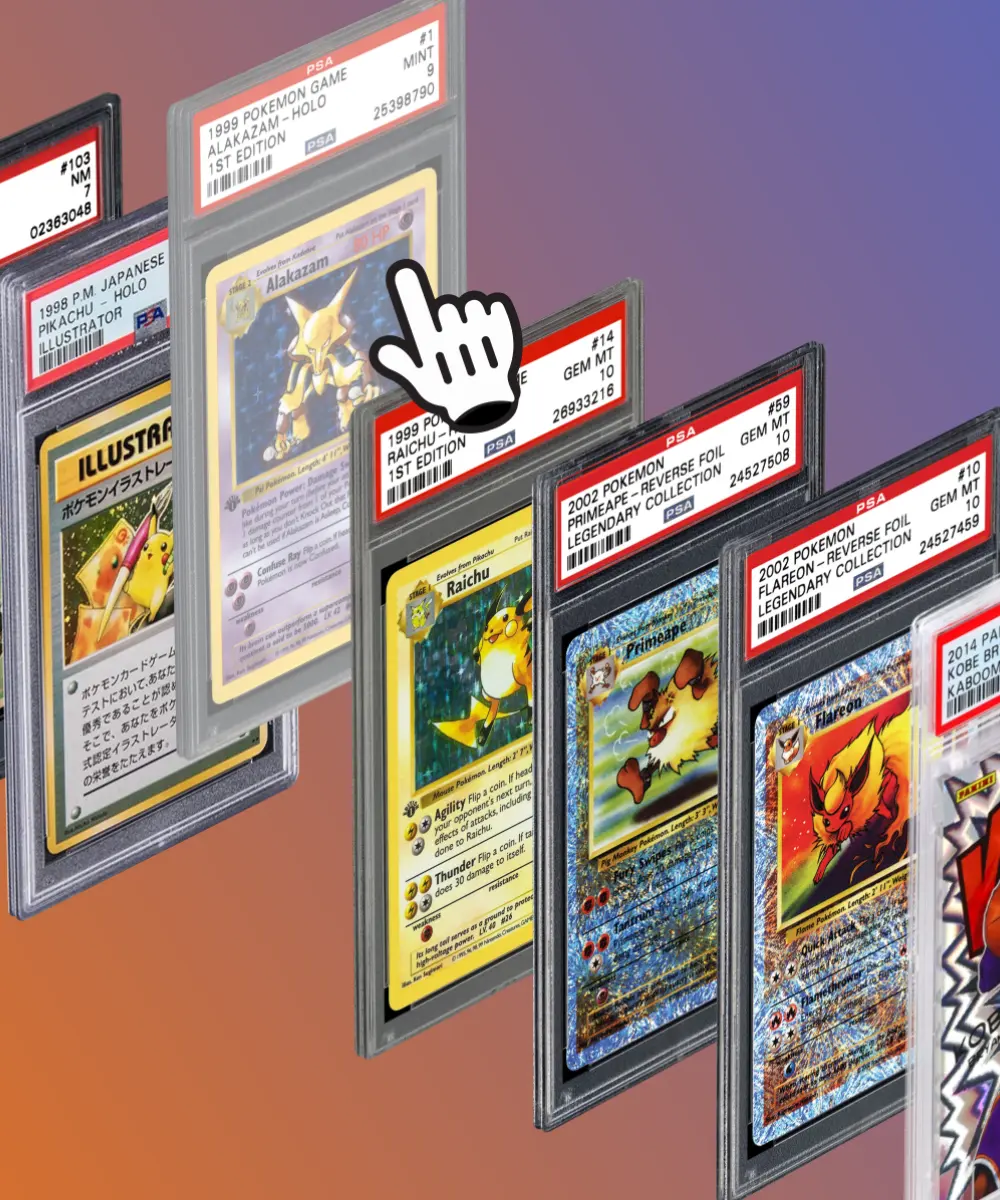
We create specific status indicators tied to user goals. For CollectorCrypt physical card tracking, users saw pickup scheduled, in transit with the carrier, delivered to facility, authentication in progress, verified and available. Each status answered "what's happening now."
When users lack expertise, guide choices through progressive narrowing. For Priority Tire, we built flow starting with vehicle selection, then showing compatible sizes, then filtering by purpose, then comparing specific products.
We've built flows for products where completion rates jumped 40%+ after redesign.
We document the complete user journey. What triggers the flow? What decisions do users make? Where do they get stuck? For EllipX KYC, we mapped verification from account creation through trading unlock.
Don't show everything upfront. Reveal options as users need them. For Dollet Wallet, we introduced crypto concepts gradually. Basic wallet setup first, then seed phrase backup with explanation why, then advanced features after users gained confidence.
We create specific status indicators tied to user goals. For CollectorCrypt physical card tracking, users saw pickup scheduled, in transit with the carrier, delivered to facility, authentication in progress, verified and available. Each status answered "what's happening now."
When users lack expertise, guide choices through progressive narrowing. For Priority Tire, we built flow starting with vehicle selection, then showing compatible sizes, then filtering by purpose, then comparing specific products.
We've worked with companies losing users in complex flows.
Lazarev.agency is more than about making profits for us and our clients. We're committed to saving lives in Ukraine, taking on pro bono projects, championing diversity, equity, and inclusion.
in funding secured for our clients
awards backing our excellence
founded, 10+ years of experience
AI product design agency
from user research to production-ready design systems
Among our clients:








We’re a UX/UI web design agency with 140+ awards that helps AI‑native and AI‑ambitious B2B teams translate complex products into clear, conversion‑ready websites.

Webby Awards x10

Red Dot Design Award x6

Awwwards x16

FWA x5
Our interactive web design agency provides a full package of solutions so your website can fly.
Satisfied clients from fintech, crypto, AI sectors tell us what made the difference.
Through a detailed understanding of the client’s platform, Lazarev. was able to create a clean and intuitive UI/UX design that ticked all the boxes. The team was receptive to all requirements and requests and adapted well to timeline changes. They produced accurate mockups at every iterative stage.

Founder of Teachchain
We saw an increase in engagement metrics, in users and in resume submissions.

Director of Operations, Blavity
We specialize in digital products where complex interactions affect business results.
We exist for B2B teams under pressure to turn an AI roadmap into visible product usage, expansion, and a safer story in front of the C‑suite and investors. If design isn’t moving revenue, adoption, or retention, it’s decoration. We design to avoid that. Since 2015, we’ve shipped 600+ products and earned 140+ awards for work on complex, data-heavy tools: fintech platforms, AI copilots, decision engines, and vertical SaaS. Our work has helped clients turn “we have AI features” into “our customers actually use and pay for them.”
We started designing AI products in 2017, long before “AI-native” became a buzzword. With 30+ AI products shipped, we focus on the hard part most teams struggle with: making complex intelligence feel simple, trustworthy, and obviously valuable in a demo, a POC, or a QBR. We’re a 40+ person team of UX strategists, product designers, and analysts who treat design as a business function.
What sets us apart from a typical agency or a single in-house hire is pattern recognition at scale. We’ve seen what works – and what quietly kills adoption – across hundreds of AI and data-heavy products. That lets us spot failure modes early, bring proven interaction patterns to your team, and reduce the risk that your next AI release is another unused toggle in a settings menu.
We start with research not because it’s “best practice,” but because designing without understanding your users, your market, and your revenue model is just guessing with nicer pixels. From there, we collaborate with your product, AI, and design leaders to define where AI should show up, how it should behave, and how to make it obvious, safe, and monetizable.
If you’re a Head of AI, Product, or an AI-native founder who needs AI capabilities to be seen, understood, and used now, not someday, we’re built to be that partner.
At this stage, clients engage us for 4–6+ month AI & data product UX redesign programs, treating us as their primary product design partner for the core platform.
of experience in UI/UX design
Trusted by over 600 companies of all sizes
international industry awards
projects successfully completed
We combine creativity with data-driven validation.
We start by understanding your business objectives, user needs, and current process performance. Map existing flows, identify abandonment points, analyze support requests.
We watch real users attempt your processes. Run usability testing. Ask about confusion points. Analyze session recordings. Competitive research shows how others solve similar interaction challenges.
We define how to fix identified problems. Redesign information architecture, create progressive disclosure systems, design status indicators, build decision support. Create interactive prototypes for key flows. Test with users, iterate based on feedback.
We design every state, transition, and feedback moment. Button behaviors, loading sequences, error messages, success confirmations. Build comprehensive interaction specifications for the development team.
Our team works with your development during the build. Review implementations, answer questions about edge cases, ensure interactions feel smooth. Test across devices and platforms.
How we work, scale, and deliver measurable outcomes.
UX design covers the entire user experience: research, strategy, information architecture, visual design. Interaction design focuses specifically on how users complete tasks: button behaviors, form flows, status feedback, progressive disclosure. Interaction design is a subset of UX. We do both because great strategy means nothing if interactions frustrate users.
We design clear progress indication, show completion estimates, provide contextual help at decision points, allow saving and returning later. For EllipX KYC, visible verification status reduced drop-off because users understood timeline. Key is removing uncertainty about what comes next and how long it takes.
Yes. We extend your design system with interaction patterns, micro-interactions, component states. Many clients have visual design guidelines but lack documented interaction behaviors. We fill gaps with specifications your development team implements consistently.
Progressive disclosure. Show simple default flows, reveal advanced options as users gain expertise. For Blockbeat dashboard, beginners saw essential market stats while power users customized layouts and technical indicators. Same platform, different complexity based on user confidence.
Interactive prototypes showing flows and behaviors. Detailed specifications documenting states, transitions, feedback messages. Micro-interaction designs for buttons, forms, loading sequences. Decision trees for complex processes. Everything your development team needs to build smooth interactions.
Touch-first thinking. Thumb-zone optimization, simplified gestures, reduced cognitive load per screen. For Priority Tire mobile flow, we redesigned complex tire selection for small screens. Mobile completion rates improved because interactions felt natural on touch devices.
Features don't matter if users can't complete tasks. We've seen products with better technology lose to competitors with smoother interactions. Dollet Wallet succeeded because crypto onboarding guided users through complexity. Priority Tire converted non-experts because product selection flow reduced decision paralysis. Interaction design turns capabilities into completed actions.
We track task completion rates, time to complete, error rates, abandonment at each step, support requests about process confusion. For the CollectorCrypt tracking system, success was eliminating "what's next" questions. For FCF search, faster flight booking with less decision fatigue. Define metrics in discovery, measure throughout the project.
Let's talk about your AI adoption challenge