How FactoryView's redesign cut planning delays for industrial operations teams
Project:
the project
A capable platform rebuilt for confident manufacturing decisions
Production planning software often fails operations teams the same way risk platforms fail security managers: it exposes every moving part and leaves the decision to them. Managers need to compare scenarios across cost, timeline, and resources fast, but disconnected tables and constant context-switching make the tool an obstacle.
FactoryView set out to solve this for industrial teams: a platform to plan, simulate, and optimize manufacturing, where managers model scenarios and pick the most efficient strategy. The engineering was solid, but the product struggled in practice. Scenarios were hard to differentiate, results were unclear, and moving between planning, simulation, and execution forced users to rebuild context at every step.
FactoryView partnered with Lazarev.agency to convert that into a capable tool. We rebuilt the platform around three layers — production timeline, scenario comparison, and simulation editing — and tested every design decision against one standard: does it bring the manager closer to a confident decision?
The Project’s
Discovery Phase
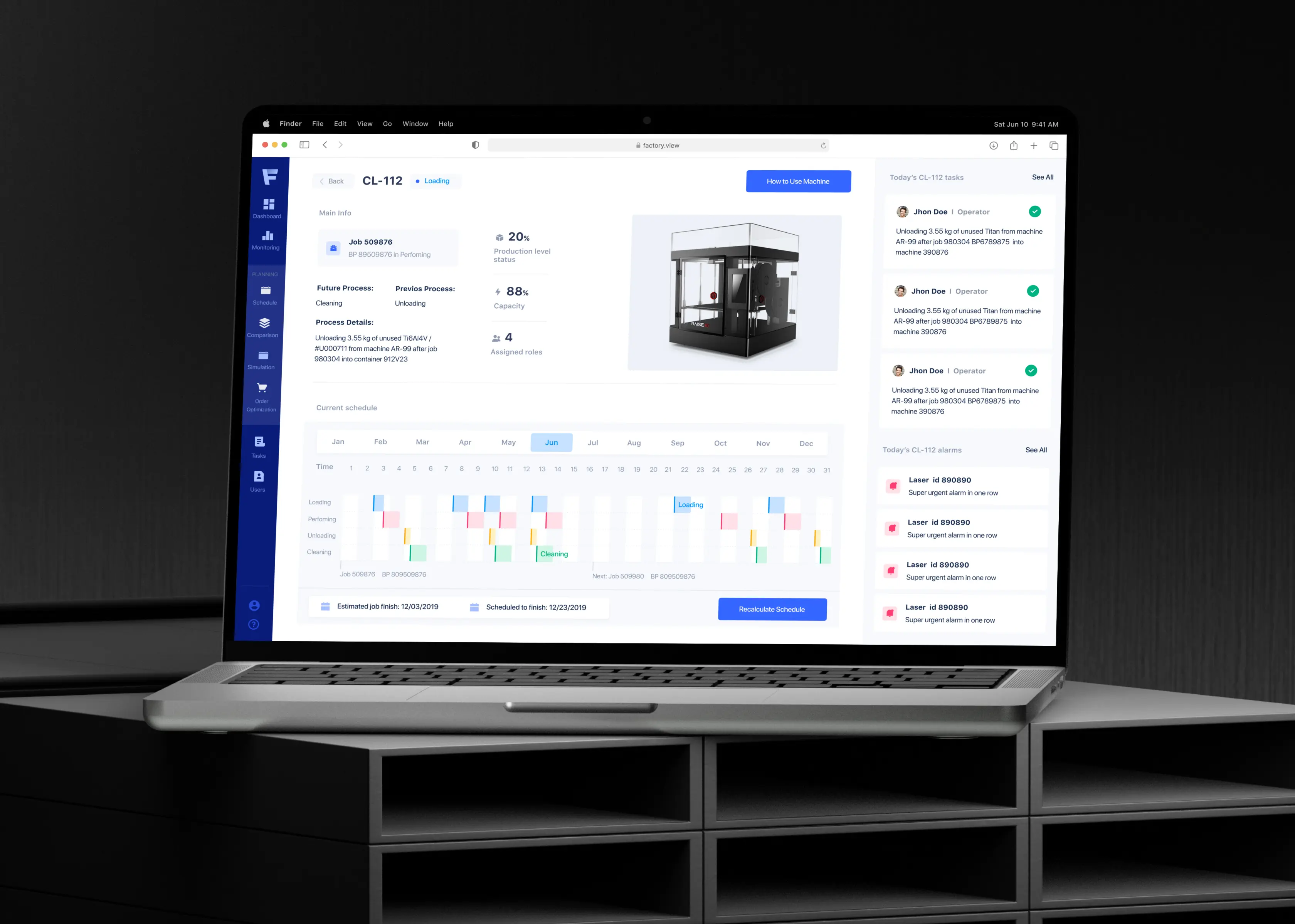
Rebuilt scheduling as a scenario-based planning system
Scattered planning tables force managers to rebuild the picture every time they move between scheduling, simulation, and execution, and the slow, error-prone cycle costs them the most efficient scenario.
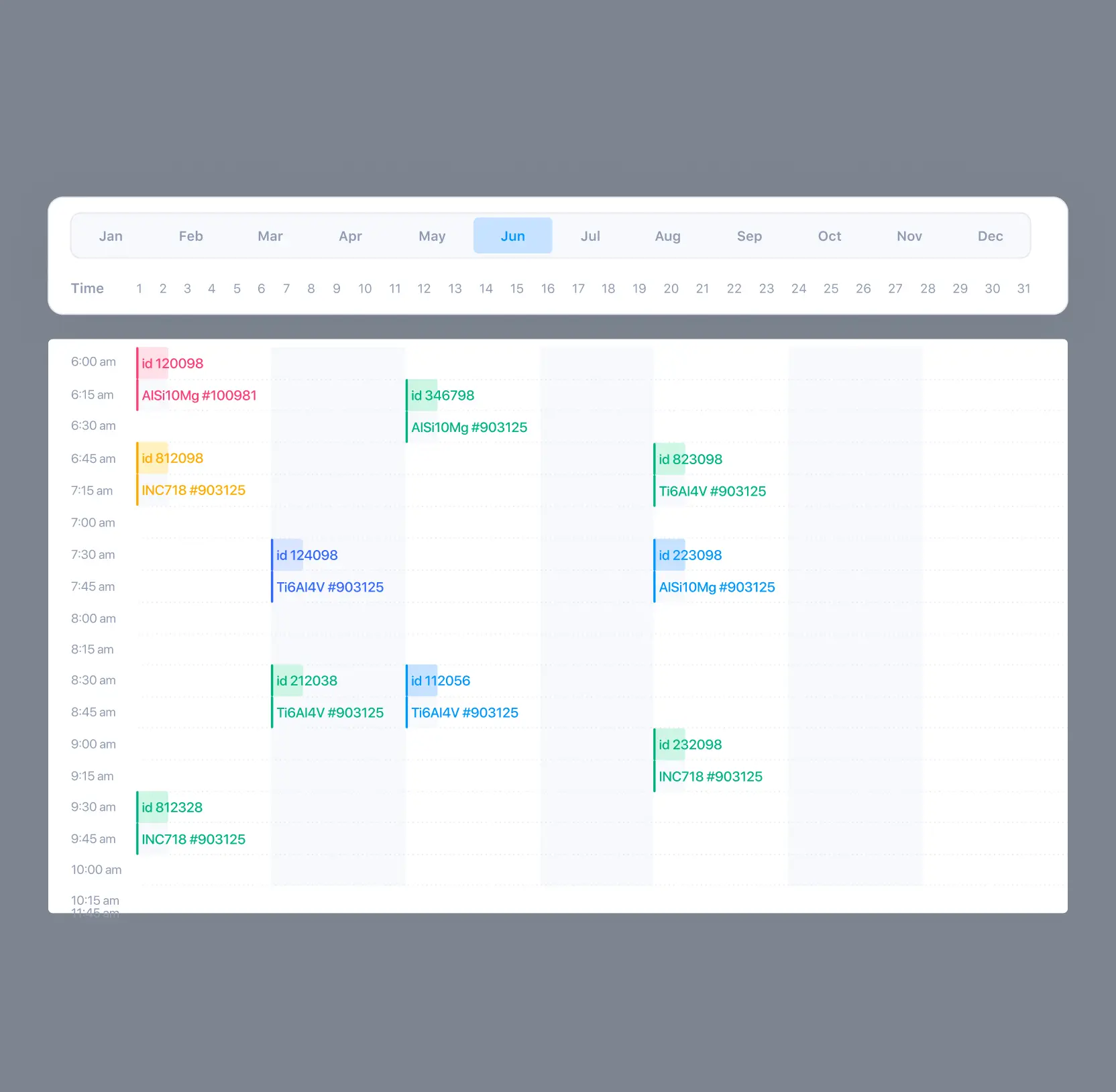
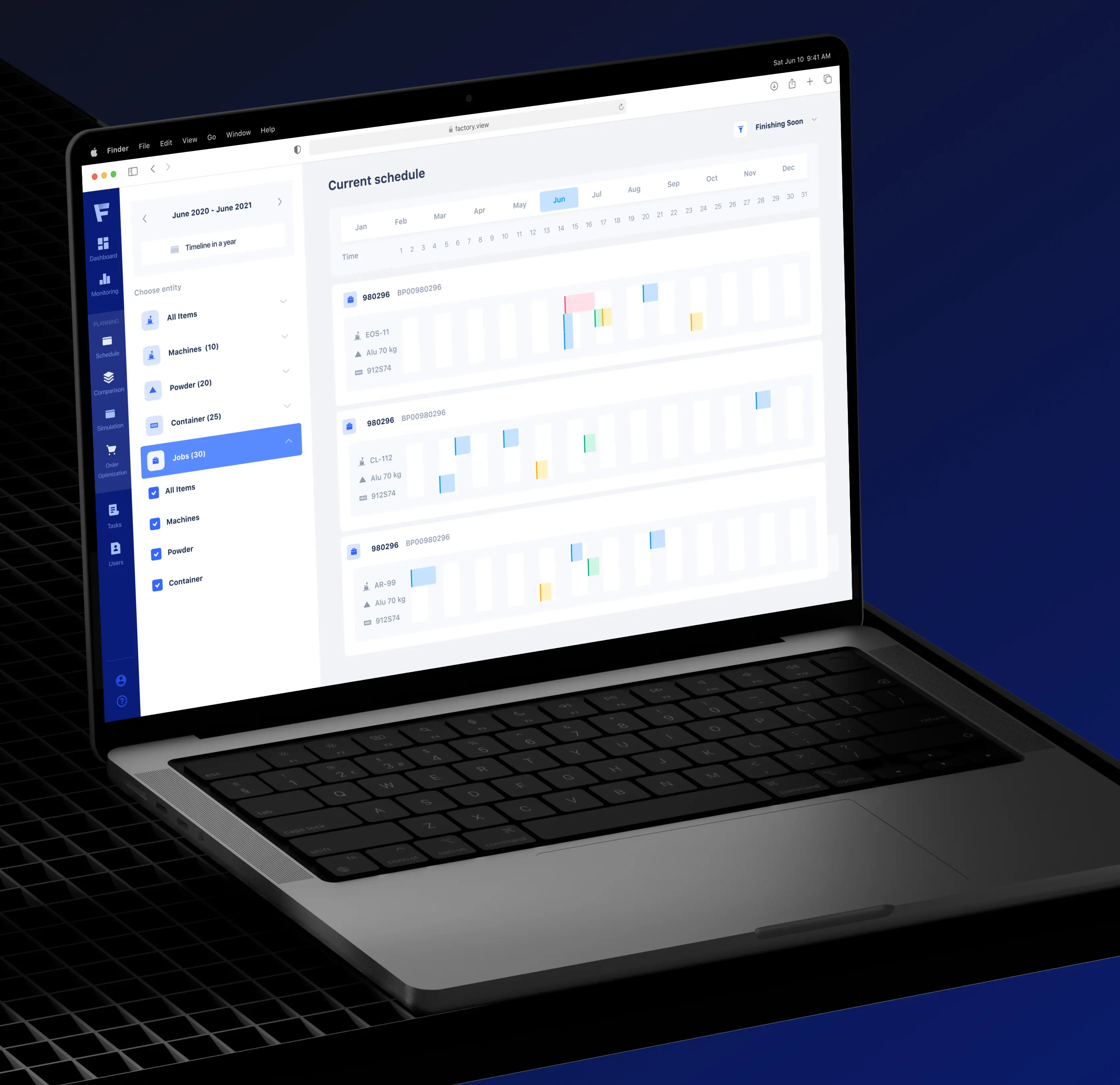
We rebuilt planning around a single timeline to illustrate how machines, jobs, materials, and containers relate over time, with a single switcher to move between entities without losing context.
Managers now have the full production picture and can recalculate a schedule the moment conditions change. Planning drives faster decisions and fewer costly missteps.
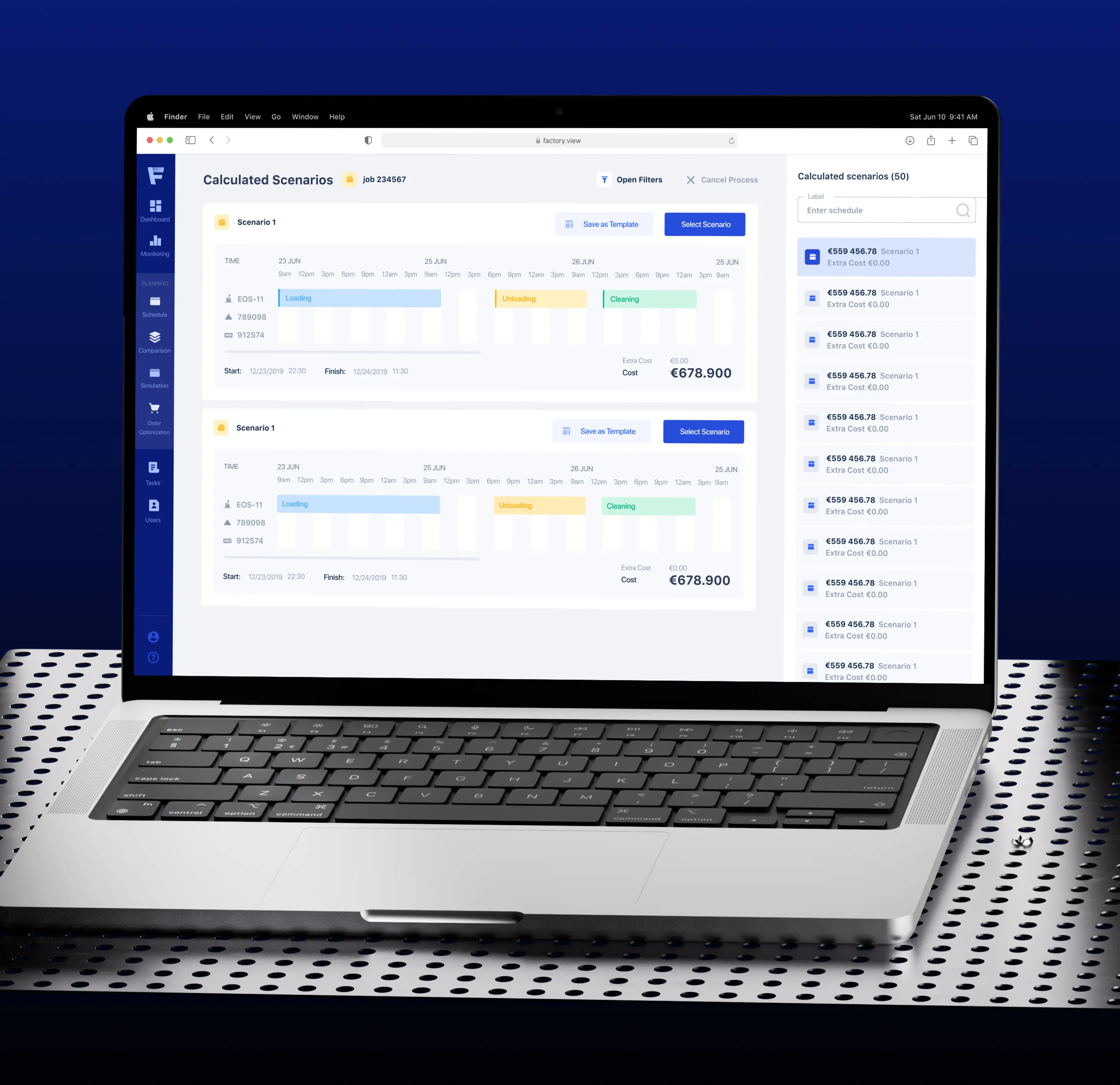
Redesigned scenario comparison for informed decision-making
Isolated calculations leave managers comparing strategies by hand, a slow process where the cheapest viable schedule is easy to miss.
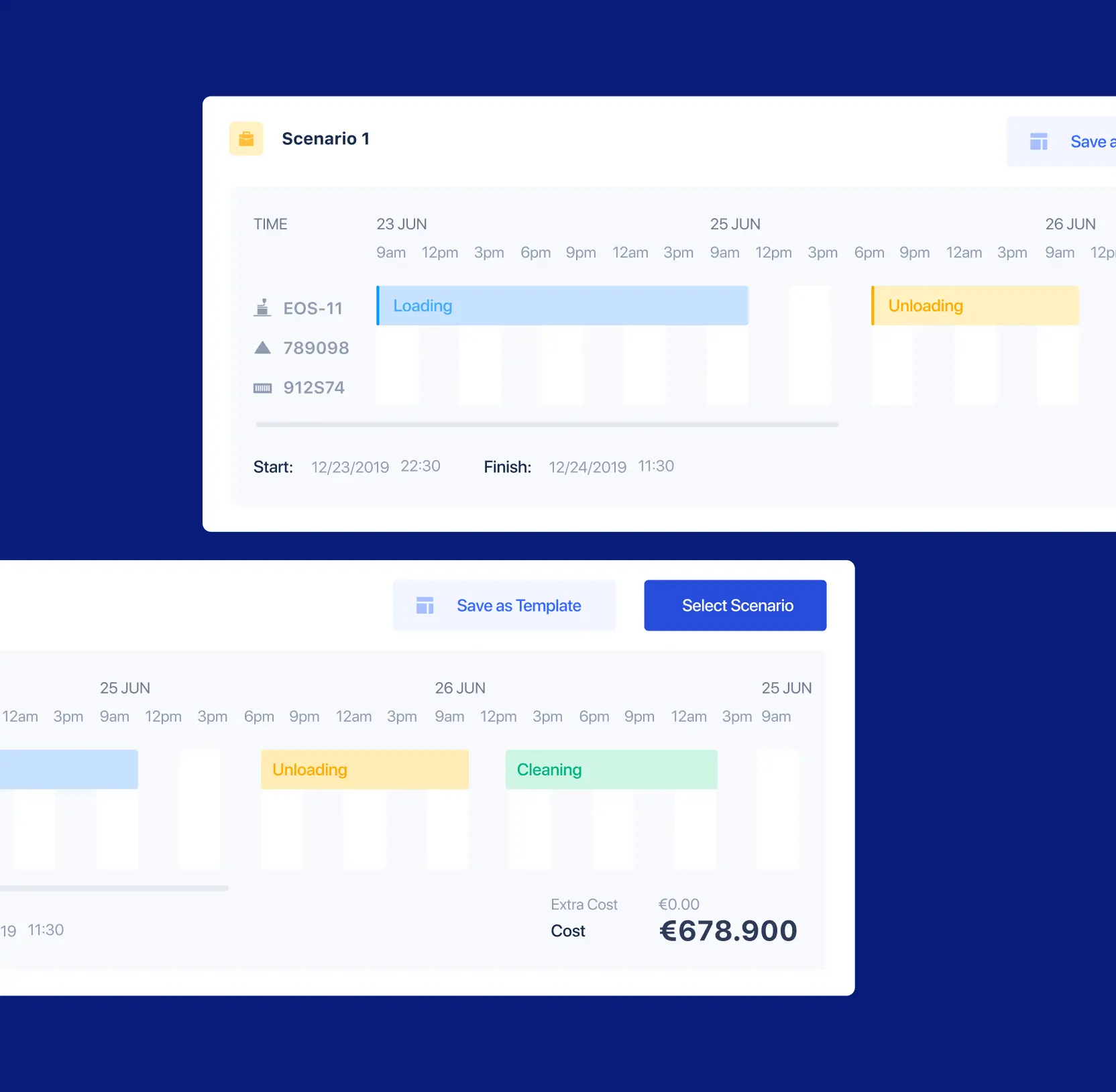
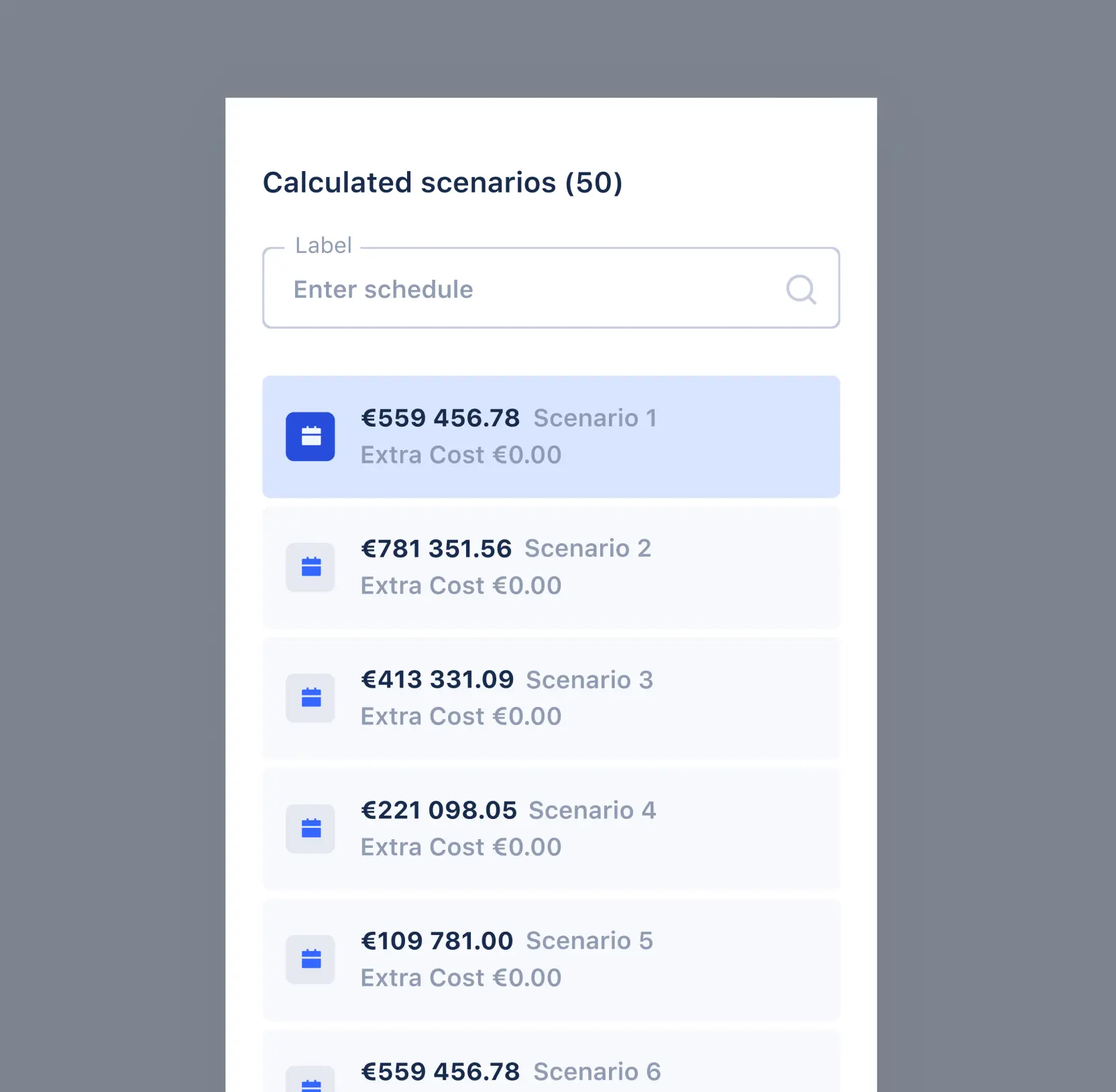
We reworked scenarios as alternative outcomes, each shown as a production timeline with its overall cost and extra expenses in focus, all sortable in one searchable list. Managers line scenarios up side by side, read the cost and timing differences in seconds, and select one without rebuilding context. The parameters driving the choice are visible throughout the whole evaluation, so the decision rests on clear numbers.
Transformed scenario simulation into an interactive workspace
A read-only simulation lets managers see results but not change them. To adjust a parameter, they leave the screen, lose context, and stretch every decision cycle.
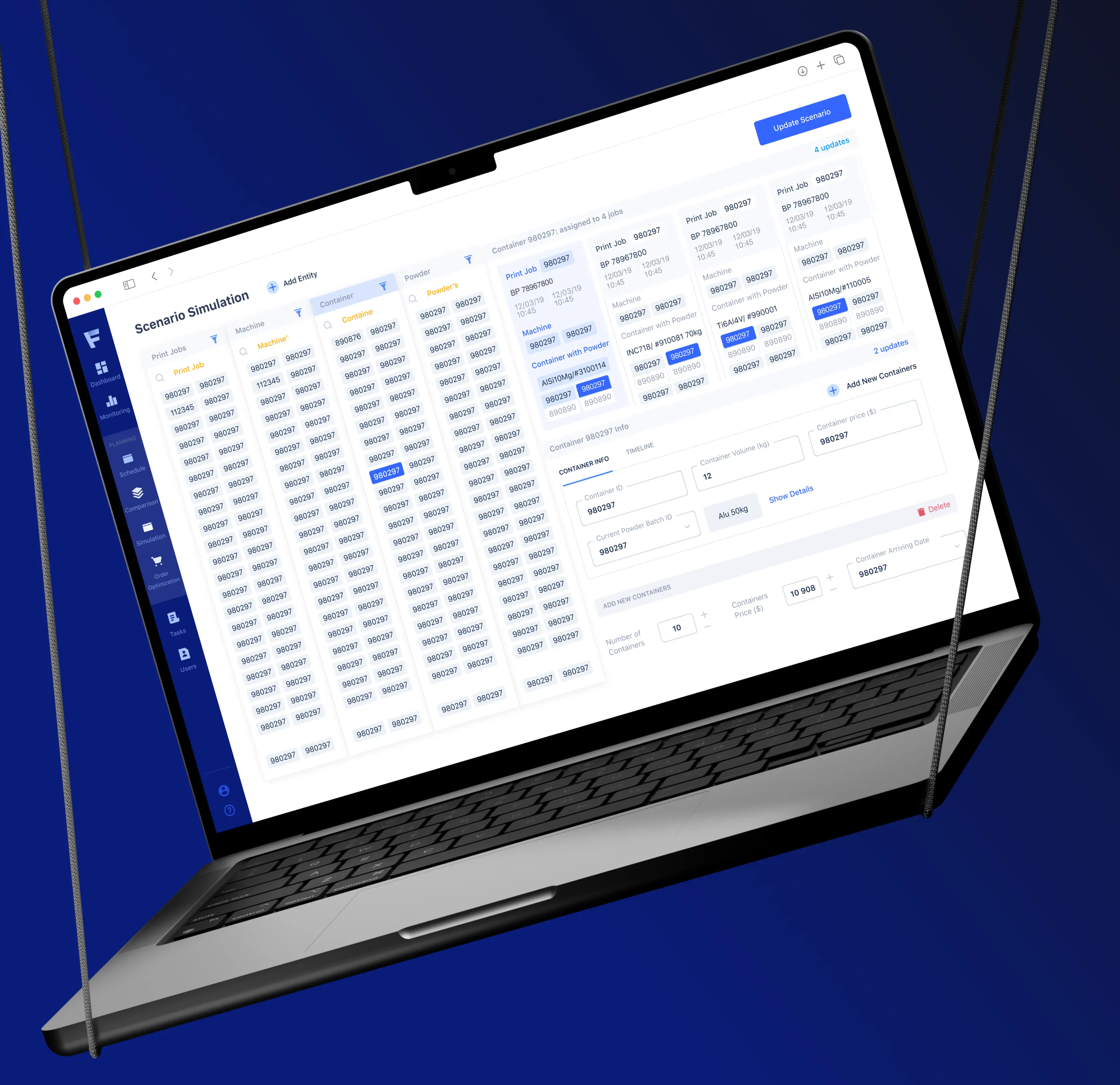
We rebuilt it as an editable workspace organized around the core entities. Managers filter and select entities, edit values, and watch a timeline show how each change reshapes the scenario in real time, with a running count of pending updates before they commit.
Fintech
Lazarev. agency offers comprehensive digital design services. Discover our range of related expertise supported by impactful case studies.
More Scaleups Cases
FAQ
How does manufacturing analytics platform design improve production planning?
Production planning depends on clear data and fast comparisons. Isolated scenarios and fragmented timelines slow decisions and increase errors. FactoryView fixes this with a unified timeline and integrated scenario comparison, letting managers act quickly.
What are the most effective UX patterns for presenting production scenarios?
Operations managers need to see differences. A comparison interface, which presents each scenario as its own complete block, forces managers to hold all three in working memory simultaneously. That's the wrong model for a high-stakes decision under time pressure. What works: alternatives with differences highlighted, processes plotted on the same time axis, and a sequential flow, which allow managers to move through options without losing context.
How should simulation interfaces in industrial software be designed to support iterative planning workflows?
Read-only simulation outputs create a structural problem: every adjustment requires exiting, modifying inputs elsewhere, waiting for recalculation, then returning. The fix is direct parameter editing within the same workspace where results are visible.
In FactoryView, Lazarev.agency rebuilt the simulation around exactly this, filtering, selection, and editing unified on one screen, with contextual panels showing timeline effects before recalculation. Eliminating unnecessary round-trips is the most direct return on a simulation redesign.
What's the business case for redesigning an engineer-built internal tool?
Tools built by engineers for internal use reflect how the system stores data. This works when users are also the builders. It stops working when the tool reaches a broader audience or when new users arrive without the institutional knowledge needed to navigate it. FactoryView had a solid technical foundation. What it lacked was a usable interface. A tool people can navigate confidently produces faster decisions, fewer errors, and better use of capability the platform already has.
How do integrated timelines enhance workflow efficiency in manufacturing analytics platforms?
Integrated timelines consolidate multiple entities and tasks into a single visual plane. In FactoryView, the timeline shows relationships between machines, jobs, containers, and materials, allowing high-level and detailed inspection without switching interfaces. A proper manufacturing analytics platform design reduces context-switching and boosts operational efficiency.
How should B2B SaaS companies approach redesigning a technical tool for a commercial audience?
Internal tools often rely on users’ familiarity with data and workflows, tolerating complexity that commercial users can’t. When scaled, this creates barriers and widens the gap between capability and usability. FactoryView addressed this by designing around decision flows instead of system architecture. For similar transitions, pinpoint areas where the interface assumes prior knowledge and reshape them around the decisions users need to make.
What lessons from manufacturing analytics UX can apply to other technical platforms?
The key takeaway shows read-only outputs and fragmented interfaces reduce the value of analytics. FactoryView’s case demonstrates how redesigning around user goals: interactive simulations, scenario comparison, and unified timelines, transforms technical capabilities into actionable insights. Any SaaS platform serving complex operations can adopt these principles to boost adoption, engagement, and decision speed.