How we redesigned Resourcify to bring financial clarity to enterprise sustainability operations
Project:
the project
Aligned contracts, invoices, and orders into one financial layer
Resourcify is a B2B sustainability platform for enterprise waste operations. It helps companies manage vendors, validate invoices, track recycling, and stay compliant across many locations. The ambition was to connect finance, vendors, and sustainability in one place.
The ambition outgrew its original structure, which did not match how enterprise teams work. Modules stood apart, and reporting surfaced data without a clear hierarchy. Every gap cost time, invited billing errors, and made audits harder to pass.
Resourcify partnered with Lazarev.agency to align contracts, invoices, orders, and reporting into one structure: contract terms drive invoice checks, order flows mirror real operations, and reporting reflects how multi-location enterprises manage waste. The result is a controllable, auditable financial layer for sustainability operations.
Here's how we achieved it.
The Project’s
Discovery Phase
Gave finance an audit-ready view of waste spend
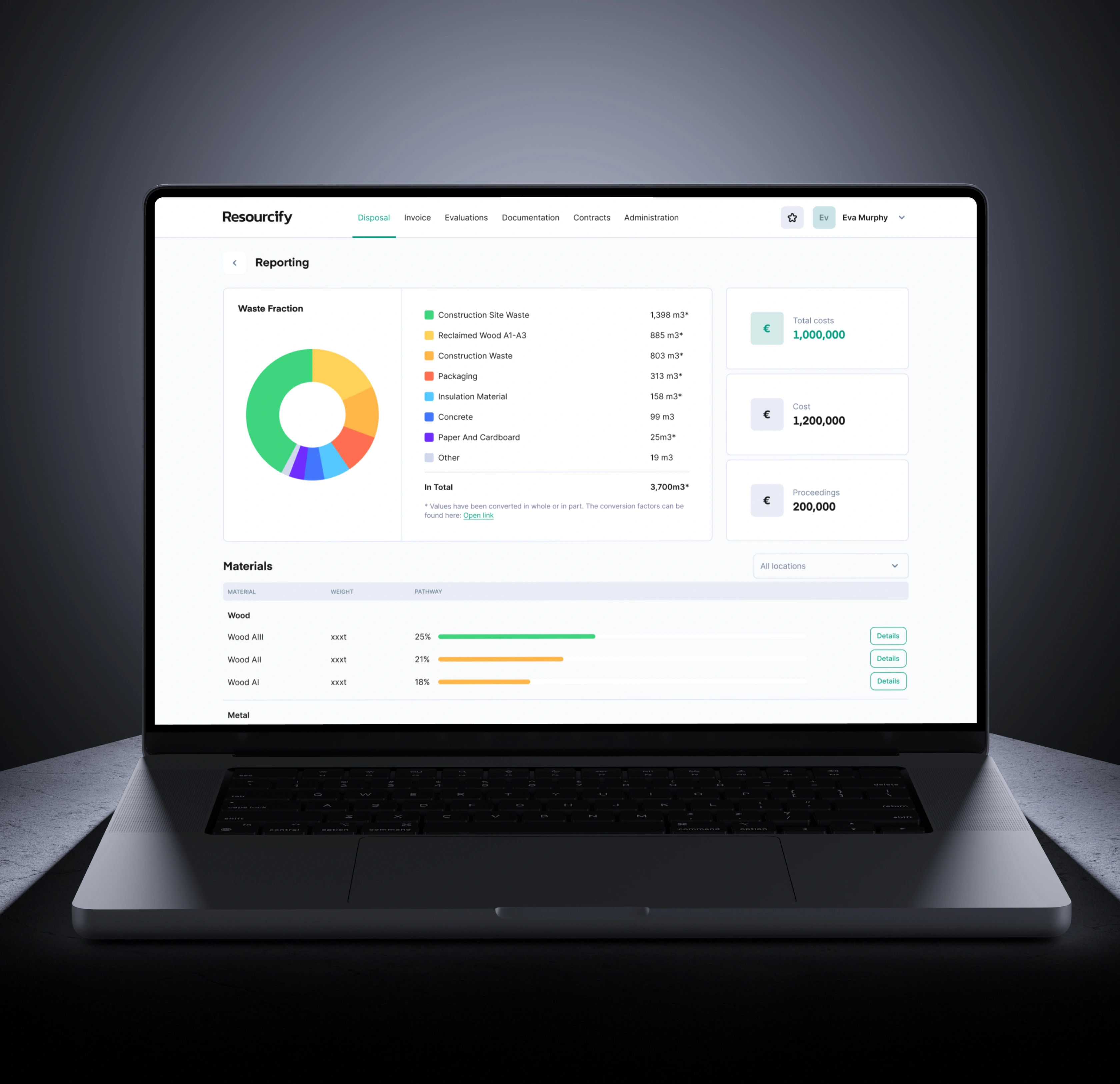
Before the redesign, Resourcify's reporting surfaced figures without a clear hierarchy, so teams could not see where costs accumulated across sites.Â
We rebuilt the reporting view to bring waste volume, cost against proceeds, and recovery pathways into one screen, filterable to a single location. Now, finance and sustainability teams see the full picture on one screen and can defend the numbers under audit without losing days to reconciliation.
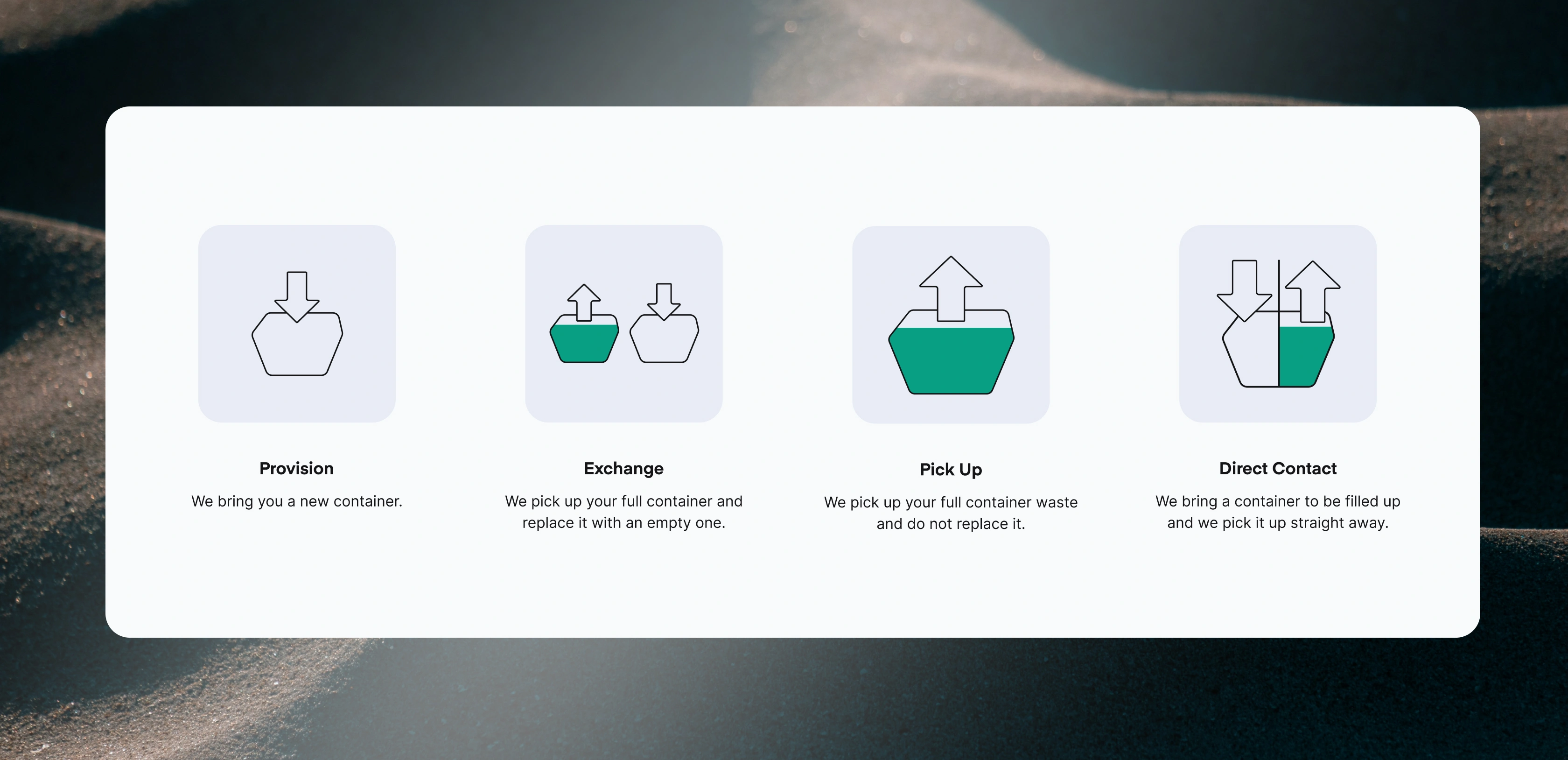
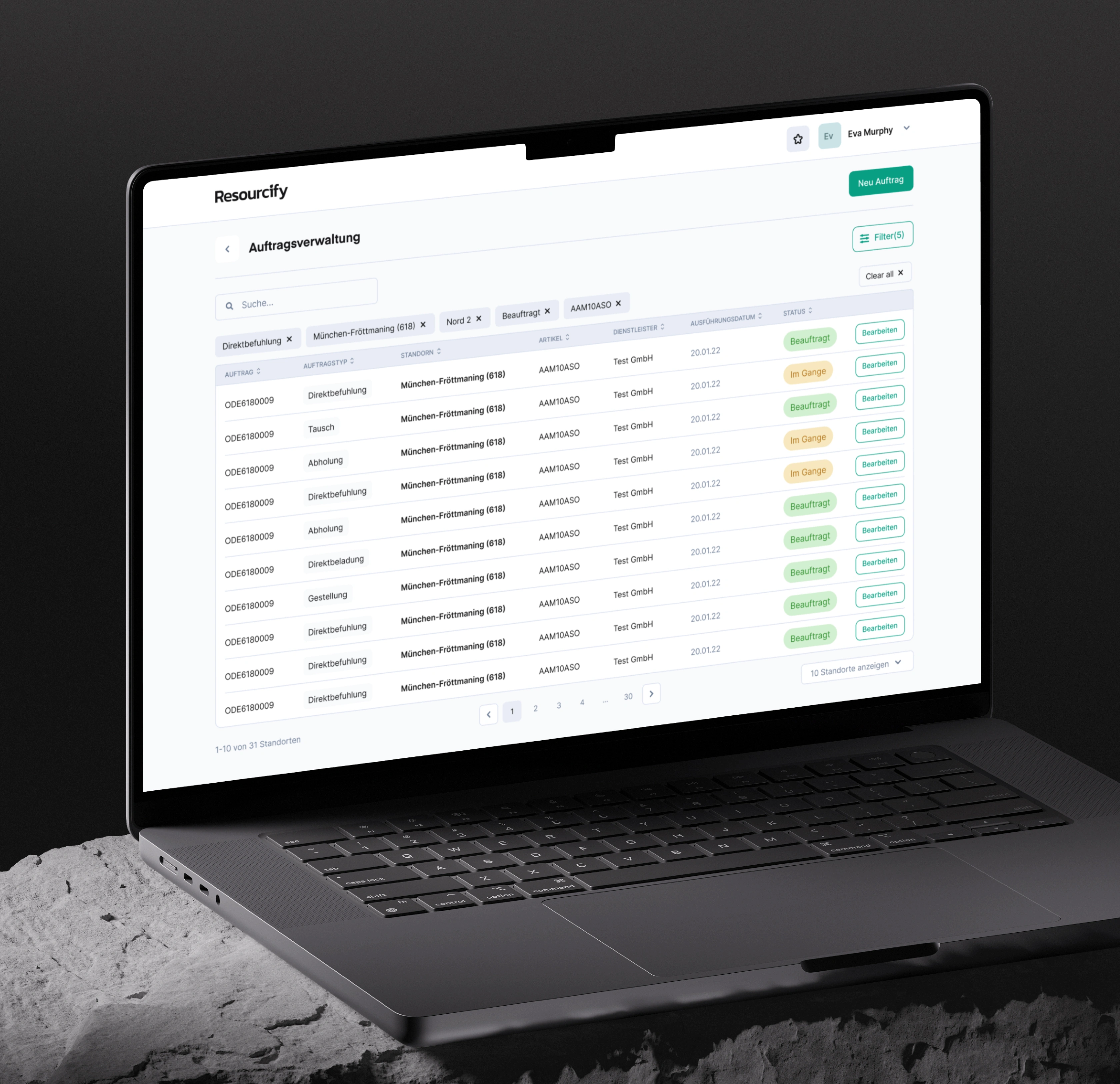
Consolidated orders by site, vendor, and status
Order tracking was fragmented, so multi-location teams could not see which vendor was servicing which site or where a job stood.Â
Our team redesigned Resourcify's order management around how enterprises operate: every order carries its type, site, vendor, date, and status, with filters to narrow the view to one site or vendor. That way, operations teams catch delayed or missed pickups early and keep service aligned with contract terms across all sites.
10 product redesign companies with proven results and client success stories
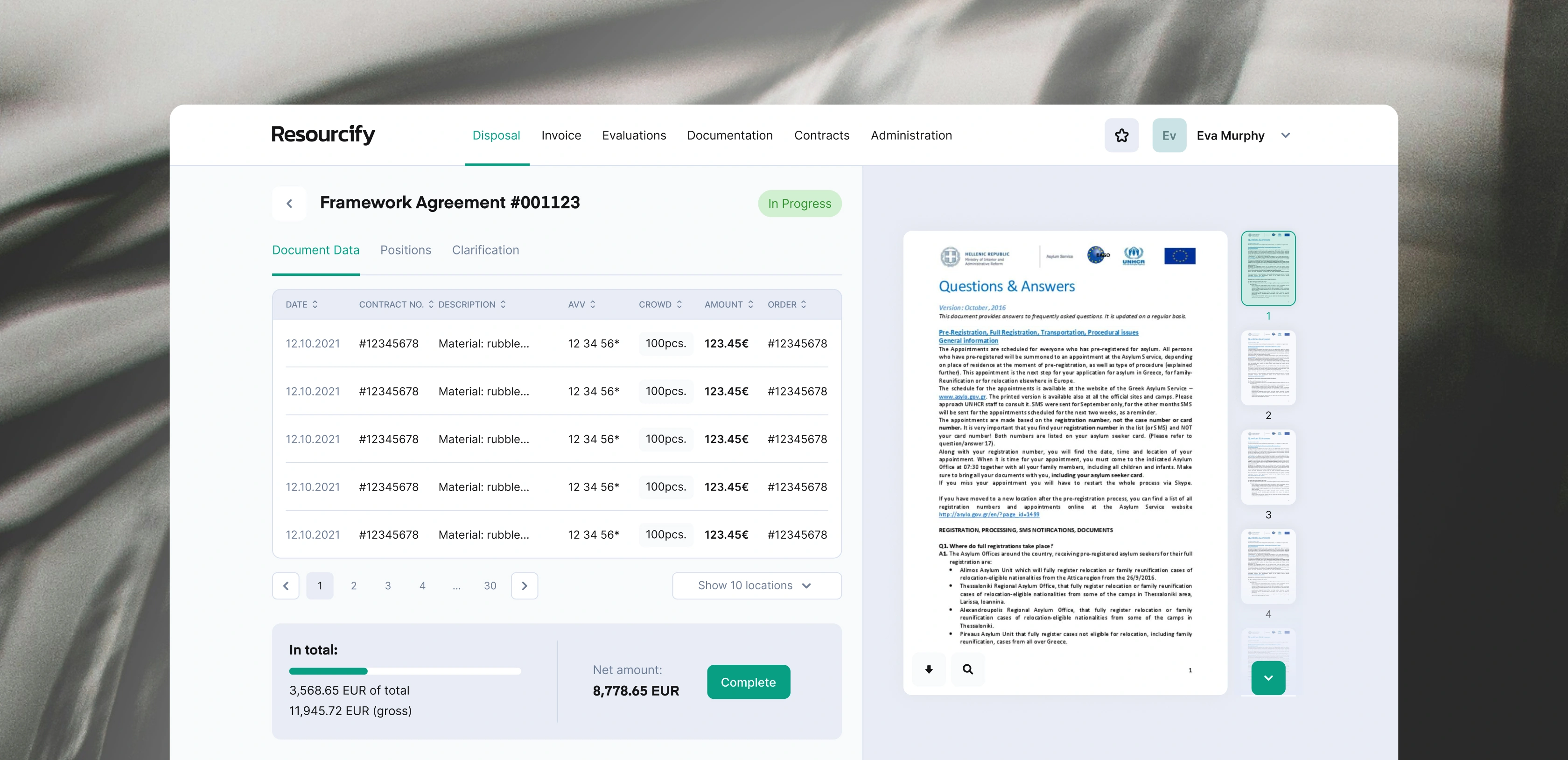
Built contracts into an auditable pricing layer
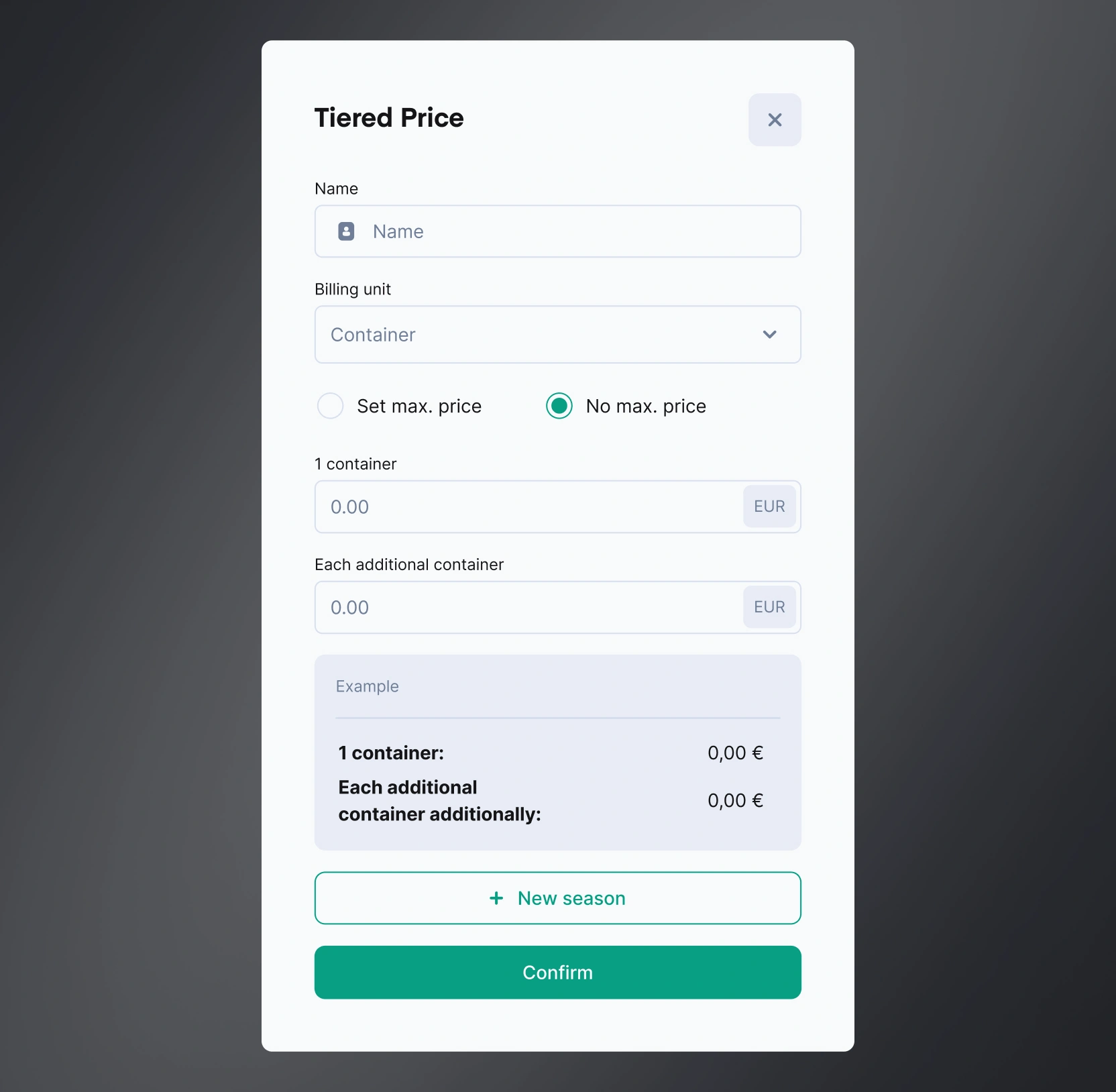
Contracts sat as static references. Teams read terms by hand, billing drifted from what was agreed, and disputes followed.Â
We reworked Resourcify's contract layer to capture pricing as structured rules, including tiered and seasonal rates per billing unit, with each framework agreement showing its positions and amounts beside the source document. Billing follows the agreed terms, and finance teams can check any charge against the contract without leaving the record.
Surfaced vendor feedback without breaking the task
Checking an order's history or a vendor's message meant leaving the task and losing the thread.Â
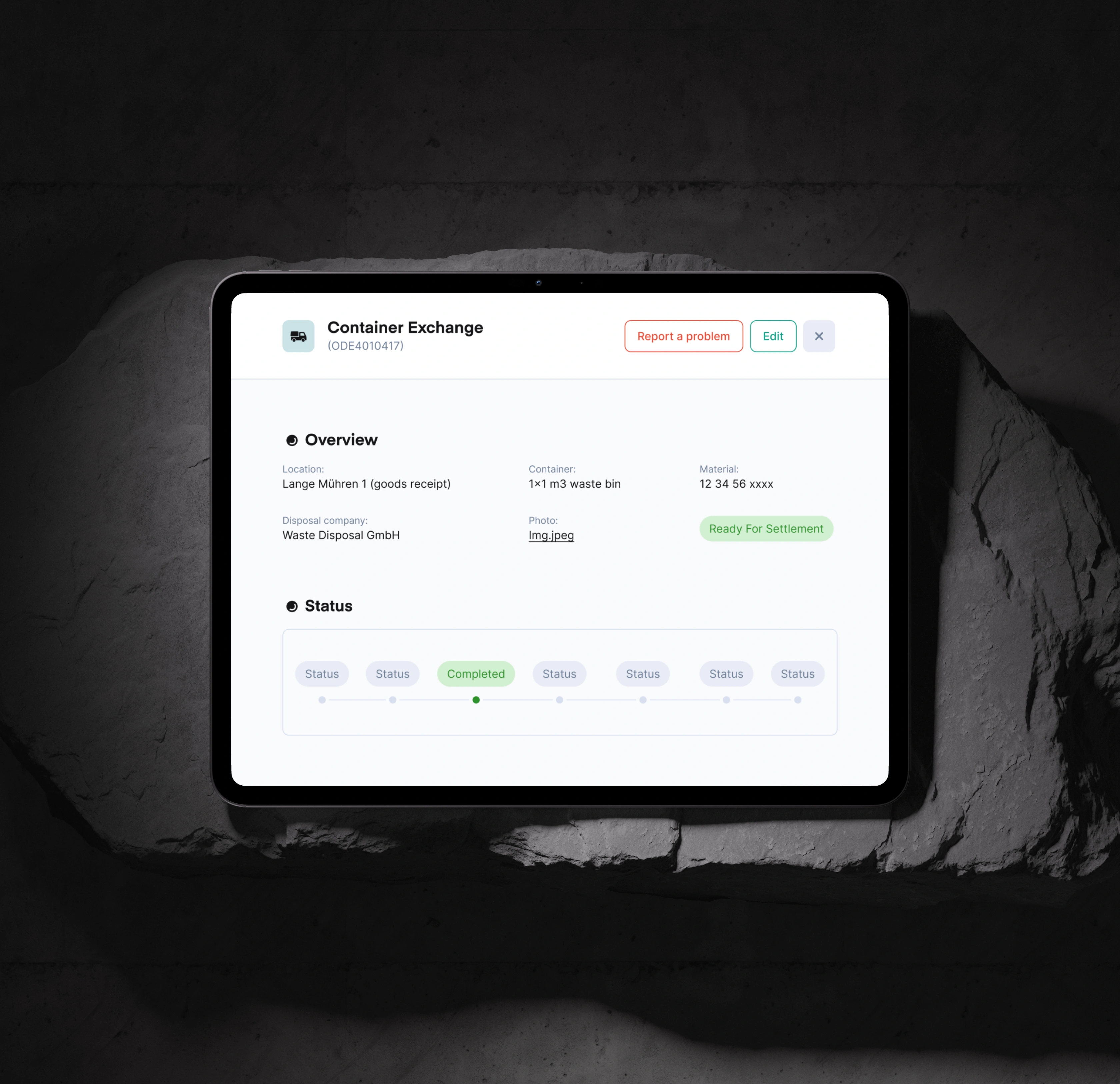
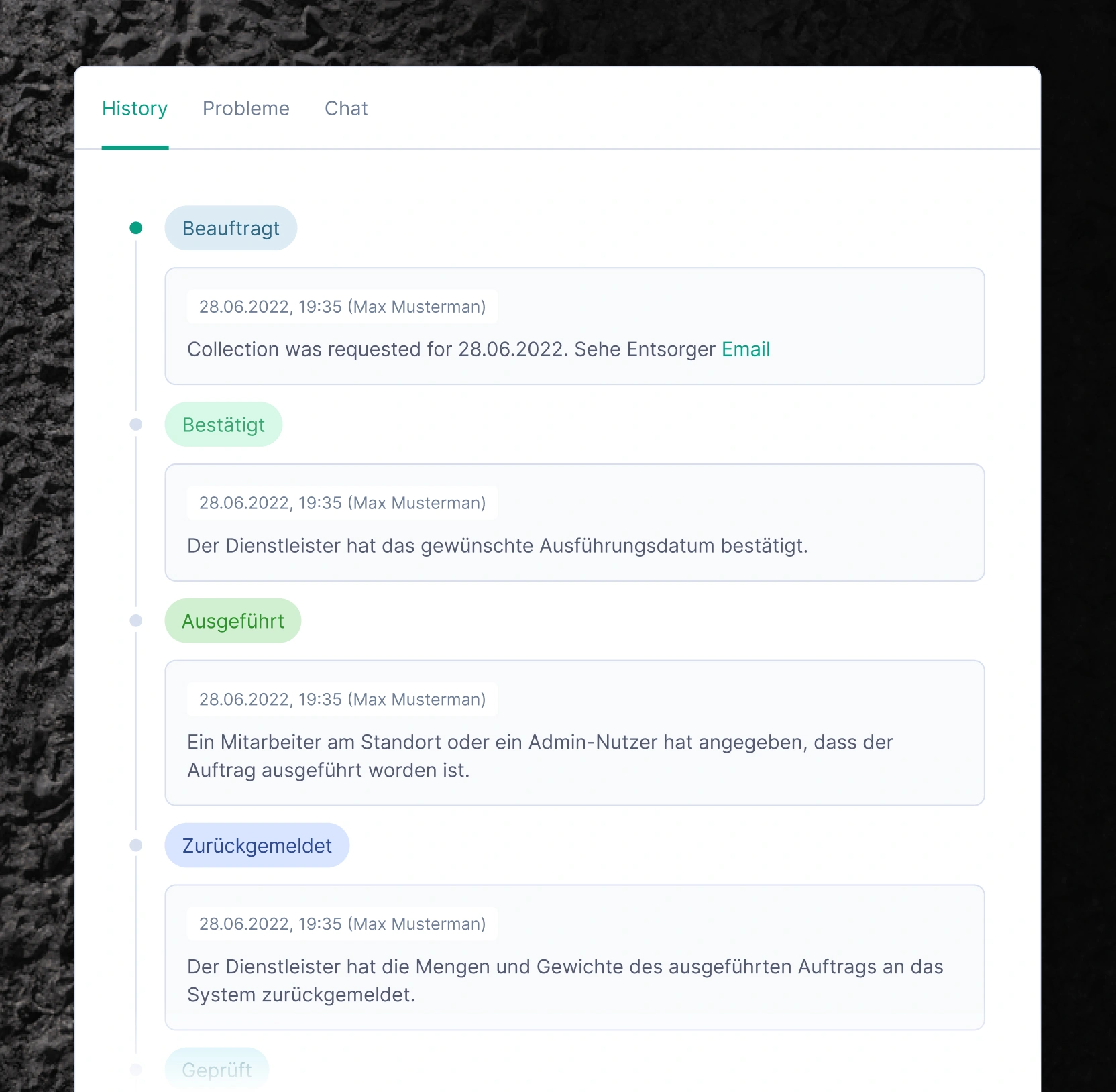
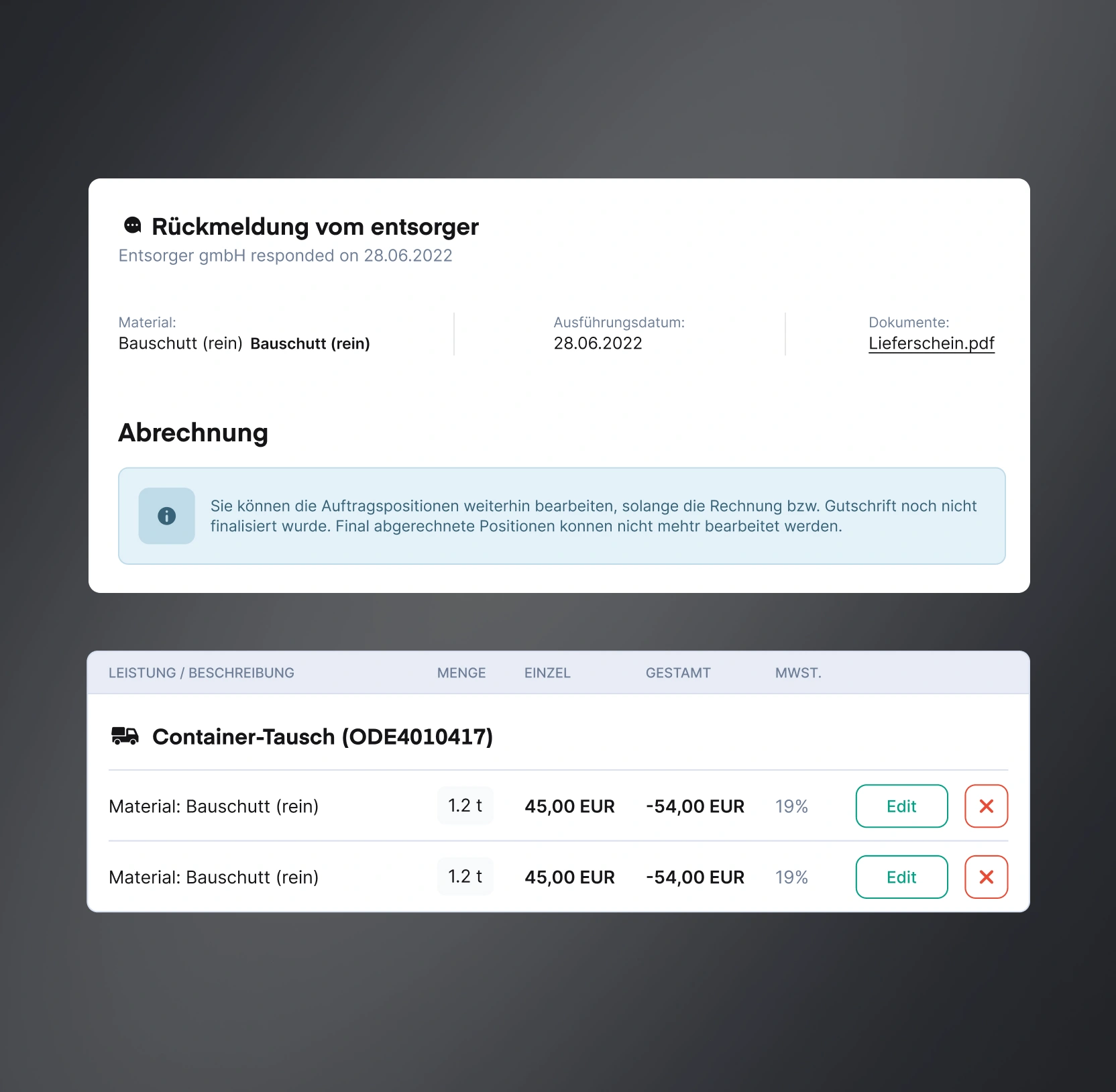
We added side-modals to Resourcify: activity history, vendor communication, the status timeline, and settlement line items slide into the current view. Users confirm what a vendor reported, resolve a problem, and approve a settlement without abandoning the work in front of them, keeping decisions fast and disputes short.
User feedback: how to collect, analyze, and act on it
AI & ML
Lazarev. agency offers comprehensive digital design services. Discover our range of related expertise supported by impactful case studies.
More Scaleups Cases
FAQ
What defines an effective B2B waste management platform design?
An effective B2B waste management platform design aligns contracts, invoices, orders, and reporting into one structured system. It reduces manual validation, enforces pricing logic, and supports multi-location enterprise workflows.
How can B2B platforms reduce invoice discrepancies at scale?
Invoice discrepancies drop when pricing logic is embedded directly within validation flows. Instead of relying on manual comparisons, teams see contract terms alongside invoice data. This context makes inconsistencies visible early, reduces approval delays, and limits financial exposure across large volumes of transactions.
What improves enterprise adoption in sustainability SaaS products?
Enterprise adoption improves when products feel predictable and reliable. Clear workflows, consistent navigation, and reporting aligned with compliance needs matter more than feature count. Buyers expect systems that support internal processes, scale across teams, and hold up under audit or executive-level scrutiny.
Why is contract-driven logic critical in operational platforms?
Contracts define pricing, scope, and responsibilities. Platforms that reflect this logic structurally prevent misalignment between agreements and execution. Without this foundation, teams rely on manual interpretation, leading to repeated errors, disputes, and loss of trust across vendors and internal stakeholders.
How should reporting be structured for compliance-heavy industries?
Reporting should mirror how operations are organized, including regions, vendors, and service categories. It needs to provide clear audit trails, highlight accountability, and support regulatory requirements. Well-structured data enables both day-to-day oversight and long-term planning without additional reconciliation work.
When should a growth-stage SaaS company invest in platform redesign?
A redesign becomes necessary when teams rely on workarounds, onboarding slows, or inconsistencies appear in financial data. These signals point to deeper structural issues. Addressing them early helps maintain product credibility, supports scaling, and prevents operational complexity from compounding over time.
What business value does a strong B2B waste management platform design deliver?
Strong platform design reduces revenue leakage by enforcing pricing accuracy and improving validation. It increases vendor accountability, strengthens compliance reporting, and simplifies operations. Over time, it positions the product as a core system within enterprise infrastructure rather than just another tool.