One verifiable record behind every deposit and inspection
Managing rental properties is inherently stressful, especially when it comes to security deposits. Landlords struggle to track property conditions, tenants worry about unfair deductions, and disputes can escalate into costly legal issues.
Rentcredit's founders had the concept but needed a full product vision to replace manual, paper-based deposit management with something both parties could rely on. They partnered with Lazarev.agency to design a B2C property management platform where landlords and tenants work from the same verified record.
A single hub for deposits and inspections
Trust breaks down when landlords and tenants keep separate versions of events — one person's spreadsheet against another's memory.
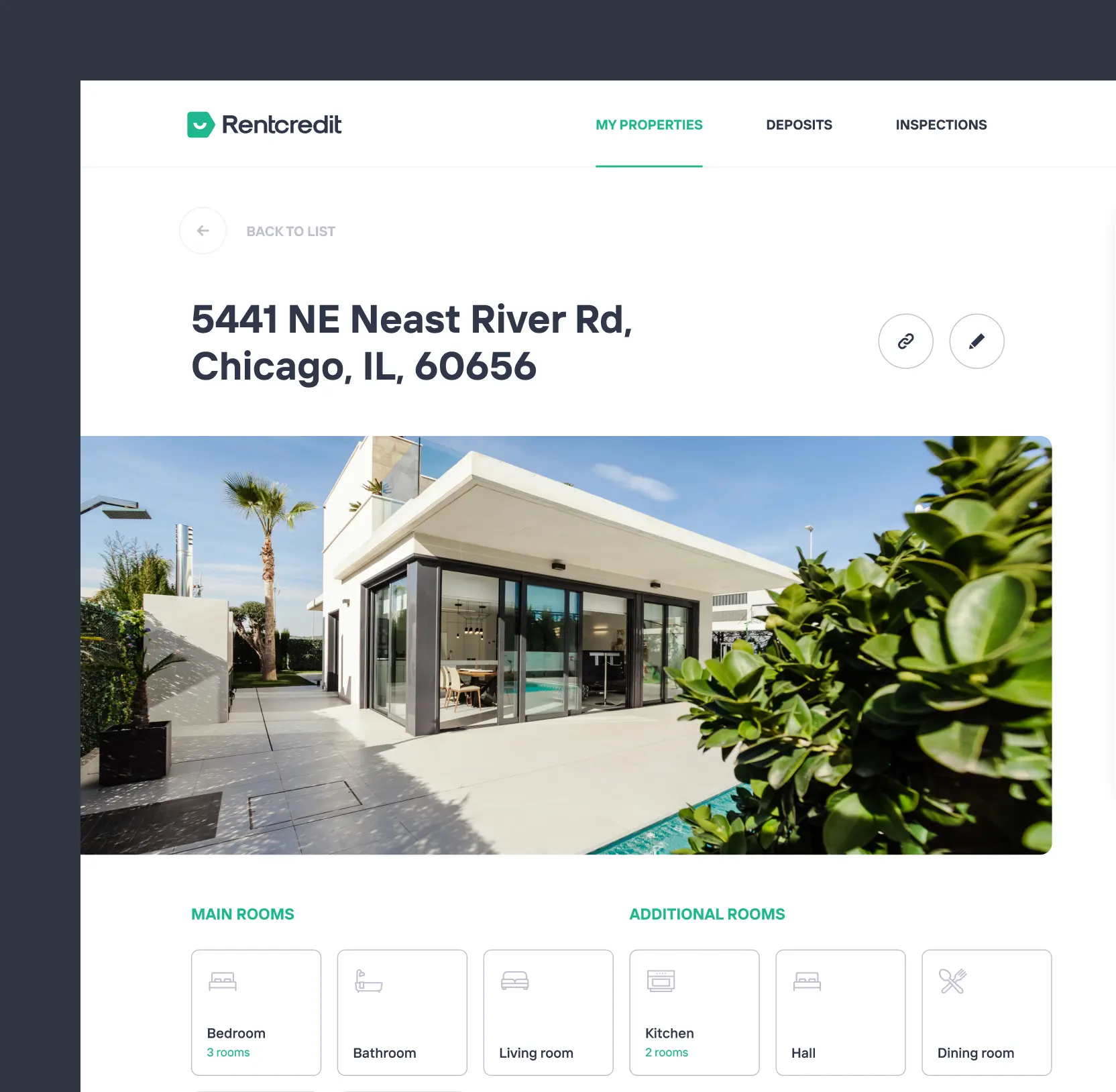
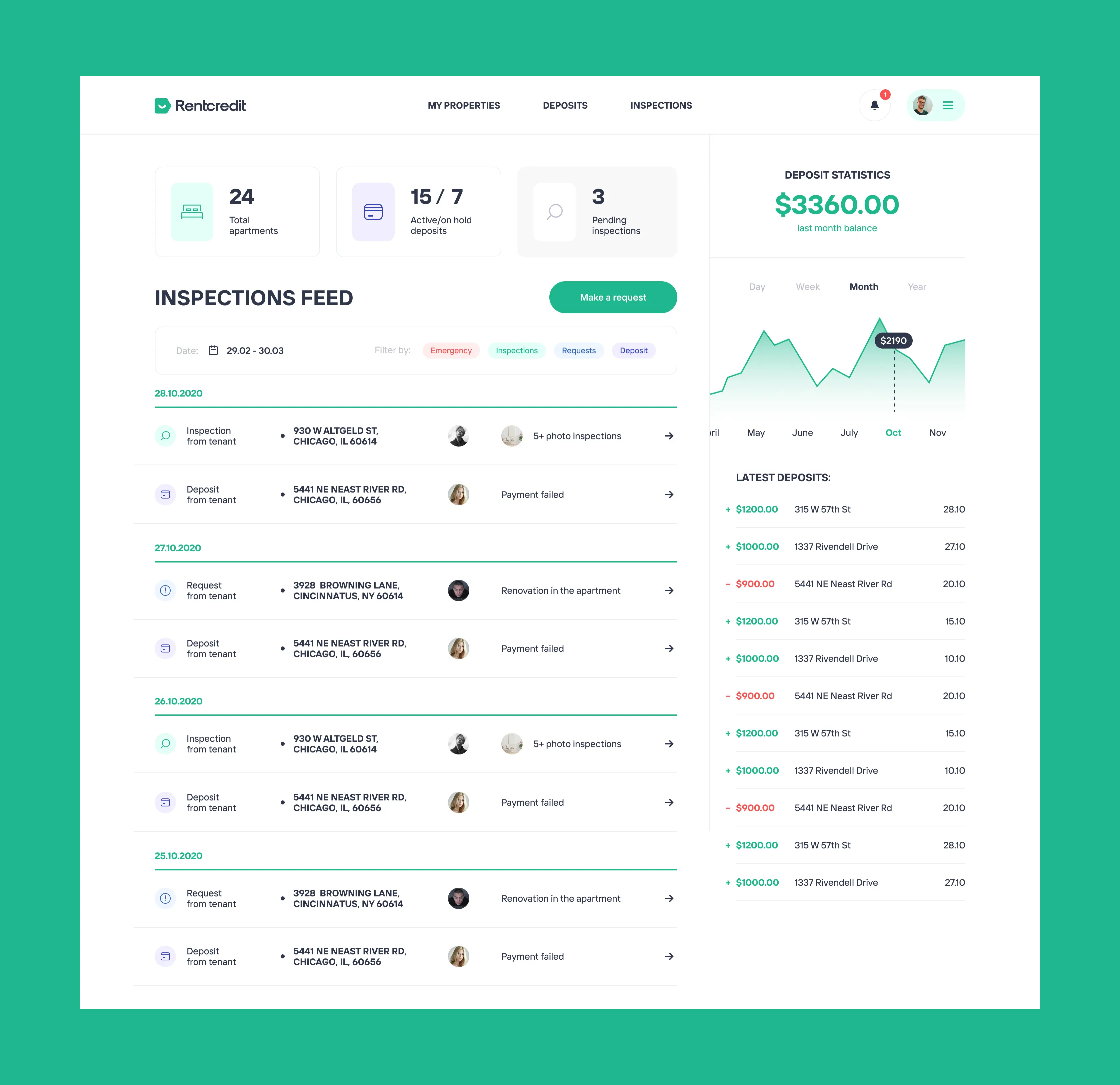
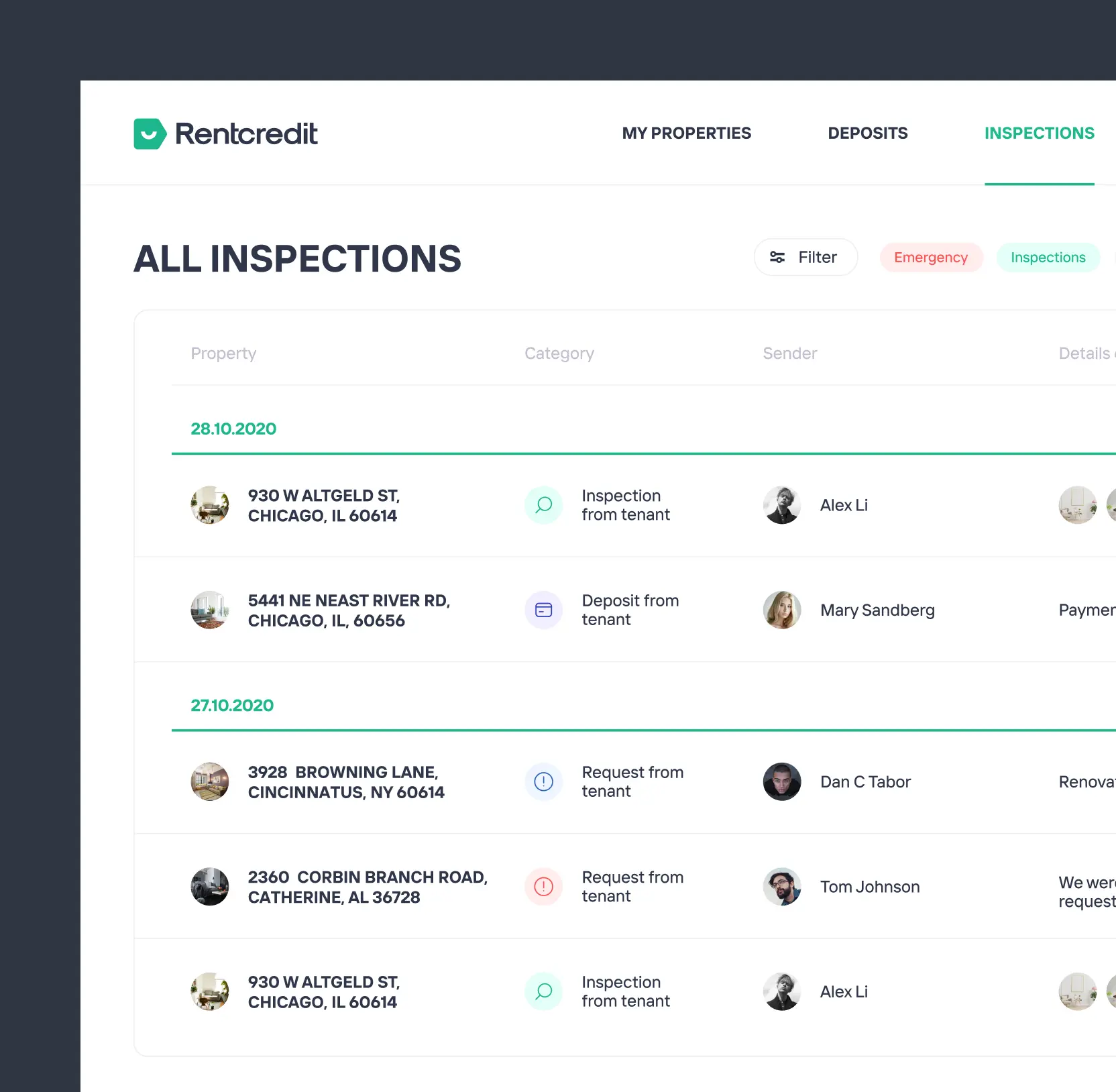
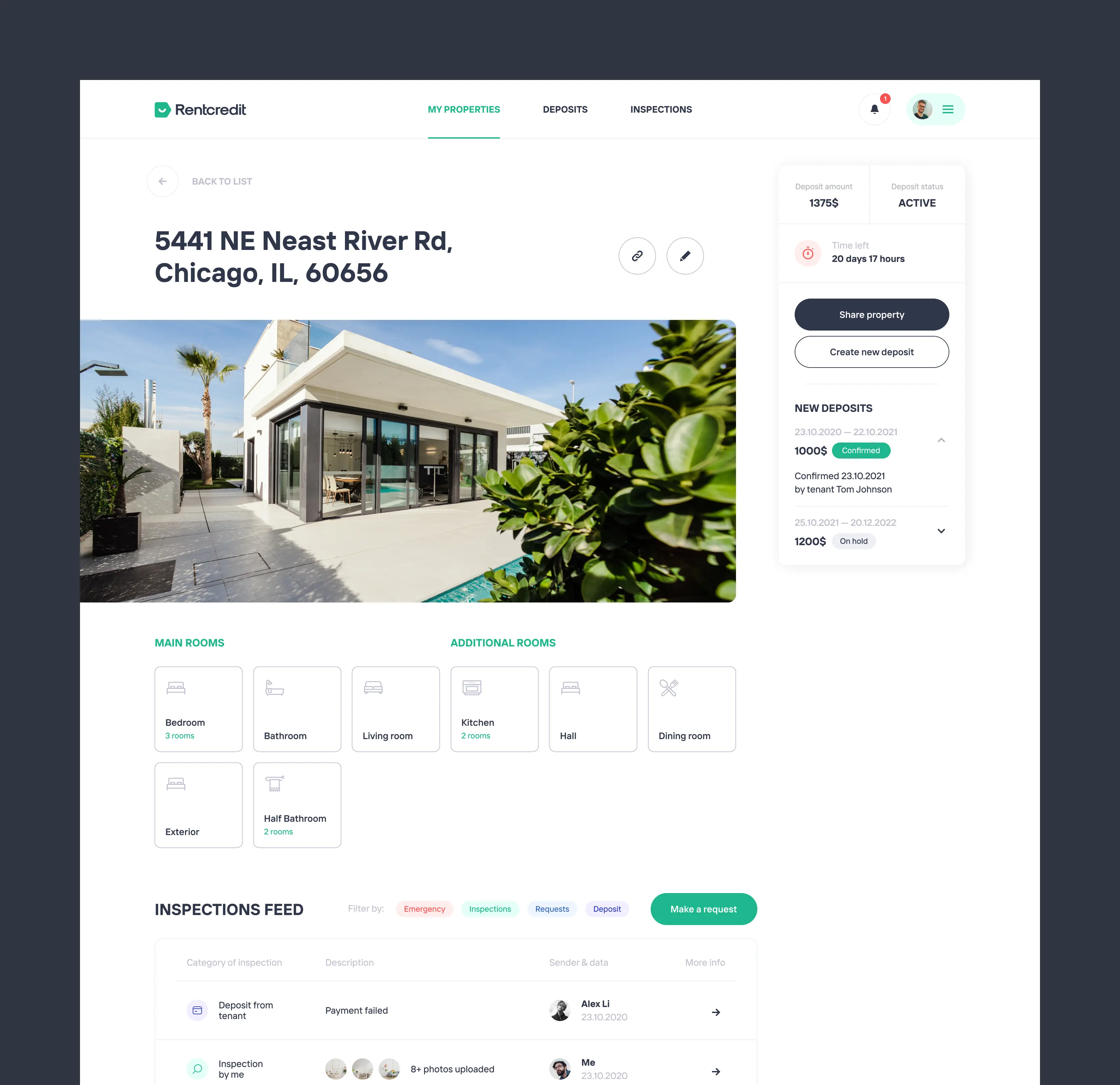
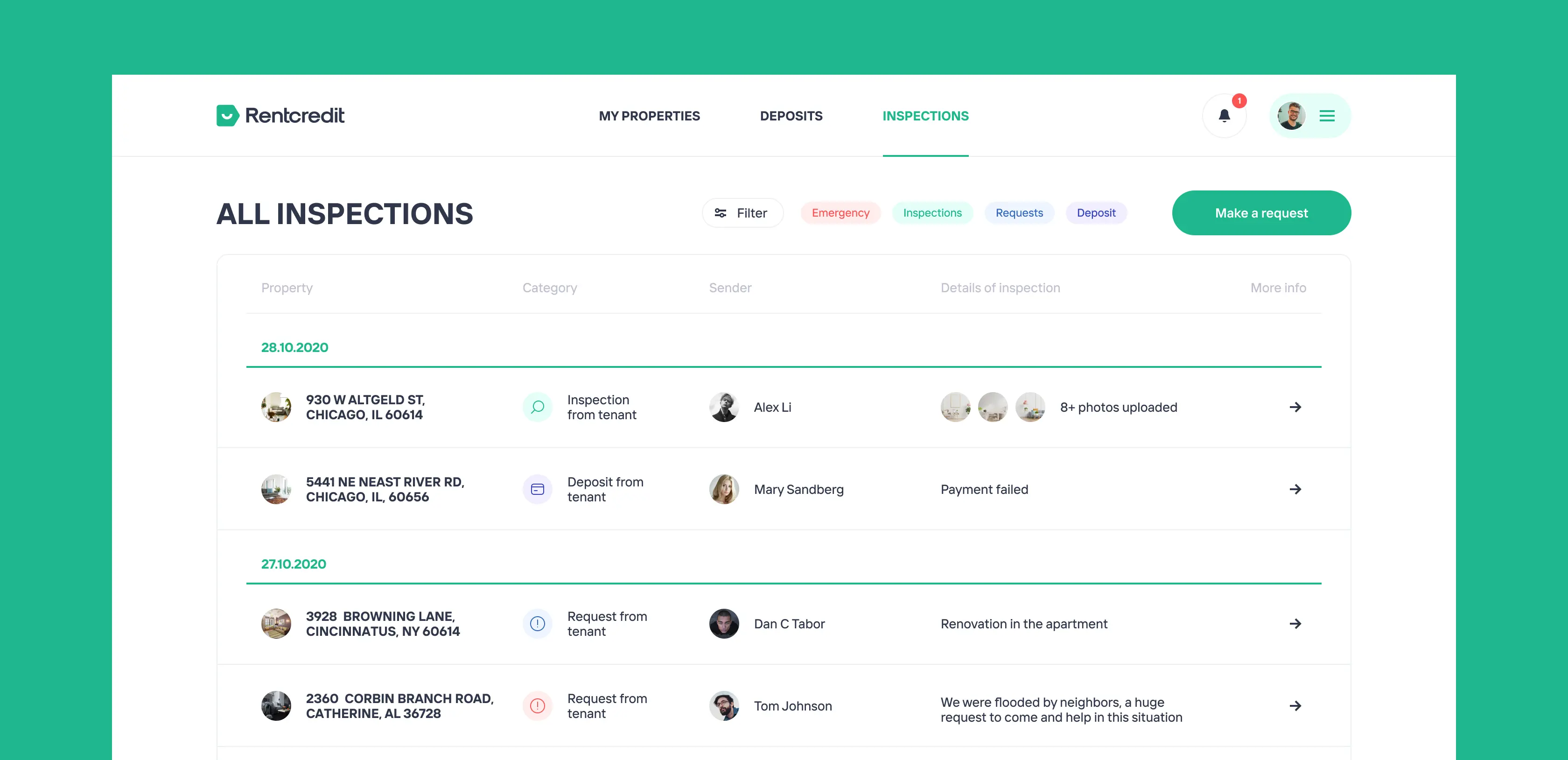
We gave both sides a single place where deposits, inspections, and property activity coexist and are updated for everyone. A landlord can check a deposit's status, an inspection's photos, and a property's history without chasing anyone, and the tenant sees the same facts. Shared visibility is what makes the rest of the platform credible.
Structured property onboarding
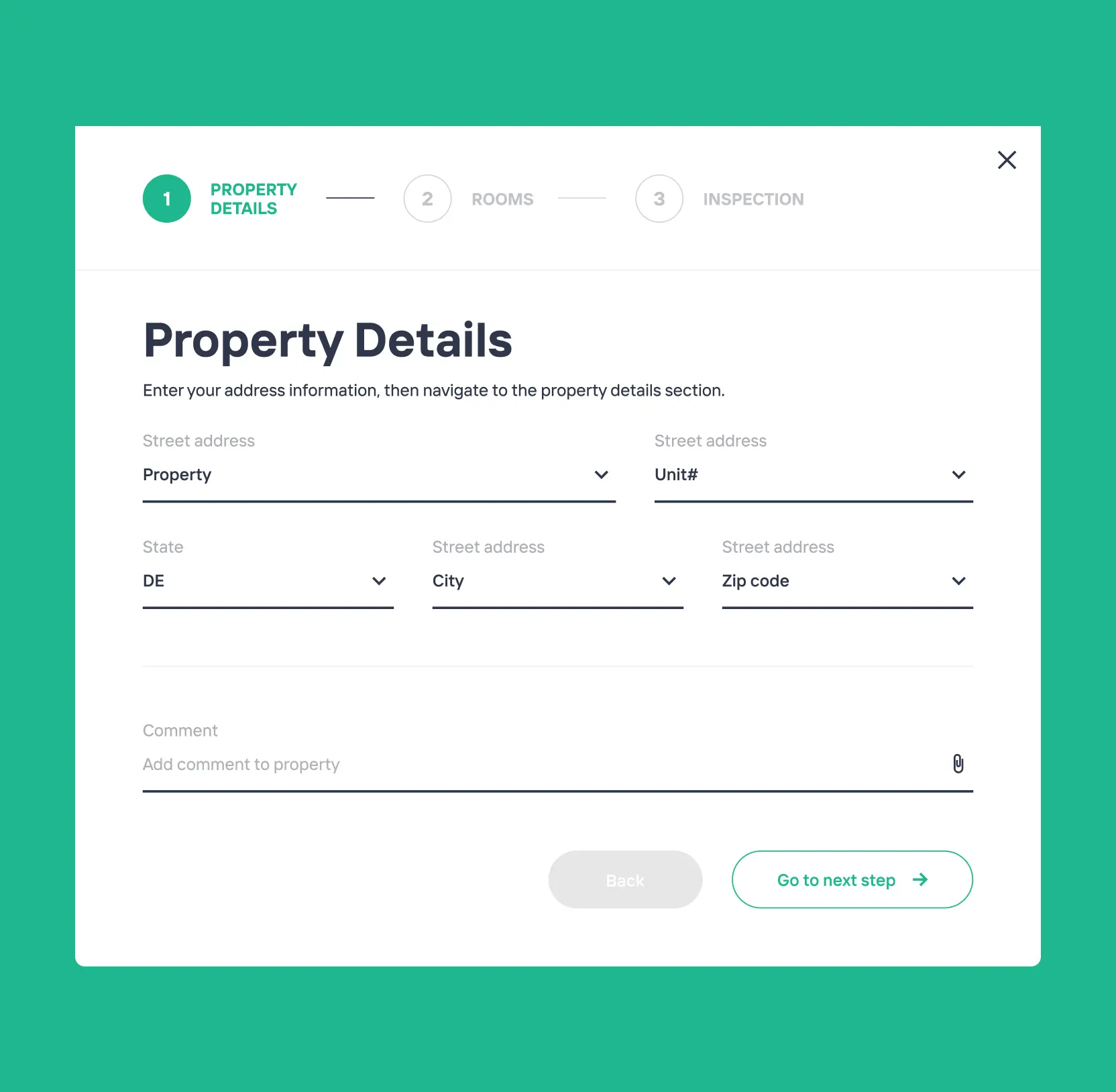
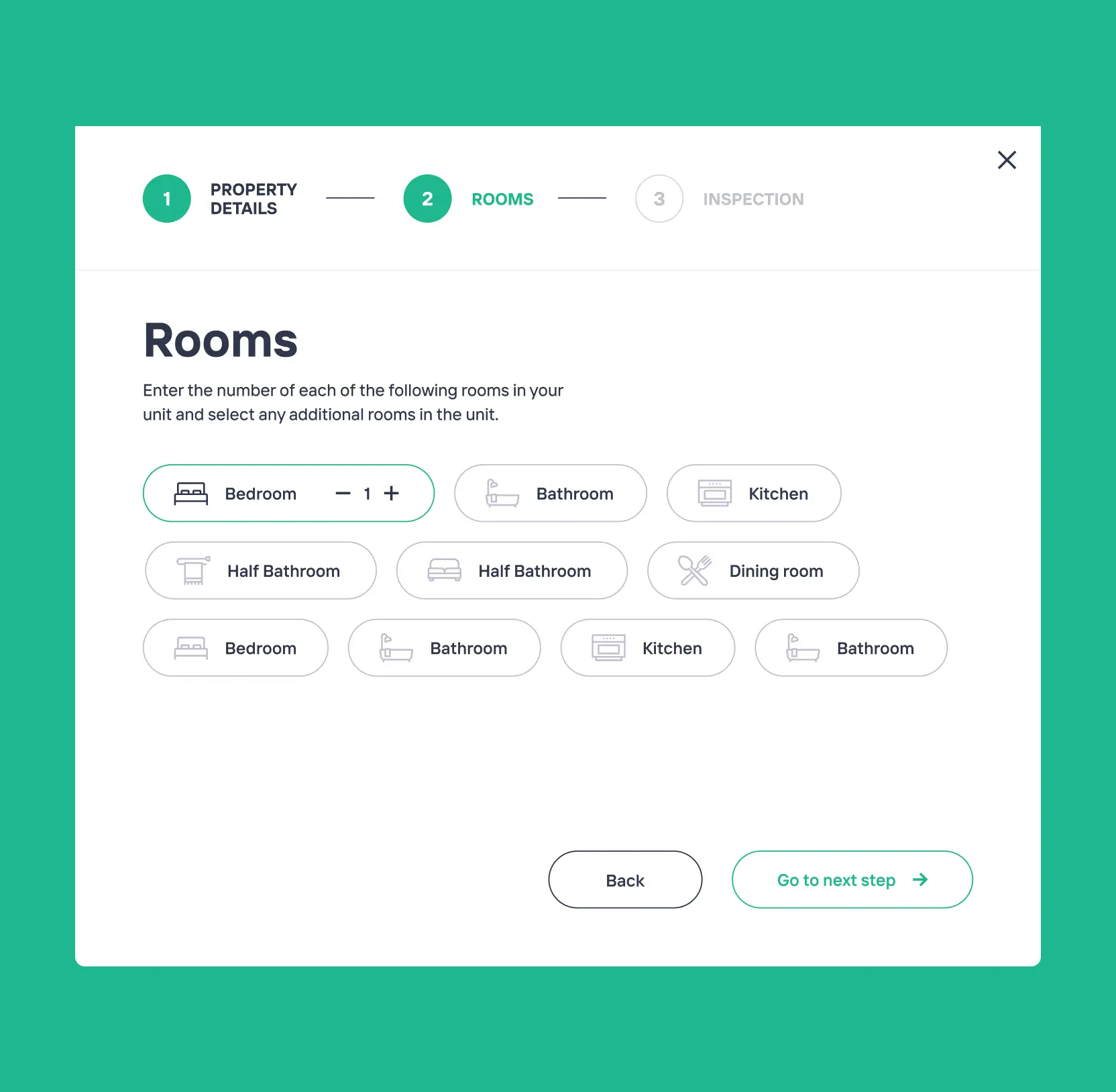
A platform earns nothing until a property is on it, and landlords abandon setup when it feels like filing taxes. We built a guided listing flow that asks only for what matters: location, rental terms, room counts, and additional features, then folds the first property inspection into the same pass, so the unit is documented the moment it goes live. Landlords then invite a tenant by email or a shared link, and both open to the same verified profile.
Integrated pre-move-in records to settle disputes early
Most deposit disputes happen because property conditions are not documented in sufficient detail before tenants move in.
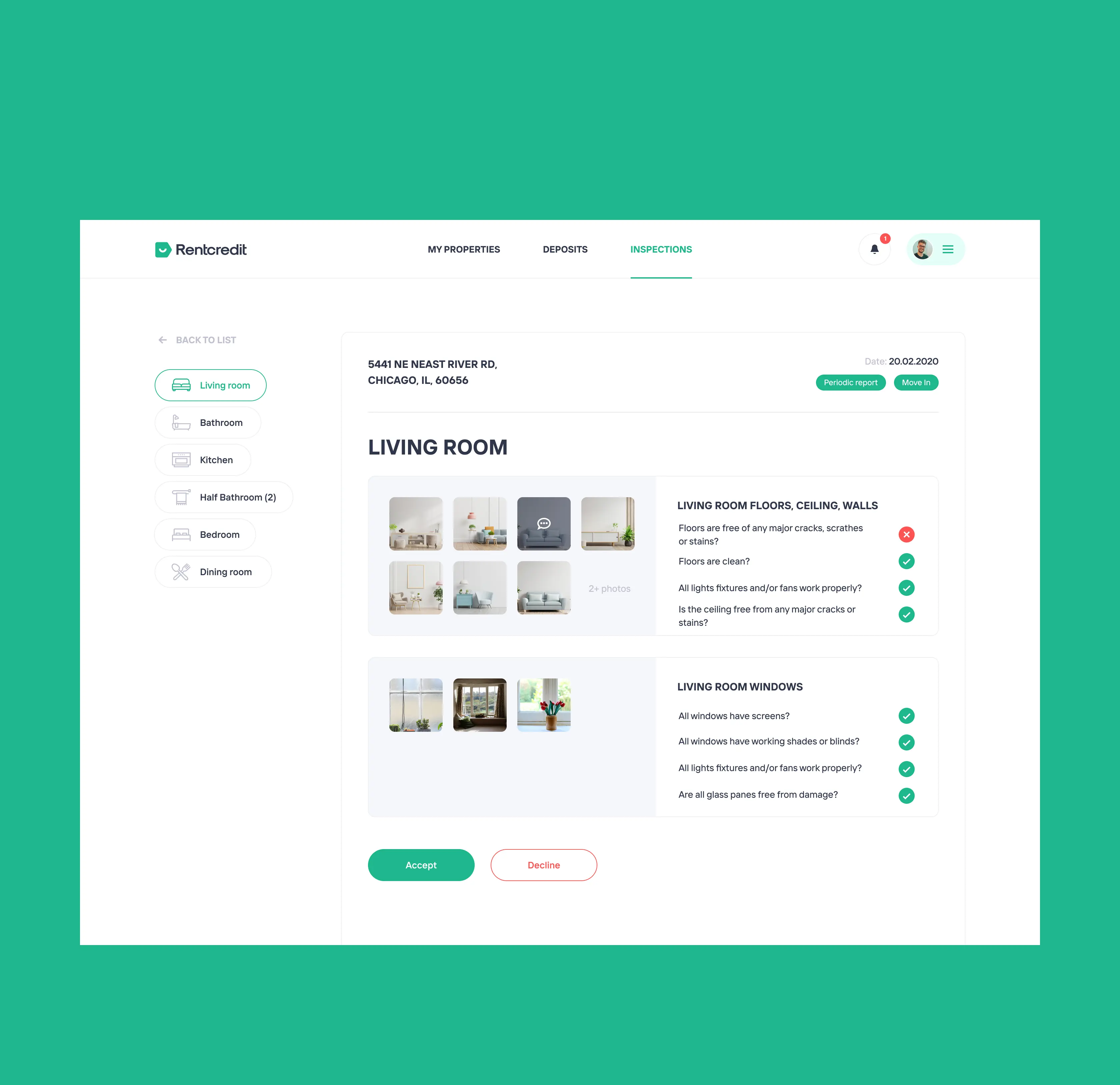
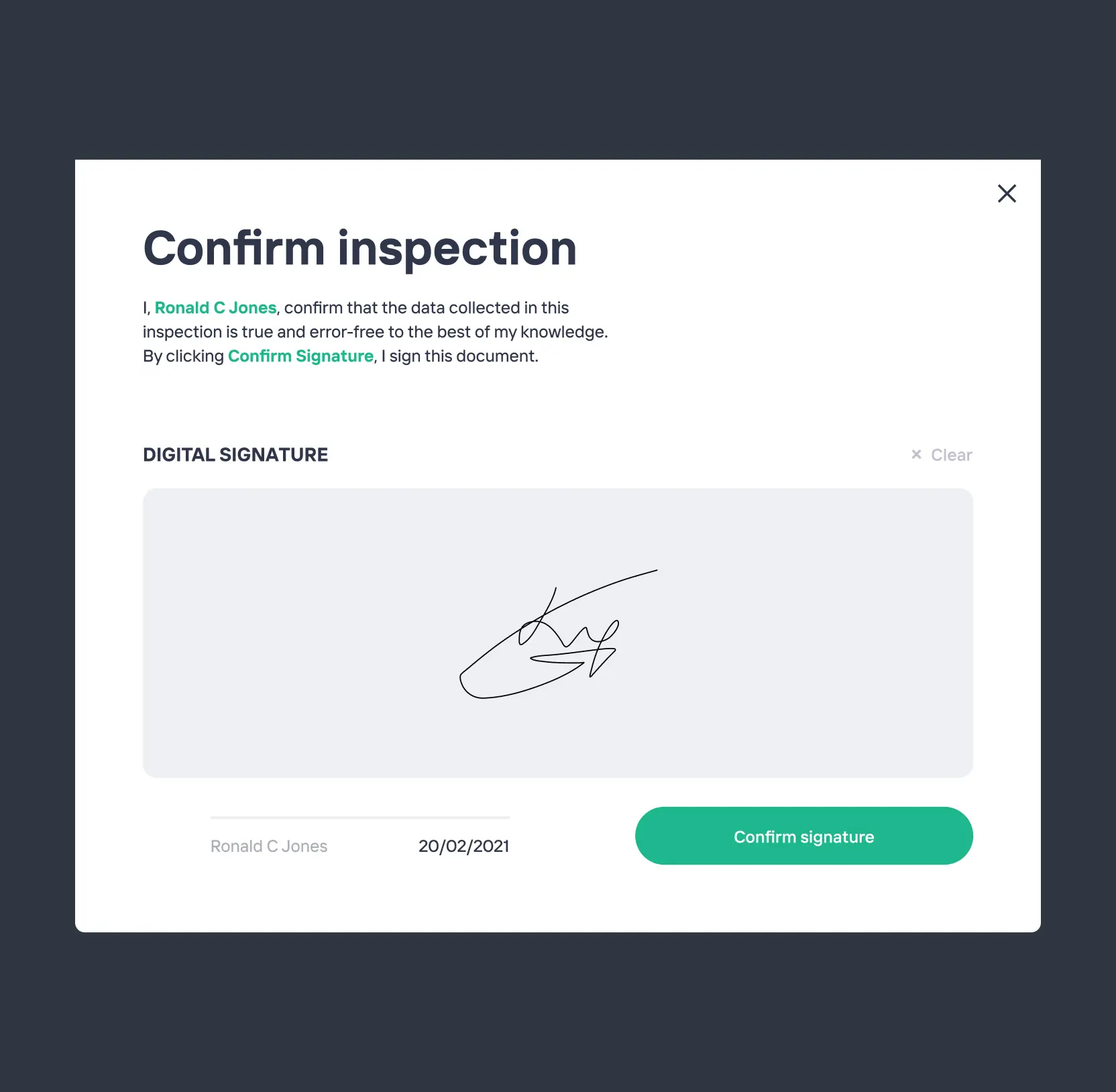
We designed a pre-move-in inspection feature to capture the exact condition of every room through structured checklists and supporting notes before anyone occupies the unit. With a documented baseline both sides reviewed, a move-out claim finally has something concrete to measure against. Landlords can defend legitimate charges, and tenants trust they won't be billed for wear that predates them.
Designed a property record tenants keep current
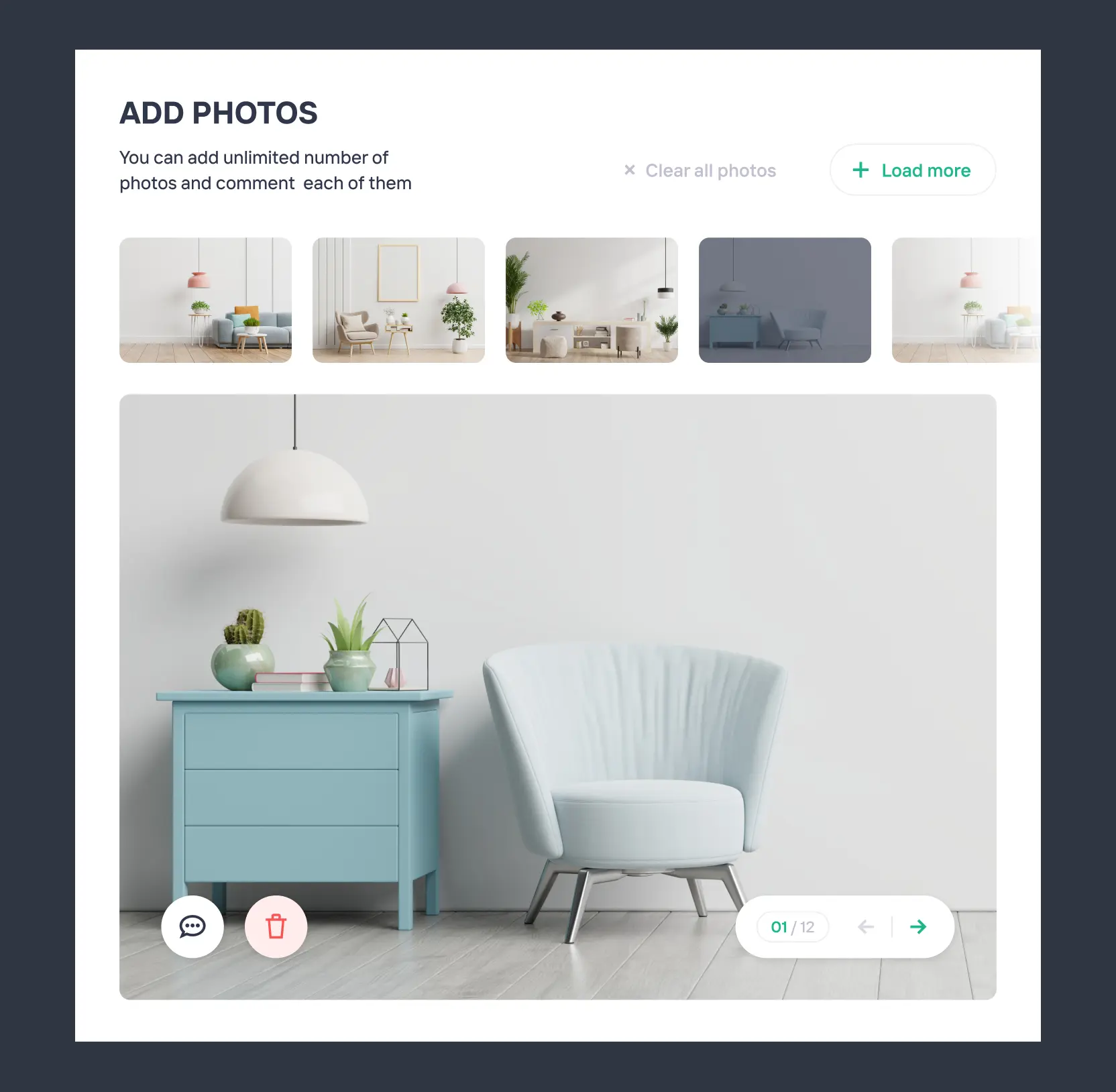
A condition report from move-in day loses value the longer a tenancy runs. We let tenants keep it alive by uploading photos throughout occupancy, while landlords work from a structured checklist aimed at the costly issues: damp, mold, pests, and damage. The property's record stays current, and small problems surface while they're still cheap to fix. Landlords protect the asset, and tenants build a track record that protects their deposit.
Simplified security deposit requests with structured digital forms
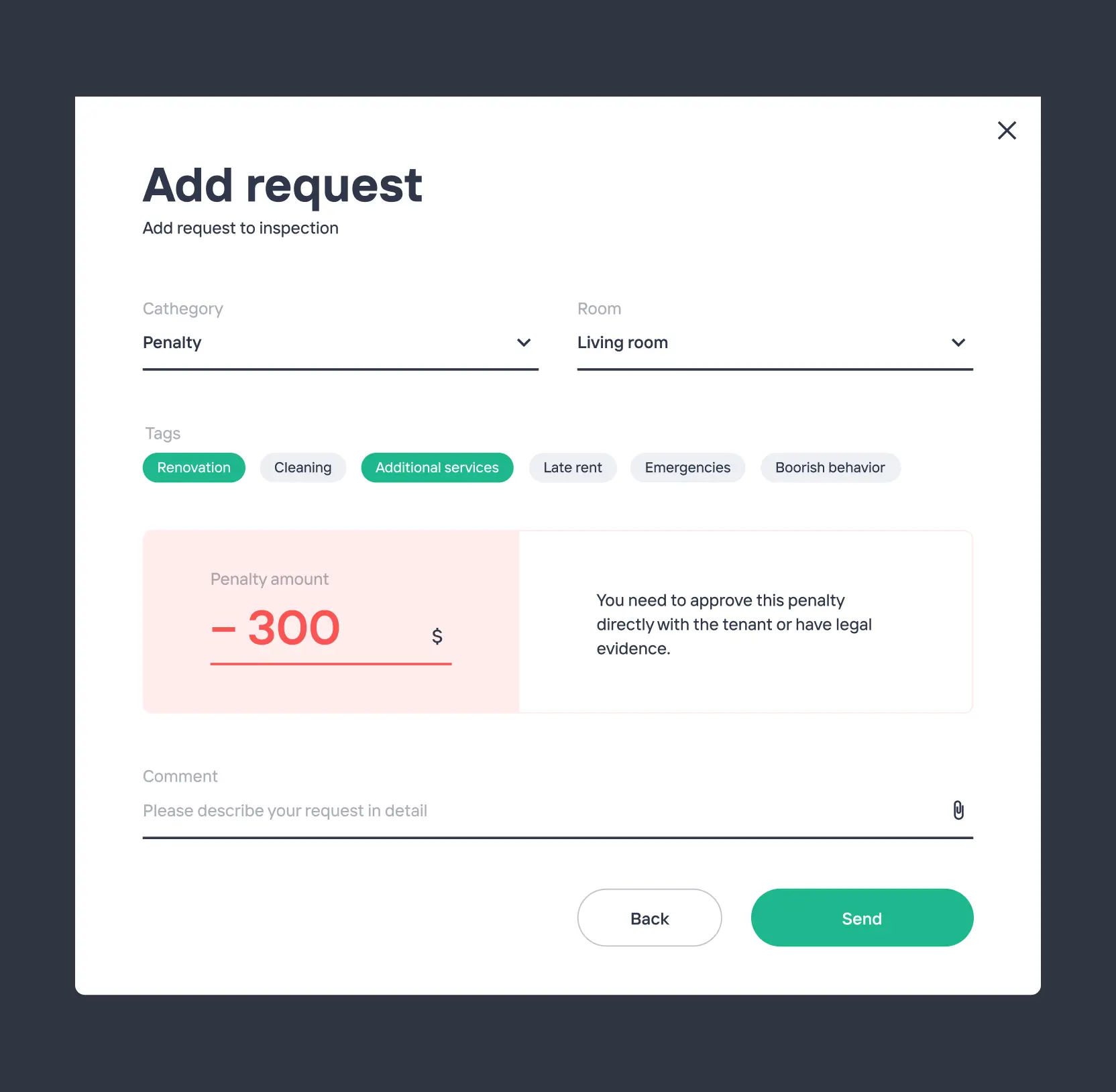
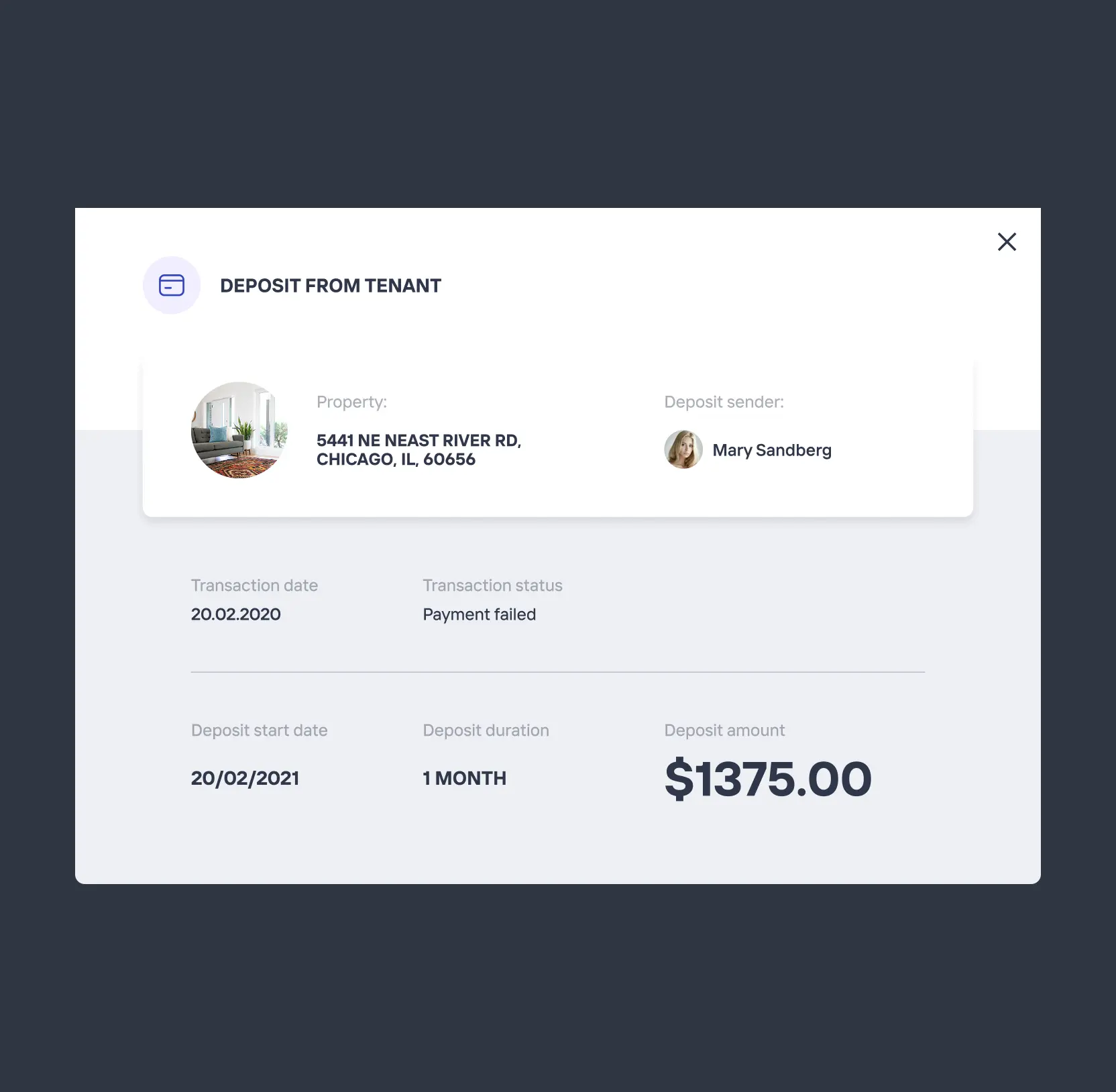
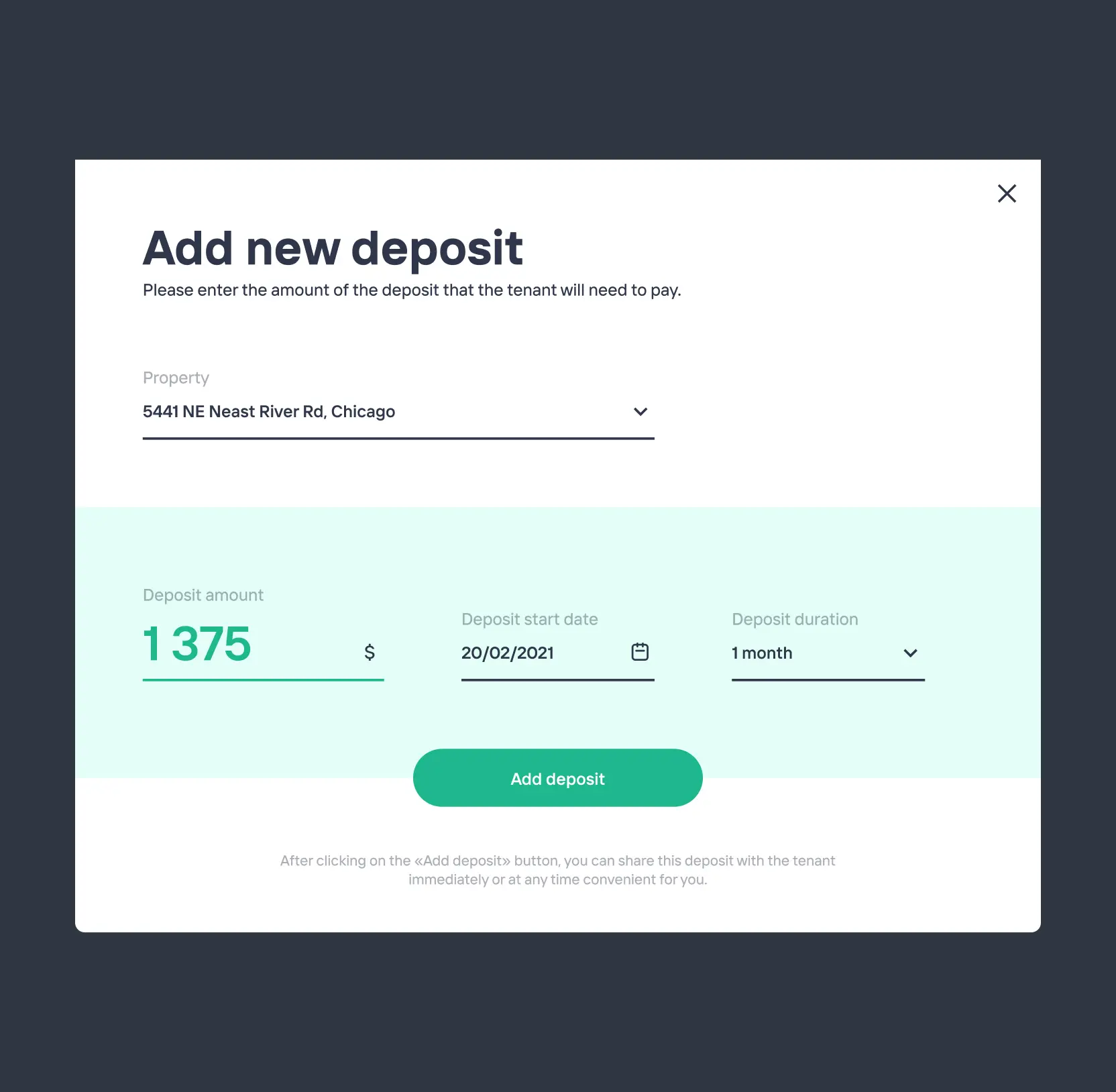
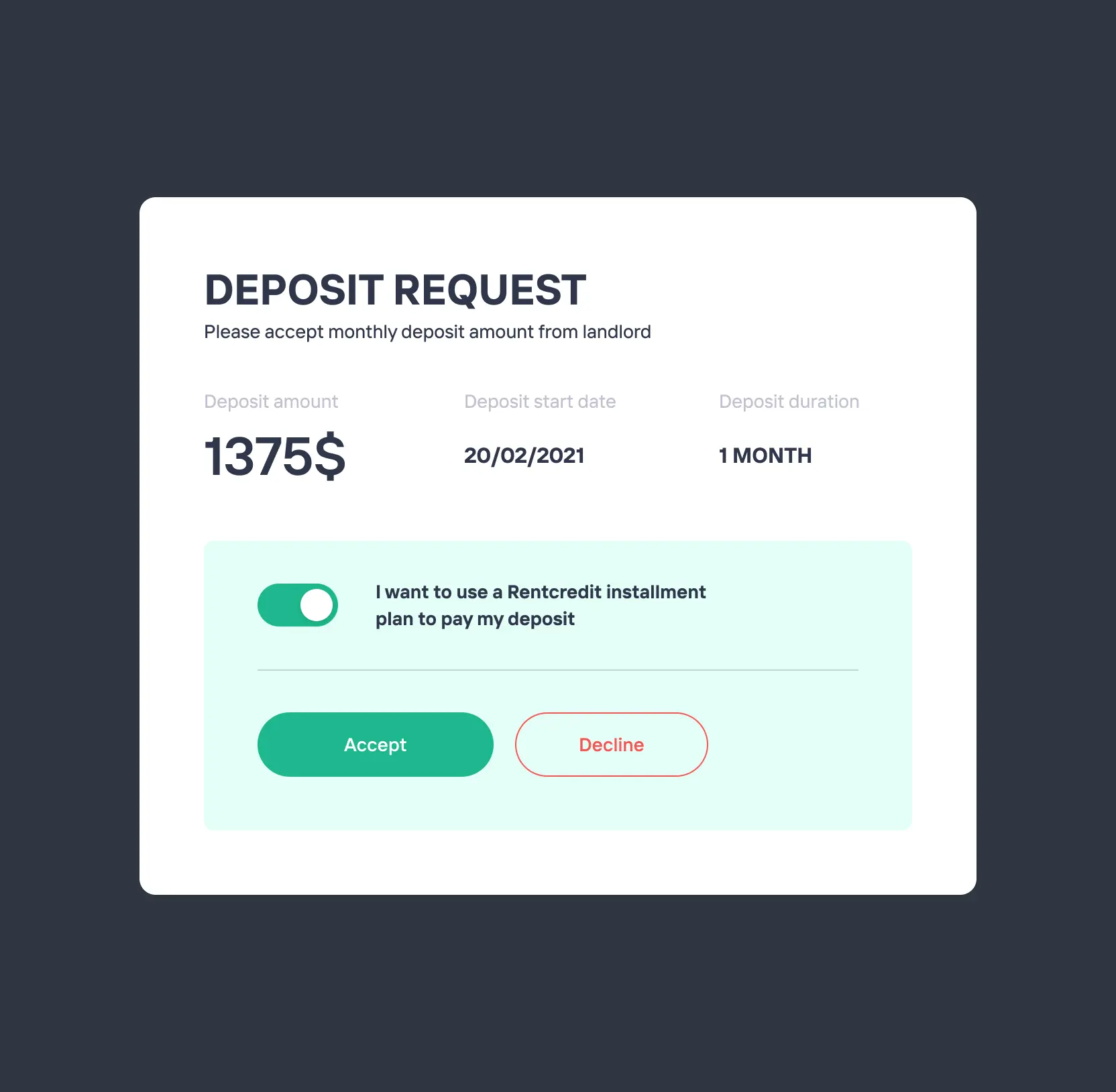
We designed the deposit request so both parties stand on equal footing: on the My Property page, a tenant can accept or decline a landlord's request, open a request of their own, or choose to pay the deposit in installments.
The exchange becomes a negotiation on equal terms, and the installment option lowers the upfront sum. Such even-handedness is what convinces tenants to transact inside Rentcredit, keeping the deposit and the relationship on the platform.
Frequently asked questions
Common questions about this topic
How can B2C property management app design build trust between landlords and tenants?
With transparent workflows for deposits, inspections, and property documentation, the platform ensures both parties have clear, verifiable records, reducing conflicts and fostering confidence.
How does streamlined deposit management benefit landlords?
Automated and standardized deposit workflows reduce administrative time, prevent errors, and enable faster transactions — all of which save money and increase landlord satisfaction.
Why are inspection tools critical in property management apps?
They provide legally defensible documentation of property conditions, protecting landlords from fraudulent claims and tenants from unfair deductions.
How does UX design improve adoption of property management platforms?
Intuitive interfaces, guided workflows, and clear communication reduce friction, making it easier for landlords and tenants to adopt the platform quickly.
How can property management apps reduce disputes?
By providing shared documentation, pre-move-in checklists, and ongoing photo-verified inspections, disputes are minimized, creating measurable business value in the form of saved time, reduced legal risks, and higher tenant retention.
What are the business advantages of investing in a property management app?
Beyond operational efficiency, platforms that foster trust improve user retention, encourage positive reviews, and create scalable solutions that support growth for both property managers and startups.
When should a startup consider building a property management platform?
Startups should invest early if they aim to differentiate through transparency, streamline administrative processes, and create a digital-first solution that appeals to landlords and tenants seeking efficiency and trust.
More cases like this
Related cases you might find useful
AI
Media
August 10, 2026
Voice AI video editor app design: how we shipped Elva's brand, onboarding, and agentic editing flow
Lazarev.agency designed Elva, a voice-first AI video editor — brand, UX, UI, onboarding, monetization — as one launch. Webby Winner, Best Visual UI in AI.
View case
Edtech
August 6, 2026
How our redesign made Abu Dhabi University's depth clear for applicants and students
Abu Dhabi University had depth, but its digital experience hid it. Lazarev.agency redesigned the platform around the needs of applicants, students, and faculty, transforming a fragmented ecosystem into a unified digital campus where information, services, and opportunities are easier to find and act on.
View case
Commerce
August 3, 2026
How we helped a premier fine wine retailer boost add-to-basket rate by 65% with a mobile-first redesign
Explore how Hedonism Wines boosted add-to-basket rates 65% with mobile-first redesign & improved UX.
View case
Let's talk about your AI adoption challenge
Tell us where adoption stalls. You’ll hear back from a senior product and UX lead with a practical action plan.