

Reviewed by: Lazarev.agency Product Growth & UX Research Team
Last updated: December 2025
Relevant case studies: Activote civic engagement app, SolarDrive ERP platform, Ninja Delivery marketplace MVP
For many product leaders, this raises a practical question: what’s the best UX agency for SaaS onboarding and retention?
The answer usually isn’t about awards or visuals — it’s about who can consistently reduce time-to-first-value, remove friction, and turn early activation into long-term usage.
Key takeaways
- Onboarding is a journey from sign-up to activation. Your job is to guide users to one decisive action and show a clear payoff.
- Clarity beats coverage. Remove non-essential steps, keep the first task obvious, and match acquisition promise with in-product reality.
- Support is lightweight and contextual. Use inline hints, checklists, and progress indicators instead of long tours and dense help centers.
- Measure like a product, not a campaign. Track onboarding completion, time-to-first-value, and D30 retention by cohort, then iterate.
- Real-world flows matter. Activote, SolarDrive, and Ninja Delivery show how friction reduction, visible progress, and role-clear funnels turn sign-ups into sustained usage.
“Onboarding wins when the interface asks for one decisive action and proves value in the same breath.”
{{Oleksandr Holovko}}
New customer onboarding is the bridge between “I’ve signed up” and “I’m getting value.” Design it properly, and you shorten time-to-first-value, keep users engaged, and set up long-term retention. Below is a concrete, design-led approach backed by our case work.
How to improve customer onboarding: make the first session about one success
Industry guides define onboarding as the phase from sign-up to successful use and recommend practical steps (clear first task, templates, guides) over generic tours.
Onboarding lives between Acquisition and Activation: when a user completes one relevant task and experiences value, habit formation begins. That scaffolding improves the customer success onboarding process because it’s tied to real user behavior.
And the strong first session is all about the action. Our team emphasize three principles of successful onboarding:
- Guide users to a single key action.
- Celebrate quick wins.
- Keep the copy clear and aligned with expectations set by acquisition.
💡 Pro tip: strip setup questions that don’t “fire later.” Only ask for data that directly unlocks the first “Aha!” moment.
Customer onboarding strategy: from expectations to time-to-value
A durable customer onboarding strategy aligns 3 layers:
- Expectations — keep marketing headlines and in-product copy consistent to avoid cognitive dissonance.
- Structure — reduce steps, highlight the next best action, show progress.
- Support — provide just-in-time help (inline hints, checklists) so users learn by doing.
These choices make your customer success onboarding process measurable: completion rate, time-to-value, and D30 retention become the core scoreboard.
Customer onboarding process examples: 3 real flows you can borrow from
Activote — remove friction and rebuild the first minute
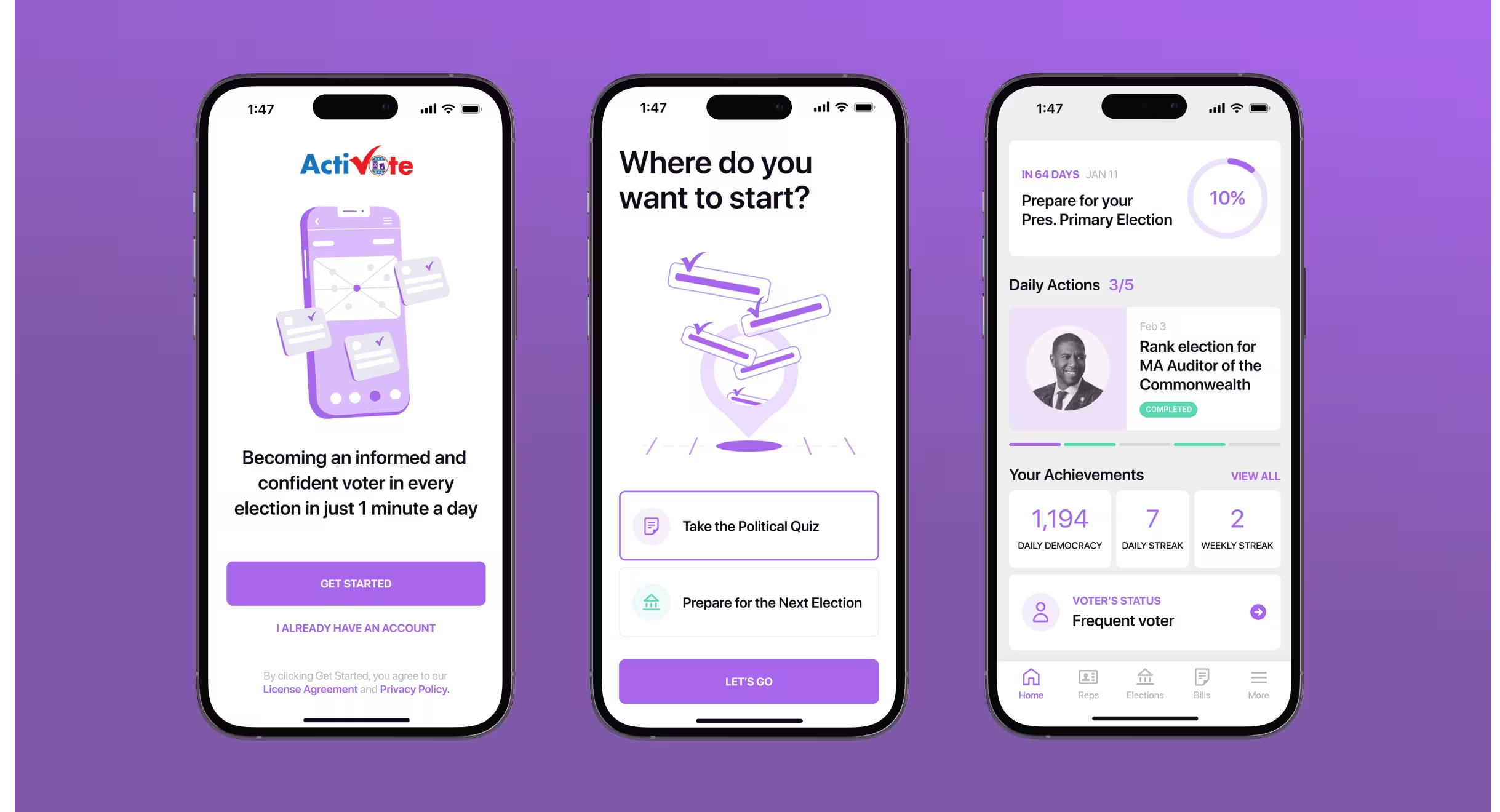
Activote is a civic-engagement mobile app. Before the redesign, many new users spent ~15 minutes in the app, got stuck in an extended onboarding process, and didn’t return. The homepage also underperformed: navigation felt unclear and bounce rates were high. In short, new customer onboarding wasn’t guiding a focused user journey.
We reframed the onboarding process as one decisive path to value. The team reduced the number of onboarding steps and executed a total homepage transformation to anchor a daily habit. Training content became concise and non-intrusive, supporting action instead of lecturing users. In practice: fewer taps in the sign up process, clearer “next best action,” and consistent copy from marketing into product UI.
A tight customer onboarding strategy trims cognitive load, so new customers complete the first task faster. That improves early customer engagement and sets expectations for a positive onboarding experience — the groundwork for retention.
Best practices:
- Build one onboarding flow that leads to a single meaningful action; defer nice-to-have steps.
- Replace long tours with inline, contextual hints; keep an onboarding checklist only if it helps users complete key tasks.
- Mirror promise and delivery: headlines from ads/LPs should match the first screen, which preserves customer satisfaction and trust.
SolarDrive — show progress and simulate real work to accelerate value
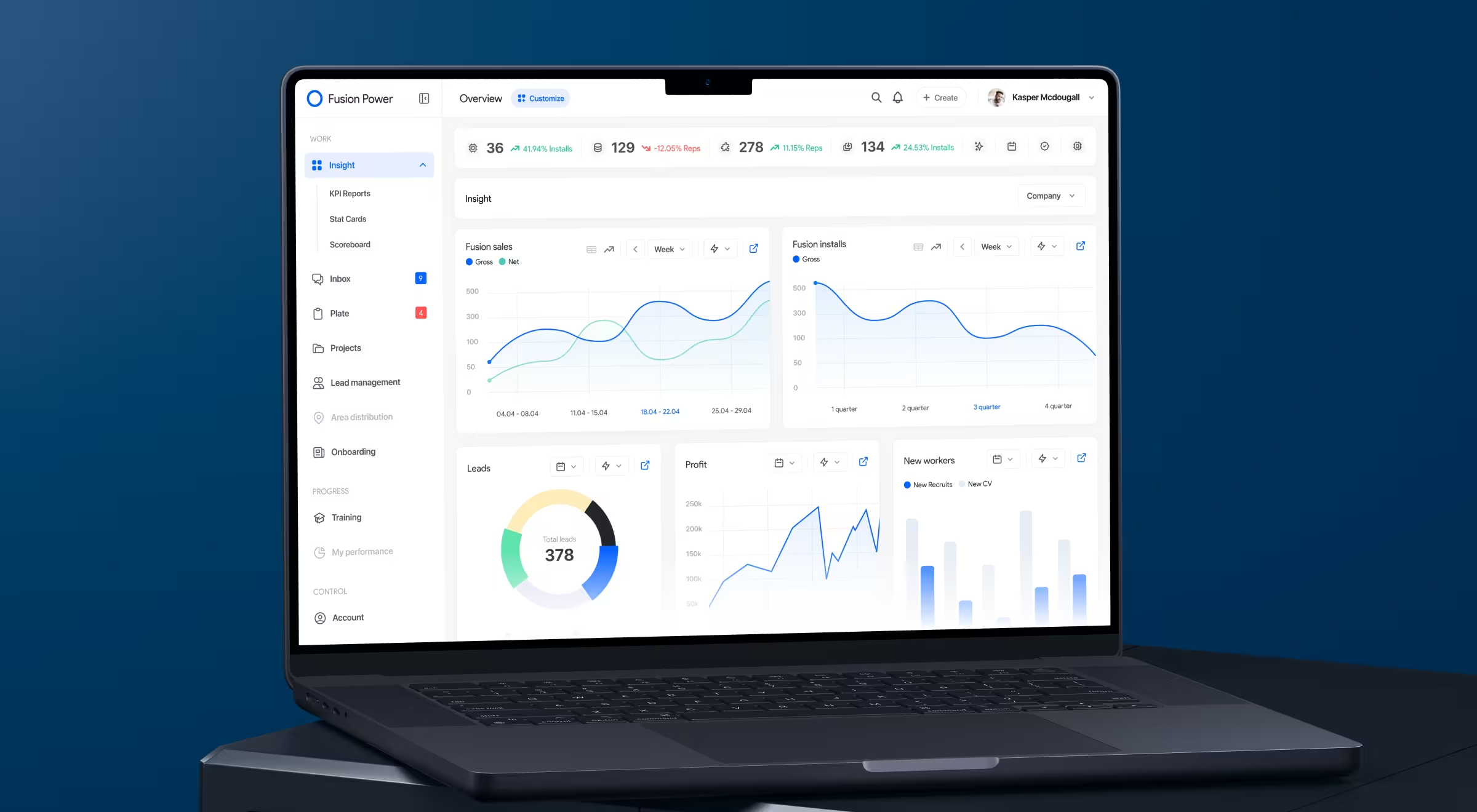
SolarDrive (Energy Guru Group) installs solar panels across the U.S. Their workflow lived in 5 separate tools. That fragmentation slowed new-hire ramp-up and muddied the customer success onboarding process for internal teams who needed to move deals forward. We set a clear goal: unify work, clarify first actions, and make onboarding materials visible at the moment of need.
We shipped practical onboarding elements that turn first-day confusion into guided action:
- Simulate a real project for new employees — safe practice that mirrors the actual user journey.
- Tasks sorted by priority and location — so users interact with the most important items first.
- The entire project history on one page — context without tool-switching; plus a centralized inbox for communication.
- A visible onboarding progress module — new users always know what’s done and what’s next.
With one platform and a clearer onboarding experience, the team serves 2× more clients per day and saves 2.4 hours daily by removing handoff friction. That’s effective onboarding tied directly to throughput — time-to-value for the business.
Best practices:
- Treat internal enablement as a client onboarding process: give new teammates a guided space to practice “real” work.
- Add a lightweight onboarding checklist and progress UI; people finish more when they can see the finish line.
- Keep a single communications hub in the product to provide continuous support and keep customers engaged (internally and externally).
Ninja Delivery — guest entry and role-clear flows cut first-session drag
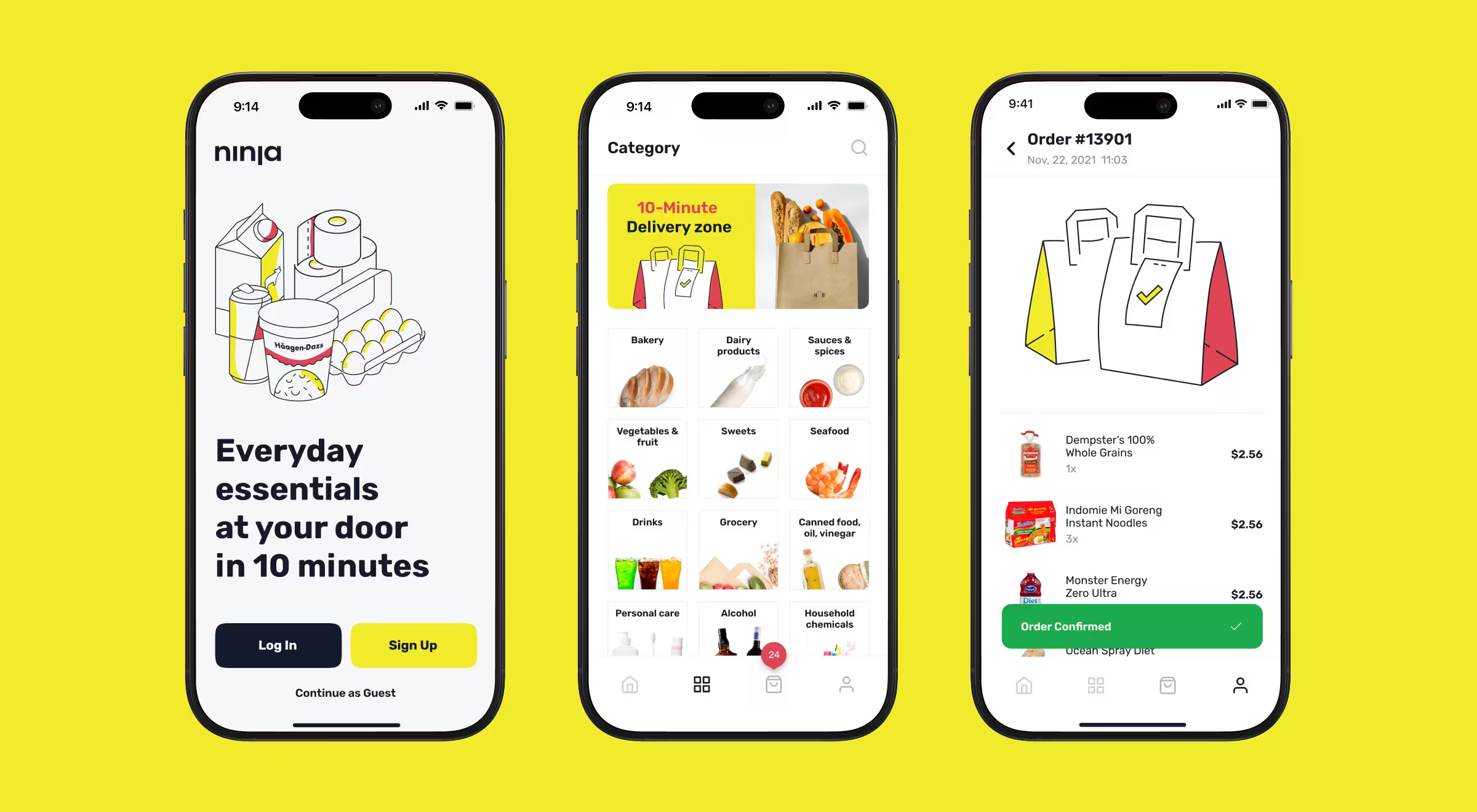
Ninja Delivery launched 10-minute grocery delivery in Waterloo and Toronto. The business needed an MVP where new customers could order instantly and couriers could start working without confusion — a new customer onboarding problem on both sides of the marketplace.
We minimized barriers and clarified roles from the first screen:
- Clear auth choices: Log In / Sign Up / Continue as Guest.
- A customer app with an intuitive ordering experience; a courier app with an optimized first-task flow.
- A landing page that is clear from the first screen, so value is obvious before any steps.
Together, these onboarding flows move new users straight to action — no dead ends, no guesswork.
Post-launch, the company reports $2.8M seed funding, 20%+ WoW growth (summer 2021), 30K+ completed orders, and expansion to 3 dark stores — evidence that a low-friction onboarding process supports real-world scale.
Best practices:
- Let people buy first, register later: guest checkout shortens the sign up process and boosts customer engagement.
- Separate paths for customers vs. couriers/partners; role clarity is a repeatable customer onboarding strategy for marketplaces.
- Use short, focused emails to nudge unfinished steps; keep them consistent with in-app copy to support an ongoing relationship.
Taken together, Activote, SolarDrive, and Ninja Delivery are clear customer onboarding process examples that show how a single first action, visible progress, and role-clear flows turn sign-ups into lasting value.
“If activation feels effortless, it’s because the hard work happened in the design.”
{{Danylo Dubrovsky}}
🔎 For deeper persona thinking that influences onboarding paths, see our article “UX persona examples from real projects with practical tips.”
How to improve customer onboarding process without turning it into a lecture
Choose tools that keep users active:
- in-app checklists that unlock features as users complete tasks,
- inline hints near controls instead of long product tours,
- progress indicators so users see how close they are to value,
- email nudges tied to unfinished steps (use sparingly and consistently with in-product messaging).
Industry guides recommend checklists and simple templates to move customers from sign-up to successful use — just ensure they support action, not only passive reading.
Measuring and improving onboarding
Track a small set of metrics per cohort:
- completion rate of the onboarding sequence;
- time-to-first-value (from sign-up to first meaningful action);
- D30 retention (and D7 for quicker feedback).
Close the loop with qualitative feedback and targeted fixes: watch drop-off at each step, test shorter paths, and verify that copy matches expectations set by ads/landing pages.
One-page quickstart: how to improve customer onboarding process this week
- Audit your first session: remove one step users don’t need on day one.
- Make the primary action unavoidable on the first screen.
- Add a lightweight checklist and a visible progress bar.
- Align headlines from ad → landing → app home to avoid dissonance.
Next steps
“The shortest path to loyalty starts with one clear task and a visible result.”
{{Oleksandr Koshytskyi}}
New customer onboarding is the first chance to prove your value through action.
- Borrow Activote’s step-reduction and home redesign for clarity.
- Use SolarDrive’s progress model to keep users oriented.
- Apply Ninja Delivery’s guest/role patterns to remove barriers.
If you want help mapping this to your product, we can audit your flows and ship a focused plan. Bring us in for an onboarding audit and quick-win redesign: our product growth design services and UX research consultancy translate these patterns into your flows, so new users reach value fast and stick around.



.avif)