
New Google Trends data reveals a sharp correction in global interest around “AI design jobs,” with search volume dropping 87% since its all-time high in mid-August 2025.
The full year of data paints a clear market story:
- Dec 1, 2024 → May 31, 2025: global interest remained consistently low, fluctuating only between 4–10 index points.
- June 2025 → early August 2025: curiosity climbed rapidly.
- Aug 10–16, 2025: the search reached a record index of 100, coinciding with the global adoption shockwave following GPT-5.
- June 8 → Nov 15, 2025: as the market absorbed the implications of AI-native design, interest settled into a stable mid-range.
- After Nov 15, 2025: searches declined quickly, returning to low-level interest for the first time since early 2025.
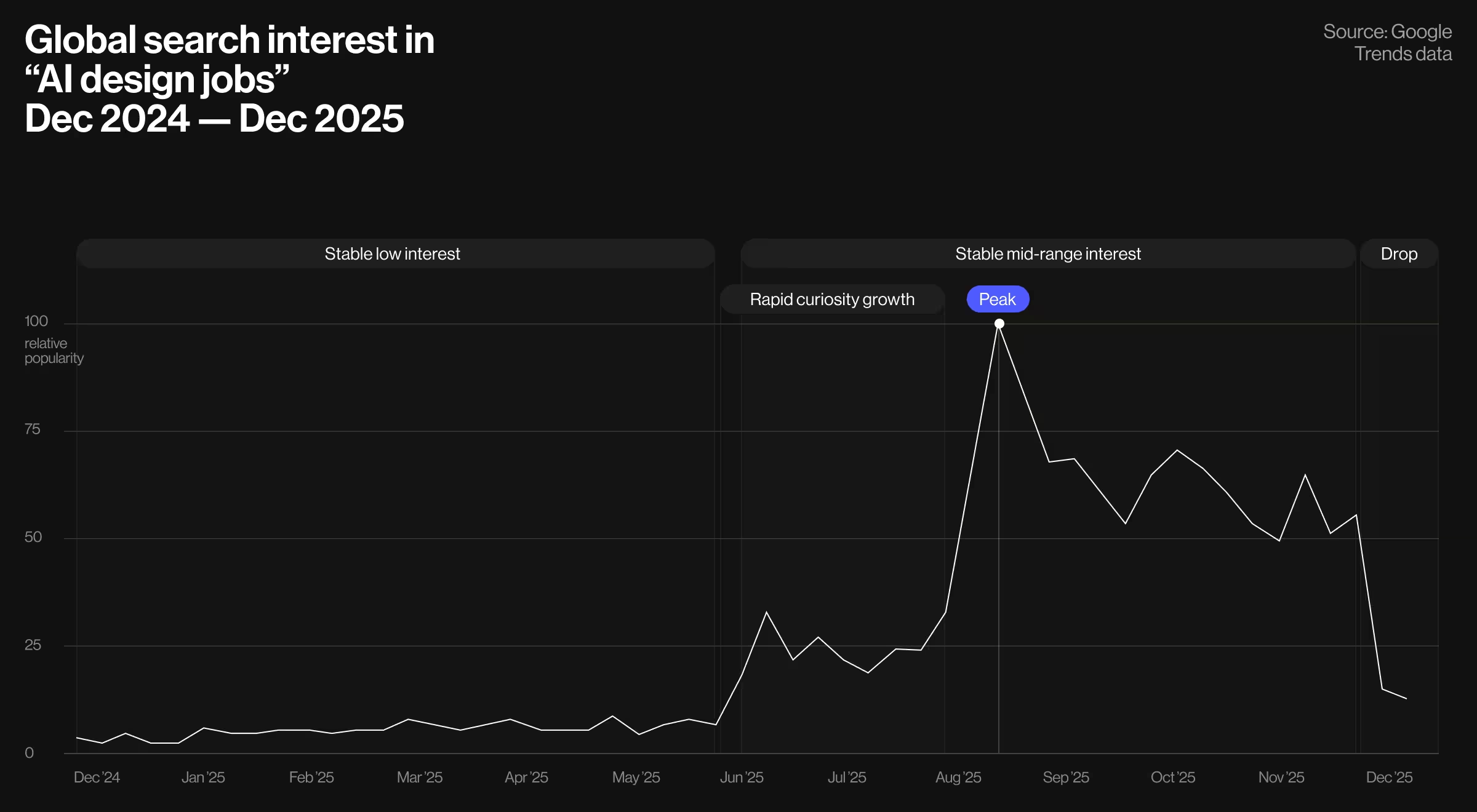
Source: Google Trends data for the period of December 1, 2024, to December 1, 2025.
But this decline does not signal fading relevance.
It signals maturity.
After a year of explosive hype, the market is moving away from searching for job titles and toward understanding hybrid UX–AI skill sets — from reasoning-flow design to multimodal interaction patterns and model-aware UX.
Companies are no longer asking “Who is an AI designer?”
They’re asking “Who can design intelligent systems that work with models, agents, and users simultaneously?”
At Lazarev.agency, an AI UX design agency, we see this as a positive indicator. AI product design has left the curiosity phase and entered the operational phase. Teams now seek specialists who can design for real AI behavior, not just attach “AI” to a job title.
👉 To navigate this shift and hire specialists with true AI UX expertise, explore our hiring AI designers options.