How Lazarev.agency redesigned Bluwalk to get car-less drivers earning across the gig economy faster
Project:
the project
One platform to get a driver from no car to first paycheck
Bluwalk is an all-in-one platform for people who want to earn in the gig economy but do not own a vehicle. A driver can register, rent a car, take on ride-hailing and delivery work across several services, and manage earnings, costs, and compliance in one account.
Getting into that work used to cost drivers before they earned a cent. Onboarding was long and unclear, so people quit before their first job. The car took time to get. Tax and invoicing demanded expertise a first-time driver didn’t have.
Lazarev.agency redesigned Bluwalk's gig-work marketplace into one guided path from sign-up to first paycheck. We reshaped onboarding, vehicle rental, earnings, and compliance into mobile-first flows a non-expert can complete alone, and built a data-driven growth program on Amplitude to keep improving the metrics that move the business.
The Project’s
Discovery Phase
Replaced app-juggling with one Bluwalk control center
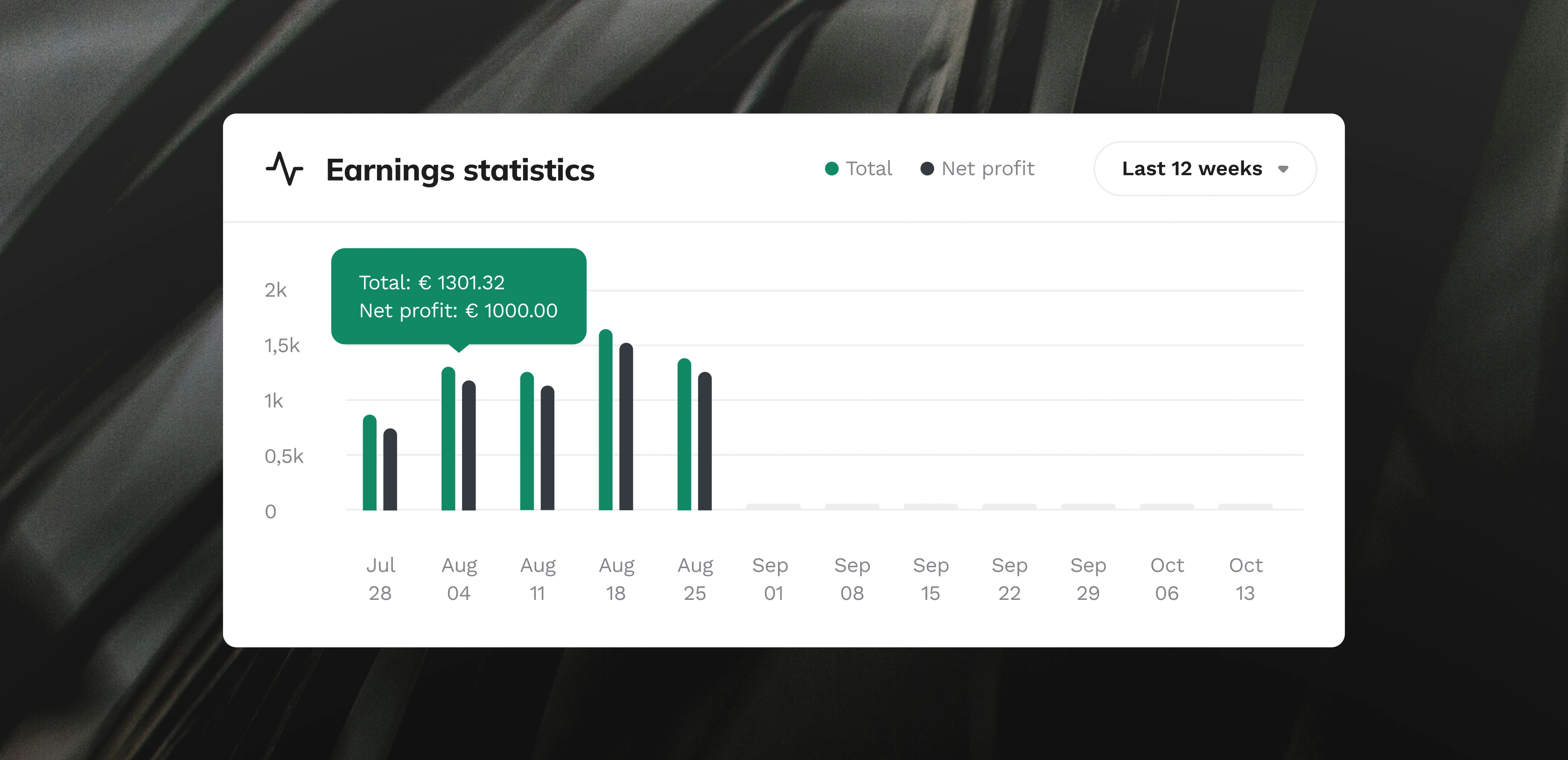
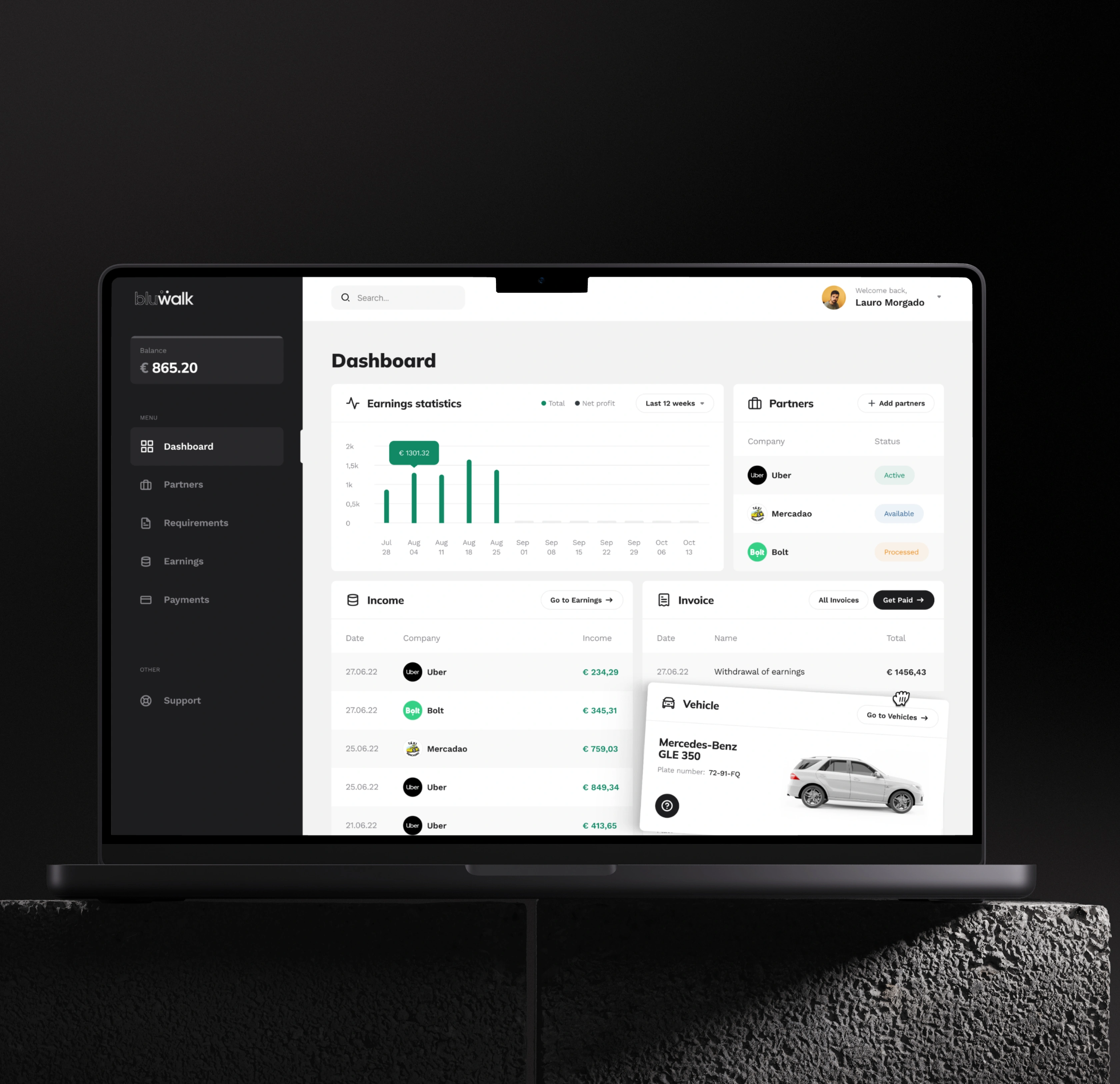
Lazarev.agency made Bluwalk's dashboard the single control center for drivers working across several ride-hailing and delivery services. Before, a driver's income was split across separate apps. No single screen showed total take-home, and every payout check meant switching services and extra admin work.
We pulled the key data onto one screen: total and net earnings across services, an income feed by company, live partner connection statuses, and the active rental. A driver now reads the combined net profit and gets paid without leaving Bluwalk.
Because the whole work life lives on one platform, Bluwalk becomes the place drivers run their earnings from, which lifts retention and repeat use.
Surfaced which services a driver can join and earn from
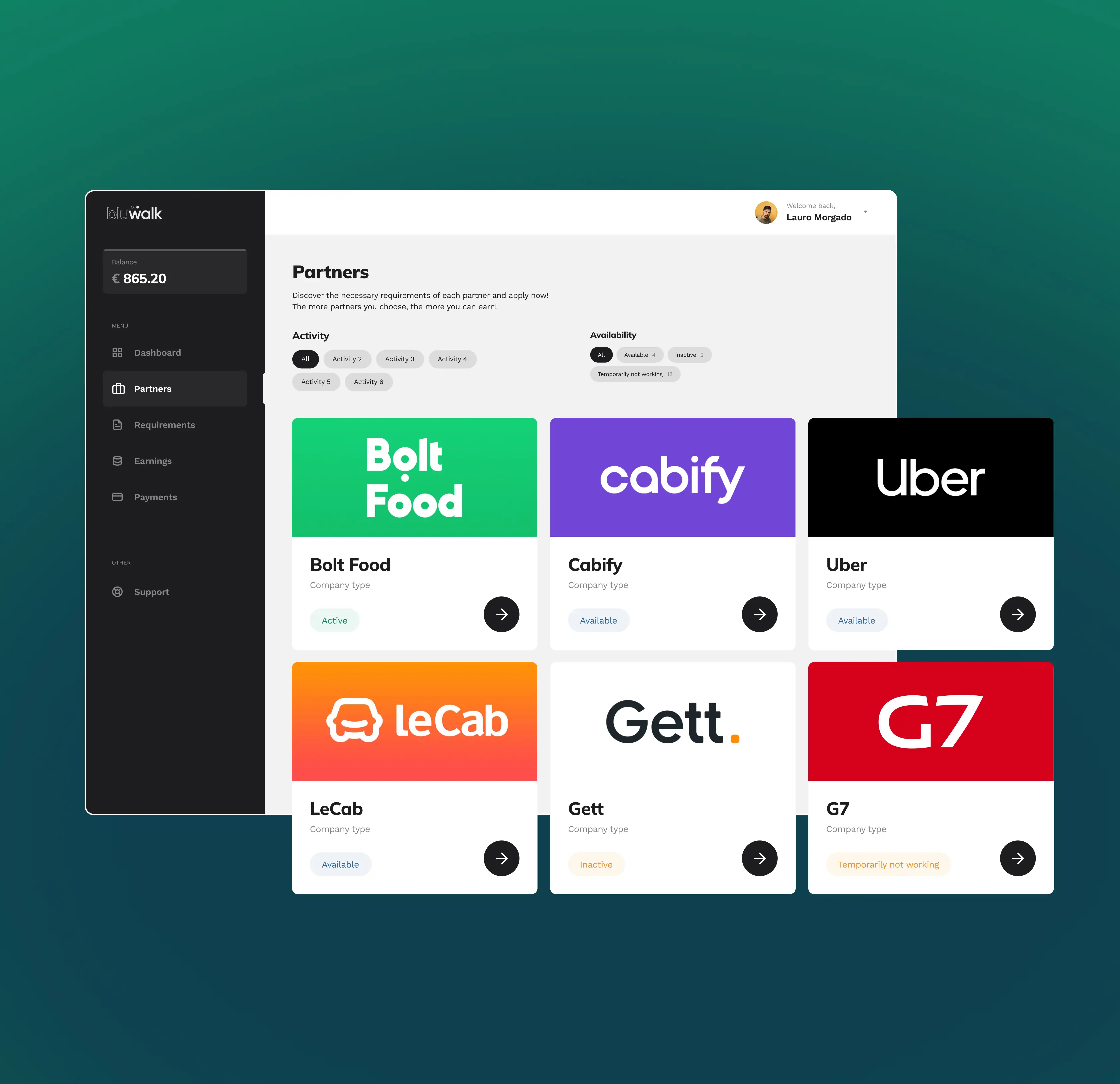
On Bluwalk's Partners page, Lazarev.agency gave drivers a marketplace of every ride-hailing and delivery service they can join. A driver without a car does not know which services are hiring or what each one requires.
We laid out each partner with its live status, filters for availability and activity, and a direct path to check requirements and apply. From one page, a driver applies to several services in a single sitting. The more services a driver takes on, the more they earn. A longer partner list gives Bluwalk more ways to draw sign-ups into active work.
Removed the no-car barrier to entering gig work
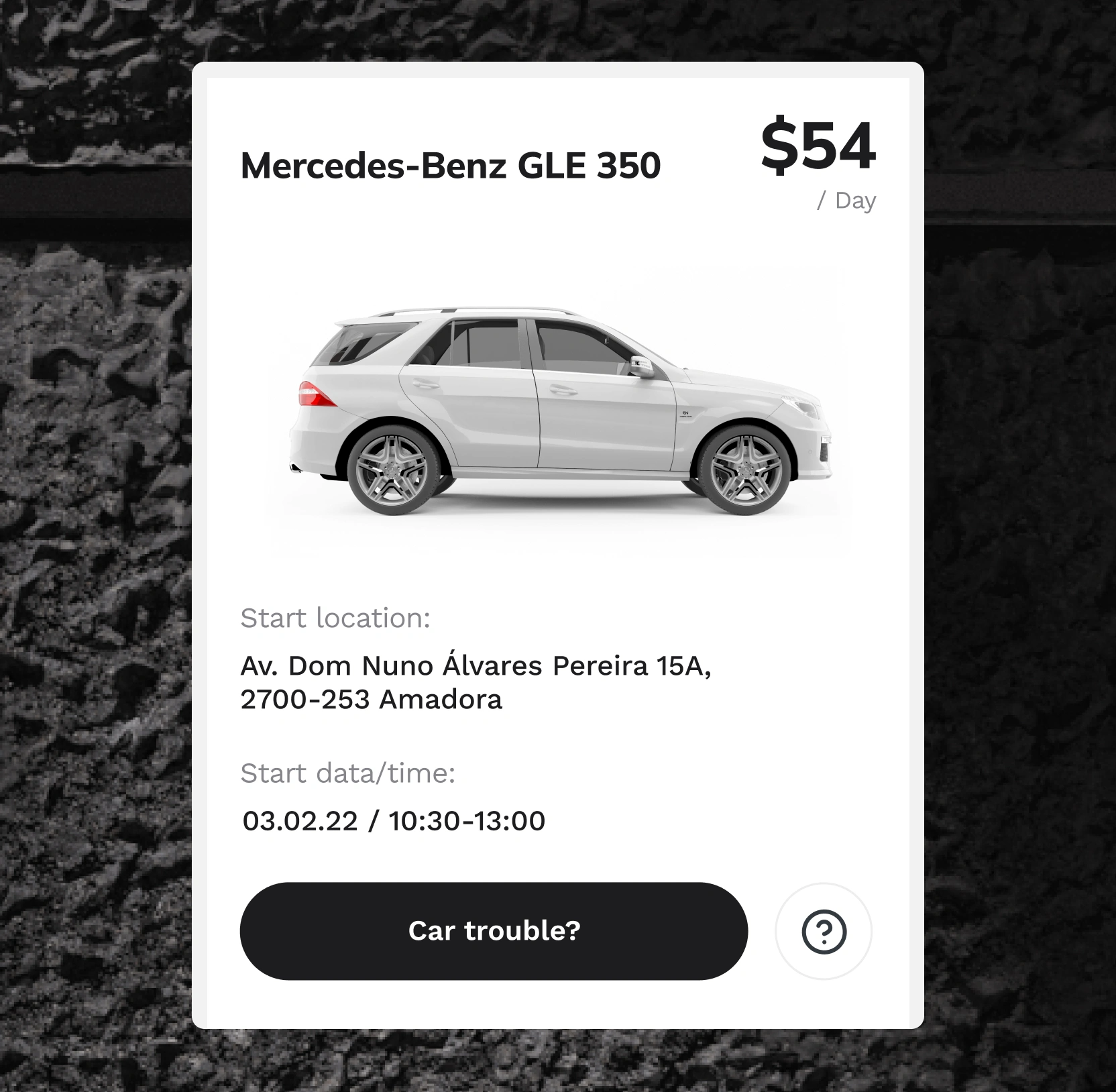
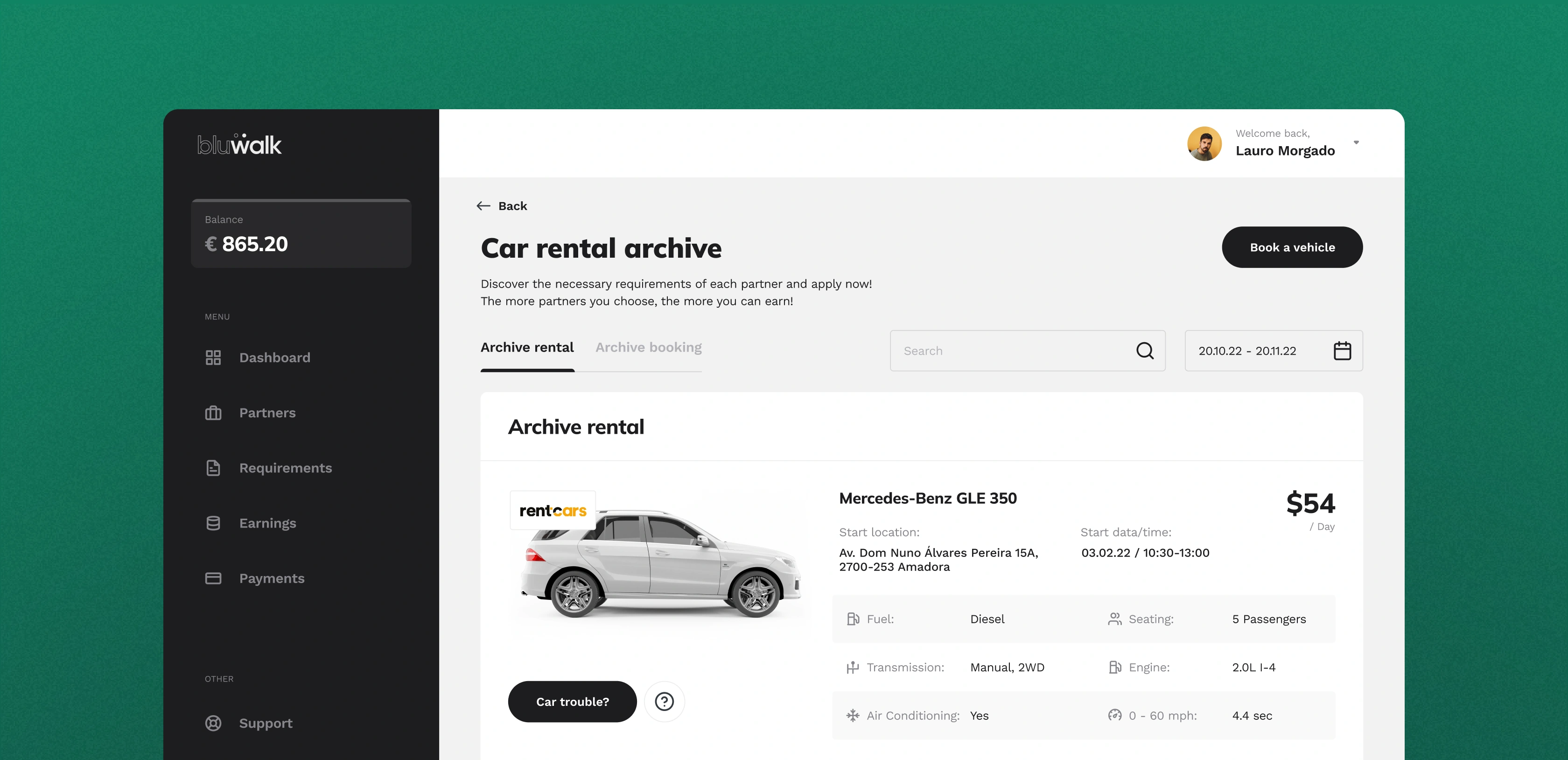
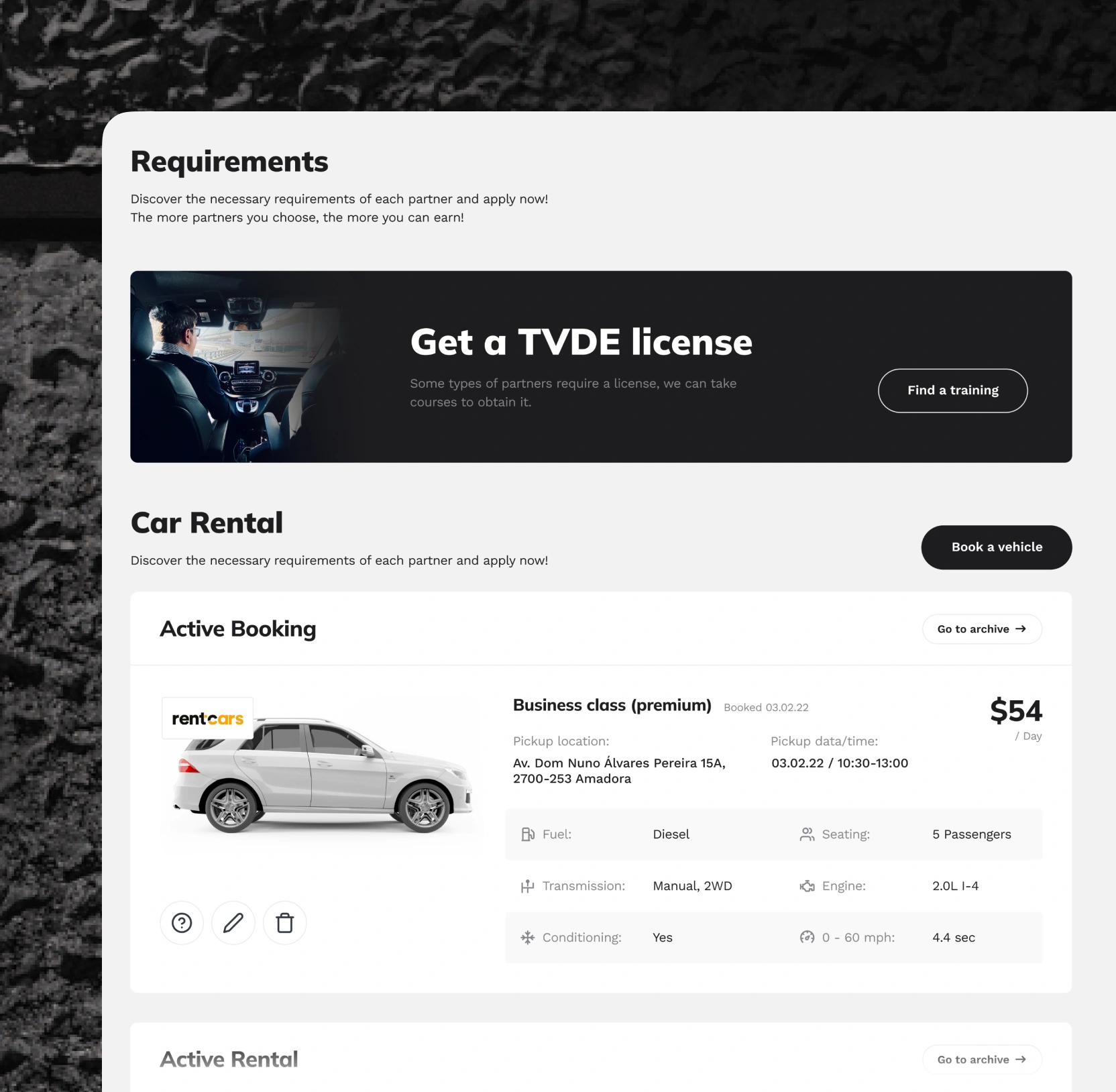
Lazarev.agency put vehicle rental directly inside Bluwalk, so a driver with no car can get one without going to a separate rental company. Without a vehicle, a would-be driver cannot take a single ride-hailing or delivery job, the hardest barrier to entering gig work.
On the redesigned platform, a driver books a car and reviews its full details before committing. The same section tracks current and past rentals with a date search and puts in-app support one tap away if something goes wrong on the road.
Access to a car separates a sign-up from a working driver, and Bluwalk now supplies that car itself.
Cleared the licensing hurdle before a first job
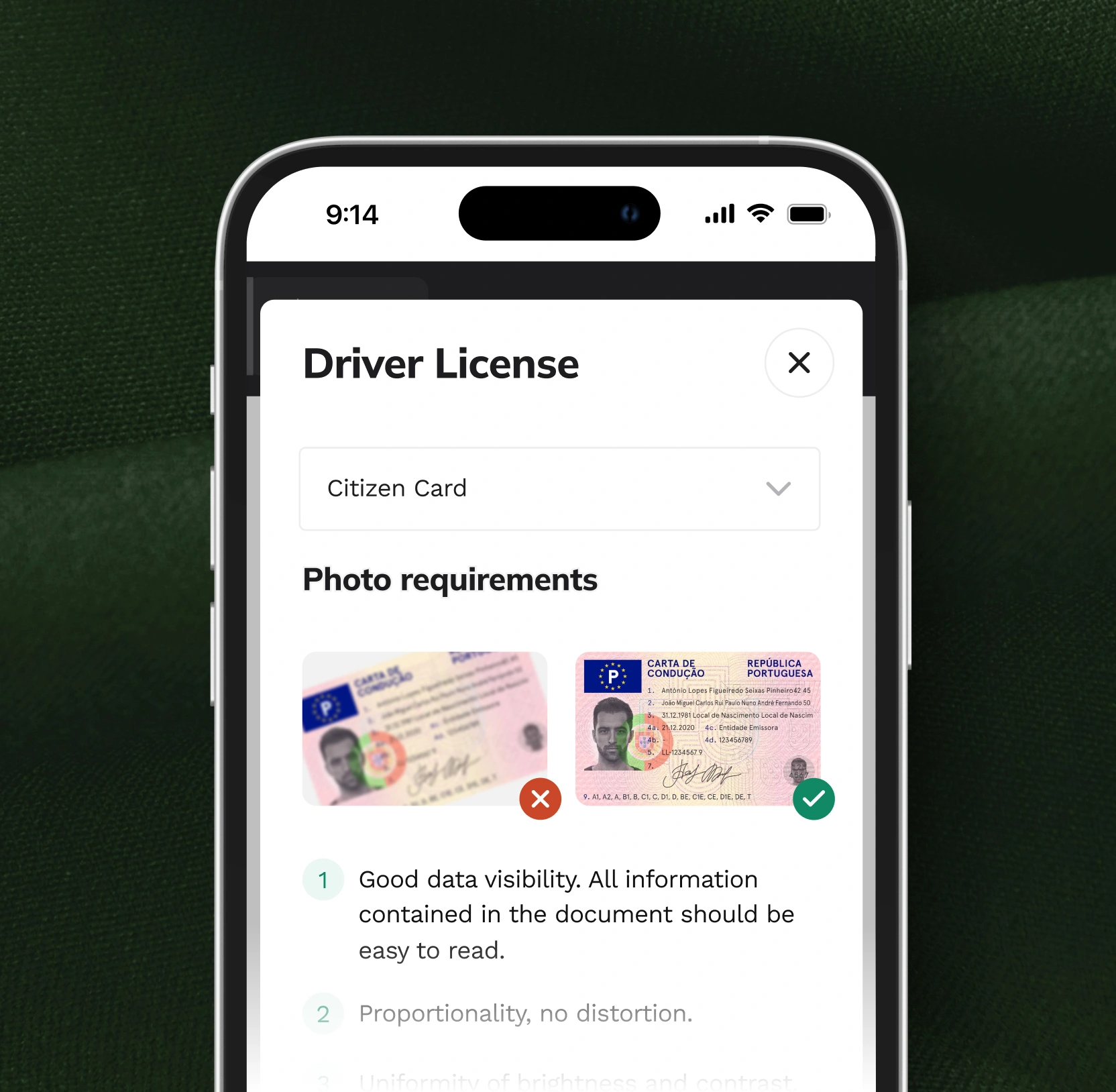
Getting legally cleared to drive is where first-timers drop out, so Lazarev.agency shaped Bluwalk's Requirements section to carry them through it. They do not know which license a service needs, and a document photographed wrong comes back rejected, so approval drags on for days.
Bluwalk now spells out what each partner requires, links straight to training for a license like the TVDE, and guides a driver to submit documents right the first time. Fewer rejected uploads mean a driver clears compliance and reaches a first paying job sooner. Cutting those rejections keeps more first-timers moving into legal, paid work.
Raised activation and retention through behavior analytics
Lazarev.agency set Bluwalk up with a data-driven growth program to move the business numbers a cosmetic redesign leaves untouched.
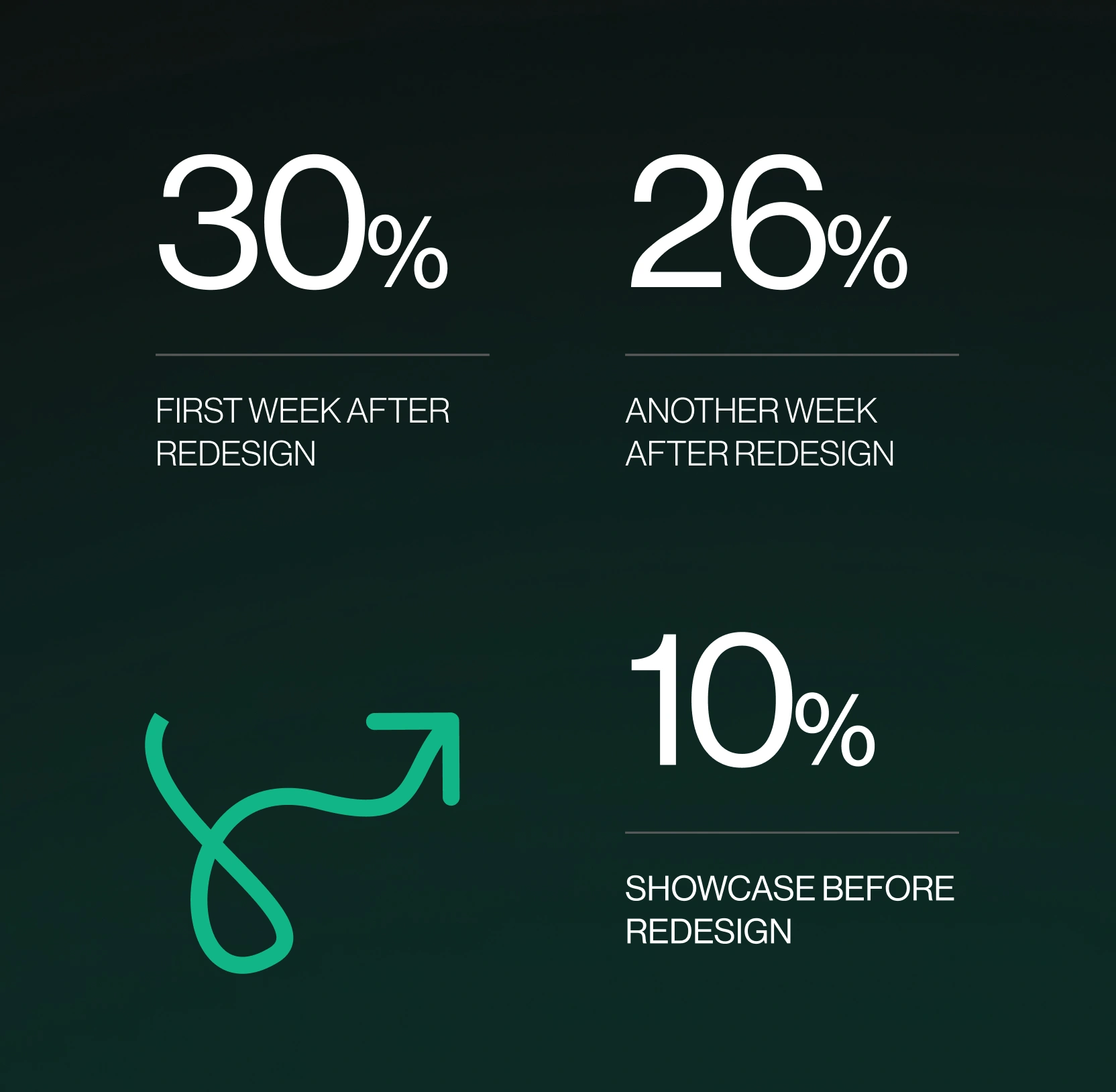
We read driver behavior in Amplitude to find which product interactions drove activation, engagement, and retention, then ran a monthly cycle: pick one metric, onboarding completion, time to first job, or earnings engagement, and optimize the product against it. The cycles delivered measurable gains within weeks of each change.
Real estate
Lazarev. agency offers comprehensive digital design services. Discover our range of related expertise supported by impactful case studies.
More Scaleups Cases
FAQ
How can gig economy platforms increase driver activation rates?
Driver activation improves when onboarding is fast, clear, and removes operational barriers. For Bluwalk, we simplified registration, clarified next steps, and optimized vehicle allocation so drivers could start working quickly, reducing drop-offs and shortening time to the first job.
What UX improvements help gig workers start earning faster?
Gig workers earn faster when platforms eliminate friction across onboarding, access to resources, and task availability. Bluwalk’s redesigned flows guide users through registration, vehicle rental, and service access in a single experience, allowing drivers to begin working across multiple services without confusion.
How can marketplace platforms support users without personal assets?
Marketplaces can lower entry barriers by providing access to shared resources. Bluwalk enables drivers without personal vehicles to participate in ride-hailing and delivery by integrating vehicle rentals directly into the platform, making asset access simple and transparent.
How can gig economy platforms simplify earnings and tax compliance?
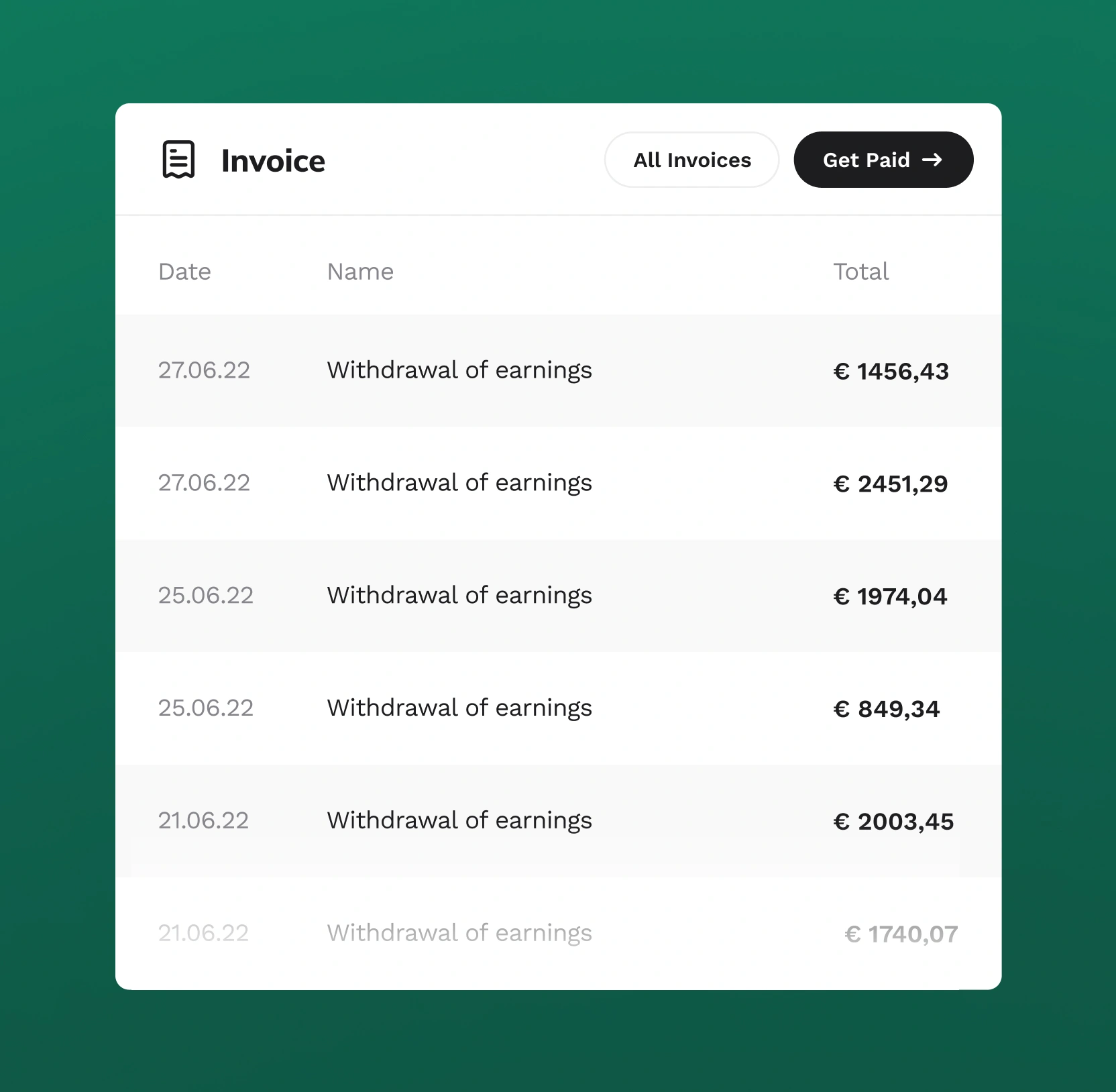
Centralized earnings management and guided invoicing reduce administrative burden. In Bluwalk, we designed an Earnings section that walks users through invoicing, supports saved payment details, and clearly explains compliance requirements — minimizing errors and delays.
Why is multi-service integration important for gig economy platforms?
Multi-service integration increases earning potential and platform stickiness. Bluwalk allows drivers to work across multiple services, such as ride-hailing and delivery, while viewing combined earnings in one place, creating a more flexible and efficient work experience.
How can partner profiles improve trust in marketplace platforms?
Clear and structured partner profiles help users make informed decisions. Bluwalk’s Partner pages present services, credentials, and opportunities using visual identifiers and organized sections, making it easier for drivers to evaluate partners and engage confidently.
How does UX design impact scalability in mobility and gig platforms?
Scalable UX relies on reusable patterns, clear workflows, and flexible system design. Bluwalk’s marketplace structure, consistent UI components, and streamlined flows allow the platform to expand services, partners, and regions without disrupting the core user experience.