How Lazarev.agency redesigned Xceed365 into an HR and payroll command center enterprises trust
Project:
the project
One control layer for payroll, leave, and compliance
Xceed365 is an AI-powered HR and payroll platform for enterprise organizations. It manages the full employee lifecycle, bringing payroll, leave, compliance, and employee records into one system. Over time, the experience had grown feature-rich and largely fragmented.
Enterprise HR teams paid for that fragmentation. Information was re-entered and reconciled across separate tools. When AI felt bolted onto workflows, administrators stopped trusting it, and leaders who could not see the right data at the right moment made slower decisions.
Xceed365 brought in Lazarev.agency to reshape the product into a platform non-technical HR teams could trust. Lazarev.agency redesigned Xceed365's HR and payroll platform into a single command center for payroll, leave, compliance, and employee records.Â
Here’s how we achieved it.

The Project’s
Discovery Phase
A home screen built to show what needs action
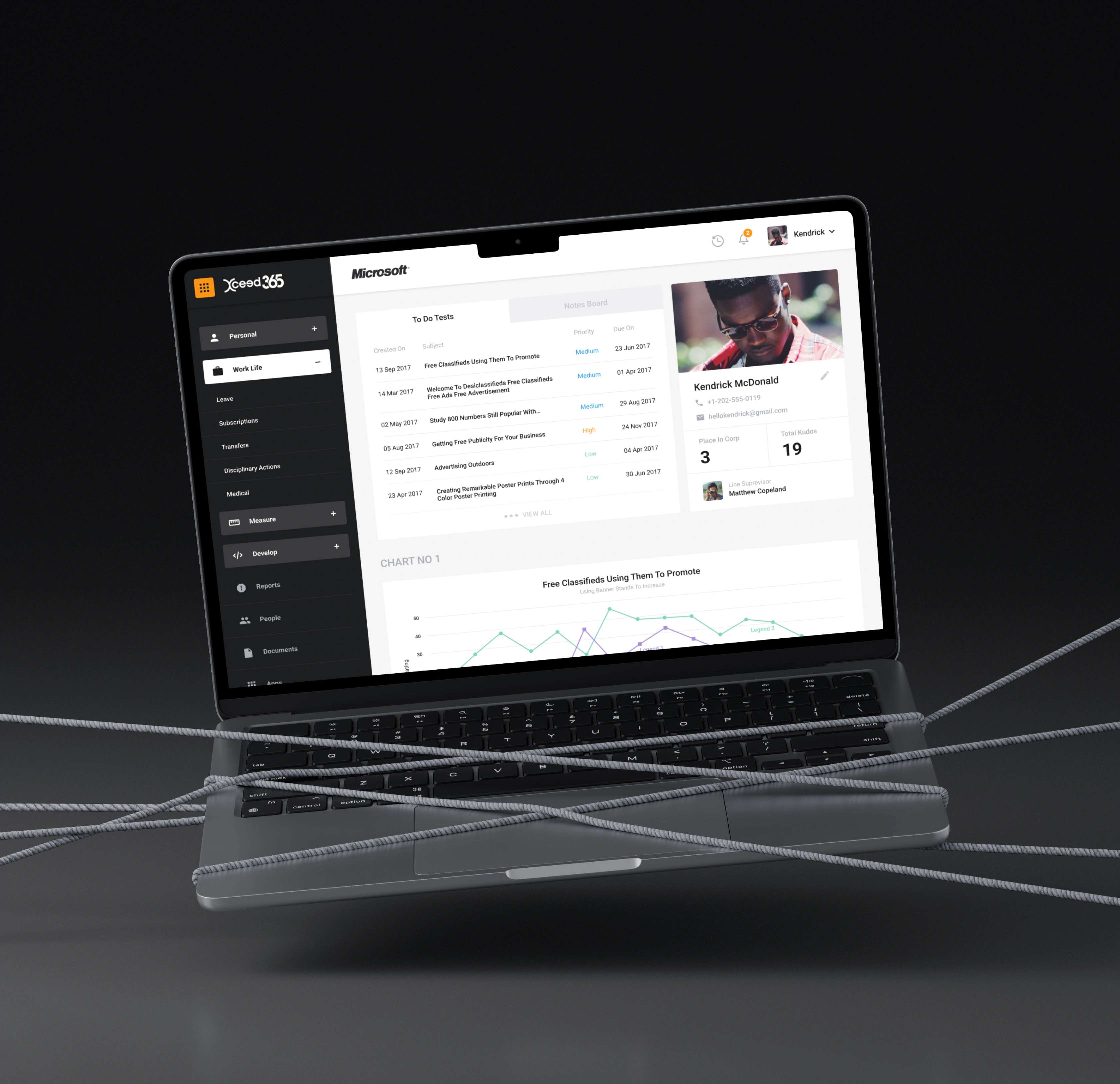
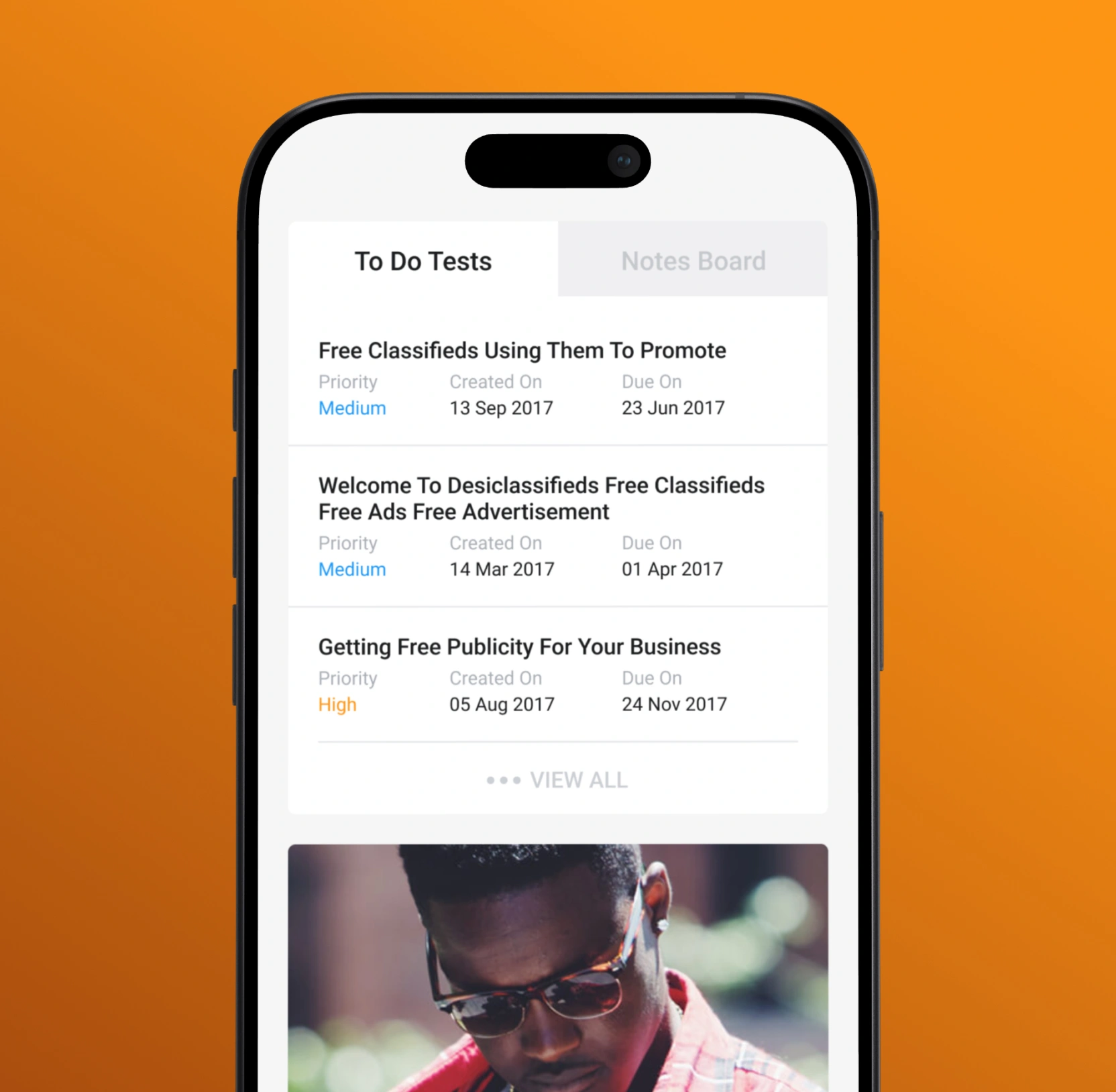
Lazarev.agency rebuilt Xceed365's homepage into a functional command center for HR and leadership. The old home was a passive overview, so anyone who needed to know what required action had to open module after module and assemble the picture themselves.Â
The redesigned home leads with live priorities, like open tasks and performance signals (with AI insights carried inside the same tiles and alerts people already read). Because the intelligence sits within the daily view, HR and leaders reach the work that needs them without having to look for it.
One visual system so every metric reads the same
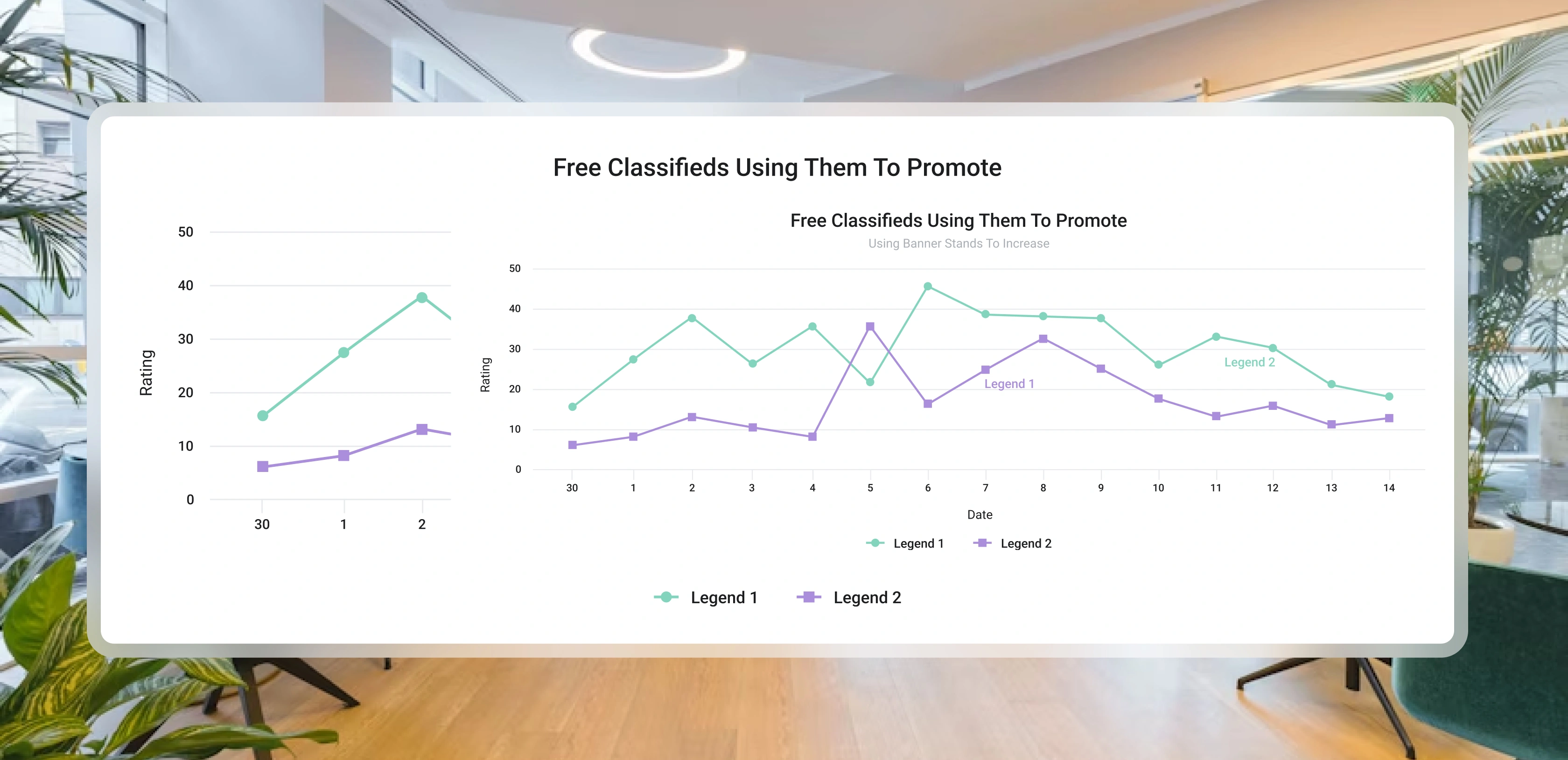
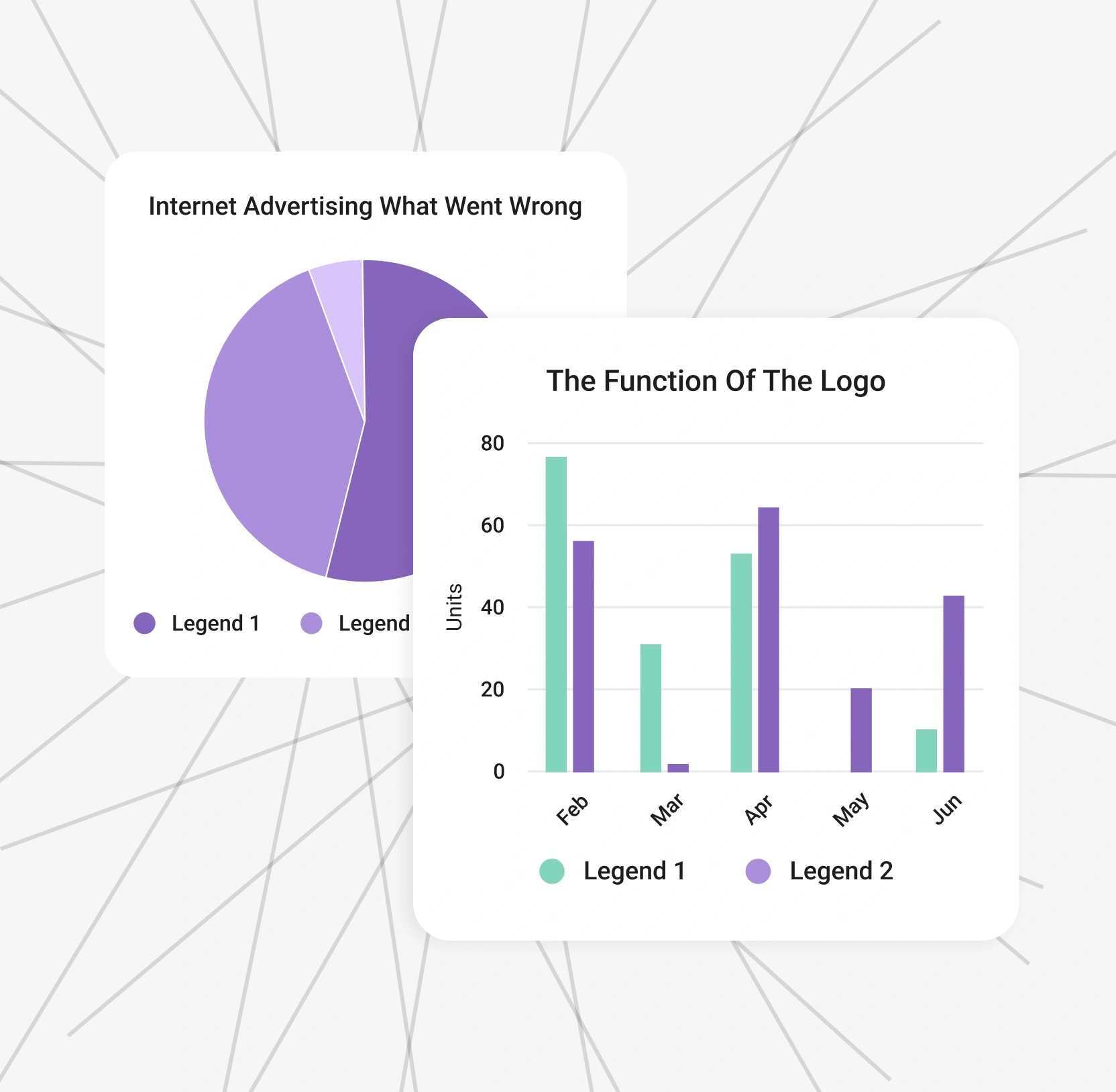
Across Xceed365, Lazarev.agency built one consistent system for presenting workforce data, from breakdowns to period comparisons to trends over time. When the same figure was charted differently on every screen, operators misread it and stopped trusting the reports in front of them.Â
Now every metric is drawn the same way wherever it appears, on a phone as clearly as on a desktop, so people act on the numbers directly, whereas before they re-checked them against a second view.
Faster leave approvals with less back-and-forth
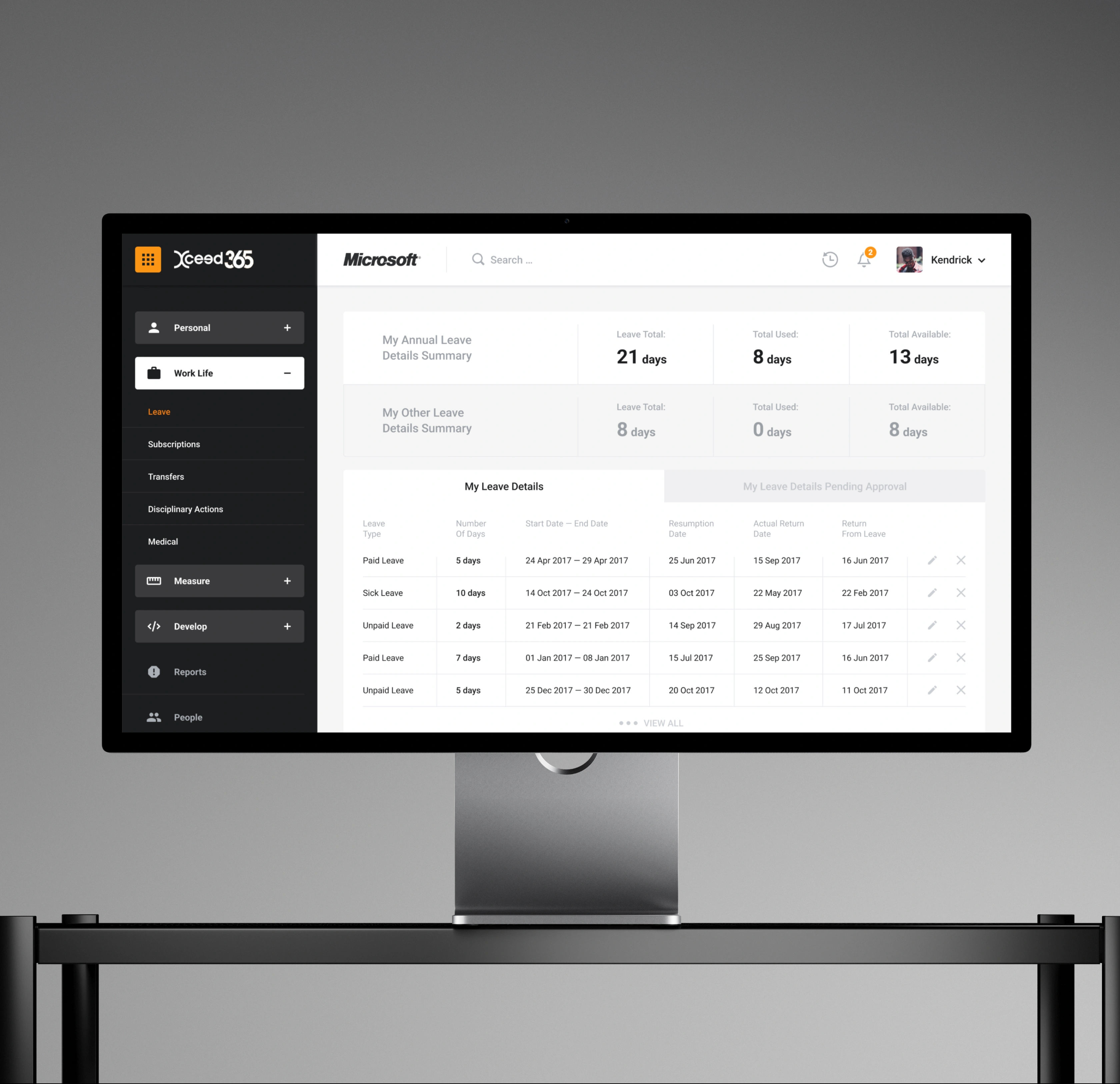
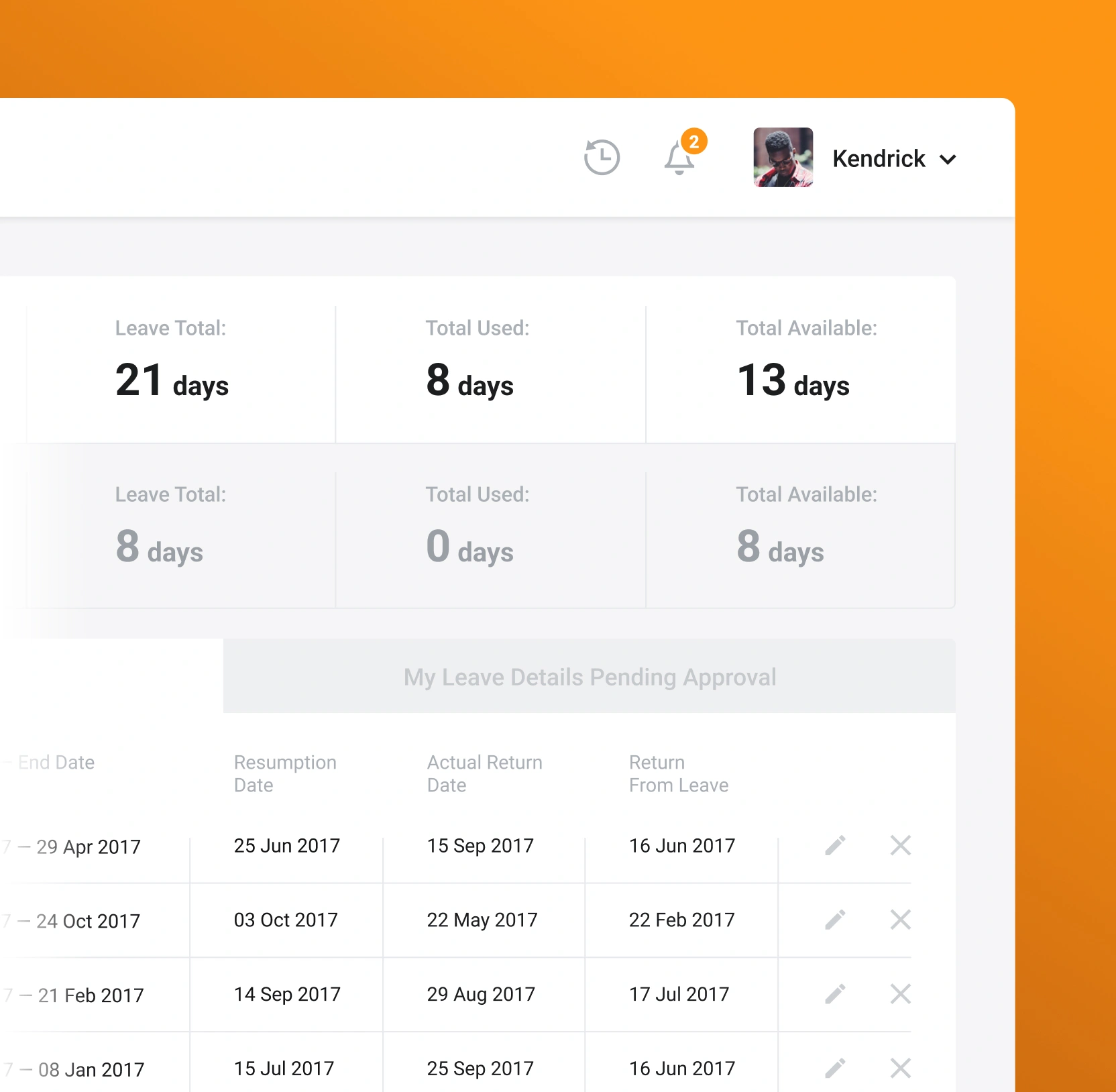
In Xceed365's leave management, employees and managers used to trade messages to learn where a request stood.Â
Lazarev.agency reshaped the leave page in Xceed365 into a structured view of balances, request history by type, and anything awaiting approval. Because each request now shows its status and stage, an approver sees what to act on, and an employee understands where they stand.
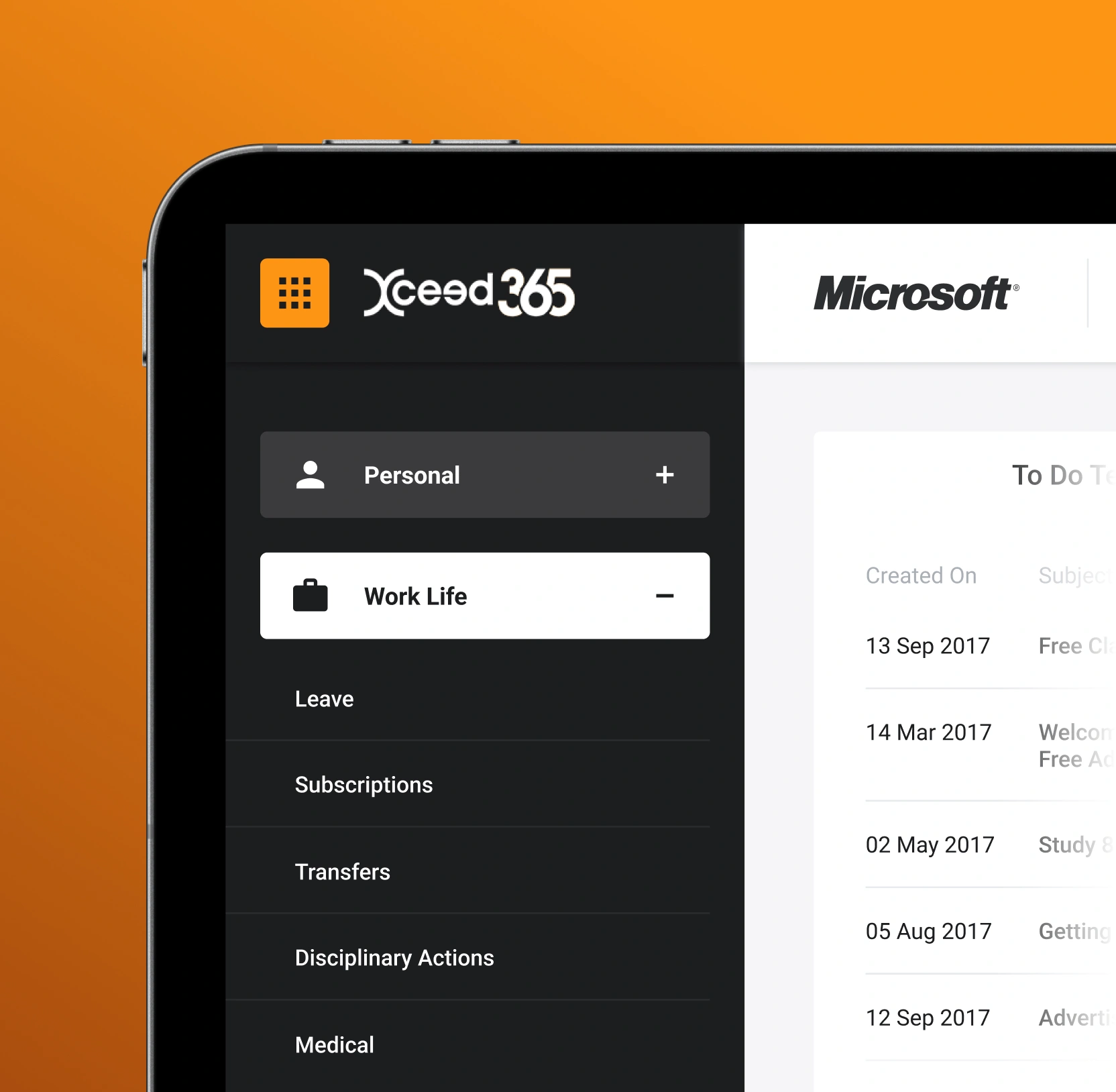
Every module reachable without digging through menus
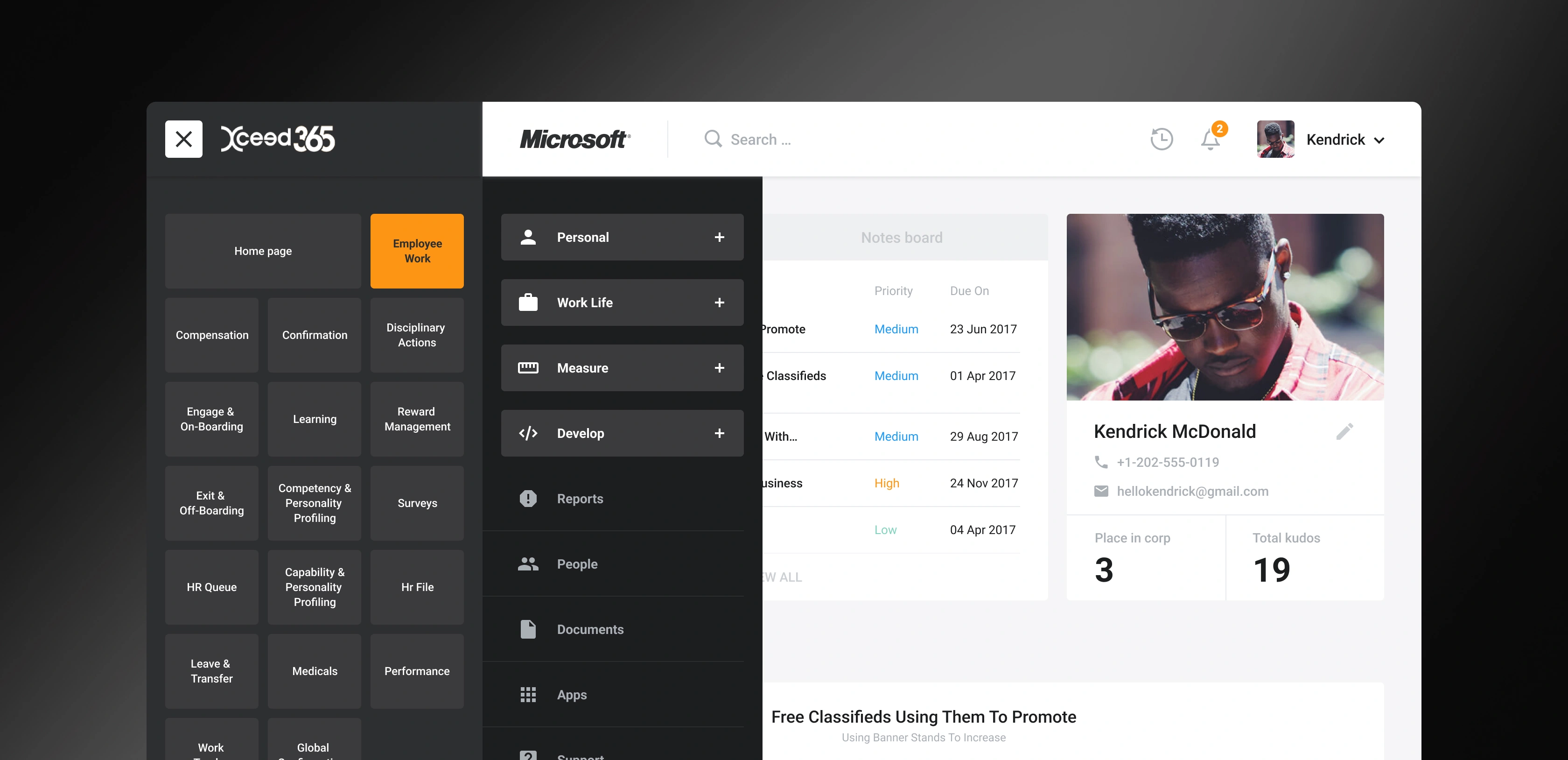
Xceed365's admin controls lived several layers deep in nested menus. Hence, administrators lost time locating where a policy or decision was set.Â
Lazarev.agency reorganized the navigation into clear groups spanning the employee lifecycle, measurement, reporting, people, and documents. An administrator now goes straight to the area they need and can see and adjust how the system behaves.
A complete employee record HR can decide from
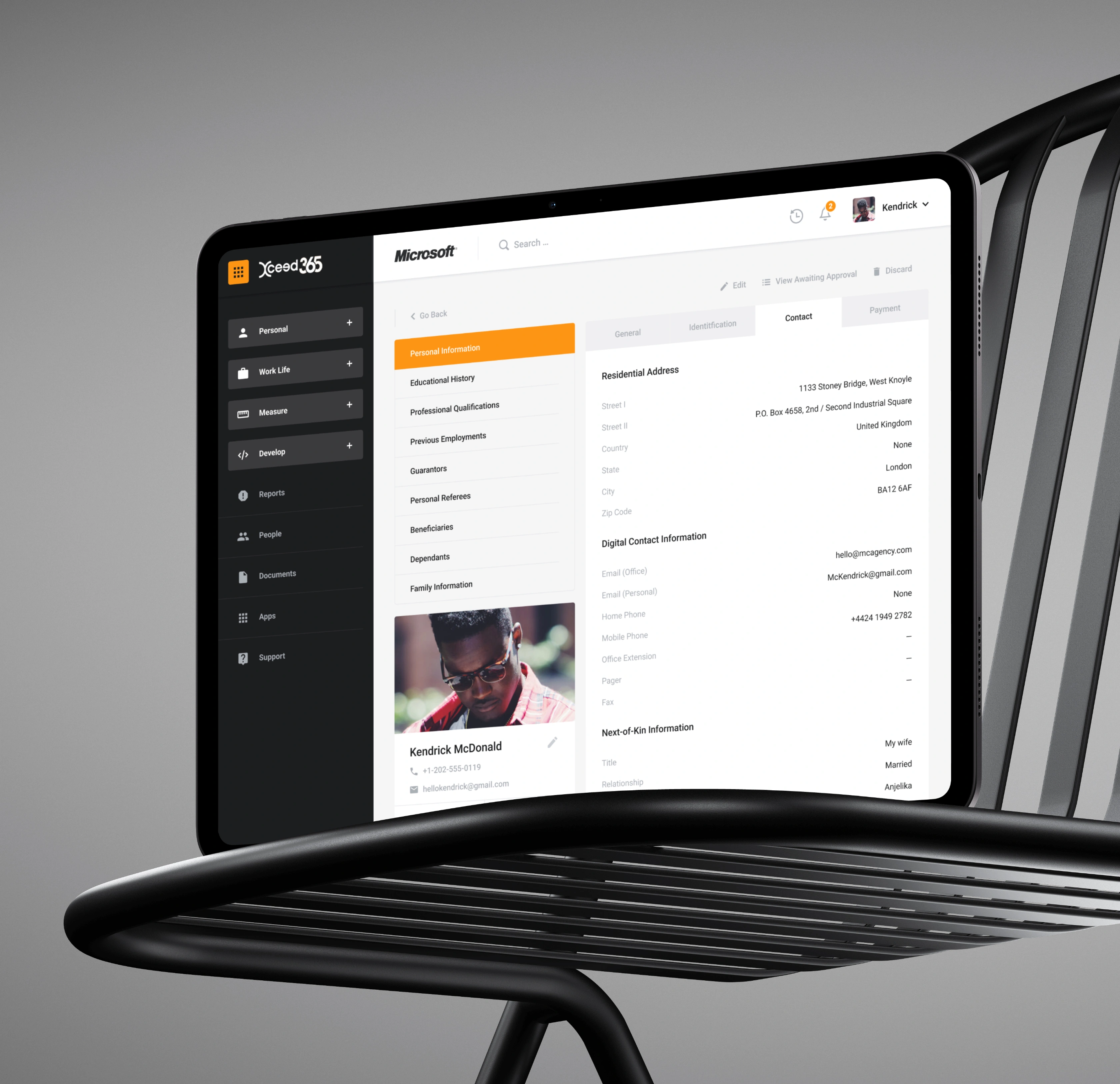
Lazarev.agency restructured the employee profile into a single record spanning identity, pay, contact details, and full employment history.Â
Before, HR pulled a person's details from several places and risked operating on an incomplete or stale picture. The profile now organizes everything about an employee into clear categories. HR has a full, current view of a person and can make well-informed decisions faster, with far less chance of acting on the wrong record.
Real estate
Lazarev. agency offers comprehensive digital design services. Discover our range of related expertise supported by impactful case studies.
More Scaleups Cases
FAQ
How do you modernize legacy HR and payroll systems with AI-powered UX design?
Modernization starts with restructuring workflows before adding automation. In AI-powered software design, we first clarify data hierarchy, permissions, and payroll logic, then embed AI insights into natural decision points. This ensures automation enhances workflows instead of complicating them.
What should companies look for in an AI-powered HR & payroll software design agency?
Companies should look for a partner that understands enterprise governance, compliance sensitivity, and operational scalability. The design requires balancing automation visibility with control. The agency must design systems both intelligent and predictable.
How can payroll SaaS UX redesign improve compliance and reduce risk?
Payroll errors often result from unclear workflows and hidden policy rules. A payroll SaaS UX redesign clarifies approval stages, permission levels, and compliance triggers. In structured AI-powered HR platforms, policy enforcement is visible and traceable, reducing fraud and misconfiguration risks.
What KPIs improve after redesigning AI-powered HR software?
Post-redesign improvements typically include reduced payroll processing time, fewer administrative errors, faster leave approvals, improved onboarding speed, and lower training overhead. Strategic AI-powered HR & payroll software design directly impacts operational efficiency and user adoption.
How do you design AI automation without overwhelming HR teams?
AI that lives in a separate module is AI that gets ignored. When insights are buried behind a dedicated analytics tab, users have to go looking for them, and most won't. The better approach is weaving signals directly into the places where work already happens: dashboards people check every morning, alerts that surface at the right moment, approval workflows where a nudge in the right direction actually changes a decision.Â
When is the right time to invest in payroll SaaS UX redesign?
The right time is when HR teams rely on spreadsheets, experience repeated payroll corrections, or struggle with permission management. These signals indicate structural friction that strategic AI-powered HR & payroll software design can eliminate.
How does enterprise-focused HR platform design support scaling organizations?
As organizations grow, workforce data becomes more complex. Enterprise AI-powered HR & payroll software design ensures reporting structures, automation logic, and governance layers remain manageable as headcount increases.