
Kin Foundation partnered with Lazarev.agency for a platform redesign and achieved a 120% traffic spike, a 25% increase in user retention, and a 40% reduction in user journey time.
Kin Foundation, a pioneer in blockchain-based digital economies, approached Lazarev.agency to modernize its outdated website. Kin’s 5-year-old Web3 platform struggled with usability friction, content sprawl, and developer adoption. Lazarev.agency delivered a sleek new interface, developer-first architecture, and strategic UX improvements, driving a 2× boost in users’ decision-making efficiency and a 120% increase in overall traffic.
What did we prioritize in redesign?
To transform a cluttered platform into a cohesive Web3 ecosystem, Lazarev.agency adopted a user-centered approach to:
- Enhance user experience by simplifying the platform’s visual hierarchy, unifying layouts across pages, and modernizing interactions for experience-led design that makes users stay.
- Strengthen developer onboarding with an optimized Developer Portal featuring quick-start software development kits (SDKs), application programming interfaces (APIs), no-code tools, and guides.
- Increase discoverability by reorganizing content flows and creating clear, contextual entry points to apps, Kin Rewards, and developer tools.
UX changes we implemented as part of the redesign
To align the platform with modern UX standards and best Web3 solutions, Lazarev.agency implemented:
- Intuitive navigation and onboarding redesign that reduced user journey time and increased new user retention.
- Revamped Developer Portal with SDKs, APIs, tutorials, and no-code tools.
- Upgraded Kin Rewards interface in the form of Kin Rewards Engine that clearly explained how developers can integrate Kin into their apps.
- A unified platform identity that ensured brand consistency on desktop and mobile.
- Dynamic homepage with 3D models and animated elements.
- Enhanced information delivery using bold buttons, icons, and typography aligned with Kin’s brand identity. Our team introduced animated backgrounds and subtle micro-interactions to increase user engagement.
“For Web3 platforms to grow, the experience needs to feel effortless. Our goal with Kin was to strip away the friction and replace it with clarity, speed, and trust. That’s how you turn complex ecosystems into products people actually want to use.”
{{Anna Demianenko}}
Results redesign brought to our client
What started as a design challenge turned into measurable success across every key metric:
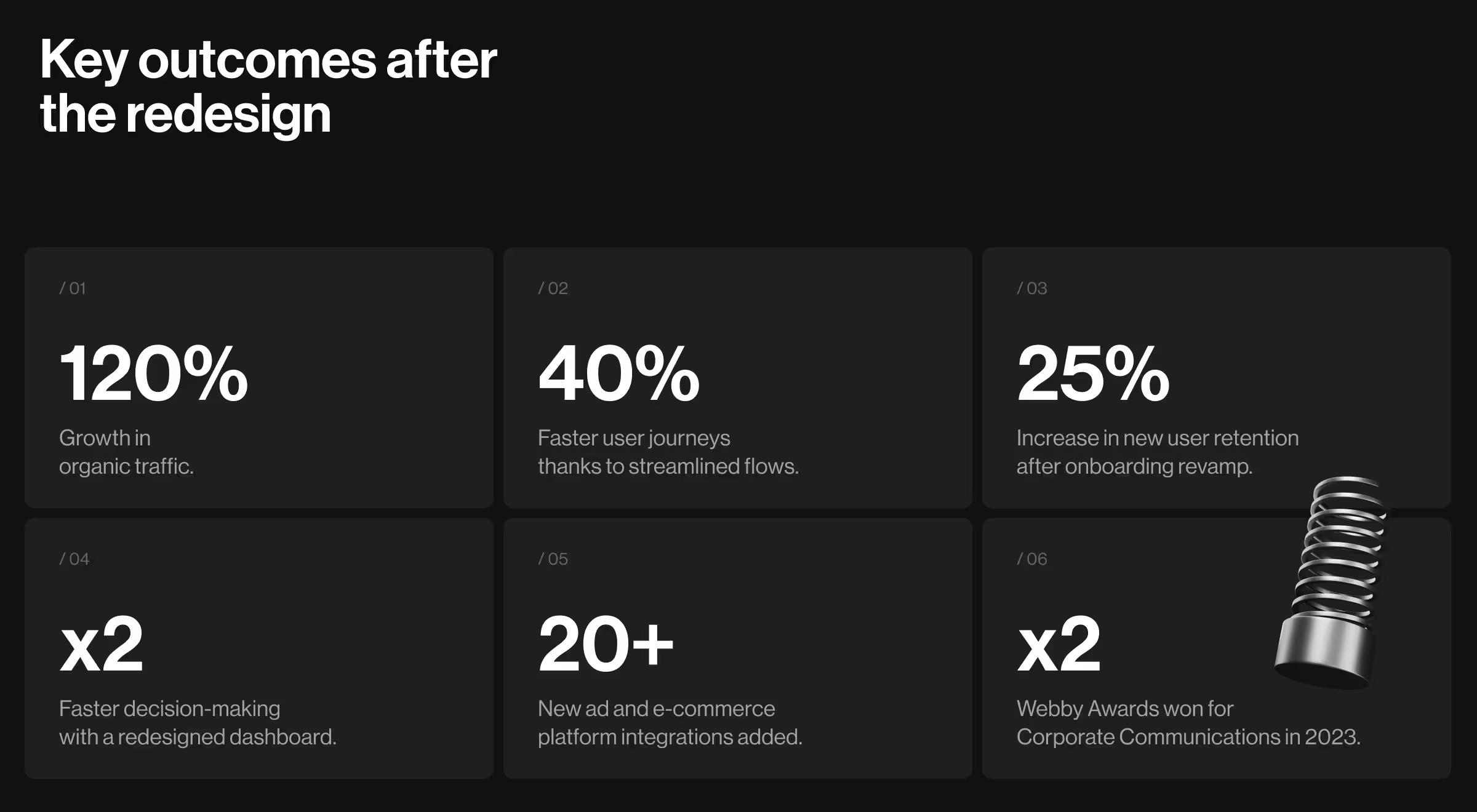
- Traffic growth: 120% increase in organic traffic.
- Faster user journeys: 40% reduction in time-to-conversion.
- Higher retention rates: 25% boost in new user retention.
- Faster decision-making: 2× faster decision-making for Kin’s marketing team.
- Expanded partner ecosystem: 20+ new integrations with leading ad and e-commerce platforms.
- Industry recognition: In 2023, the Kin Foundation project won two Webby Awards in the Corporate Communications category, earning top honors both from the public and the judges.
Discover how strategic design can power your Web3 platform
Kin Foundation’s case study illustrates how user-centered experience design transforms a fragmented blockchain platform into an innovative Web3 ecosystem. In a space often cluttered with complexity, Lazarev.agency brought clarity and structure. By rethinking developer flows and user engagement, Kin became a platform that developers trust and users return to.