

Ever seen a product outsmart its competitors simply because it finally learned how to talk to people?
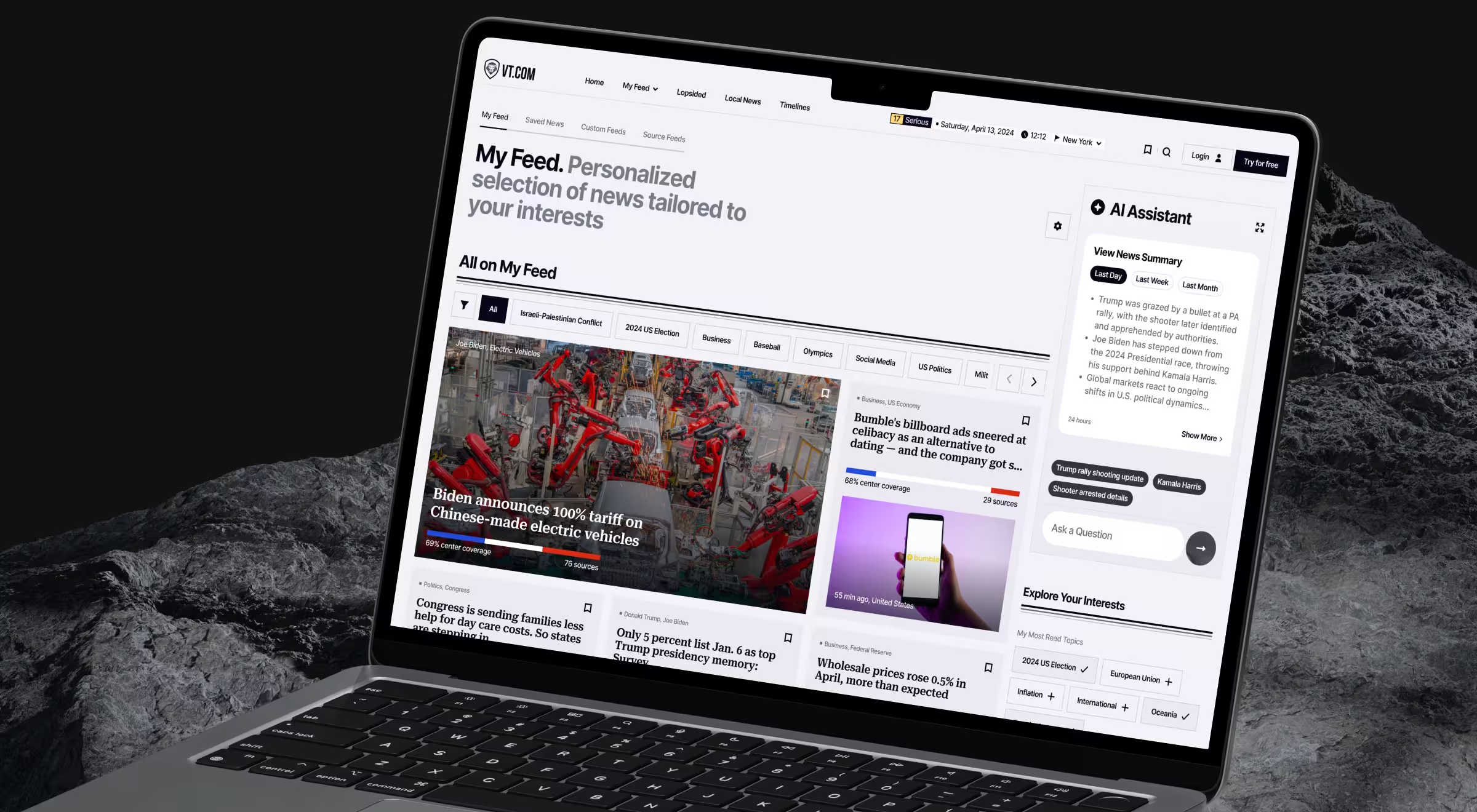
When Lazarev.agency partnered with Patrick Bet-David to build VTnews.ai, the secret wasn’t the AI model scanning 130k+ articles a day (impressive, yes). The true advantage was the conversational assistant that decoded political chaos and translated it into “explain-it-like-I’m-busy” insights. The redesign delivered instant news summaries and direct answers to questions users didn’t have the energy to search for.
That’s what top AI conversational UX agencies do. They design intelligent dialogue that keeps users coming back because the product finally feels like it gets them.
Teams evaluating product design consultancies for conversational AI UX usually discover that success depends less on chatbot visuals and more on how deeply the agency understands dialogue logic, context retention, and real decision-making under pressure.
And if you’re leading a product in 2026, you already know that conversational UX is the baseline. This article will give you a quick pulse check on why conversational design now moves retention and trust, a breakdown of the leading agencies shaping the field, and comparison insights to help you choose a partner who can make your product feel right straight away.
Key takeaways
- Conversational AI UX is the IQ test for your product. If your AI can’t hold a coherent, context-aware conversation, users will assume the rest of your system is just as confusing.
- The best AI conversational UX agencies, like Lazarev.agency, design cognitive shortcuts. Real professionals know how to cut decision time and make complex workflows feel intuitive through strategy and advancements in AI technology.
- Your AI’s success depends less on model horsepower and more on UX architecture. A well-designed conversation can rescue even a mediocre model, whereas a poorly designed one will sabotage the smartest AI on earth.
Why bother about conversational interfaces powered by artificial intelligence?
If you think conversational AI is just another fad, the numbers will politely disagree. Users aren’t merely open to talking with your product, but increasingly prefer it.
And businesses are integrating AI faster than they’re updating their org charts. Conversational AI UX has already become the default interface layer for how people work, browse, troubleshoot, and make decisions.
Here’s an insight-loaded snapshot of what’s going on:
- Conversational AI is exploding: The market is expected to jump from $11.58 billion in 2024 to $41.39 billion by 2030.
- Consumers vote for chatbot digital transformation: 96% want more businesses to integrate them, 94% say chatbots across industries replace call centers, and 82% try a bot before waiting for a human.
- AI is now standard inside companies: 88% of organizations use AI in at least one business function — up from 78% in a single year.
- Employees rely on AI more than leaders realize: Nearly everyone knows gen AI tools, and employee adoption is 3× higher than executives estimate.
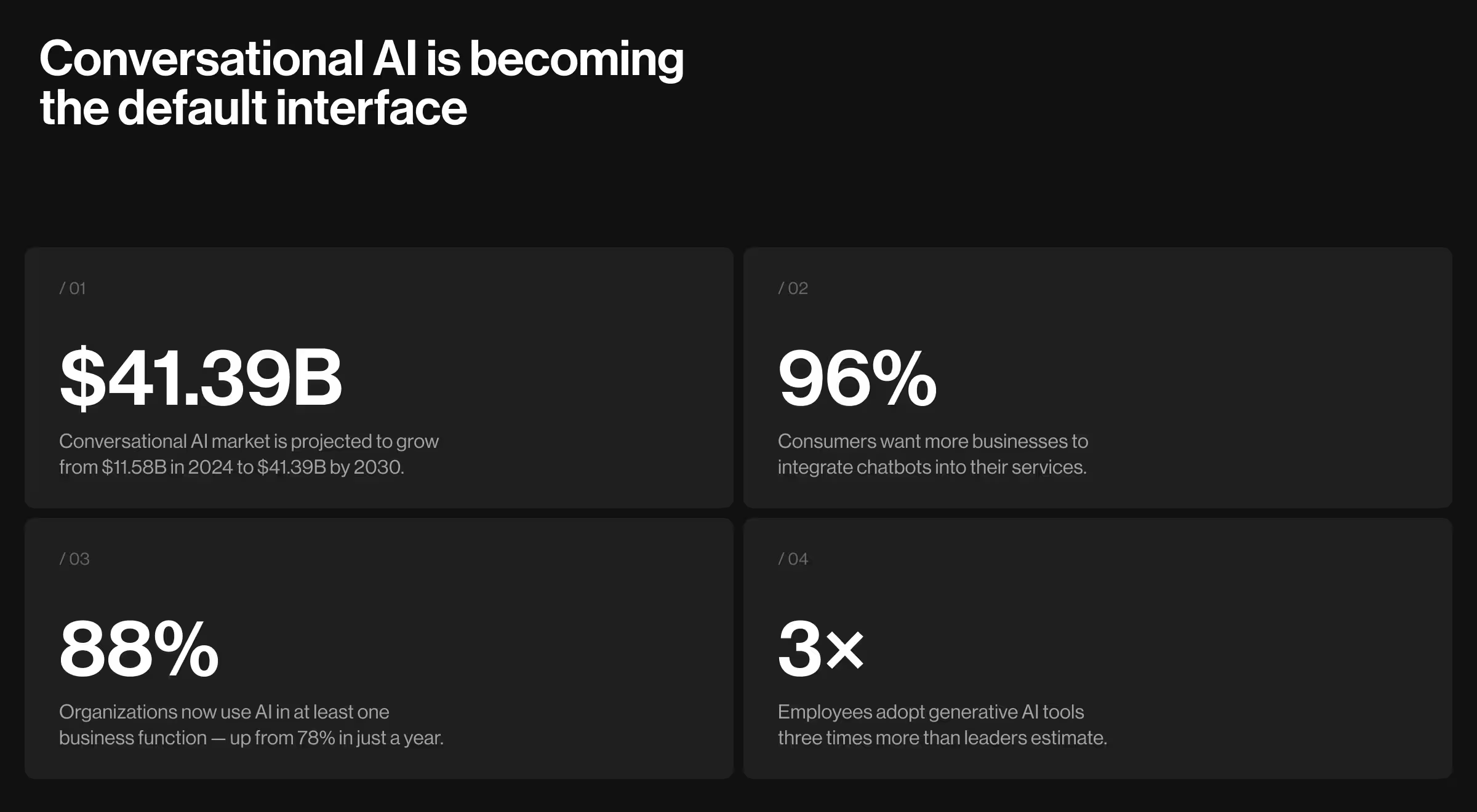
With AI saturating consumer habits and business operations, fluency in conversational AI UX is the new baseline standard for products to stay relevant.
Best 12 conversational AI UX design agencies
When teams ask what separates the best product design consultancies for conversational AI UX from vendors that simply “add a chatbot,” the answer is rarely tooling. So, what separates an agency that simply “adds a chatbot” from one that designs a conversational layer your users will return to?
Before diving into individual reviews, here’s the definitive side-by-side comparison of the 12 leading AI conversational UX agencies that shape what AI transformation looks like.
Choosing the right conversational AI UX partner starts with understanding how well the agency grasps the dynamics of human–AI dialogue.
While the table gives you a quick scan, here’s a real story about what each agency excels at and which type of organization they’re best suited for.
1. Orizon Design
- AI UX expertise: Intuitive SaaS design with assistive AI patterns.
- Industry recognition: Acknowledged as one of the leading generative AI UX design agencies.
- Watch for: Limited focus on complex enterprise AI systems.
- Best for: SaaS founders building user-friendly AI powered products.
- Clutch rating: 5.0
🔗 Explore the agency’s case studies.
2. Lazarev.agency
Our team has earned a reputation as a top AI UX agency with a knack for transforming multi-layered agentic flows into intuitive dialogue-driven interfaces. Trusted by fast-growing AI startups and enterprise innovation teams alike, Lazarev.agency leads the industry in designing advanced conversational AI UX.
- AI UX expertise: Deep expertise in multimodal and conversational AI UX, generative AI, and MVP product design. Known for integrating anticipatory UX in AI-native products.
- Industry recognition: Multi-award-winning, totaling at 140+ awards, including:
- 3× Webby Awards Winner
- 2× Webby Awards Honoree
- 2× Honoree & 6× Red Dot Awards
- CSS Design Awards Nominee
- Watch for: Strong focus on a partnership mentality with deep strategic involvement across teams.
- Best for: Companies building AI-native platforms that need advanced conversational flows and hybrid prompt+GUI interfaces.
- Clutch rating: 5.0
🔗 Explore our portfolio to find out more.
3. Momentum Design Lab
- AI UX expertise: Strong in structured conversational ecosystems and workflow-heavy AI interfaces.
- Industry recognition: Recognized as one of the best interactive design agencies.
- Watch for: Discovery phases that take their time (because enterprise).
- Best for: Corporations building scalable conversational AI architectures.
- Clutch rating: 4.9
🔗 Explore the agency’s case studies.
4. Singlemind
- AI UX expertise: Research-driven approach to building conversational UI flows.
- Industry recognition: Known as one of the best UX prototype design specialists.
- Watch for: Smaller team, so massive parallel projects can stretch timelines.
- Best for: Mid-sized teams wanting evidence-backed conversational UX.
- Clutch rating: 4.9
🔗 Explore the agency’s case studies.
5. Merge Rocks
- AI UX expertise: Skilled in designing conversational touchpoints for consumer-facing mobile apps.
- Industry recognition: Known for startup-friendly collaboration.
- Watch for: Less enterprise-level AI experience.
- Best for: Early-stage products building their first conversational AI layer.
- Clutch rating: 4.9
🔗 Explore the agency’s case studies.
6. The Story
- AI UX expertise: User centric design with strong technical integration.
- Industry recognition: Respected in the European AI community.
- Watch for: Works best when clients have a structured product ownership model.
- Best for: Enterprise teams looking for conversational user interfaces.
- Clutch rating: 5.0
🔗 Explore the agency’s case studies.
7. Qubika
- AI UX expertise: Excellent at data-heavy conversational flows for financial services.
- Industry recognition: Known in North America for robust AI engineering.
- Watch for: High minimum project budgets.
- Best for: If your product deals with financial data, regulations, and the occasional compliance-induced headache, this is your match.
- Clutch rating: 4.9
🔗 Explore the agency’s case studies.
8. DeepInspire
- AI UX expertise: Strong fintech UX with conversational enhancements for complex user workflows.
- Industry recognition: Over two decades of fintech specialization.
- Watch for: Best suited for structured, long-term projects.
- Best for: Fintech firms implementing AI assistants for onboarding or customer support.
- Clutch rating: 5.0
🔗 Explore the agency’s case studies.
9. Topflight Apps
- AI UX expertise: Known for conversational UX in health, wellness, and coaching platforms.
- Industry recognition: Highly rated by healthtech founders.
- Watch for: Mobile-first approach may require adaptation for multi-platform projects.
- Best for: Wellness and healthcare apps using conversational AI to guide users.
- Clutch rating: 4.9
🔗 Explore the agency’s case studies.
10. Perpetual
- AI UX expertise: Great for embedding AI into B2B workflows with light conversational layers.
- Industry recognition: Trusted by enterprise SaaS teams.
- Watch for: Projects thrive when clients already have a strong internal product strategy.
- Best for: SaaS platforms adding AI enhancements rather than fully conversational products.
- Clutch rating: 4.9
🔗 Explore the agency’s case studies
11. Hedgehog Lab
- AI UX expertise: Proven track record with data-based customer experience solutions and AI strategy revamps.
- Industry recognition: Global presence with strong enterprise partnerships.
- Watch for: Regional variations in working style — align early.
- Best for: Enterprise teams needing large-scale conversational digital experiences.
- Clutch rating: 4.8
🔗 Explore the agency’s case studies.
12. Artkai
- AI UX expertise: Research-led conversational design with strong emphasis on user psychology.
- Industry recognition: Recognized across the EU and US fintech for deep UX rigor.
- Watch for: Enterprise timelines may be longer due to thorough user research.
- Best for: Fintech, blockchain, and marketplaces needing AI assistants anchored in trust and compliance.
- Clutch rating: 4.9
🔗 Explore the agency’s case studies.
7 principles of high-quality conversational AI UX and tips on how to get it right
Great conversational AI UX gives users the freedom to ask, explore, command, refine, and feel genuinely understood.
Below is a distilled set of proven principles we rely on at Lazarev.agency when designing AI-native products across news, finance, and search ecosystems.
Understanding the principles is one thing. Applying them in real products is another. To bridge that gap, our AI UX team distilled several field-tested tips that show how these principles translate into effective design decisions.
1. Add contextual prompts
🔍 Explanation: Give users a head start by offering ready-to-click prompts tailored to their current context.
🎯 Evidence: On VTnews.ai, we embedded topic-specific prompts next to each news story. This way, readers can jump straight into meaningful interactions, which dramatically increases user engagement.
2. Combine conversational output with structured UI
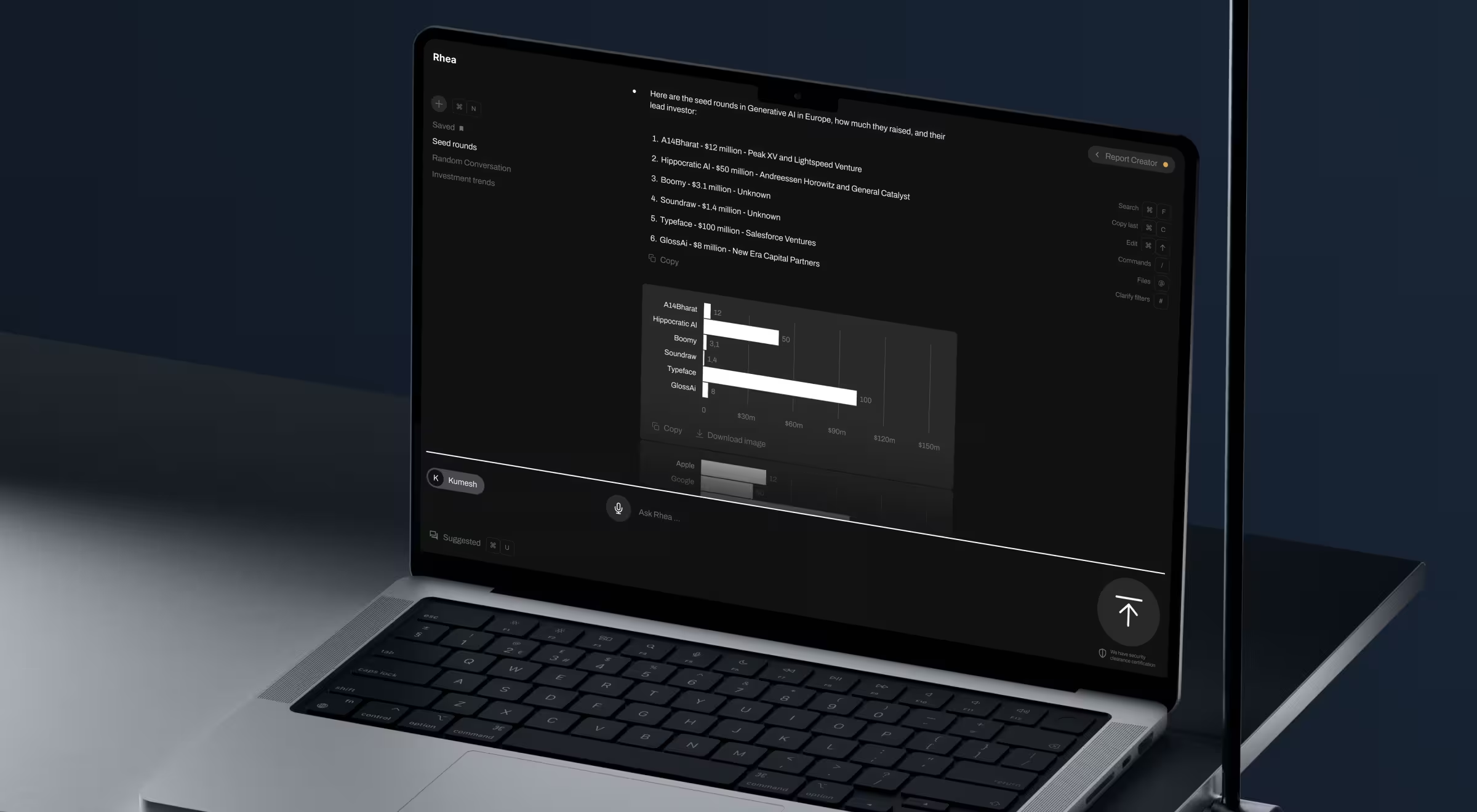
🔍 Explanation: Raw text responses overwhelm, but pairing them with visual modules keeps users oriented.
🎯 Evidence: In Accern Rhea, we developed a hybrid prompt + GUI interface that let analysts filter, refine, and manipulate AI output visually. This redesign transformed the handy chat into a serious research tool.
3. Place the AI entry point where intent is highest
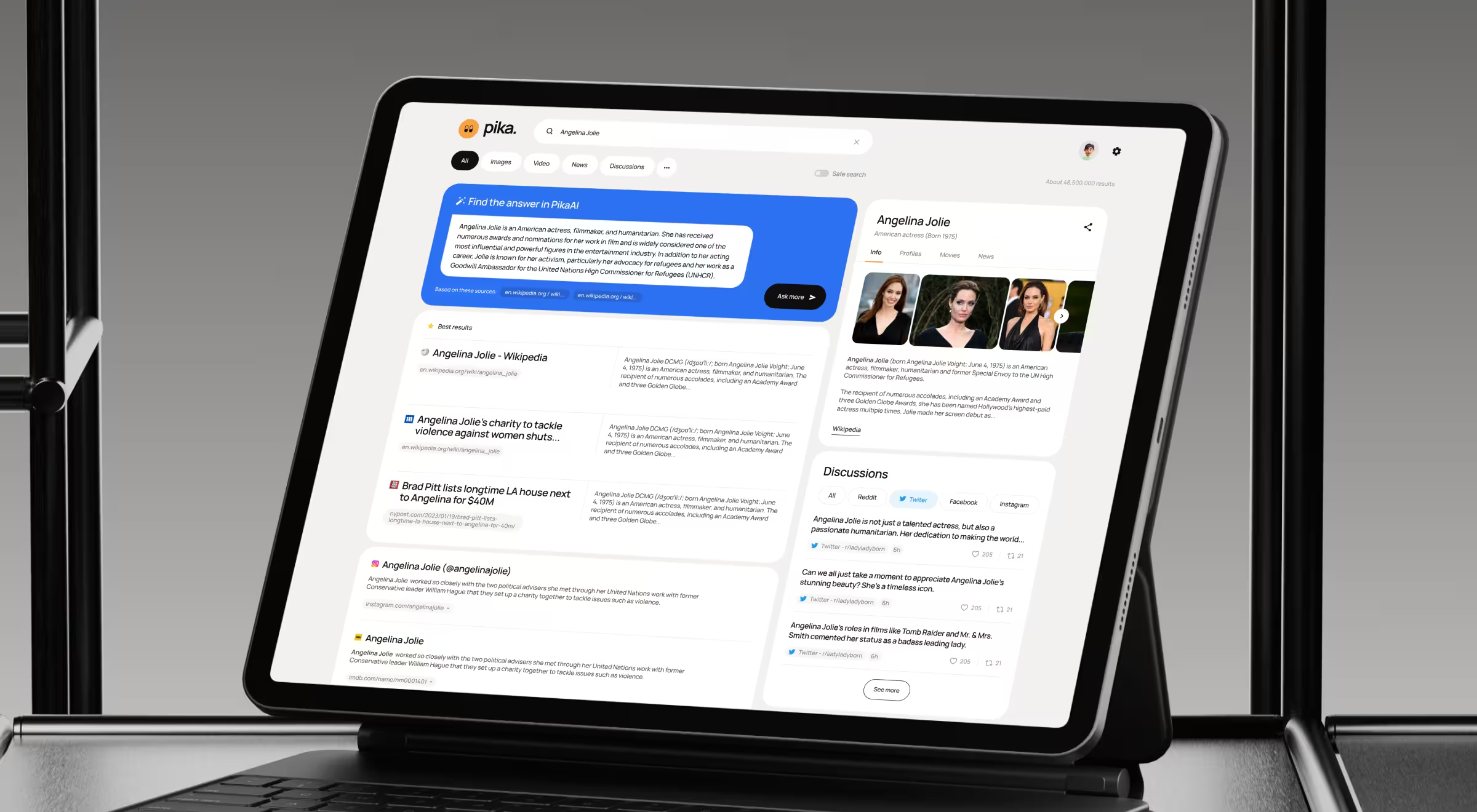
🔍 Explanation: Users adopt conversational interactions when the chat is introduced at the exact moment they need it.
🎯 Evidence: On Pika AI, we placed the chat widget directly under the search bar — the intent hotspot. This made the AI assistant the natural next step.
4. Build transparency into every answer
🔍 Explanation: Users trust conversational systems that reveal context, bias, or sources.
🎯 Evidence: VTnews.ai displays left/center/right viewpoints and a media bias scale alongside conversational summaries. This intentional layout helps readers understand not just the answer but the political context surrounding the topic of interest.
If the conversation isn’t working, the product isn’t working. Let’s fix that
Your conversational AI UX partner directly determines the outcomes you achieve. The right agency helps your AI respond faster, explain itself better, anticipate user needs, and drive key UX performance metrics like optimizing bounce rate or boosting conversions.
At Lazarev.agency, every solution we design is grounded in real product behavior, be it analysts trying to make sense of financial data, readers navigating biased news, or users searching the web. Our work proves that when the UX is right, the AI becomes exponentially more useful, and users stick around longer.
If you want a conversational experience that genuinely improves how people work with your product, let's talk about your next step.




.webp)