

“There’s a way to do it better. Find it.” — Thomas Edison.
At Lazarev.agency, an award winning design agency, this quote embodies the philosophy behind every legal tech product we design. In an industry where workflows are dense and user trust is everything, making things “better” (in every sense possible) is the only path forward.
The moment you reframe complex legal flows into a guided, human-friendly experience, the entire user experience changes. The product becomes clearer, the user gets the confidence boost they need, and suddenly, your legaltech brand feels like it actually understands its audience.
This brings us to the hard part: picking the right partner. With so many legaltech design companies on the market, you need a framework. In this article, our design team shares the methodology we used to identify top-tier partners and presents a curated list of 15 agencies that truly excel in the legaltech space. Let’s dive in.
Key takeaways
- Legaltech isn’t forgiving. Only teams with real domain fluency can design products that feel trustworthy and genuinely useful for legal professionals.
- Artificial intelligence is now table stakes. Top AI UX design agencies, like Lazarev.agency, know how to design safe and confidence-building AI interactions lawyers won’t second-guess.
- Fifteen agencies made the final list, each vetted for tangible UX impact, design maturity, and actual business growth.
Methodology behind selecting the best legaltech design companies
Choosing a legaltech design partner is a high-stakes decision. You’re trusting them with workflows that handle privileged data, redline-sensitive documents, multi-step reviews, and AI-assisted reasoning. The bar has to be high.
Like with anything, our team of designers at Lazarev.agency, a top AI product design agency, took a strategic approach to selecting the best partners for your law firm web design project.
We built a rigorous, criteria-driven evaluation process, applied it to over 50 design agencies across the US and Europe, and narrowed it down to the 15 companies that genuinely stand out.
Here’s our exact methodology.
1. Domain expertise
🔍 What we evaluated: Experience designing case-management systems, e-discovery tools, contract automation platforms, research assistants, and compliance dashboards.
🟩 Why it matters: Legal workflows are high-risk and unforgiving. If an agency doesn’t understand legal mental models (think deadlines, data privacy, auditability), you’ll spend months educating them. Domain fluency ensures the product maps to real legal behavior.
2. AI capabilities
🔍 What we evaluated: Ability to design AI-powered features such as drafting assistants, smart search, predictive recommendations, AI dashboards, automated summaries, and agentic workflows. We assessed whether teams understand AI UX patterns: trust cues, explainable outputs, error boundaries, and confidence indicators.
🟩 Why it matters: Modern legaltech is increasingly AI-first. AI innovation in UX reduces cognitive load, tackles uncertainty, and helps users understand why a suggestion is made. Agencies that design with AI responsibly yield massive efficiency gains.
3. Data sensitivity awareness
🔍 What we evaluated: Understanding of secure UX patterns, including permission logic, role-based access, audit trails, retention policies, and safe handling of confidential or privileged information. We also evaluated agencies’ familiarity with compliance frameworks (SOC 2, GDPR, HIPAA requirements).
🟩 Why it matters: Legal data is the most sensitive category of enterprise data after healthcare and finance. A single poorly designed file-sharing or permission flow can create catastrophic risk. Agencies must design interfaces where security is embedded into every access point.
4. Design track record
🔍 What we evaluated: Case studies demonstrating faster drafting time, improved search accuracy, lower error rates, fewer support tickets, higher retention, and clearer document workflows. In other words, we looked for portfolios of operational impact.
🟩 Why it matters: Legaltech ROI is measured in hours saved, mistakes avoided, and workflows simplified. Agencies that consistently deliver quantifiable improvements show they understand the operational pressure legal teams face.
5. Industry reputation
🔍 What we evaluated: Presence in legaltech or AI design communities, contributions to design standards, published insights on legal workflows and AI digital transformation, conference talks, and overall authority in the digital product ecosystem.
🟩 Why it matters: Legaltech evolves fast. Agencies that publish insights and engage in industry discussions tend to stay ahead. It proves they’re learning at the same pace as the industry changes.
15 best legal technology design companies
Below are the 15 agencies that passed our five-point evaluation framework with confidence.
Each one brings a unique blend of legal domain fluency, AI-ready design thinking, and operational design maturity.
1. Usman Group
Usman Group focuses on research-driven UX for teams drowning in data, governance rules, and operational fine print.
- Domain expertise: Strong research culture is what lets the agency accurately map stakeholder roles and processes.
- AI capabilities: Designs systems with predictive UX patterns and automated flows.
- Data sensitivity awareness: Familiar with security-heavy industries, applying robust IA and content governance.
- Design track record: Numerous projects highlight gains in user engagement.
- Industry reputation: 4.9/5 Clutch rating.
🔗 Explore the agency’s portfolio
2. DD.NYC
DD.NYC is a multidisciplinary digital agency with real UX chops. Their legaltech work shines because they take those tangled user flows and trim them into something clean and surprisingly humane without sacrificing the visual punch.
- Domain expertise: Experience with dashboards, client portals, and document workflows that require precision and a clear hierarchy.
- AI capabilities: Incorporate smart search, tagging automation, and predictive interface elements into their product work.
- Data sensitivity awareness: Familiar with secure UX patterns, access logic, and handling sensitive data in client-facing legal environments.
- Design track record: Known for improving user engagement and task completion through strategic UX.
- Industry reputation: 4.9/5 Clutch rating.
🔗 Explore the agency’s portfolio
3. Hexxen
Hexxen is a digital product studio with strong engineering integration. And it’s exactly why legaltech teams trust this agency with deeply technical stuff.
- Domain expertise: Experience designing data-heavy systems and enterprise workflows relevant to legal operations.
- AI capabilities: Skilled at designing advanced filtering, automated document actions, and logic-based UI flows.
- Data sensitivity awareness: Strong understanding of secure information architecture (IA) and permission-sensitive design.
- Design track record: Demonstrates improved workflow efficiency in multi-user environments.
- Industry reputation: 4.8/5 Clutch rating.
🔗 Explore the agency’s portfolio
4. Lazarev.agency
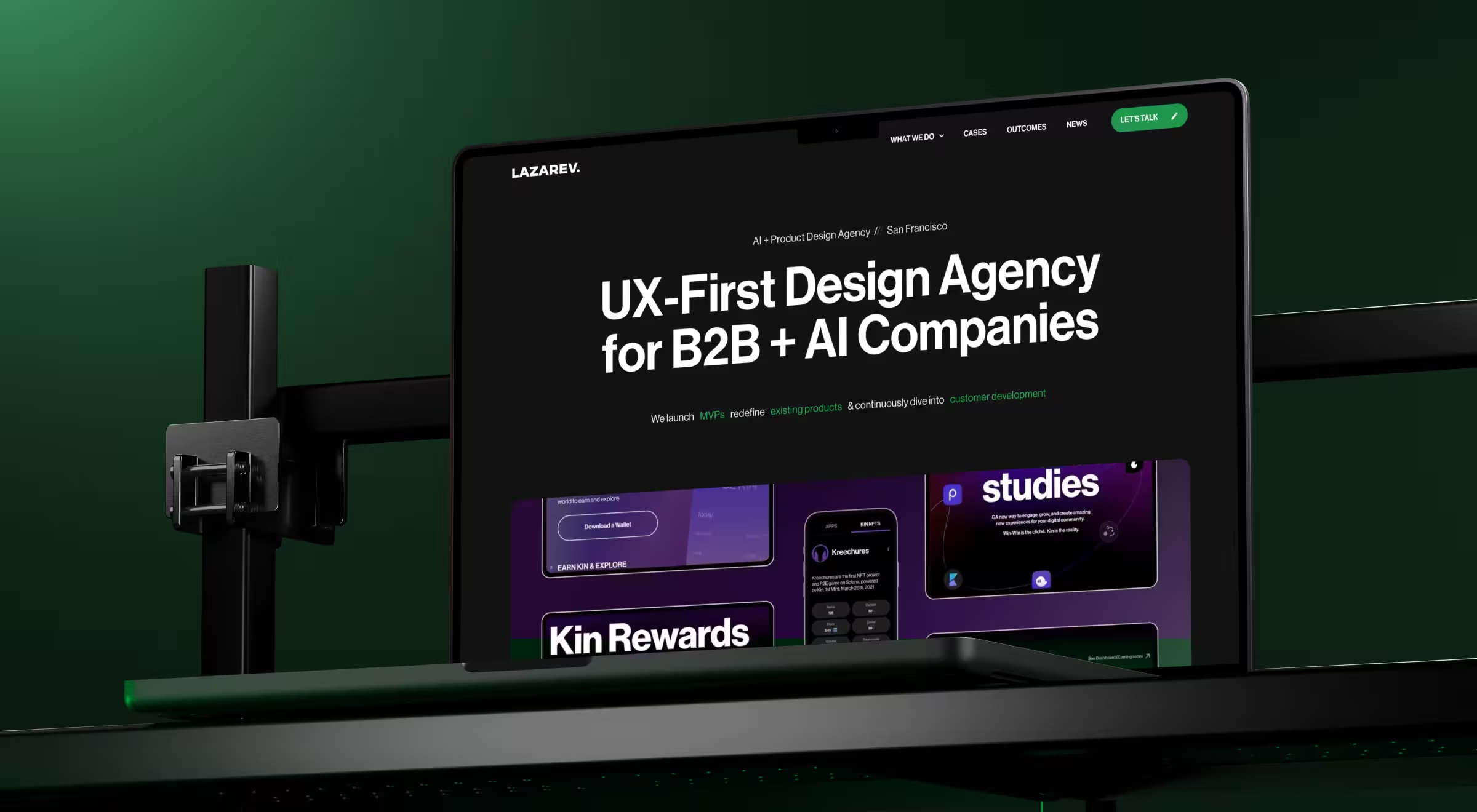
Lazarev.agency is an AI-native digital product design company based in San Francisco, known for building intelligence-driven tools for SaaS, legaltech, and enterprise environments. Our work stands out for rewiring dense, high-stakes workflows into intuitive digital experiences.
- Domain expertise: Extensive experience with AI research assistants, document-intensive workflows, multi-step approvals, and systems that demand traceability and auditability.
- AI capabilities: Strong specialty in AI UX, including agentic workflows, conversational AI, generative AI tools, semantic search, and interfaces embodying digital transformation.
- Data sensitivity awareness: Our design systems integrate role-based access, redaction flows, granular user permissions, and enterprise-grade UX security principles.
- Design track record: Solid evidence of successful collaboration on legaltech projects:
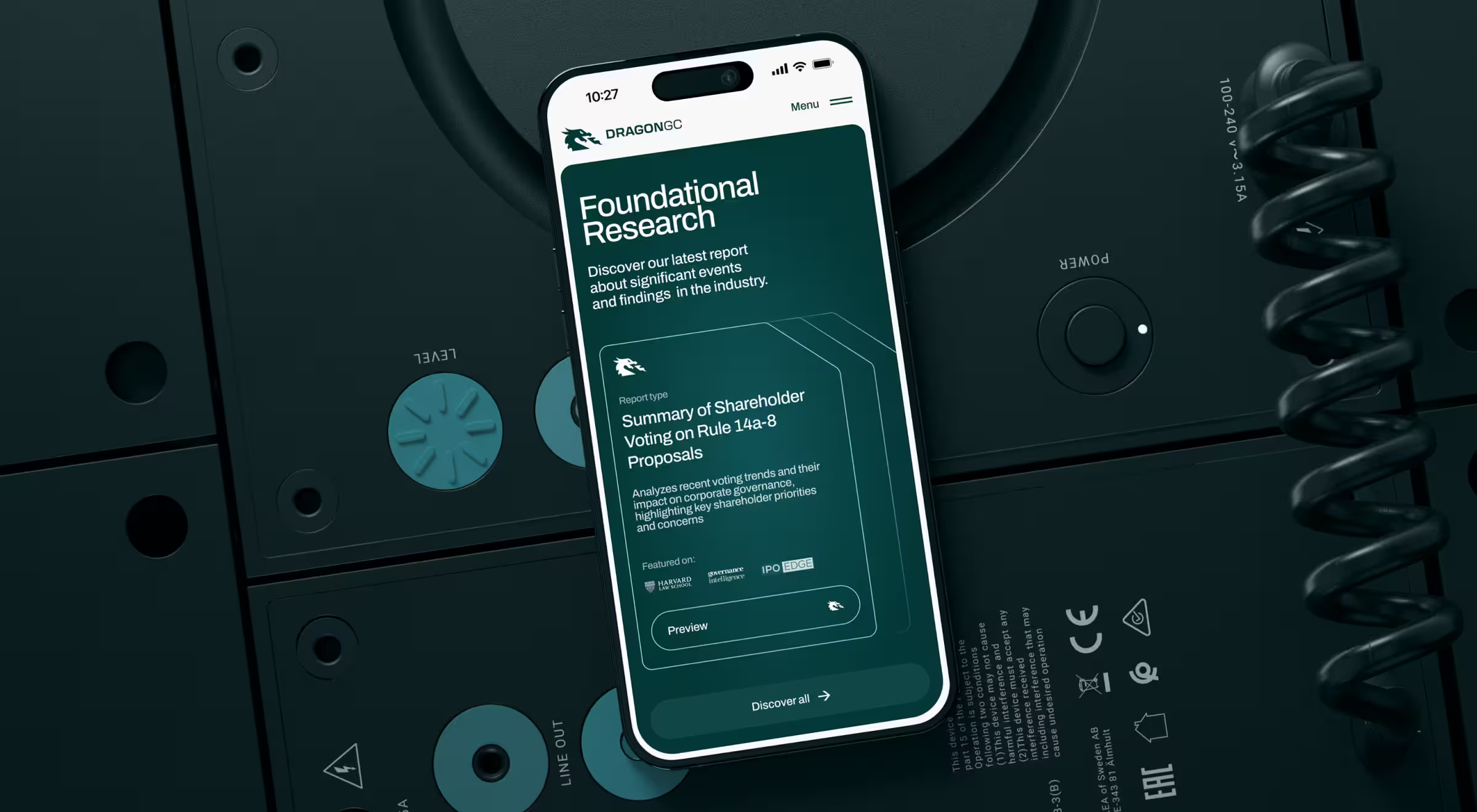
DragonGC: Repositioned a complex AI compliance platform into a trustworthy enterprise-ready brand. Redesigned the entire digital experience to clearly communicate regulatory value and boost investor confidence during a major market expansion.
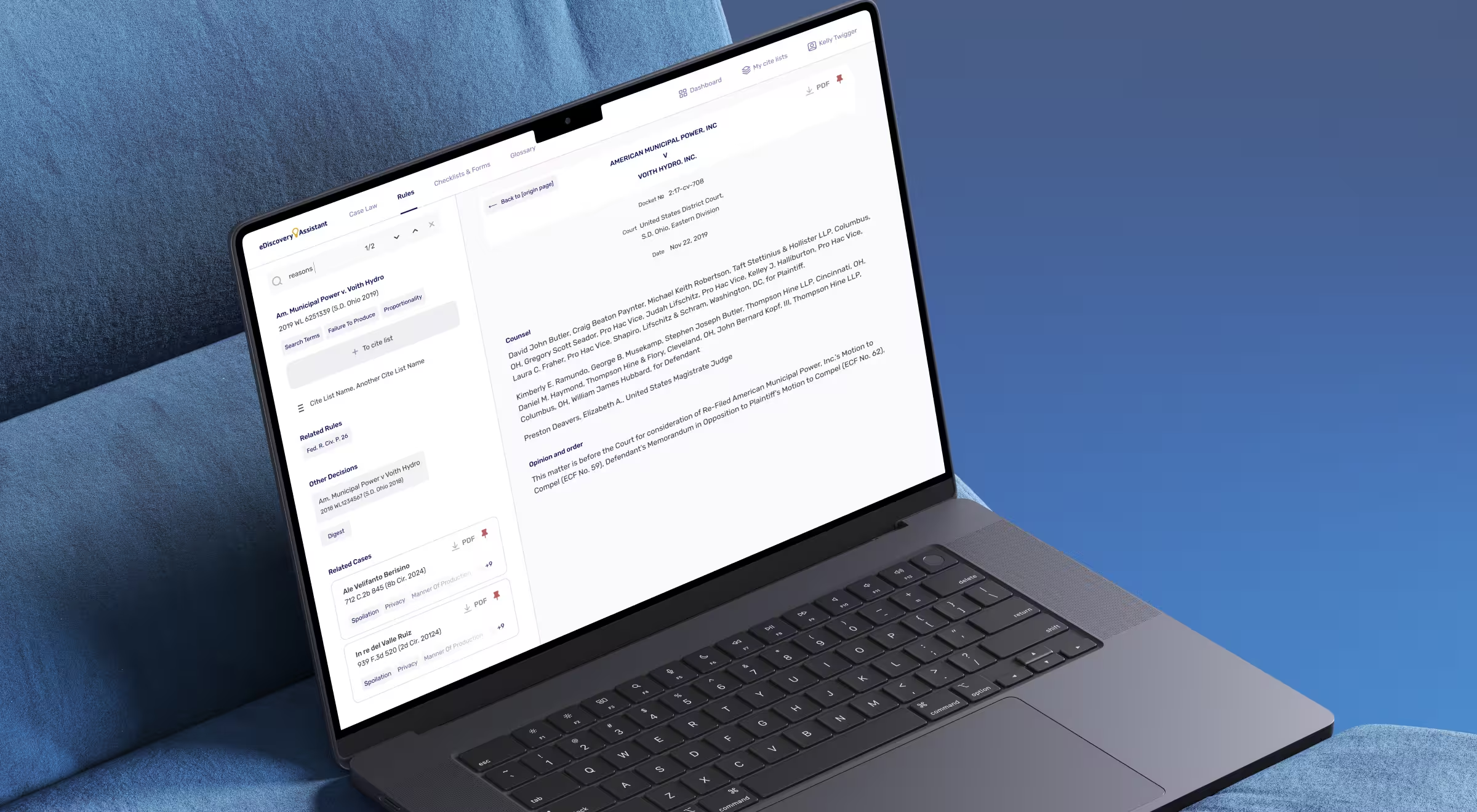
eDiscovery Assistant: Rebuilt the research workflow UX to deliver 75% faster case-law discovery and cut search times from 45+ minutes to just 2 minutes.
- Industry reputation:
- Over 140 awards total, including 3× Webby Awards Winner, 2× Webby Awards Honoree, 2× Honoree and 6× Red Dot Awards, and CSS Design Awards Nominee.
- 5/5 Clutch rating.
🔗 Learn more by exploring our portfolio
5. Baunfire
Baunfire combines strong UI design principles with UX fundamentals. The agency is well-positioned for legal tech companies looking for highly credible digital experiences.
- Domain expertise: Experience with professional services, enterprise content systems, and information-dense dashboards.
- AI capabilities: Integrated automated actions, smart surfacing, and content structuring patterns.
- Data sensitivity awareness: Comfortable designing for structured access and layered content governance.
- Design track record: Known for clean, intuitive interfaces that minimize cognitive load.
- Industry reputation: 4.9/5 Clutch rating, considered one of the best San Francisco web design agencies.
🔗 Explore the agency’s portfolio
6. Storm Brain
Storm Brain brings a blend of branding and data-driven UX design. The team knows the perfect recipe for law firms looking for operational precision and a stronger market presence.
- Domain expertise: Familiar with designing for service-heavy workflows and content-driven legal operations.
- AI capabilities: Designs UIs that leverage automated recommendations and smart categorization.
- Data sensitivity awareness: Prioritize safe UX structures for sensitive information.
- Design track record: Known for boosting usability and product clarity through redesigns.
- Industry reputation: 5/5 Clutch rating, recognized as one of the top-performing web design companies in Las Vegas.
🔗 Explore the agency’s portfolio
7. CreativeWeb
CreativeWeb specializes in responsive product interfaces and workflow-heavy systems. This digital agency builds workflows that feel easy to navigate and interaction patterns that legal teams actually trust.
- Domain expertise: Designed systems with multi-step, human-in-the-loop review processes similar to legal workflows.
- AI capabilities: Incorporates AI solutions with smart search and guided task flows.
- Data sensitivity awareness: Experienced in designing secure client portals and structured data environments.
- Design track record: Expert at smoothing out task bumps and making user flows intuitive.
- Industry reputation: 4.9/5 Clutch rating.
🔗 Explore the agency’s portfolio
8. Groundwrk
Groundwrk blends product expertise with marketing know-how. This way, the team guides legal professionals in growing their offerings and expanding their online presence with ease.
- Domain expertise: Familiar with complex B2B decision systems and enterprise workflows.
- AI capabilities: Strong capability in automated sorting, predictive content display, and guided UX paths.
- Data sensitivity awareness: Designs logic-driven UX that respects access boundaries and data separation.
- Design track record: Focus on efficiency and clarity in information-heavy interfaces.
- Industry reputation: 5/5 Clutch rating, recognized as one of the most reliable website design partners in New Orleans.
🔗 Explore the agency’s portfolio
9. Grow Law
Grow Law is dedicated exclusively to the legal sector. This team delivers digital marketing services and strategic solutions thoughtfully tailored to the needs of law firms and legal service providers.
- Domain expertise: Deep understanding of UI/UX design principles specific to the legal industry.
- AI capabilities: Integrates smart intake, automated contract management updates, and intelligent content structuring.
- Data sensitivity awareness: Strong awareness of confidentiality-related UX rules and secure data exchange.
- Design track record: Demonstrates measurable improvements in client communication and admin workload.
- Industry reputation: 5/5 Clutch rating.
🔗 Explore the agency’s portfolio
10. Collective42
Collective42 is known for systematic thinking and robust product architecture.
- Domain expertise: Familiar with workflow-based platforms similar to review systems for legal documents.
- AI capabilities: Implements guided flows, automated suggestions, and data-driven feature sets.
- Data sensitivity awareness: Strong information-architecture discipline ensures safe data structures.
- Design track record: Often cited for improving workflow speed in operational tools.
- Industry reputation: 5/5 Clutch rating, listed as one of the best enterprise design agencies.
🔗 Explore the agency’s portfolio
11. 7 Studios
7 Studios is a creative digital agency that turns the labyrinth of legal processes into web experiences users actually enjoy.
- Domain expertise: Skilled at simplifying dense information flows akin to legal task management.
- AI capabilities: Experience with automated tagging and integrated AI helpers.
- Data sensitivity awareness: Expert in designing secure document architectures and permission schemes that protect data without decelerating workflows.
- Design track record: Known for delivering user-friendly UIs.
- Industry reputation: 5/5 Clutch rating.
🔗 Explore the agency’s portfolio
12. Arounda
Arounda brings polished product design and startup-friendly UX expertise useful for legaltech products in early or growth stages. That’s exactly what makes this agency perfect for mid sized law firms.
- Domain expertise: Designed numerous workflow-heavy SaaS tools reflective of complex legal processes.
- AI capabilities: Skilled with AI-driven recommendations, summarization features, and automated onboarding logic.
- Data sensitivity awareness: Comfortable designing around structured access, safe storage patterns, and user governance.
- Design track record: Strong performance in reducing user friction and improving feature discoverability.
- Industry reputation: 5/5 Clutch rating, ranked as one of the best product redesign agencies.
🔗 Explore the agency’s portfolio
13. Three29
Three29 is a Sacramento-based digital agency with strong UX fundamentals and a history of delivering structured product workflows.
- Domain expertise: Skilled at designing multi-user, multi-system enterprise flows comparable to legal processes.
- AI capabilities: Uses automation and smart recommendations to streamline repetitive tasks.
- Data sensitivity awareness: Experienced in building UX for sensitive operational data.
- Design track record: Known for reorganizing complex flows for faster task completion.
- Industry reputation: 4.9/5 Clutch rating.
🔗 Explore the agency’s portfolio
14. Digital Silk
Digital Silk is a well-established agency specializing in large-scale digital transformation, enterprise UX, and conversion-led design.
- Domain expertise: Experienced in designing complex enterprise ecosystems that mirror legal operations.
- AI capabilities: Skilled with data automation, predictive logic, and AI-powered task simplification.
- Data sensitivity awareness: Understands compliance-heavy infrastructures and multi-role access hierarchies.
- Design track record: Notable improvements in navigation, adoption, and workflow efficiency.
- Industry reputation: 5/5 Clutch rating, listed as one of the best law firm website design companies.
🔗 Explore the agency’s portfolio
15. Saritasa
Saritasa is a full-service development and design firm with deep engineering expertise, ideal for teams that need end-to-end support.
- Domain expertise: Works with logic-heavy systems, including those with legal-adjacent workflows.
- AI capabilities: Strong technical understanding of AI integrations and data-heavy workflows.
- Data sensitivity awareness: Implements secure backend architectures.
- Design track record: Proven ability to improve operational efficiency in enterprise applications.
- Industry reputation: 4.8/5 Clutch rating, recognized as one of the leading web design providers in Orange County.
🔗 Explore the agency’s portfolio
Now is your time to win the legal industry with Lazarev.agency
The best digital product design partner understands legal workflows, anticipates user behavior, and builds AI-ready experiences that increase trust and drive adoption.
At Lazarev.agency, this is exactly where we excel. We turn high-risk legal processes into intuitive digital products used by real legal teams. If you’re building something ambitious, something that needs both intelligence and precision, we’d love to help.
Skip straight to the good part and talk to our team to discuss your next project.

.avif)