If that quote made you nod, you’ve probably lived the problem. The UI looks fine. The team is talented. And yet everything takes longer than it should. Small changes turn into debates. Familiar components get redesigned (again). Engineers rebuild patterns everyone thought were settled. Nothing is on fire. But progress feels… sticky.
That’s where design system companies actually earn their keep. Their real value is restoring momentum. As products expand and AI-driven transformation takes off, a strong design system becomes operational infrastructure. At this stage, teams usually ask a very practical question: what’s the best agency for SaaS design systems and components when speed, governance, and scale all matter?
In this article, we break down why design systems have become essential, how the right web design partnership changes execution speed, and which design system companies deliver results.
Let’s dive in.
Key takeaways
- Design systems turn UX decisions into information infrastructure. The strongest design systems standardize how teams make decisions.
- The best AI UX companies like Lazarev.agency focus on pattern intelligence. Experienced partners recognize failure modes early and design systems that hold up as products and teams grow.
- Velocity is the real ROI metric. A design system is doing its job if teams ship faster, onboard quicker, and spend less time revisiting solved problems.
What are design systems, and why building one could be a game-changer for your business
A design system is not a UI kit. And it certainly isn’t just a tidy Figma library. So what’s the best way to define a concept that (by mistake) seems self-explanatory?
Here’s our AI UX Designer Anna Demianenko take on UX design systems and their role:
“A design system is a centralized ecosystem of reusable components, design tokens, pattern libraries, and rules. It sets the tone for how a digital product looks, behaves, and evolves across teams and platforms.
At the enterprise level, a design system becomes operational infrastructure. It gives design, engineering, and product teams a shared language and, in doing so, removes ambiguity.
In modern products, this system must also support AI-driven interfaces without confusing users.
When done right, a design system becomes a force multiplier for every actionable UX performance metric under the sun. And that’s the beauty (and a hidden challenge, believe me) of it.”
Design systems aren’t a theoretical win. Their value is provable and substantial.
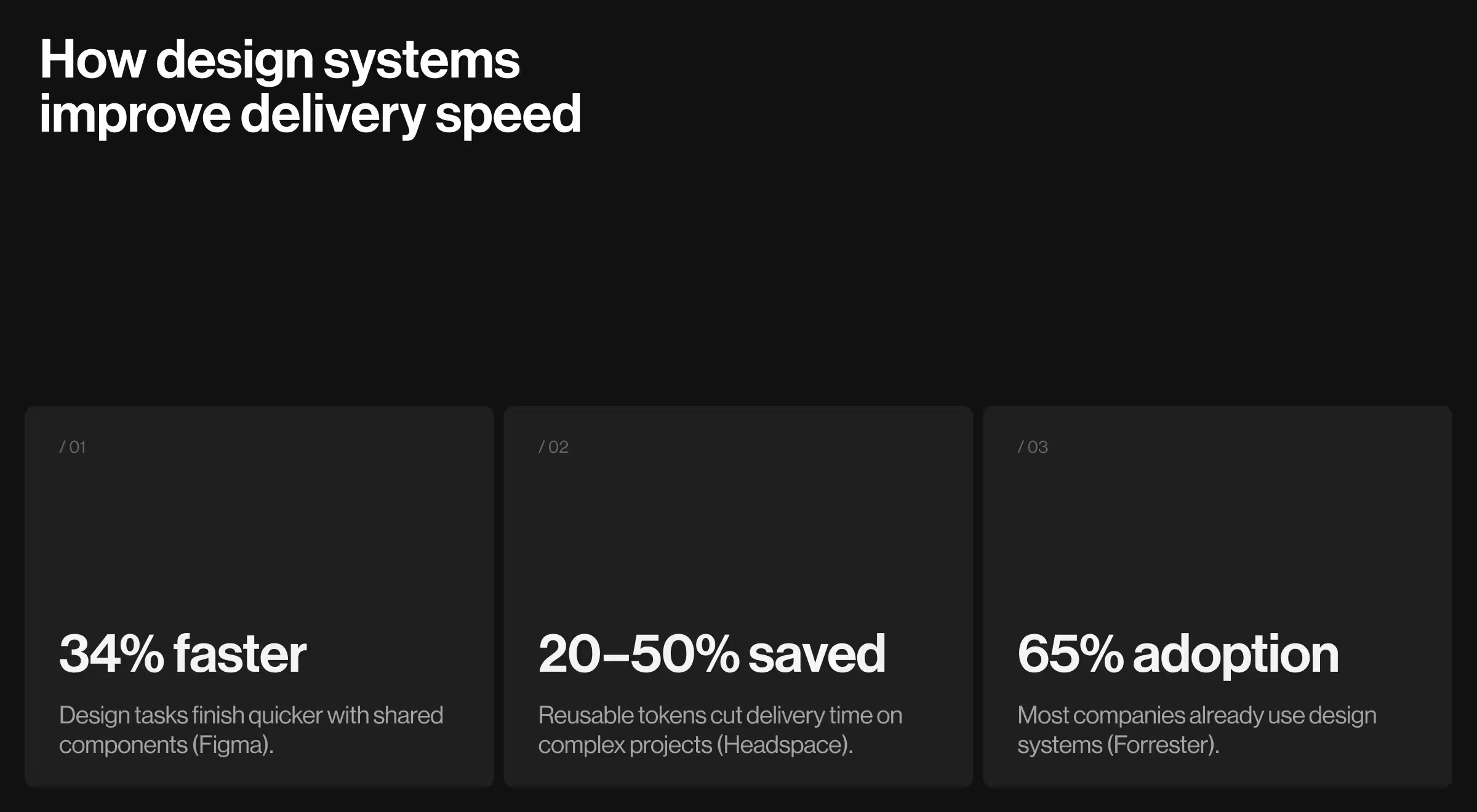
Here’s what real data shows when teams work with a design system:
- 34% faster task completion. In a Figma study, designers completed product design tasks 34% faster when working with a design system versus starting from scratch.
- Up to 50% time savings on complex projects. At Headspace, 85% of design files are built from system tokens and common components, which cuts delivery time by 20–50% (based on the task complexity).
- Adoption is accelerating. According to Forrester’s 2020 research, 65% of companies were already using design systems.
Benefits of partnering with outsourced design system experts
When internal teams hit scaling limits, the question shifts from whether to outsource to what’s the best agency for SaaS design systems and components that won’t create future UX debt.
Building a well crafted design system in-house sounds efficient until it slows everything down. An experienced outsourced design partner brings pattern intelligence that internal teams simply don’t have the time or exposure to develop.
A proven design systems partner helps you:
- Architect intelligent systems that scale across products and platforms.
- Build a digital transformation strategy with a lasting impact.
- Align design and engineering workflows from day one.
- Embed accessibility, governance, and documentation into the system.
- Avoid costly rewrites by focusing on growth design thinking.
The real value of partnering with an experienced design system shows up after the foundation is set, when the system starts shaping how teams make decisions and move across project phases. Once governance, tokens, components, and workflows are aligned, the impact is no longer abstract.
Below are the core benefits of a strategic UX design system that an experienced design partner helps you leverage.
10 partners to level up your enterprise design systems
As organizations move toward AI-driven interfaces and continuous UX optimization, choosing the right design partner becomes a strategic decision.
The agencies below are teams with proven experience designing growth-ready UX systems, component libraries, governance models, and cross-team workflows that withstand enterprise pressure.
Each agency brings a different strength. Some excel at AI-native UX, while others deliver unmatched design–development alignment.
The right choice depends on whether you’re standardizing a single product or rebuilding your UX foundation for the age of AI.
Below is a closer look at each firm, with what sets them apart and when they’re the best fit.
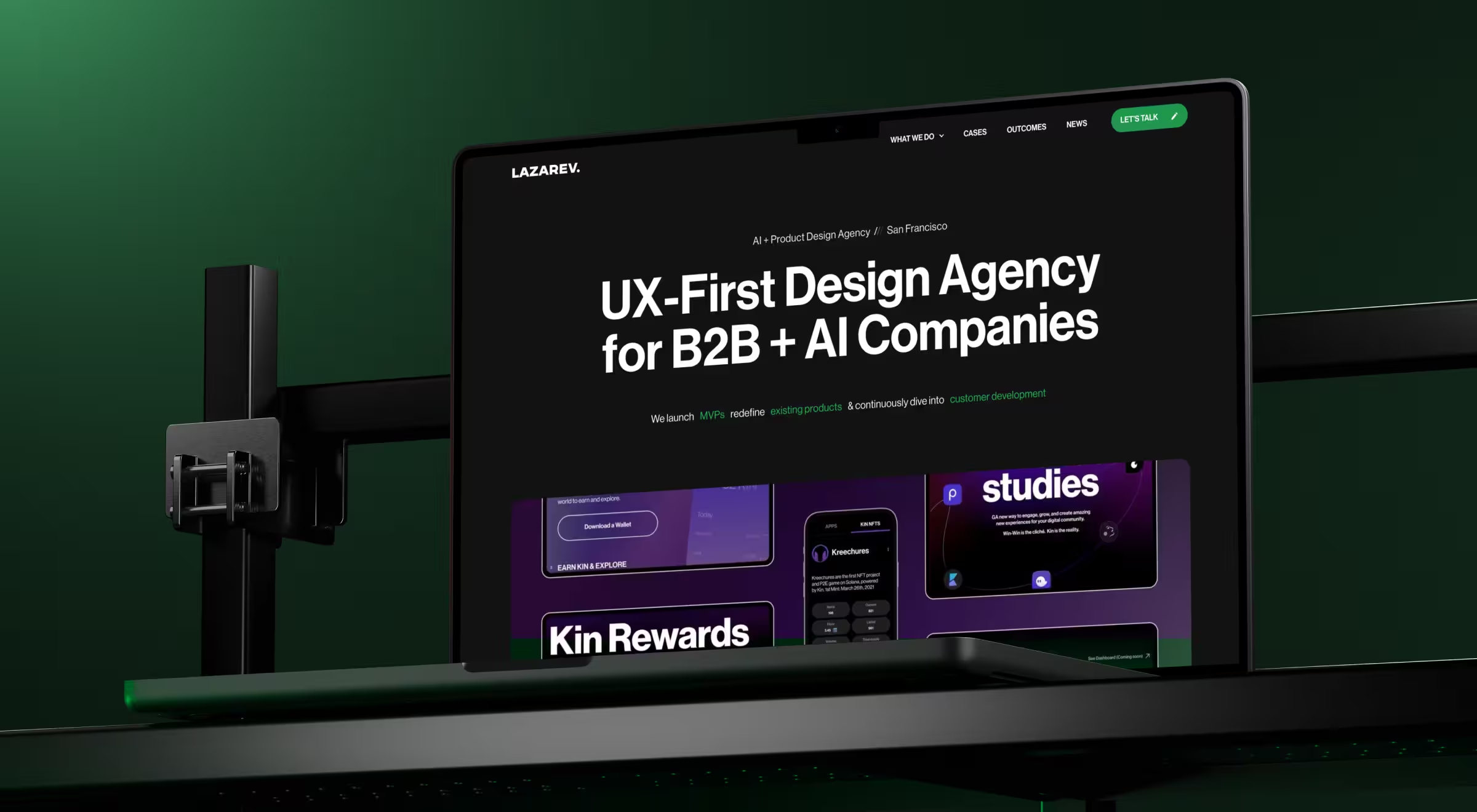
1. Lazarev.agency
- Hourly rate: $100–$149
- Differentiator: AI-native design systems built for enterprise-scale UX optimization and AI-driven interfaces.
- Clients: Accern.Rhea, Peel, CoHome, Qore8.
- Best use cases: Enterprise and growth-stage companies building design systems for AI products, SaaS platforms, and complex data-driven tools.
- Clutch rating: ⭐ 5.0
🖇️ Explore the outcomes our clients achieved with our design system services.
2. ProCreator
- Hourly rate: $25–$49
- Differentiator: Strong focus on integrating enterprise-grade benefits of digital transformation.
- Clients: Salesforce, ICICI, and Mahindra Finance.
- Best use cases: Large organizations modernizing legacy UX and standardizing multi-product interfaces.
- Clutch rating: ⭐ 4.9
🖇️ Learn more by exploring the company’s portfolio.
3. Goji Labs
- Hourly rate: $100–$149
- Differentiator: Combines design systems with product strategy and MVP thinking.
- Clients: World Wildlife Fund, WHO.
- Best use cases: Companies building their first scalable design system alongside new product launches.
- Clutch rating: ⭐ 5.0
🖇️ Learn more by exploring the company’s portfolio.
4. DOOR3
- Hourly rate: $100–$149
- Differentiator: Deep enterprise UX and engineering integration.
- Clients: New Jersey Institute of Technology, Stillwell-Hansen.
- Best use cases: Large enterprises requiring design systems tightly integrated with engineering workflows.
- Clutch rating: ⭐ 4.9
🖇️ Learn more by exploring the company’s portfolio.
5. MetaLab
- Hourly rate: Undisclosed
- Differentiator: Product-led design systems for SaaS and digital platforms.
- Clients: Slack, Uber, Amazon.
- Best use cases: SaaS companies scaling mature products with refined UX systems.
- Clutch rating: Undisclosed
🖇️ Learn more by exploring the company’s portfolio.
6. Hueman Studio
- Hourly rate: $150–$199
- Differentiator: Strong brand-to-system translation.
- Clients: United Nations, UCLA.
- Best use cases: Enterprises aligning brand systems with digital product design systems.
- Clutch rating: ⭐ 4.9
🖇️ Learn more by exploring the company’s portfolio.
7. Think Company
- Hourly rate: $150–$199
- Differentiator: Research-driven design systems with service design depth.
- Clients: Comcast, JP Morgan Chase, Johnson & Johnson.
- Best use cases: Complex enterprise platforms with heavy UX research requirements.
- Clutch rating: ⭐ 4.9
🖇️ Learn more by exploring the company’s portfolio.
8. Webstacks
- Hourly rate: $200–$300
- Differentiator: Design systems tightly coupled with Webflow and SaaS marketing sites.
- Clients: Retool, Justworks.
- Best use cases: B2B SaaS companies aligning product UX and marketing systems.
- Clutch rating: ⭐ 5.0
🖇️ Learn more by exploring the company’s portfolio.
9. Darly Solutions
- Hourly rate: $50–$99
- Differentiator: Cost-efficient, system-first UX design for SaaS products.
- Clients: Scale-ups and mid-market SaaS companies.
- Best use cases: Teams needing structured design systems without enterprise-level overhead.
- Clutch rating: ⭐ 5.0
🖇️ Learn more by exploring the company’s portfolio.
10. Merge Rocks
- Hourly rate: $50–$99
- Differentiator: Strong UX craft paired with scalable system thinking.
- Clients: Fintech and SaaS startups.
- Best use cases: Startups transitioning from ad-hoc UI patterns to structured design systems.
- Clutch rating: ⭐ 4.9
🖇️ Learn more by exploring the company’s portfolio.
7 UX design system examples done right
A good UX design system doesn’t impress at first glance. It proves itself over time when teams move faster, decisions get easier, and products stay coherent as they grow — see our design systems 101 guide for more details.
The examples below show what working design systems look like in practice. Some are global standards. Others are custom-built for complex products.
Apple Human Interface Guidelines
Apple designs for multiple platforms, devices, and interaction modes. Without a strong system, consistent digital experiences are out of reach.
Apple’s Human Interface Guidelines (HIG) are principle-led. Motion, spacing, hierarchy, and feedback are governed by clear interaction rules that apply across iOS, macOS, watchOS, and beyond.
🔄 Why it works:
- Strong behavioral rules.
- Consistent interaction patterns across platforms.
- Clear decision-making framework for designers.
💡 What to learn: Strong design systems guide thinking. When design principles and usage guidelines are clear, teams move faster with fewer debates.
Salesforce Lightning Design System
Salesforce Lightning Design System supports countless products, teams, and integrations. SLDS gives them a shared structure through clearly defined tokens, reusable components, and accessibility rules. This way, products feel related without becoming identical.
🔄 Why it works:
- Token-based foundations scale across large ecosystems.
- Accessibility is treated as a core requirement.
- Clear alignment between design and engineering.
💡 What to learn: Enterprise systems need governance as much as visuals.
Adobe Spectrum
Adobe Spectrum solves a different problem. And it’s variety.
Creative tools don’t behave the same way. Spectrum defines common foundations while leaving room for product-specific behavior. That balance is why it works across tools with very different workflows.
🔄 Why it works:
- Clear separation between foundations and product expression.
- UI components that adapt to context.
- Stable UX across very different applications.
💡 What to learn: Consistency doesn’t mean sameness. Good systems allow variation without losing coherence.
Fractal Protocol by Lazarev.agency
Fractal Protocol’s platform had grown dense. Users struggled to trust and interpret data.
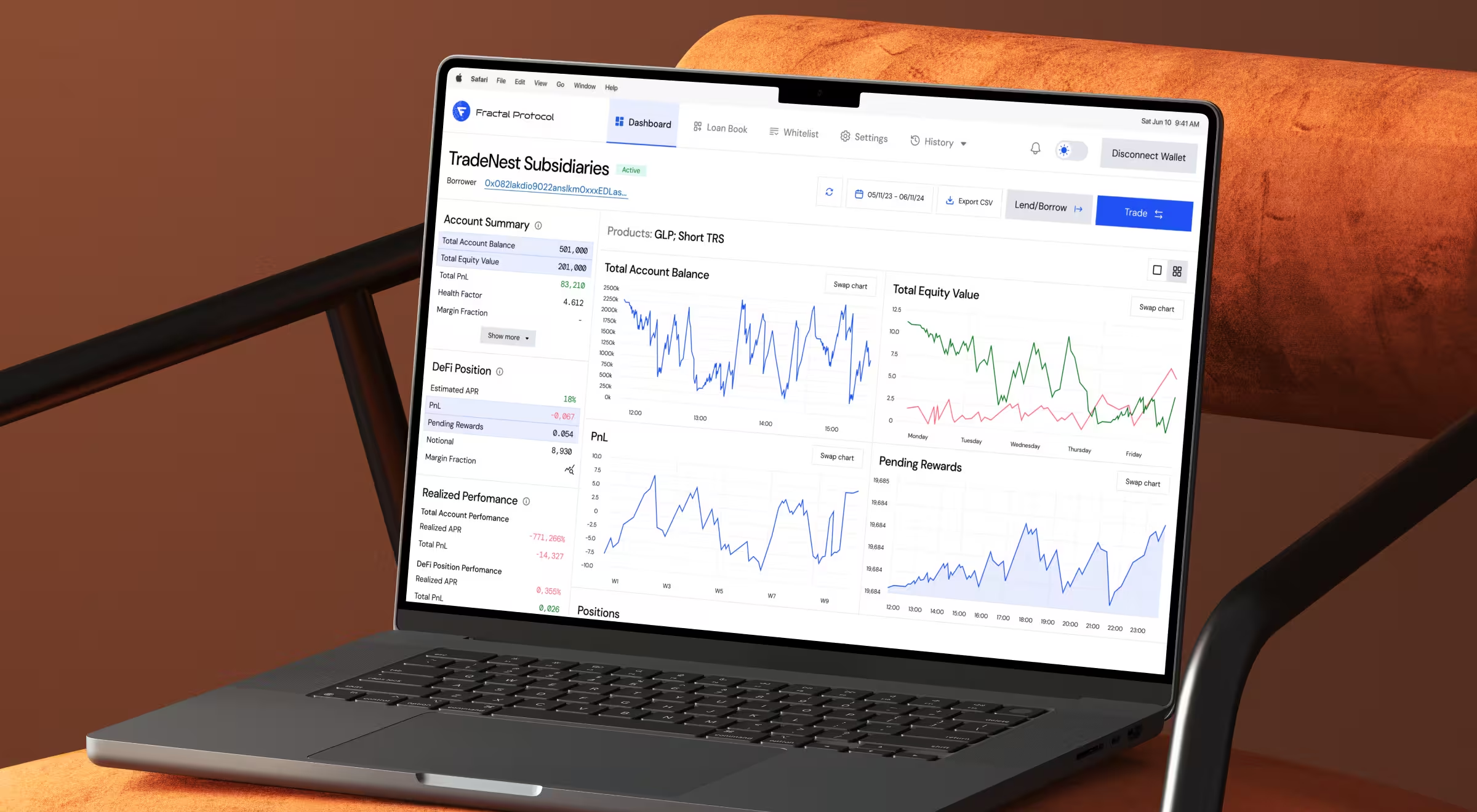
Lazarev.agency rebuilt the platform around a scalable UX design system designed specifically for data-heavy workflows. Dashboards were restructured. Components were designed to support both overview and deep analysis. Light and dark modes were treated as system-level requirements.
🔄 What changed:
- 165% improvement in usability
- 33% increase in user satisfaction
- Faster access to critical insights
💡 What to learn: This is customer experience design in the age of AI UX: clear structure, lower cognitive load, and faster decisions.
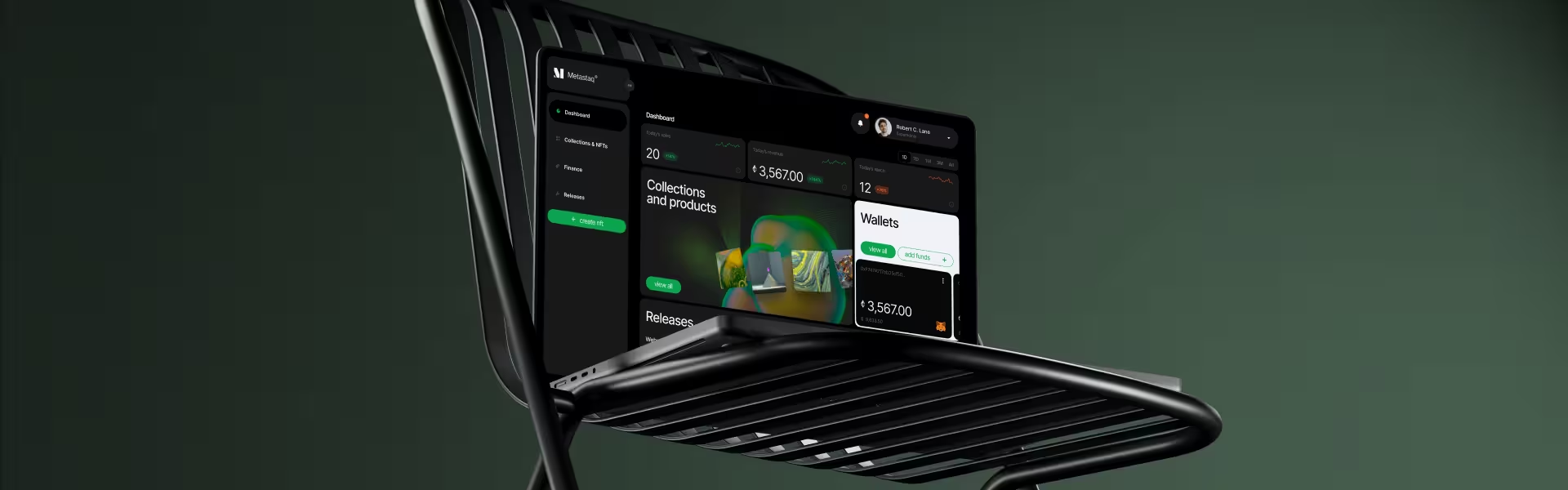
Metastaq by Lazarev.agency
Metastaq faced a usability problem common in Web3: the technology was powerful, but inaccessible to non-technical teams.
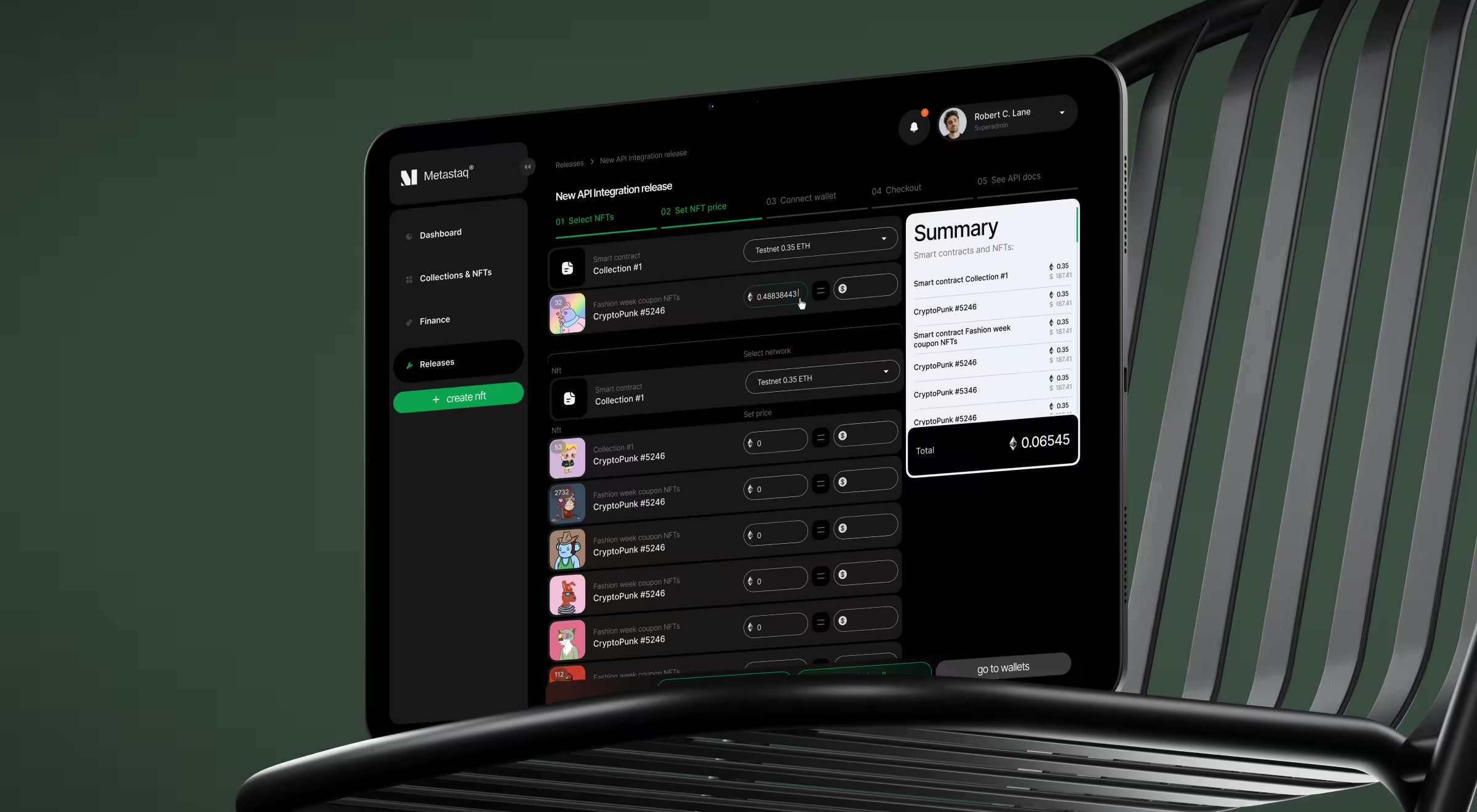
The design system Lazarev.agency, a top AI UX design agency, built focused on clarity. Complex blockchain concepts were translated into understandable workflows through consistent components, dashboards, and interaction patterns.
🔄 What the system enabled:
- NFT creation without technical expertise.
- Intelligent dashboard design for collections and finances.
- Adoption by global brands with no Web3 background.
💡 What to learn: A well-structured design system reduces learning curves instead of adding them.
Customer City by Lazarev.agency
Customer City began as a website redesign but required more than surface improvements.
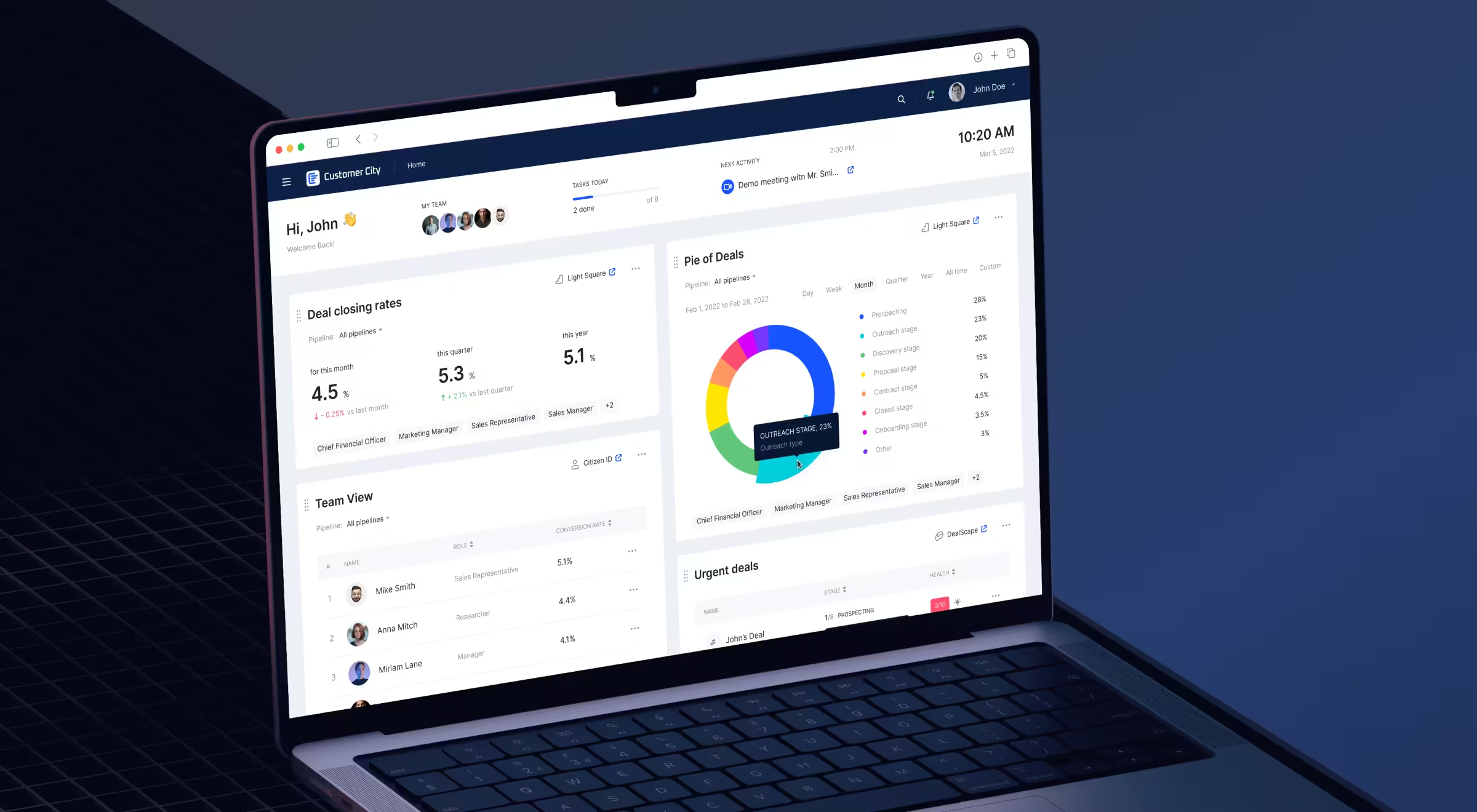
Lazarev.agency created a modular digital experience system that unified branding, content structure, interaction patterns, and conversion flows. The result was a flexible foundation that supports new campaigns and content without repeated redesign.
🔄 What the system delivered:
- Improved engagement and lead quality.
- Reusable layouts and components.
- A structure built for ongoing UX optimization.
💡 What to learn: Design systems aren’t limited to products. They’re just as effective for growth platforms when built with intent.
IBM Carbon Design System
IBM builds complex enterprise software, AI tools, and analytics platforms used at global scale.
Carbon emphasizes predictability, accessibility, and documentation. It’s tightly integrated with development workflows and designed to be used by engineers and designers alike.
🔄 Why it works:
- Clear governance and contribution model.
- Designed for data-heavy, AI-driven interfaces.
- Strong alignment with engineering teams.
💡 What to learn: Carbon proves that clarity and discipline ignite business growth better than visual novelty.
Create your own design system with the right partner
Design systems don’t win awards. They win time. And a lot more than that.
They tackle friction from everyday decisions, replace opinion-led debates with shared rules, and let teams ship without second-guessing every interaction. As products grow and markets expand, that kind of operational clarity becomes non-negotiable.
Here, the real question isn’t whether you need a design system. It’s whether you’re building one that holds up under pressure. The right design system company coordinates how your teams collaborate, how decisions get made, and how your UX strategy survives scale.
At Lazarev.agency, an AI product design agency based in San Francisco, we build enterprise-grade design systems for AI-native products and forward-thinking teams. Our systems align design, product, and engineering around a single source of truth so progress doesn’t depend on constant rework or internal negotiations.
Explore our portfolio to see how our design systems perform in real-world conditions. Get in touch to build one that earns its place in your product stack.