How Suits.ai’s MVP design earned adoption and investor confidence
About the project
A shorter path from sign-up to active AI agents
Suits.ai is a B2B platform where companies build their own branded AI agents and load them with client-specific knowledge bases. A team can delegate routine work like research and reporting to expert AI-powered assistants. But as more enterprise customers signed on, the early product began to cost the company deals: new users faced a long, unclear path before an agent could do anything useful, and slow activation meant slower expansion and weaker renewals.
Suits.ai reached out to Lazarev.agency to make the first run obvious and fast, let teams manage many agents in one place, and prove value before a buyer’s trial ran out. Here’s how we converted that vision into a working MVP, designed to make a group of AI assistants feel like one capable team and earn the confidence of users and investors alike.
$1M
Raised after the MVP launch.
A product built to win enterprise accounts
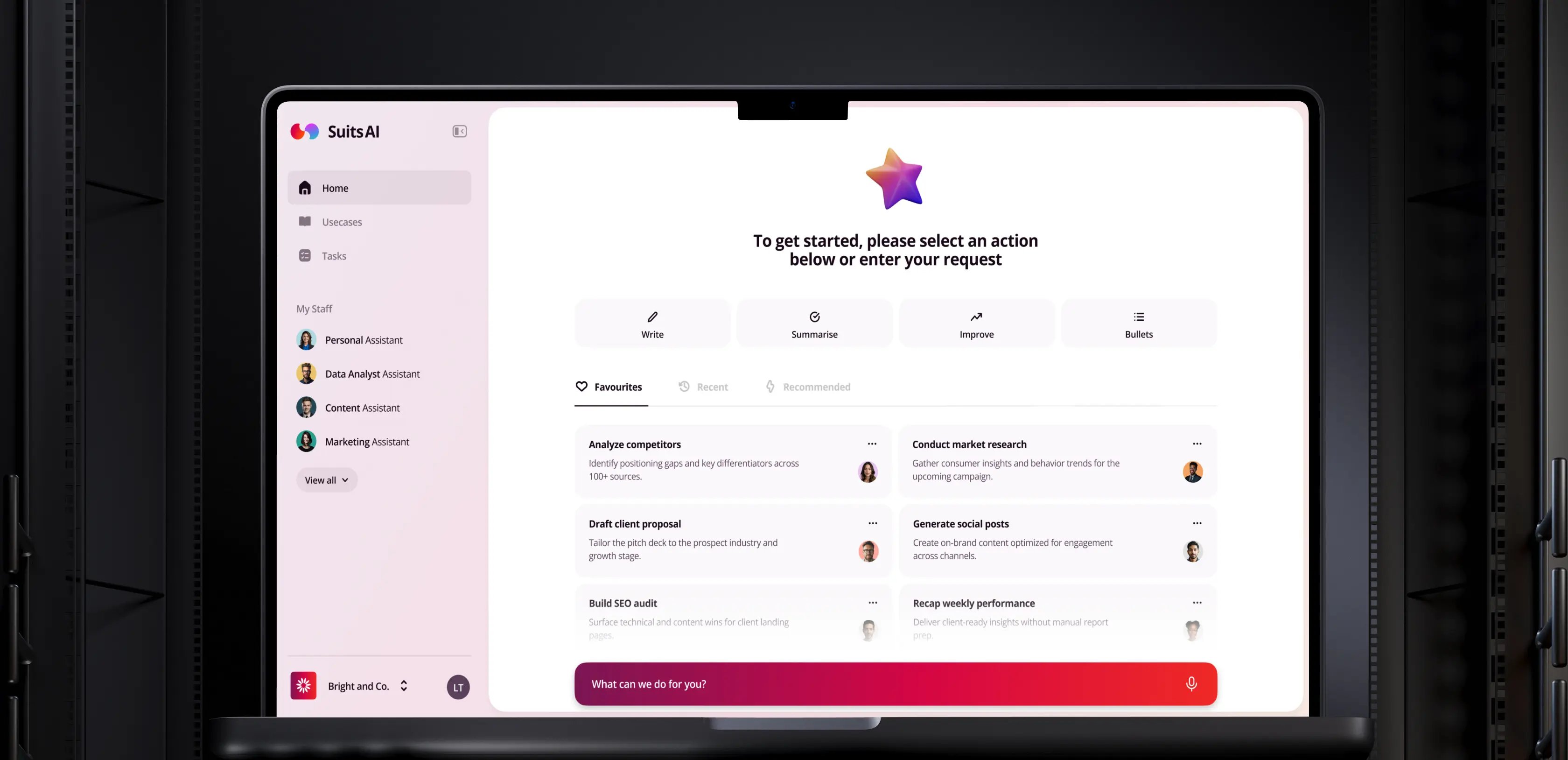
Suits.ai came to Lazarev.agency with strong technology and a product still hard to adopt. We reshaped the user journey from first run and task setup to day-to-day management, so the platform proves its worth inside an enterprise without hand-holding.
New customers activate sooner, more trials convert into paid accounts, usage expands as teams add agents, and the product clears the credibility bar enterprise buyers set before they sign. In a crowded AI market, the redesign gives Suits.ai a sharper reason for buyers to choose it and stay.
A guided onboarding to activate new users fast
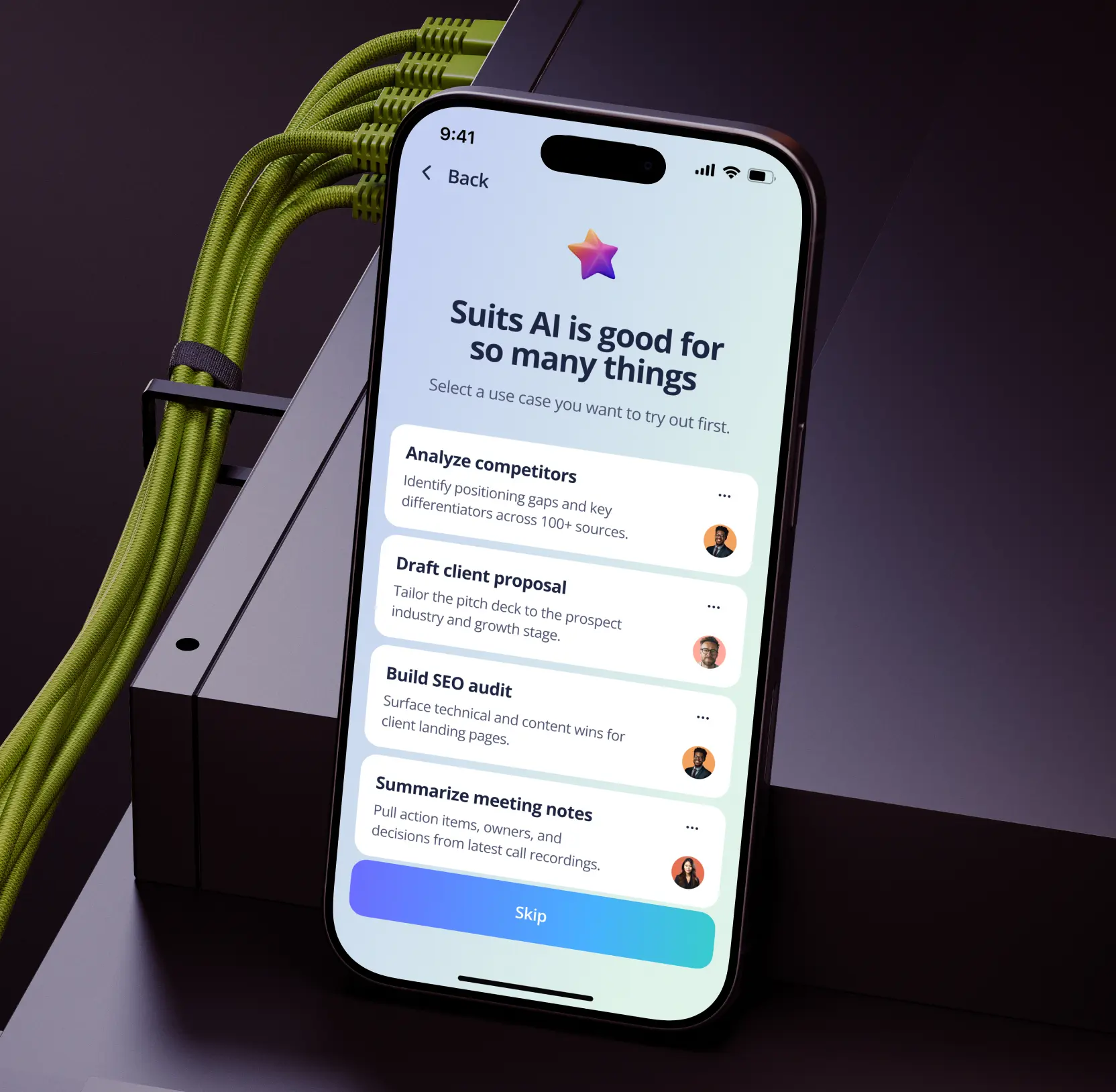
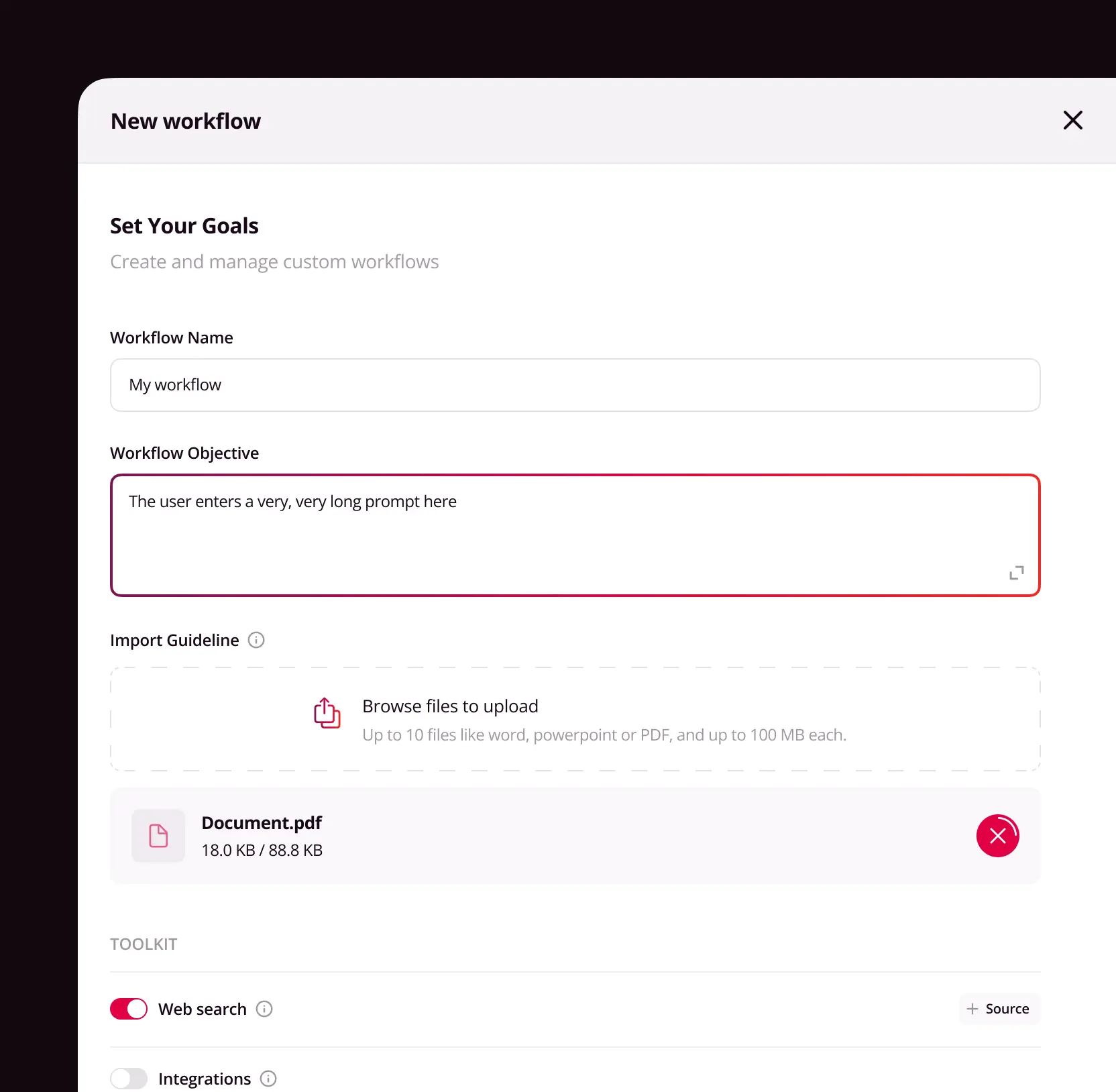
A trial converts only if the user reaches a working agent before they lose patience. We rebuilt the first run as a guided sequence: choose a use case, set up the agent, configure the brand, and load a knowledge base, with progress markers indicating how close completion is at each step. New users reach a useful result in minutes, and more trials convert into active, paying teams.
Task setup with fewer steps
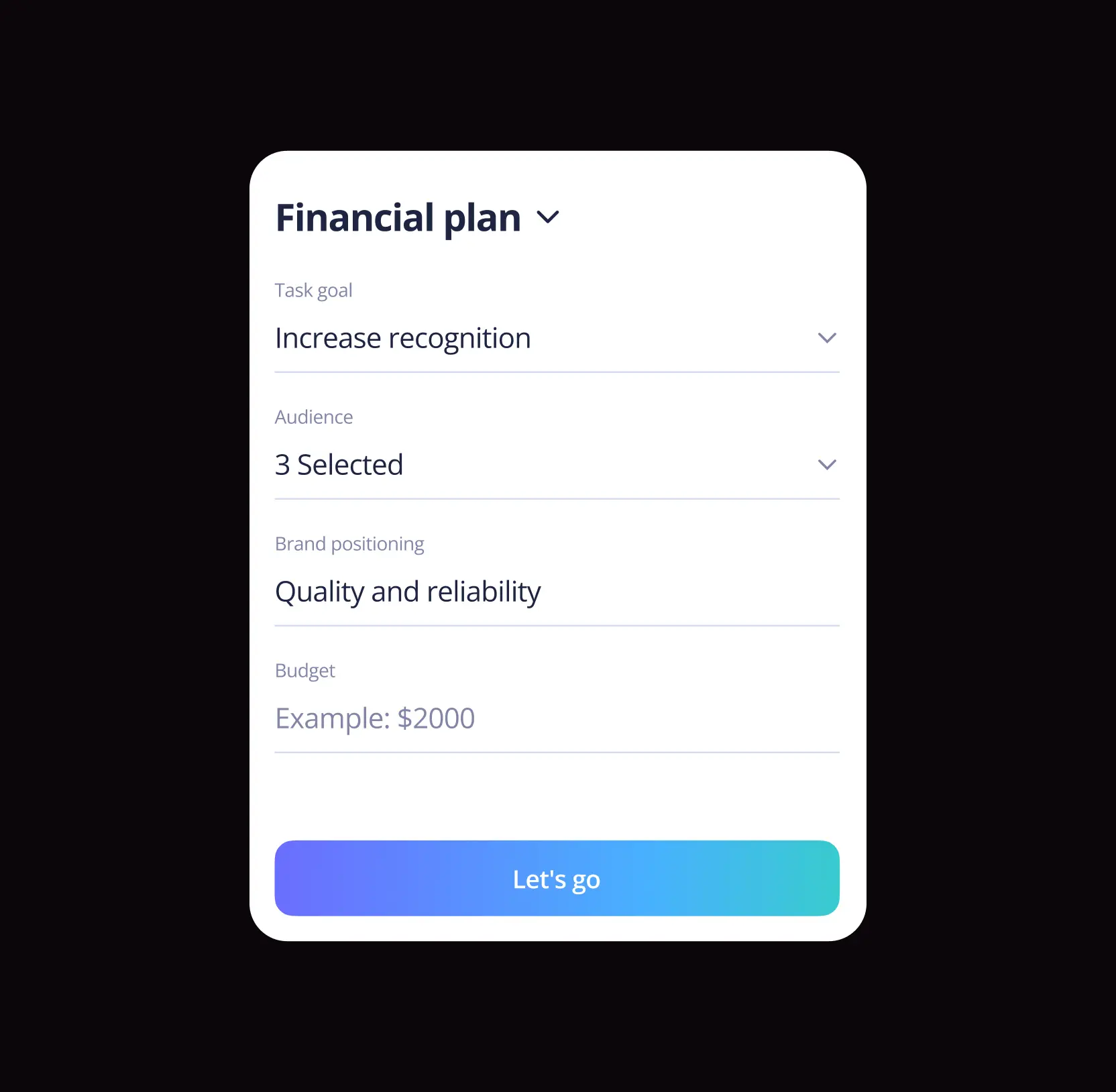
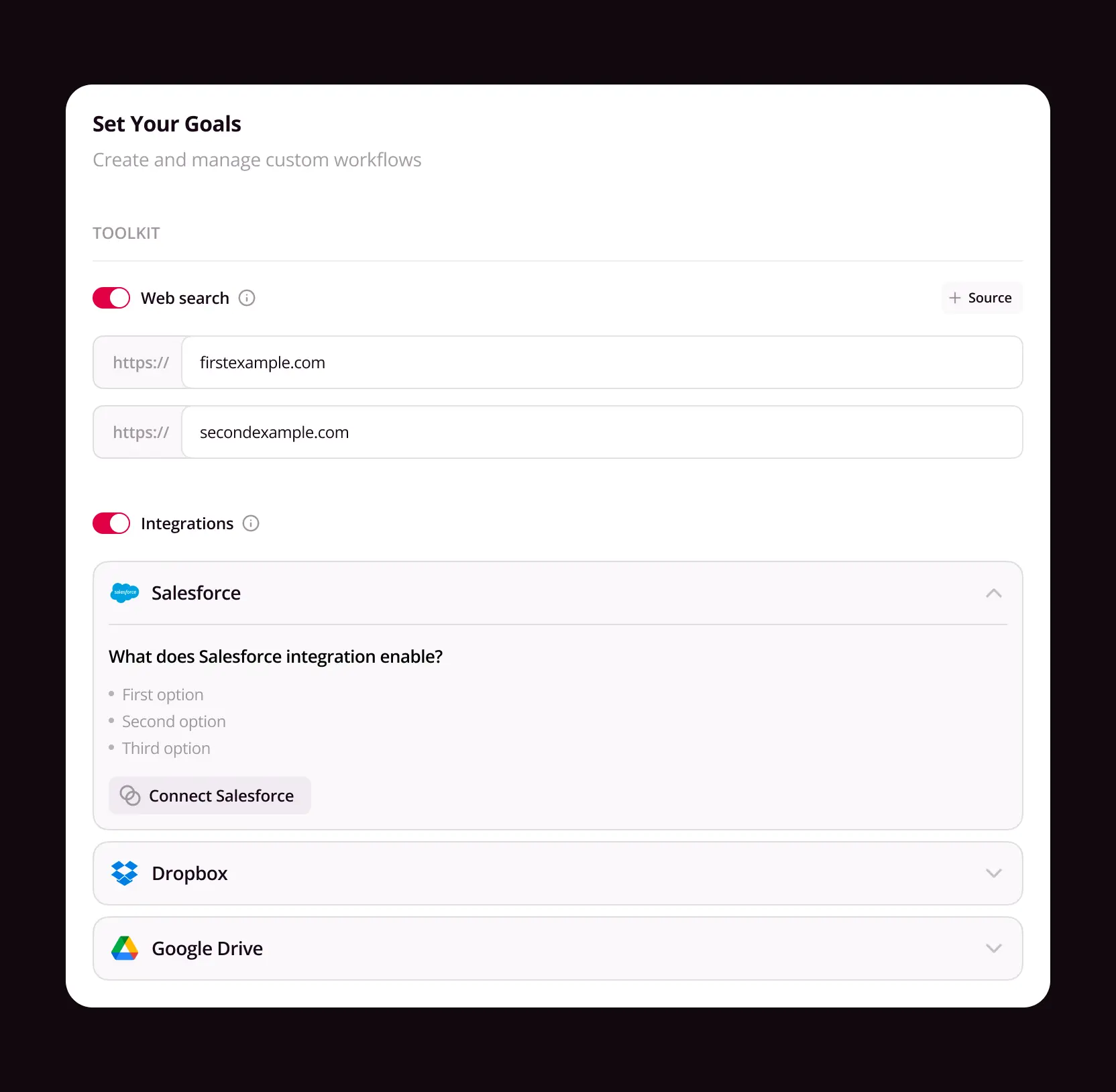
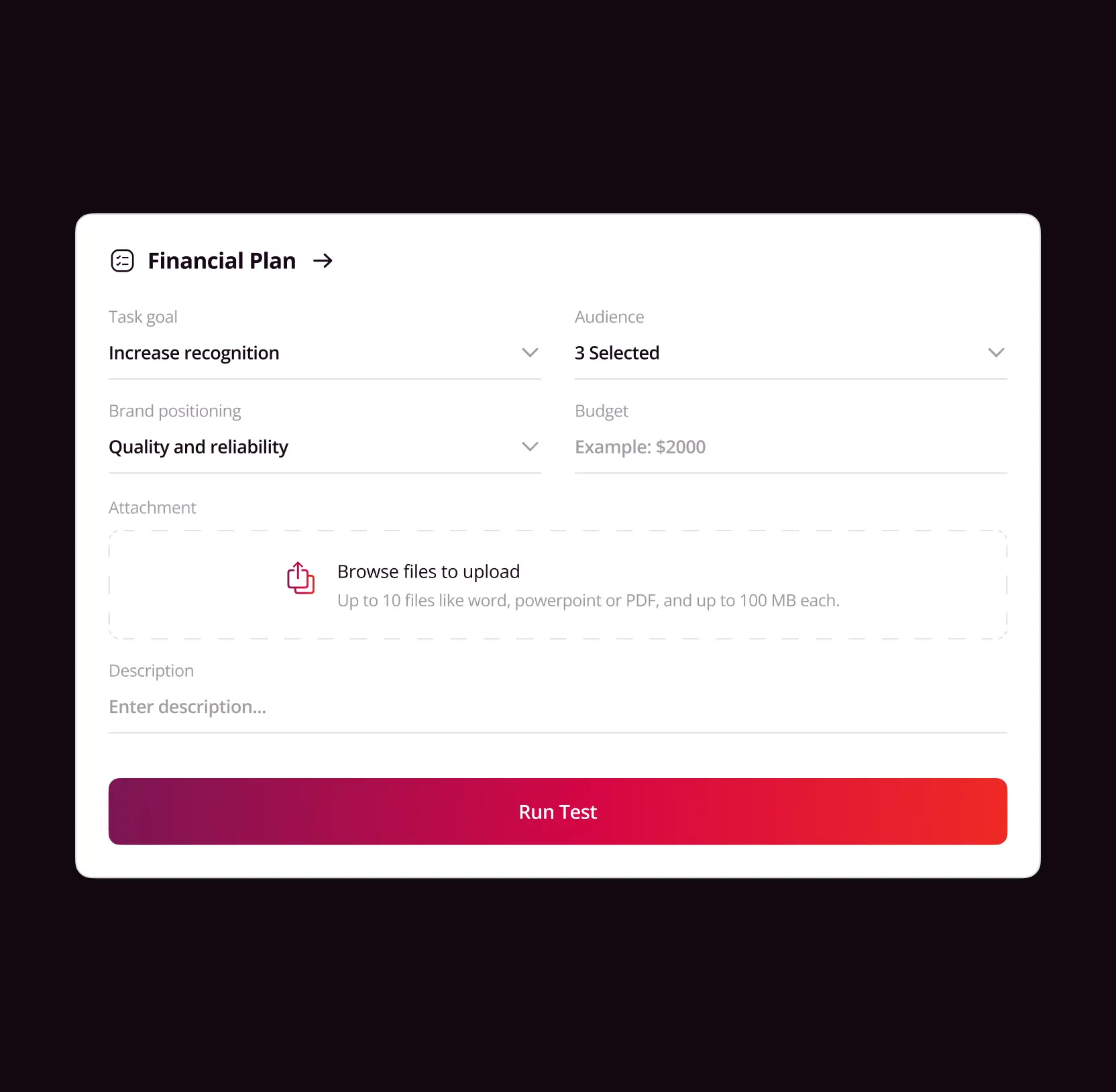
Every abandoned task is work the platform never got to do. We reworked task creation so a team assigns the required assistant, defines how the agent should behave, and connects its data sources in a clear sequence, with the system confirming each choice along the way.
Users configure tasks in less time and with fewer mistakes, so more of the work they signed up to automate gets done, and the platform earns its place in the daily workflow.
An assistant dashboard to centralize AI management
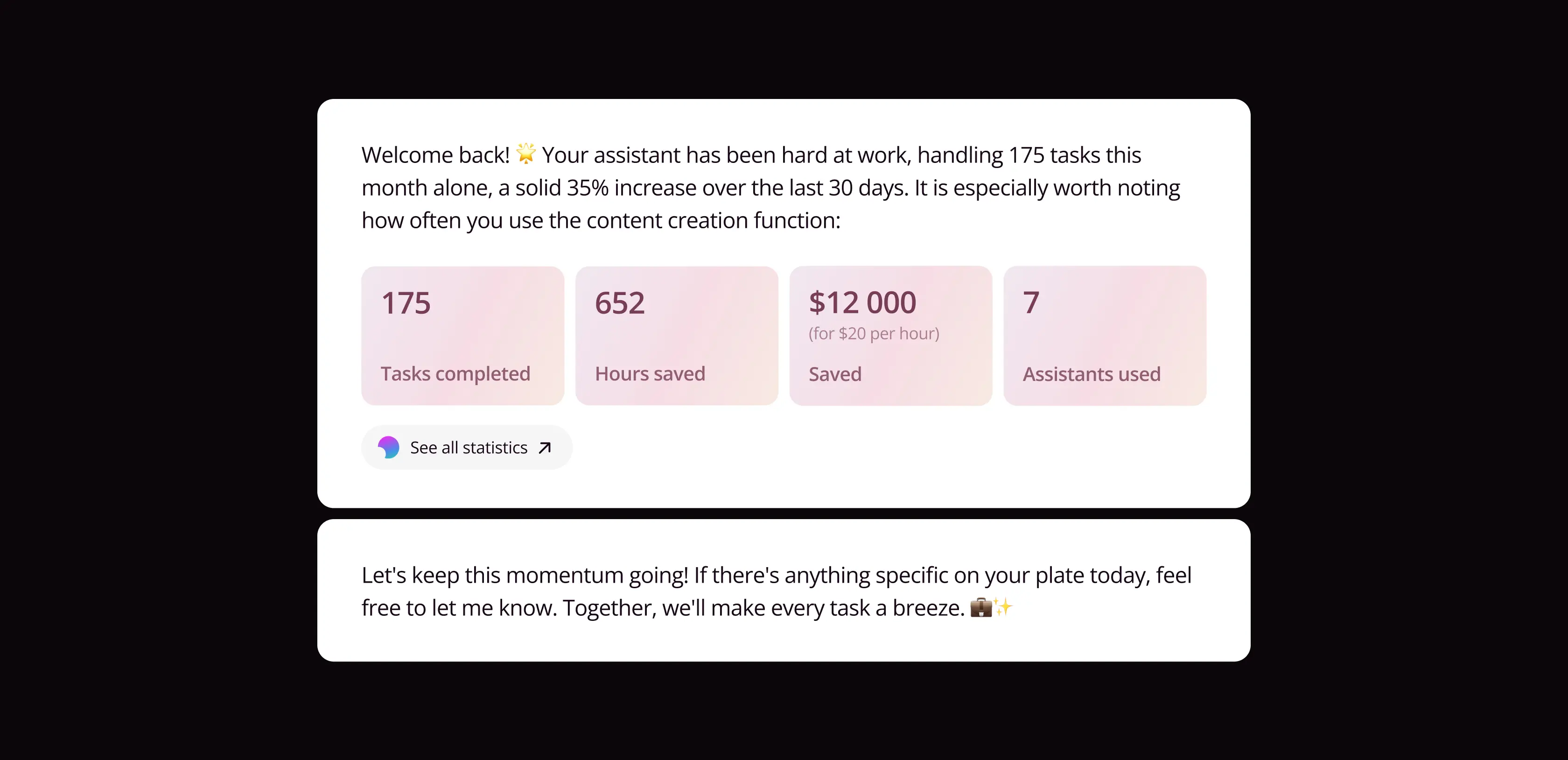
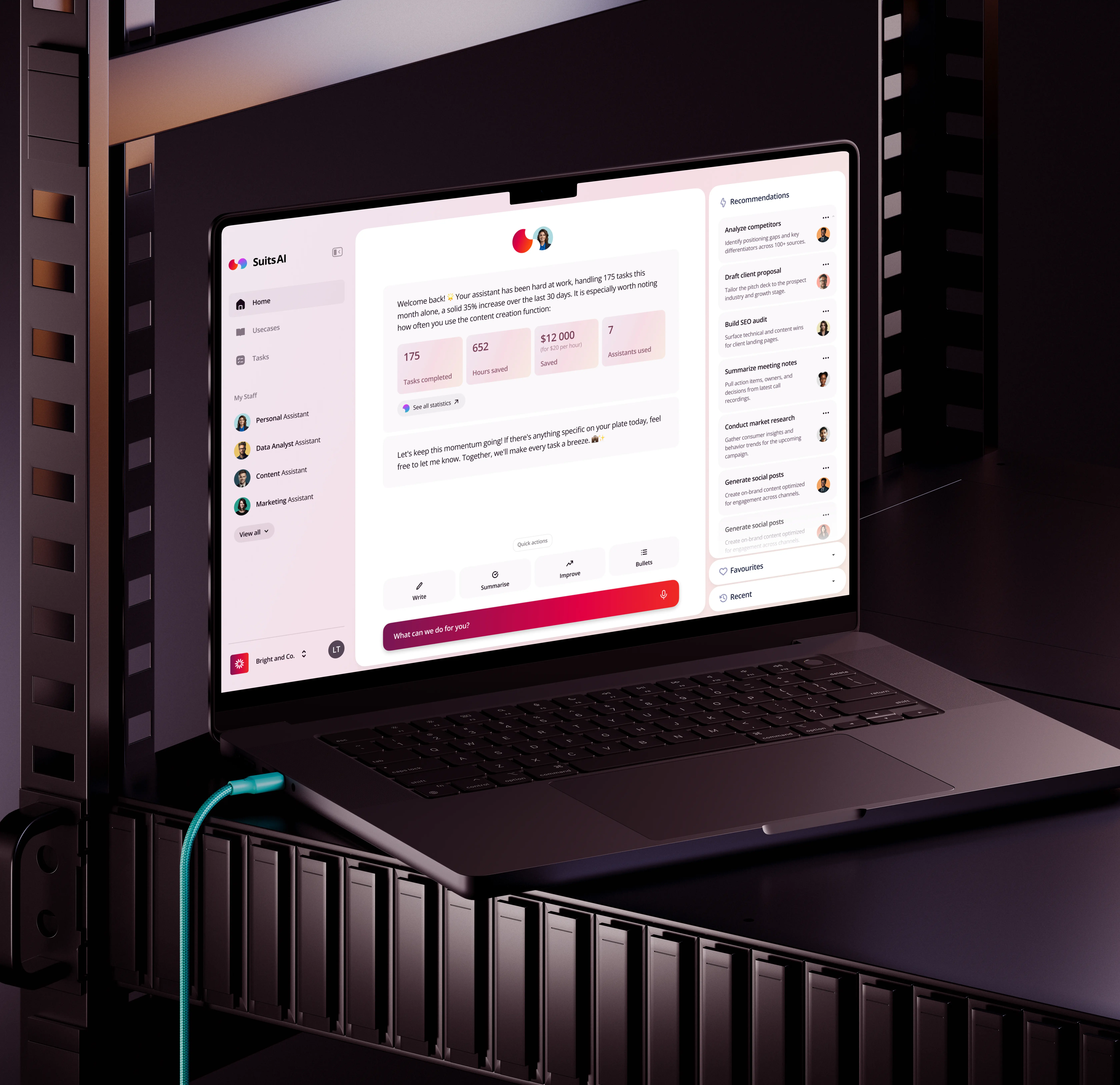
When agents run across separate screens, problems surface late, and oversight eats hours. We built a single dashboard to show agent performance, task status, and knowledge-base updates in real time. Now teams spot trouble early and fix output in a single place. A company can add more agents without hiring more people to keep an eye on them, so its costs remain flat even as usage grows.
Workflows ready for high-volume AI work
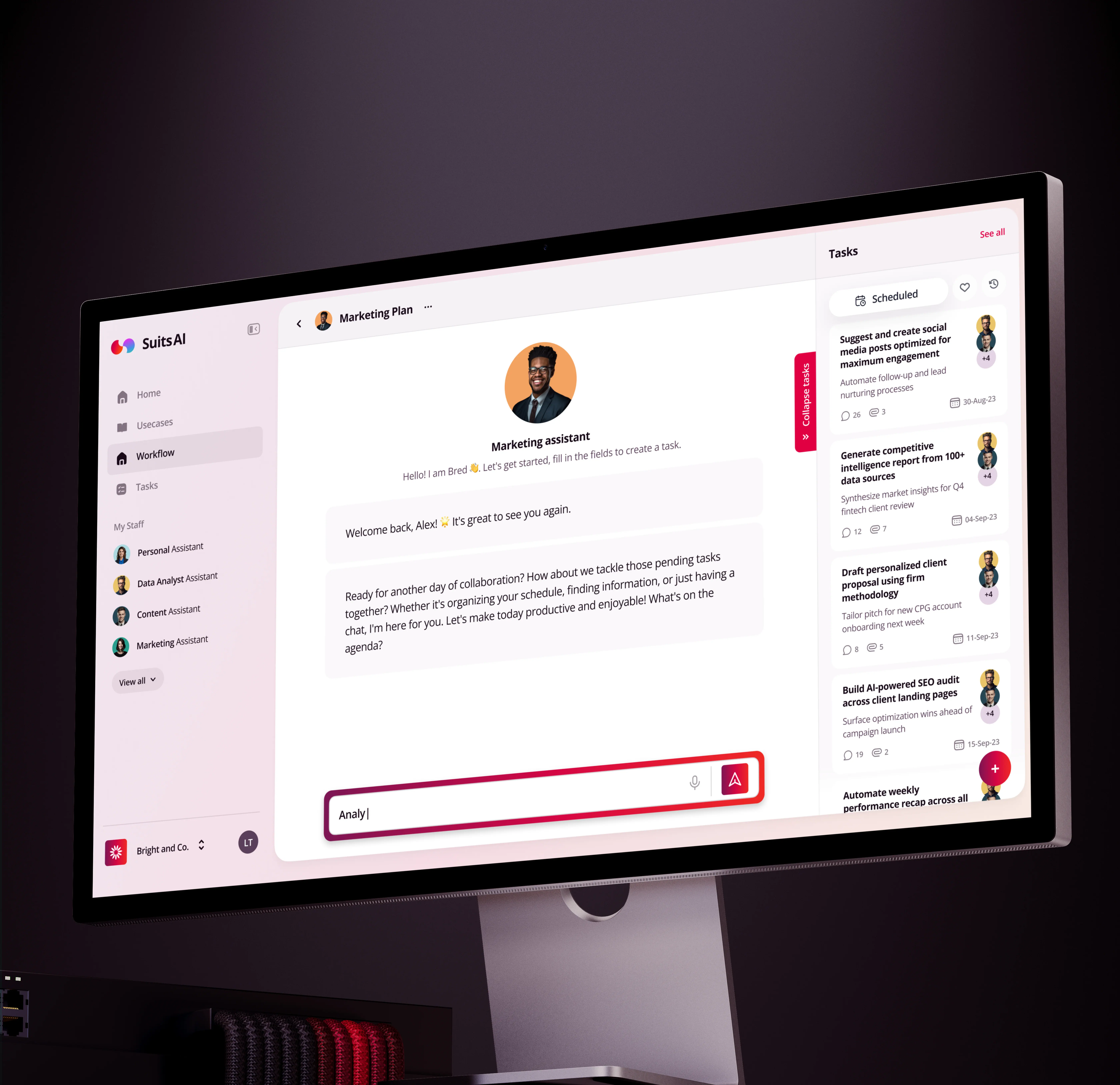
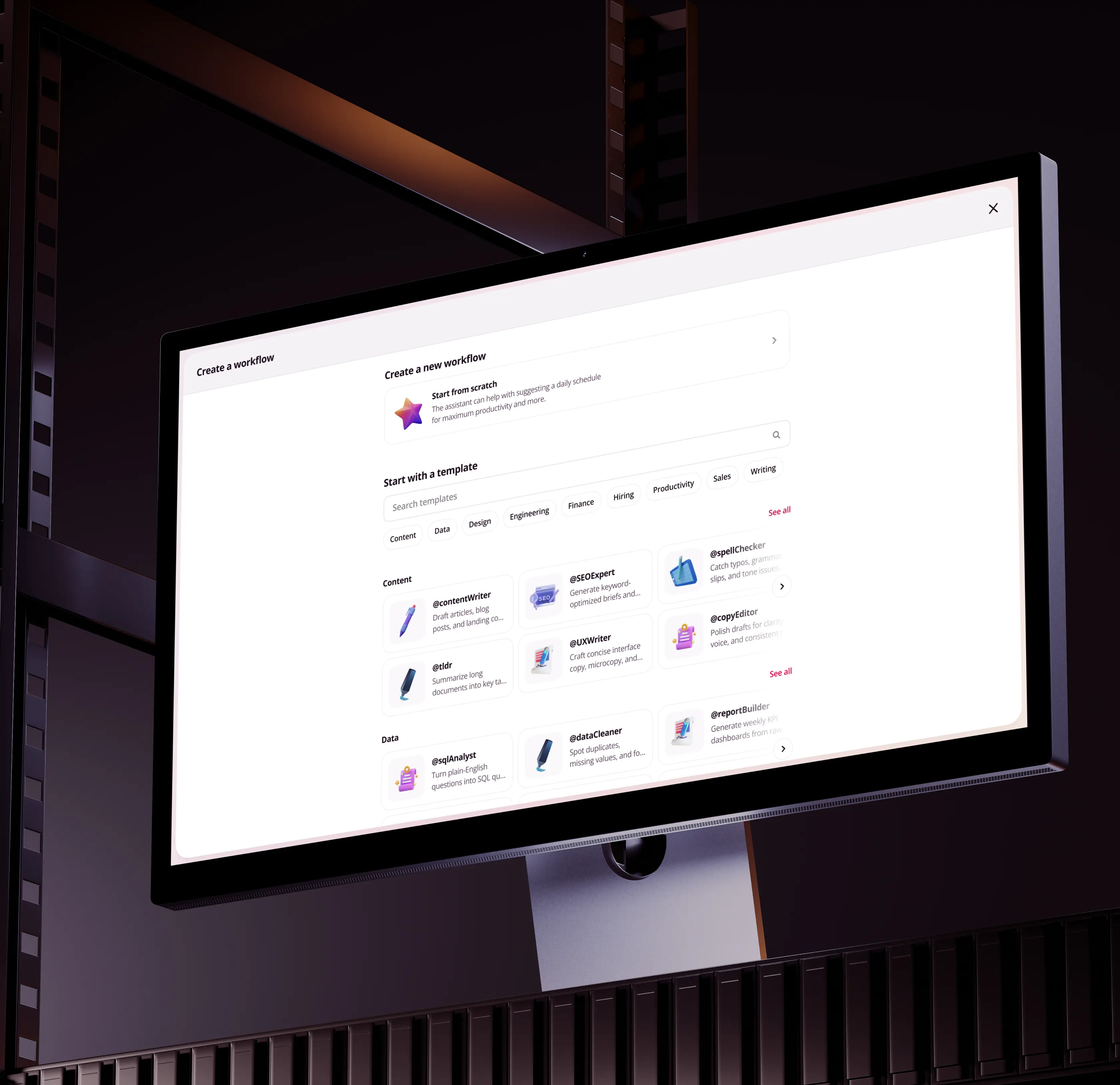
We restructured internal workflows to support high-volume task execution and multi-agent management. Clear process visualization and logical task grouping enabled teams to manage complex AI operations without cognitive overload.
Raw AI work, designed into client-ready output
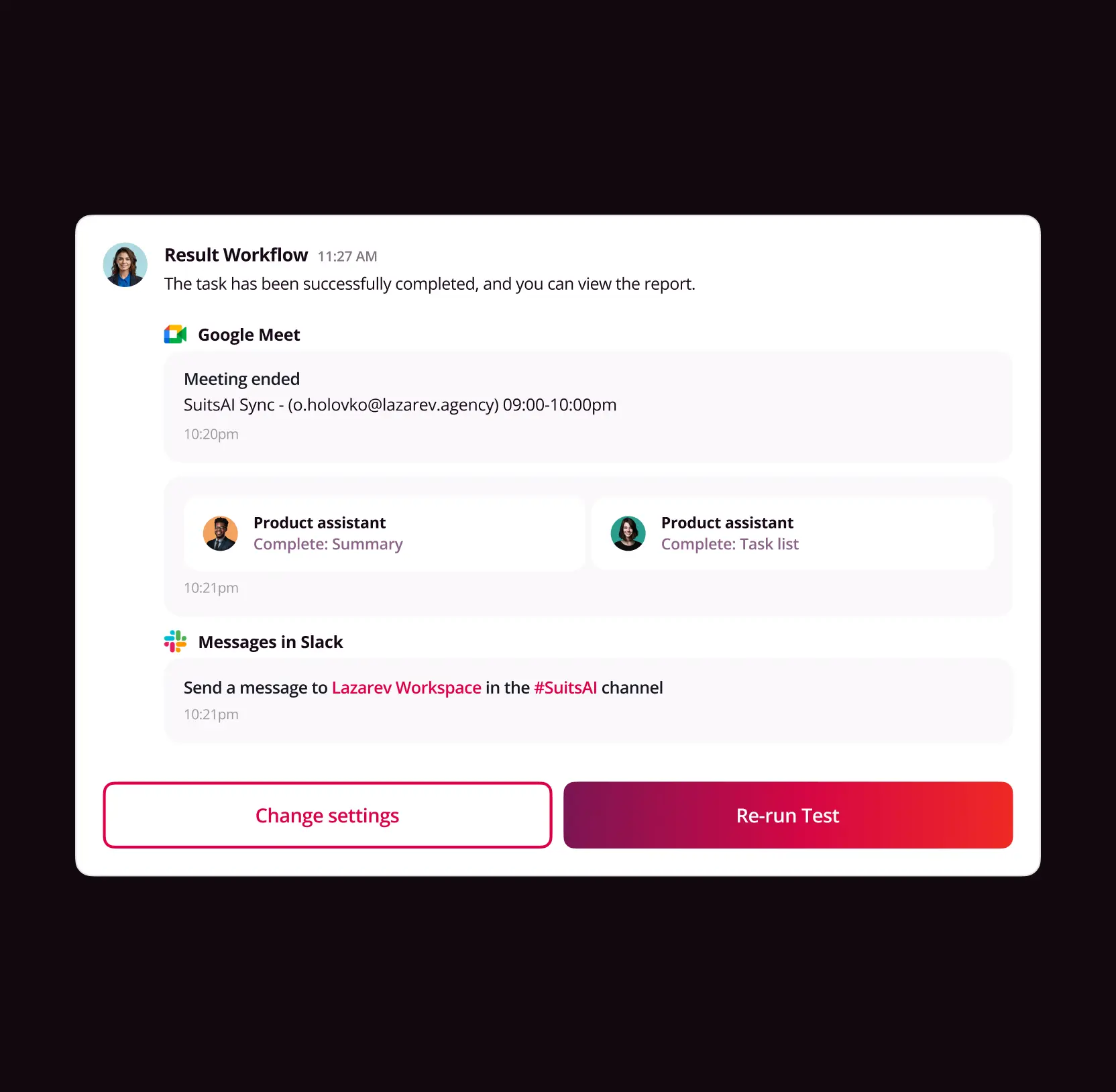
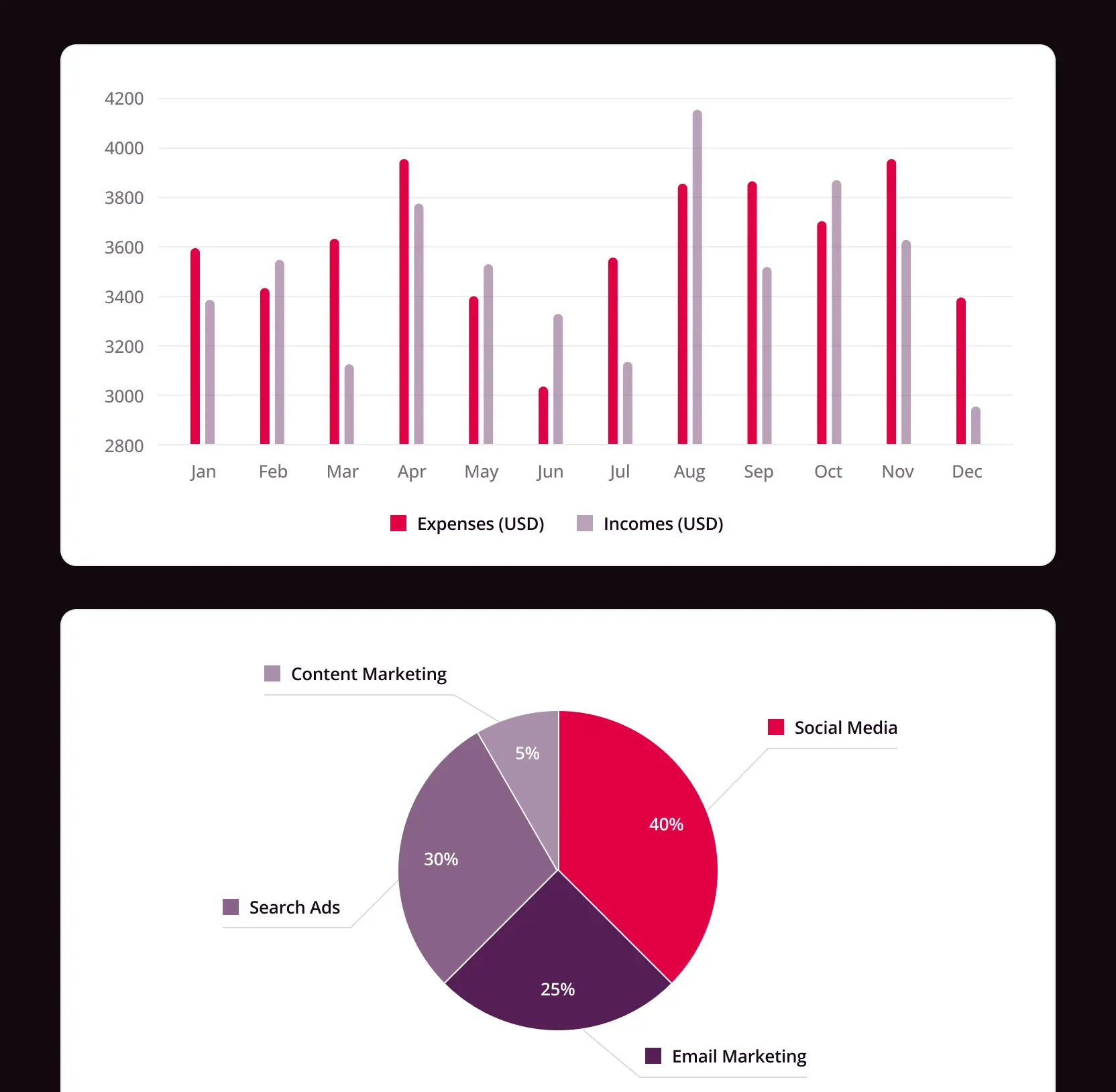
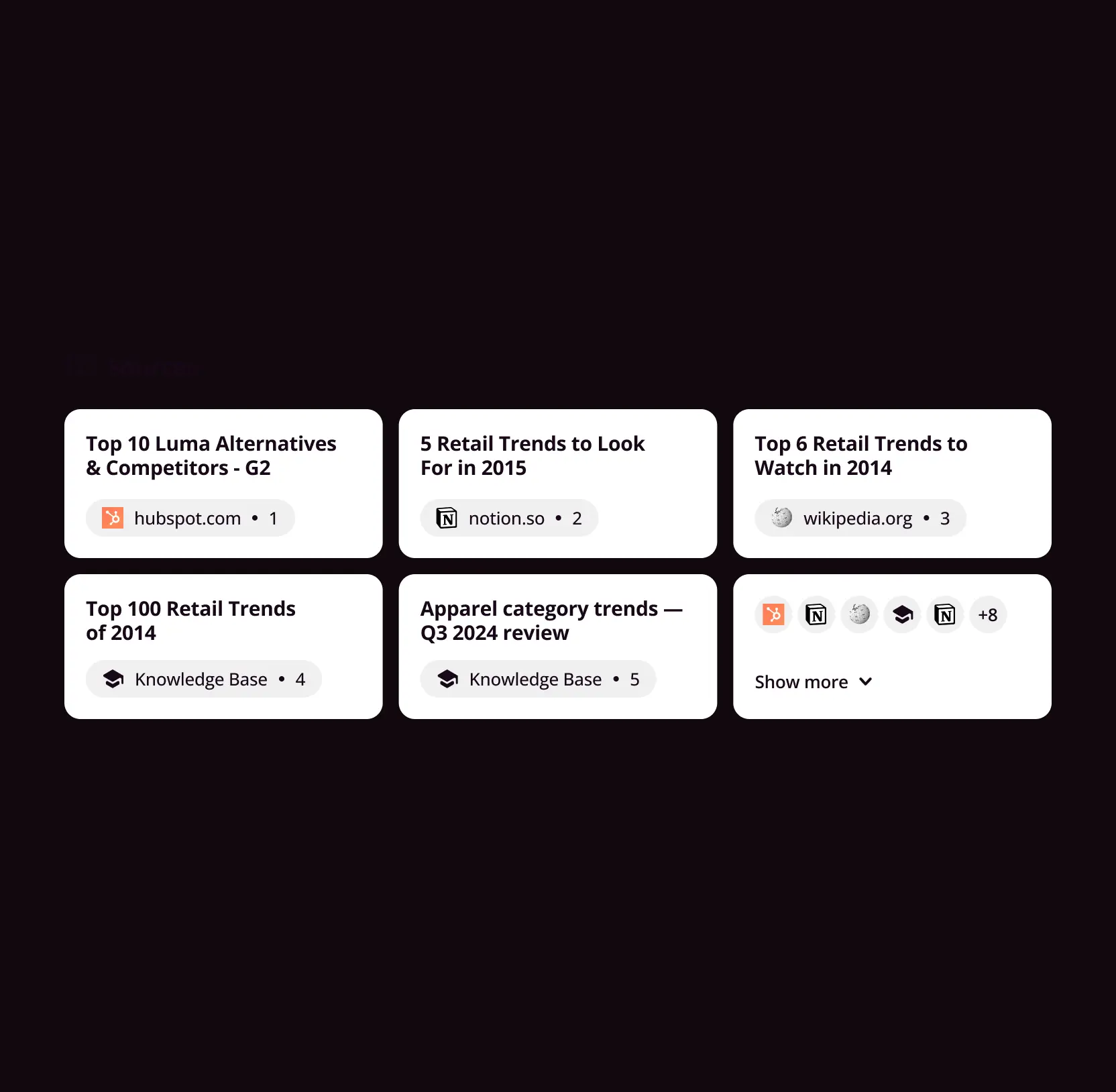
A job handled by five assistants pulling from dozens of sources could land as a wall of raw text no one wants to read. We designed the output intentionally: each subtask shows which assistant produced it, the report follows a clear structure with charts and headings, and every claim carries a numbered source the user can open and verify.
A design system to keep the product consistent and credible
A product seen across browser tabs, phone screens, and the app itself needs to read as one company at every touch. We built a single brand and component system with a reusable set of UI elements and clear rules for how they travel from one surface to the next. The product now looks deliberate and credible wherever a buyer meets it, which builds the recognition and trust enterprise customers weigh before they commit.
Frequently asked questions
Common questions
about this topic
How can AI SaaS platforms increase user adoption and activation?
Successful adoption depends on reducing onboarding friction and accelerating time-to-value. For Suits.ai, we redesigned onboarding flows, simplified setup steps, and added guided configuration to help users activate AI agents faster and start seeing results immediately.
What UX improvements help companies scale AI agent management?
Scalability requires centralized control and clear workflows. We built a unified assistant dashboard and optimized task management flows for Suits.ai, allowing teams to manage multiple AI agents efficiently from one interface.
How can workflow optimization improve AI platform performance?
Well-structured workflows reduce errors and speed up execution. Suits.ai’s redesigned task flows and progress tracking improved operational efficiency and enabled teams to scale AI usage without increasing complexity.
Why is accessibility important for enterprise AI software?
Enterprise clients often require accessibility compliance. By implementing WCAG standards for Suits.ai, we improved usability for all users while making the platform enterprise-ready and compliant with corporate procurement requirements.
How does dashboard design impact AI product usability?
Dashboards provide visibility into system performance. For Suits.ai, the assistant dashboard enabled real-time monitoring of agent activity and task progress, helping teams make faster and more informed operational decisions.
What design strategies reduce AI setup and configuration time?
Reducing configuration time requires simplified forms, clear instructions, and logical flow sequencing. Suits.ai benefited from step-by-step setup flows and streamlined task creation, which significantly reduced setup complexity.
How can product UX improvements increase AI platform ROI?
Better UX increases adoption, retention, and operational efficiency. By optimizing onboarding, workflows, and dashboards, Suits.ai improved user productivity and platform scalability, directly contributing to higher customer lifetime value and stronger enterprise adoption.
More cases like this
Related cases you
might find useful
How we helped Accern design an AI research product that powered $40M growth and acquisition
Discover how we helped Accern build a powerful AI research tool for analysts and VCs, setting new UX standards now used by AI leaders across industries.
How Lazarev.agency helped Dynascale attract new leads and build an engine for profit growth
See how Dynascale overcame growth challenges with strategic brand revamp & enterprise-grade UX by Lazarev.agency.
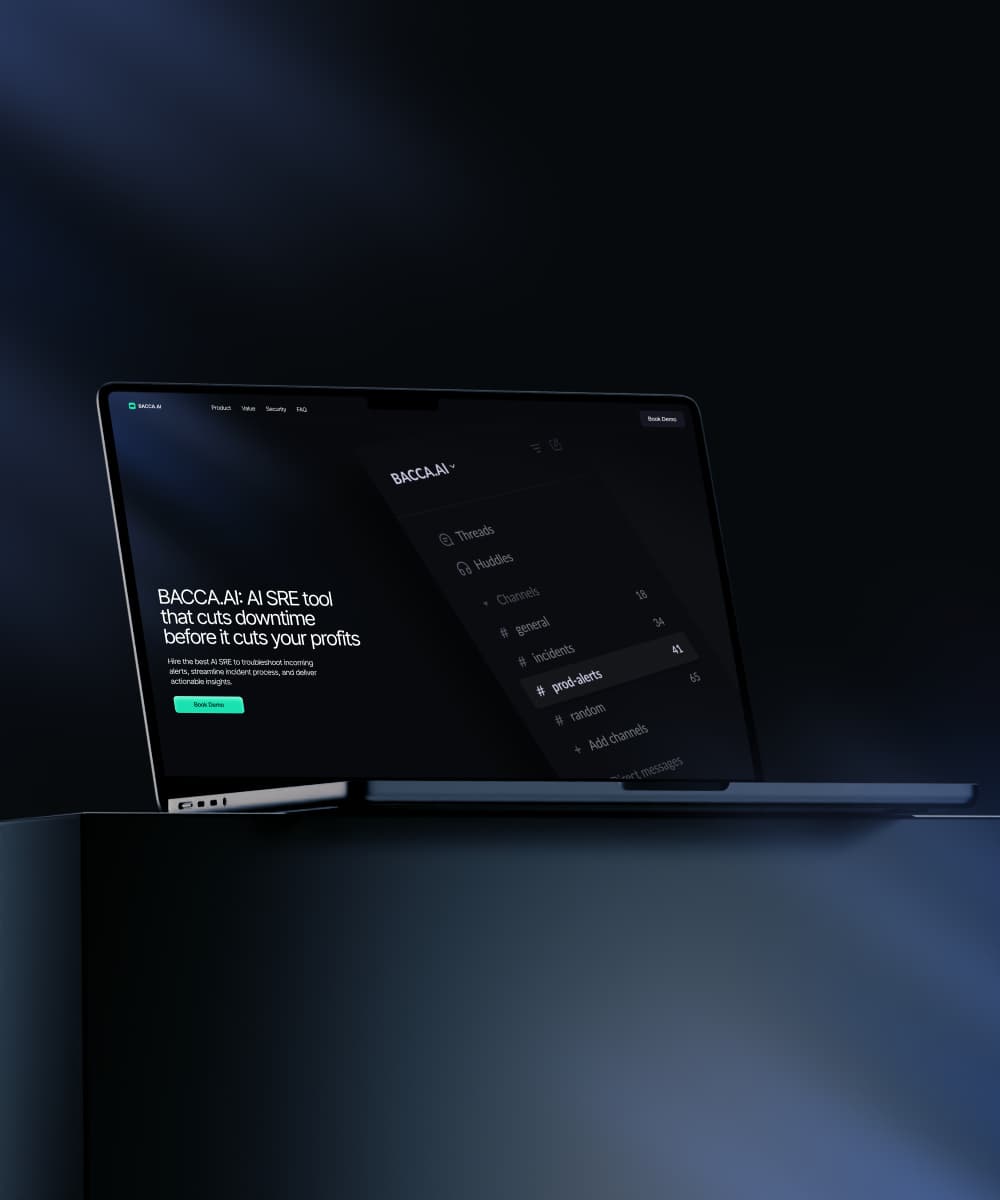
How we helped a complex AI SRE tool website boost customer acquisition
See how Lazarev.agency transformed Bacca AI's complex tech into a compelling story that boosts SRE platform sales.
Let's talk about your AI adoption challenge
Tell us where adoption stalls. You’ll hear back from a senior product and UX lead with a practical action plan.