

You open a product that claims to be powered by AI, and the confusion sets in almost immediately.
The system makes strong recommendations with no explanation whatsoever. It acts on your behalf without clear consent. When the outcome feels wrong, there’s no context and no way to recover. You try to override the system. It still doesn’t work. Eventually, you walk away.
That breakdown is exactly the problem AI UX strategy companies are hired to fix.
In this article, we explain why AI UX strategy now sits at the core of modern digital products, share a data-backed snapshot of how web design influences the adoption of AI tools, and present a list of leading UX agencies with AI expertise to help you choose the right partner.
Key takeaways
- AI UX strategy is a new baseline. AI-powered products fail when users don’t understand or control them.
- Not all AI UX strategy companies are built the same. AI-native studios, product agencies, and consultancies solve very different problems. Choosing the wrong type creates risk.
- The best firms with a proven track record, like Lazarev.agency, design around genuine decision-making logic. Strong AI UX strategy explains your product’s autonomy, transparency, and path to recovery long before visuals enter the picture.
Why artificial intelligence matters in UX strategy
Traditional UX strategy was built for predictable systems. Design powered by artificial intelligence blew that up.
Once products start recommending, predicting, auto-acting, and occasionally getting it wrong, classic UX strategy becomes insufficient.
In AI-driven environments, businesses face problems traditional UX frameworks were never meant to solve:
- Systems act without explicit user input. AI recommends, predicts, prioritizes, and increasingly executes. UX strategy must define who is in control, when, and at what cost.
- Products evolve. Models learn, and data changes all the time. That’s why your UX framework cannot be “final”. A solid strategy must account for changes.
- Business value depends on adoption. The smartest AI is useless if users don’t understand it or know when to rely on it.
Why do so many AI initiatives stall?
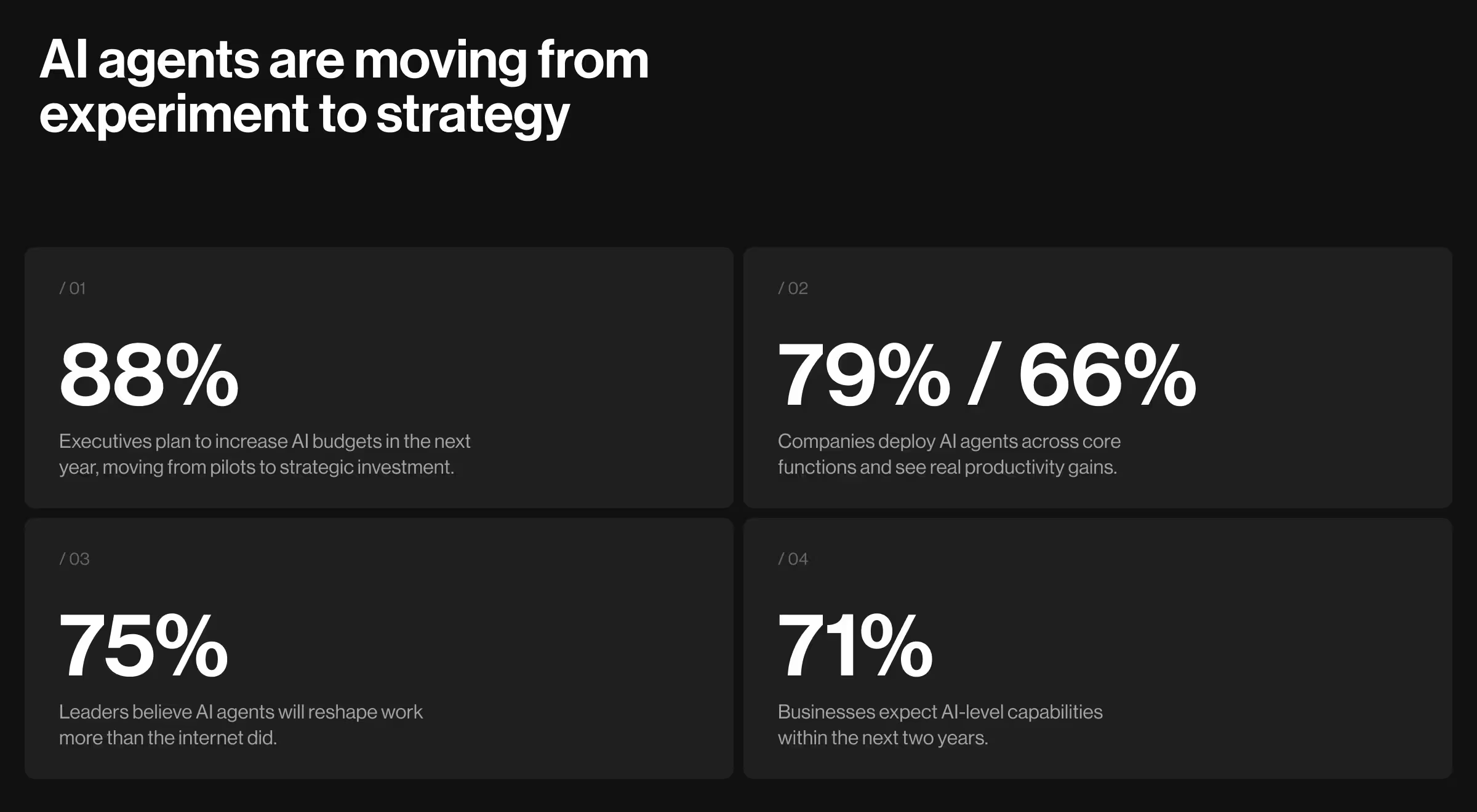
Because the experience design strategy never caught up. And if this sounds theoretical, the numbers in PwC’s AI agent survey say otherwise:
- 88% of senior executives plan to increase AI budgets in the next 12 months.
- 79% of companies are already adopting AI agents, and 66% report tangible productivity gains from them.
- 75% believe AI agents will reshape the workplace more than the internet did.
- 71% expect AI-level capabilities within two years.
Zoom out, and the impact gets bigger:
- McKinsey reports that generative AI alone could unlock 0.1–0.6% annual productivity growth through 2040.
- Combine it with broader automation, and you’re looking at up to 3.4 percentage points of productivity growth a year.
AI is reshaping internal operations, decision-making, customer experience design, and business planning.
Key strategy forces shaping AI UX design process
Modern AI UX strategy is shaped by four forces that redefine how users interact with intelligent systems:
- Generative AI turns users into co-creators. UX strategy defines authorship, quality boundaries, and what happens when the output misses the mark.
- Conversational AI makes dialogue the interface. Strategy decides when conversation helps, and when it just slows people down.
- Agentic AI introduces autonomous action. UX strategy sets guardrails, escalation paths, and the moment humans retake control.
- Anticipatory design makes UX predictive. Strategy determines what the system should infer, suggest, or do before users ask.
Types of AI UX strategy companies and how to choose the right AI design agency
Not all providers approach AI UX strategy the same way. Understanding the categories prevents mismatched partnerships.
Treat this table as a fit matrix. Here’s what to take from it:
- If your AI system makes recommendations users must trust, AI-native UX strategy agencies excel because they design decision logic.
- If speed and execution matter the most, AI product design agencies can ship quickly, though they often require clear strategic guardrails.
- If your challenge is consistent UX or UX research maturity, traditional UX consultancies help (at least until AI uncertainty enters the picture).
- If leadership needs alignment before any product work begins, management consultancies can help clarify direction, but they rarely own the experience details.
Top 7 AI UX design agencies to consider
When was the last time an “AI-powered” product explained why it did something without dumping a wall of text on you?
Exactly.
Still think designing for AI is just sprinkling intelligence on top of an interface? Well, the best chatbot examples prove the opposite.
It’s about using AI to shape how users understand decisions, trust recommendations, and stay in control when the system gets clever (or wrong). That’s UX strategy under pressure, and not every web design agency is equipped for it.
Below are seven web design agencies with a proven track record of designing AI-driven user experiences.
1. Neuron
- Hourly rate: $150–$199
- Team size: 50–100
- AI UX maturity: ★★★★☆ (4/5)
- Industry recognition: Long-standing enterprise UX partner, strong thought leadership.
- Key audience: Enterprise organizations, data-heavy platforms.
- Clutch rating: 5.0
- Explore the agency's portfolio
Neuron brings deep UX strategy experience to complex, data-driven products. Their AI interfaces are the strongest option for enterprise systems that require highly structured UX workflows.
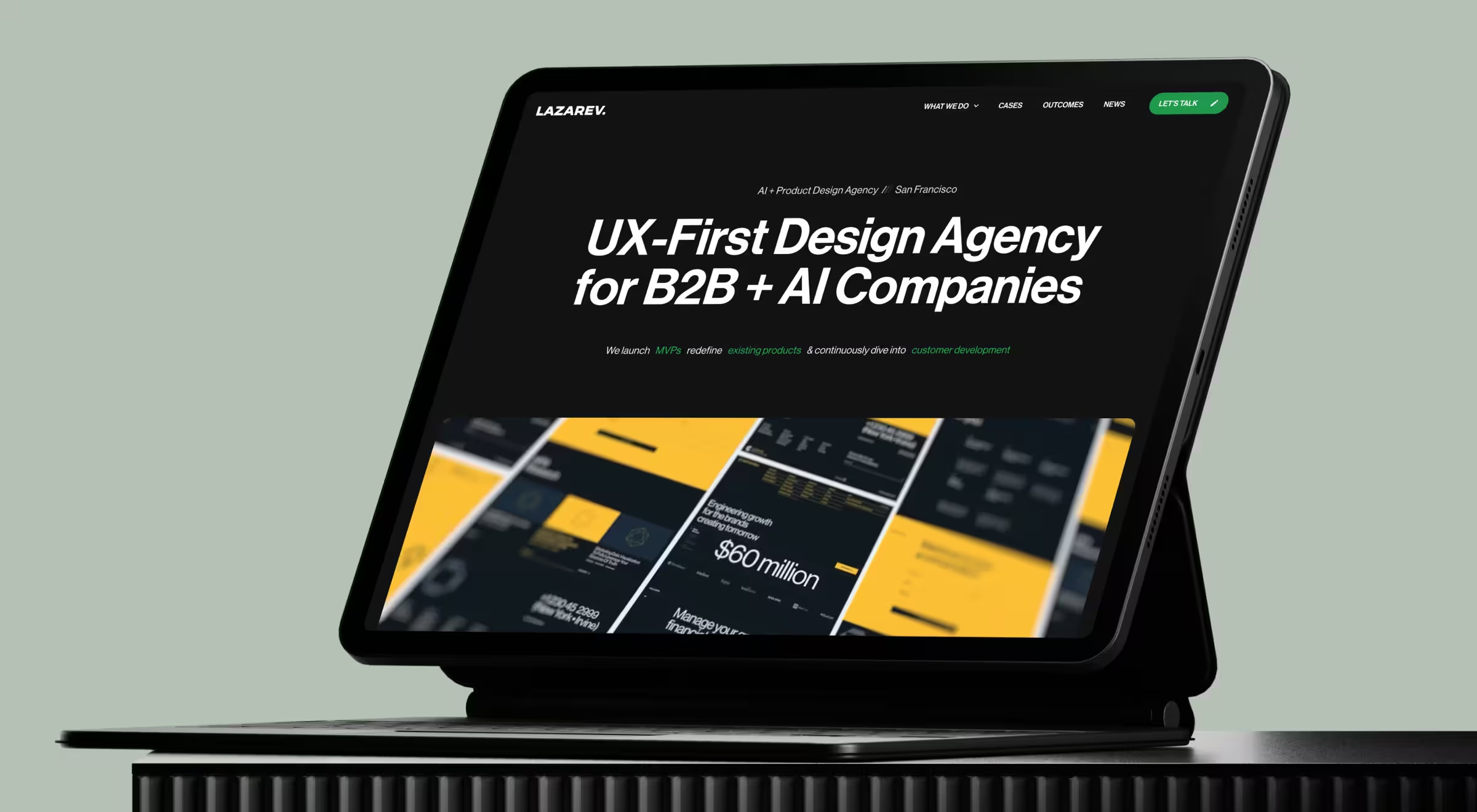
2. Lazarev.agency
- Hourly rate: $100–$140
- Team size: 40+
- AI UX maturity: ★★★★★ (5/5)
- Industry recognition: over 140 awards, including 3× Webby Awards Winner, 2× Webby Awards Honoree, 2× Honoree & 6× Red Dot Awards, CSS Design Awards Nominee.
- Key audience: AI startups, SaaS scale-ups, enterprise teams building AI-native products.
- Clutch rating: 5.0
- Explore our portfolio
Founded and led by Kirill Lazarev, the agency blends AI transformation, research and strategy, and product-growth thinking into a single discipline. The result is AI products that speed up new customer onboarding, improve retention, and make value obvious early.
3. Dreamten
- Hourly rate: $100–$149
- Team size: 10–49
- AI UX maturity: ★★★★☆ (4/5)
- Industry recognition: Strong startup ecosystem presence.
- Key audience: SaaS startups, product-led teams.
- Clutch rating: 5.0
- Explore the agency's portfolio
Dreamten excels at translating product strategy into usable, AI-assisted experiences for early-stage and growth-stage SaaS products.
4. Goji Labs
- Hourly rate: $100–$180
- Team size: 30–50
- AI UX maturity: ★★★★☆ (4/5)
- Industry recognition: Recognized as one of the best AI MVP design companies.
- Key audience: Startups, digital innovation teams.
- Clutch rating: 5.0
- Explore the agency's portfolio
Goji Labs is effective for teams looking to launch AI-powered MVPs quickly, with a UX strategy tightly coupled to development and iteration speed.
5. Orizon Design
- Hourly rate: $100–$149
- Team size: 10–49
- AI UX maturity: ★★★★☆ (4/5)
- Industry recognition: Strong UI and branding reputation.
- Key audience: Acknowledged as one of the leading generative AI UX design agencies.
- Clutch rating: 5.0
- Explore the agency's portfolio
Orizon’s AI UX strength is best suited to products where AI supports core decision-making.
6. Perpetual
- Hourly rate: $100–$149
- Team size: 50–249
- AI UX maturity: ★★★★☆ (4/5)
- Industry recognition: Trusted partner for complex digital platforms.
- Key audience: Enterprises, data-centric products.
- Clutch rating: 4.9
- Explore the agency's portfolio
Perpetual brings structure and scale to AI-enabled UX projects, particularly where multiple stakeholders and long-term platform thinking are required.
7. Supercharge
- Hourly rate: Undisclosed
- Team size: 50–249
- AI UX maturity: ★★★★☆ (4/5)
- Industry recognition: Strong presence in emerging tech and AI solutions.
- Key audience: Tech companies, innovation-driven teams.
- Clutch rating: 4.8
- Explore the agency's portfolio
Supercharge focuses on designing digital products around emerging technologies, with solid experience aligning AI capabilities to real-world user needs.
What strategic AI UX looks like: practical insights from Lazarev.agency
“AI UX strategy proves its value when it survives real user feedback and unforgiving business pressure. Abstract frameworks don’t count. What matters is whether AI-driven products become clearer and more actionable once they hit the market.”
{{Anna Demianenko}}
Below are three case studies showing how Lazarev.agency applies strategic AI UX thinking in practice. Different industries, different challenges, but the same rule applies: the smarter the AI gets, the more UX has to do the explaining.
AdMetrics

🔴 Challenge: AdMetrics started as a powerful AI-driven market-tracking tool, but its target audience struggled to extract product value. Too many dashboards and too much data meant no one knew what to do next.
Our AI UX strategy: Lazarev.agency reframed the product around decision-first UX:
- Unified, customizable dashboards that surface what matters now.
- Understandable attribution views showing the full customer journey.
- AI-assisted monitoring and creative optimization to minimize manual effort.
🟢 Result: AdMetrics evolved from a niche analytics tool into an accessible, AI-powered decision platform. Teams can now analyze large datasets and understand cross-channel performance instantly.
Mannequin
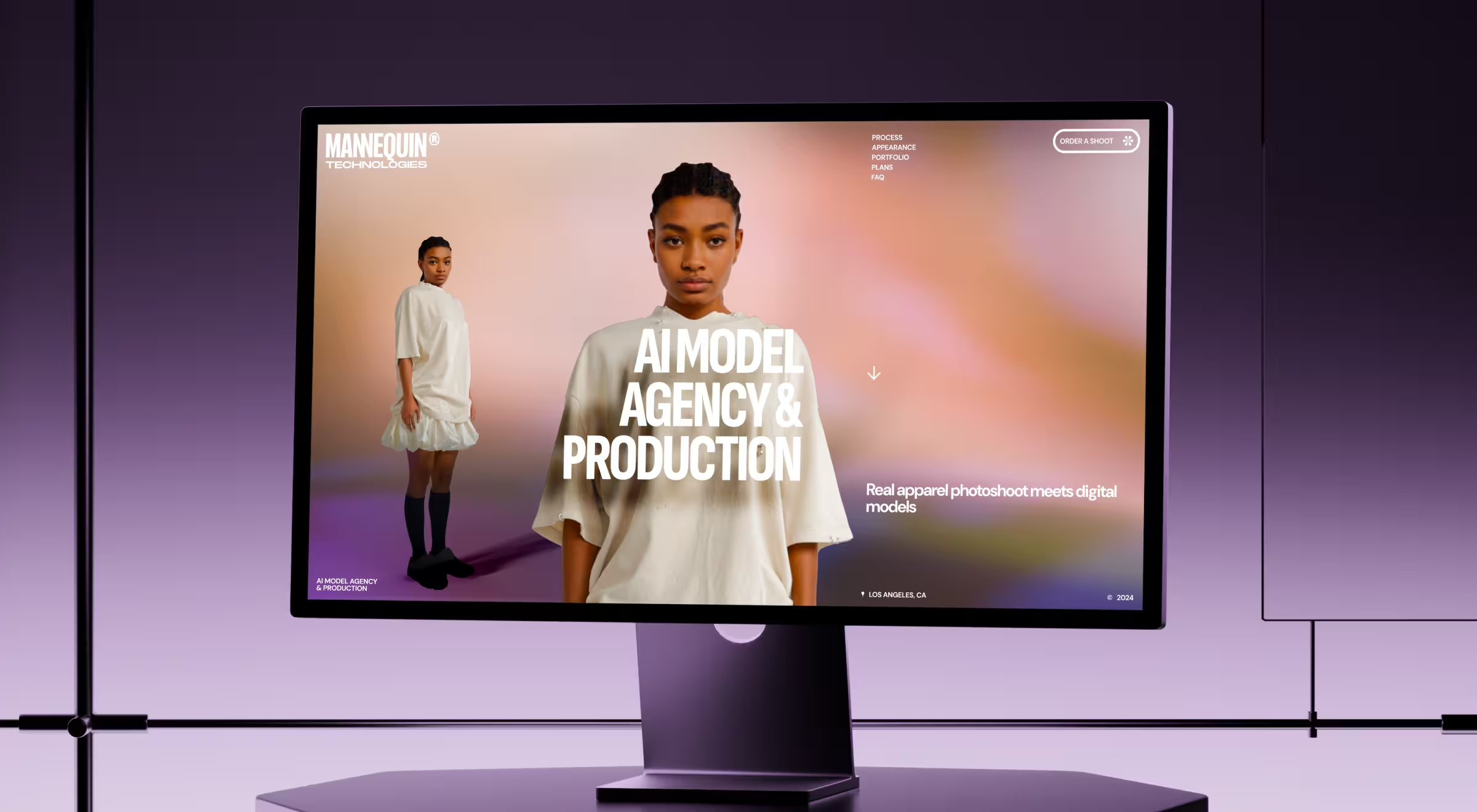
🔴 Challenge: Mannequin’s AI replaces traditional fashion photoshoots with AI-generated humans wearing real garments.
Powerful tech that’s hard to explain. Here’s what left users baffled:
- Were the clothes also AI-generated?
- How do you communicate the real value of AI while not overwhelming users with undue technical detail?
Our AI UX strategy: Lazarev.agency leaned into a show-don’t-tell UX strategy. Instead of explaining the AI, the experience demonstrates it:
- Story-driven layouts that show how AI adapts garments across models and markets.
- Motion design and parallax to simulate depth using 2D assets.
- Clear narrative separation between real clothing and AI-generated humans.
🟢 Result: Mannequin’s website feels as advanced as the technology behind it. The product story is instantly clear and globally relevant, which, in turn, positions Mannequin as a serious player in the AI-driven fashion industry.
Bacca AI
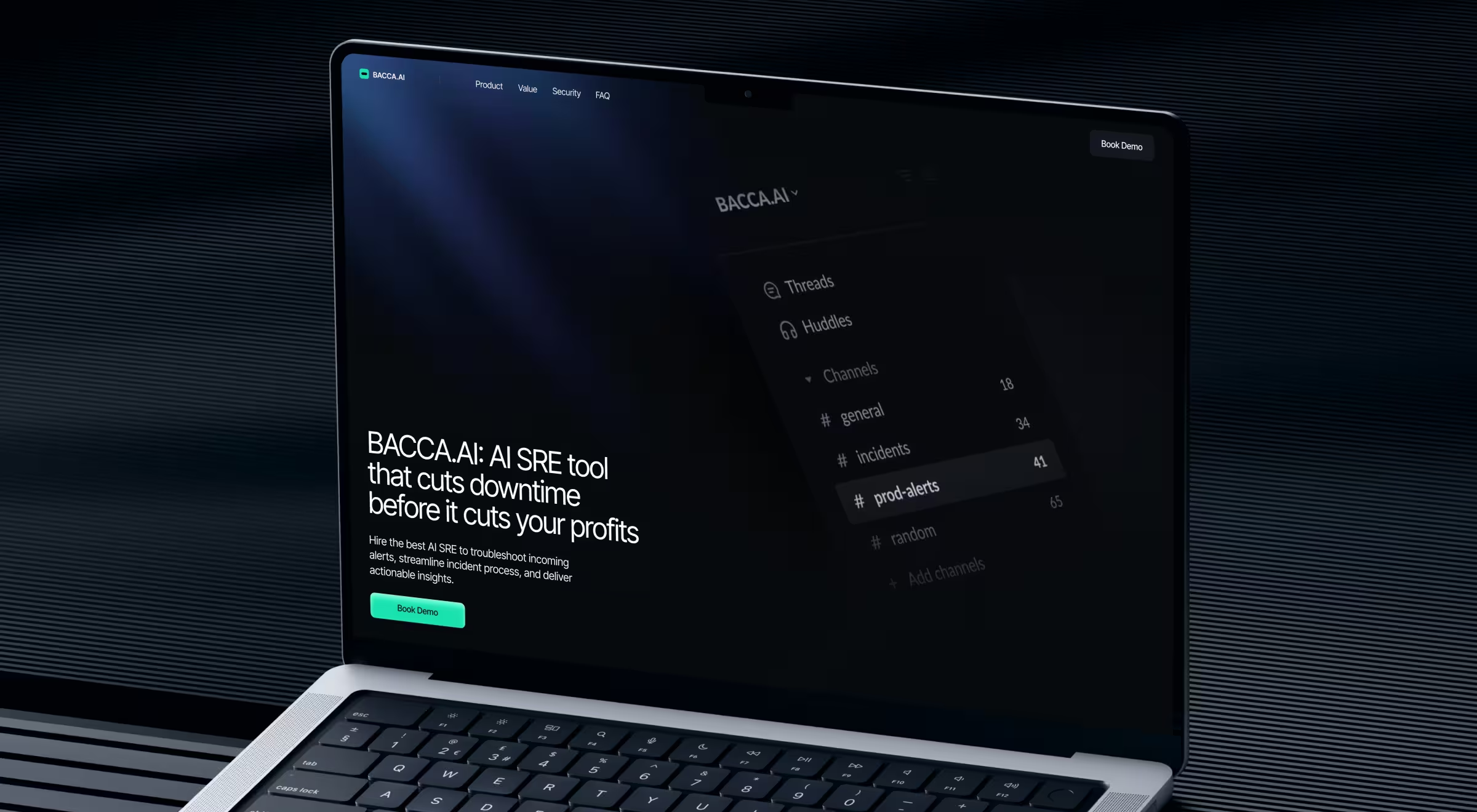
🔴 Challenge: Bacca AI does the work no one sees by quietly automating site reliability and incident resolution in the background. With minimal surface-level UI and significant technical depth, the real hurdle was clarity: leaders couldn’t connect system uptime to direct revenue impact.
Our AI UX strategy: Lazarev.agency applied strategic storytelling UX to bridge technical and business audiences:
- Reframed features as outcomes: reduced downtime, protected revenue, lower burnout.
- Built a vertical narrative flow that guides users from problem to payoff.
- Designed conceptual UI and motion elements to visualize “invisible” AI processes.
🟢 Result: Bacca AI’s platform story became unmistakable. Technical buyers see depth, whereas business leaders can grasp impact immediately. The product stands out in a crowded SRE market by making its AI value credible and commercially relevant.
Common AI UX strategy pitfalls and how top companies avoid them
There’s no denying that AI reshapes the future of web design. Because of the shift, companies are forced to answer new questions:
- Who decides — the user or the system?
- How much automation is too much?
- When does confidence become deception?
These questions live in strategy. That’s exactly why more teams are rethinking their reasons to hire AI designers in the first place.
Below are the most common AI UX strategy pitfalls paired with practical fixes top firms use to deliver real customer experience solutions for businesses.
Pitfall 1: treating AI UX like a prompt problem
⭕ What happens: The product launches with a decent chat interface, yet an empty input field. Users hesitate, adoption drops, and nobody knows what to type.
Why it happens: Execution-heavy agencies optimize for speed. Strategy gets skipped way too often.
📗 What top firms do instead: AI-native UX strategy companies design guided experiences. Structured layouts and conversational UI inputs work together.
Pitfall 2: automating too much
⭕ What happens: The system acts on the user’s behalf without clear consent. One visible misstep is enough to break trust.
Why it happens: Traditional UX assumes systems behave deterministically. AI doesn’t.
📗 What top firms do instead: This approach helps reduce customer churn by preventing moments where users feel trapped or misled by automation.
Pitfall 3: hiding uncertainty
⭕ What happens: AI outputs sound confident even when accuracy is shaky. As a result, users feel misled.
Why it happens: Teams confuse simple UI with clear UX, assuming less explanation means better experience.
📗 What top firms do instead: They design context-aware AI transparency:
- Low-stakes actions → minimal explanation.
- High-stakes actions → confidence indicators, reasoning, alternatives.
Here, transparency isn’t about exposing the model. It’s about helping users make better decisions without slowing them down.
Pitfall 4: treating errors as rare exceptions
⭕ What happens: When something goes wrong, the interface shrugs. Users are left guessing what happened and what to do next.
Why it happens: UI-centric agencies design for the happy path with no reality checks along the way.
📗 What top firms do instead: They design failure handling as a core UX scenario:
- Clear, human error messages.
- Simple correction paths.
- Reassurance that the system is still reliable.
This is where such actionable UX performance metrics as correction rates, overrides, and recovery success matter.
Pitfall 5: designing a static UX for a learning system
⭕ What happens: The product feels solid at launch… then slowly drifts into inconsistency as the model evolves.
Why it happens: UX is treated as a one-time deliverable.
📗 What top firms do instead: They design UX as adaptive infrastructure with feedback loops and signals that evolve alongside the model. The experience stays coherent even as the system learns.
Choose the right partner to design AI that makes sense
AI fails in the moments where users hesitate or walk away because the system feels opaque or out of control. That’s why an AI UX strategy is the foundation that determines whether intelligent products grow or stall.
At Lazarev.agency, we’ve spent years designing AI-native products where strategy, UX, and intelligence work as a unified system. Our team specializes in AI UX strategy, conversational and anticipatory UX, and AI-driven product design that improves onboarding, boosts retention, and makes value obvious early.
We shape how AI behaves when it takes on an agentic role and when it stays out of the way.
If you’re building an AI product and want users who get it instead of second-guessing it, start a conversation with us.




.webp)