
The idea to outsource product design usually hits when your team has a big roadmap, but everyone’s plate is full. Someone casually suggests, “Maybe we should bring in external designers”.
By then, two things are clear: design is slowing you down, and hiring in-house feels irrelevant. Outsourcing looks appealing. And risky.
As a team of AI UX/UI designers with over a decade of industry experience, we’ve seen firsthand how the right external partnership elevates business performance. The wrong approach, though, blocks progress just as fast.
In this article, we’ll explore the benefits and pitfalls of outsourcing, early signals your team is ready for this step, and a practical roadmap to make it work.
Let’s dig in.
Key takeaways
- Outsourcing product design succeeds when external designers are embedded in product thinking. Proximity to decisions matters more than employment type.
- Most outsourcing risks stem from structure and alignment gaps. Clear context, defined ownership, and shared standards prevent the majority of issues.
- Outsourcing product design to the right partner strengthens your internal team. Experienced specialists like Lazarev.agency bring in senior judgment and flexible technical capacity, taking the load off your team’s shoulders and giving them space for creativity.
What does it mean to outsource product design?
To outsource product design is to engage a specialized external partner who takes ownership of defined design outcomes.
But businesses differ. And their outsourcing goals do too.
For some teams, it means delegating execution-heavy design work. For others, the primary goal is more strategic: sharpening market positioning through UX audits, user research, and discovery.
That’s why outsourced product design spans multiple general services, including:
- Product discovery and market research
- UX audit and A/B testing
- Information architecture restructuring
- Interface design
- Design system services
At the same time, your team might be on the lookout for specialized expertise like:
- Conversational UI and voice-first experiences
- AI dashboards and data-dense interfaces
- AI agents and human–AI interaction design
- Early-stage MVP design
Either way, outsourcing product design only works when your in-house team and external experts are aligned on a strategic, operational, methodological, and technical levels.
“Your outsourcing partner must understand your industry dynamics, market trends, your product’s technical makeup, and the stage of maturity it has reached. Equally important is sharing core values and a compatible work ethic.”
{{Ostap Oshurko}}
There are many boxes to tick when it comes to forming a strong partnership with external design specialists, but once you find the right match, the payoff is exponential.
In-house team vs. freelancers vs. outsourcing partner: which setup fits your product stage best?
Each setup — in-house, freelance, or outsourced design services — behaves differently within the same context. So what kind of design partnership does your product need right now?
Sometimes, a deep understanding of your product is non-negotiable. Sometimes, your priority is speed. Sometimes, you are on the lookout for a senior perspective that isn’t available internally (at least yet).
Understanding these differences upfront helps you make an informed decision. Below, we break down how the three most common design setups operate in product teams.
Each model has its pros and cons. The genuine advantage comes from choosing the setup that aligns with your business strategy, internal resources, operational goals, and current product stage.
What are the early signs you need to outsource your design work?
Before you commit to the decision, it’s worth checking whether outsourcing product design would unblock progress in your case. The signals are there if you know where to look.
We recommend using this checklist to sense-check your current setup:
◻️ Design work slows down decisions. Product choices linger because design input arrives late or in fragments.
◻️ Your designers are stuck in delivery mode. Internal designers spend most of their time executing requests rather than shaping product direction.
◻️ You revisit the same design problems repeatedly. Similar issues resurface across features, screens, or releases with no durable resolution.
◻️ Product thinking depends on a single person. Too much context lives in one designer’s head, creating risk and bottlenecks.
◻️ The roadmap outpaces your design capacity. Upcoming initiatives require more design work than your current team can realistically handle.
◻️ You’re entering a high-stakes phase. MVP launches, redesigns, or major feature rollouts demand experienced product judgment.
◻️ Hiring feels slower than the product cycle. By the time a new designer is onboard, the opportunity window has already shifted.
If several of these points feel uncomfortably familiar, that’s usually a sign your product needs additional product design expertise delivered in a more flexible way.
Intentional outsourcing is a practice of mindful delegation focused on restoring momentum.
What benefits do teams gain when they outsource product design?
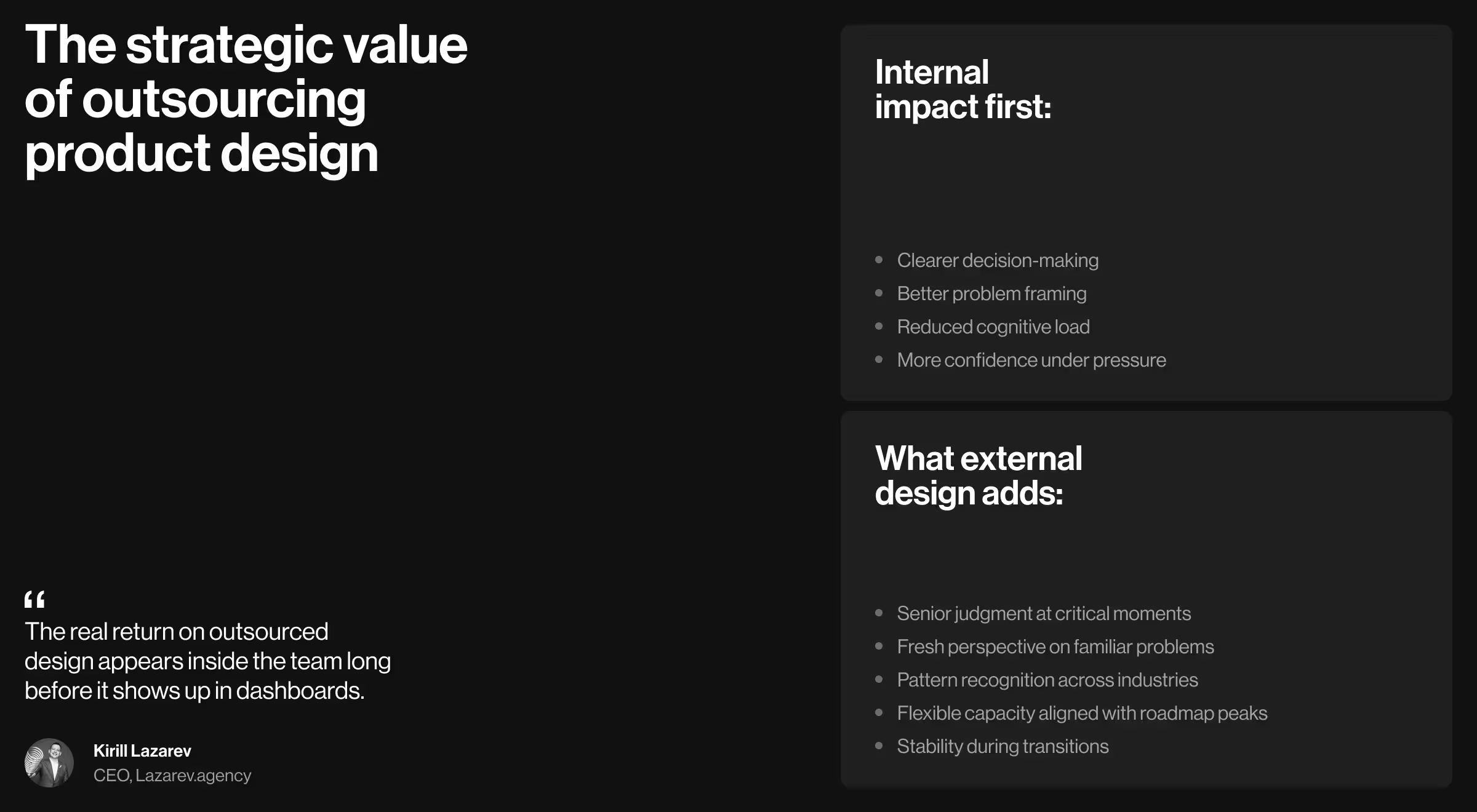
“Outsourcing product design is often discussed in operational terms. Teams do it to accelerate time to market, control costs, strengthen retention, and improve ROI. While these metrics do matter, they are the end results. The real value shows up earlier, inside the team itself: balanced workloads, reduced cognitive strain, more space for creative thinking, and access to senior design expertise.”
{{Kirill Lazarev}}
In other words, the biggest gains are strategic. Teams that outsource successfully improve how decisions are made, how problems are framed, and how confidently the product moves forward when pressure increases.
Below are the benefits we’ve seen teams reap when an experienced outsourcing team is brought in at the right moment.
1. Access to senior product judgment
Experienced external designers know which questions to ask and which assumptions to challenge.
They help frame problems early and reduce unnecessary iteration. That proactive judgment and solid expertise save teams weeks of refining ideas that don’t move the product forward.
💻 How this looks in practice: Senior external designers map constraints, user needs, and technical realities into workable directions. Teams make fewer false starts and reach alignment faster, even when information is incomplete.
2. Fresh perspectives on the product
Internal teams naturally adapt to the product they work on. Over time, certain issues fade into the background, even when they continue to affect users.
External designers don’t carry that history. They offer fresh perspectives and notice inconsistencies precisely because they aren’t accustomed to them.
💻 How this looks in practice: External designers often question flows or assumptions that internal teams stopped revisiting. Those questions lead to simpler structures and fewer compromises.
3. Cross-industry pattern insight
Design specialists see the same problems across products so often, they learn the hacks: how to approach new customer onboarding, when to commit to a full design system audit, how to leverage chatbot digital transformation to meet evolving user needs.
Instead of reinventing solutions, teams benefit from digital solutions strategies that have already proven effective in comparable situations, even if the industry differs.
💻 How this looks in practice: Outsourcing companies draw on prior experience to suggest structures or interaction patterns that fit the problem.
4. On-demand design capacity aligned with roadmap pressure
Product roadmaps rarely unfold evenly. Some project phases demand intense design effort. Others require minimal support. Fixed internal teams struggle to absorb these swings.
Outsourcing allows teams to match design effort to current demand without stretching people thin.
💻 How this looks in practice: During feature pushes or major releases, external designers step in to handle execution-heavy work. Internal designers regain space to focus on higher-level thinking, coordination, and quality control.
5. Built-in flexibility during transitional phases
MVP launches, pivots, redesigns, and scaling periods are inherently unstable. Internal teams often struggle to adapt while preserving consistency.
Outsourced designers add flexibility without forcing the organization to restructure around temporary needs.
💻 How this looks in practice: When priorities shift, an external team adjusts quickly. The product keeps moving forward without rushed hiring, abrupt team changes, or added internal strain.
🔍 For more insights, explore our blog on 10 reasons to hire a product design agency.
What risks come with outsourcing product design and how can you mitigate them?
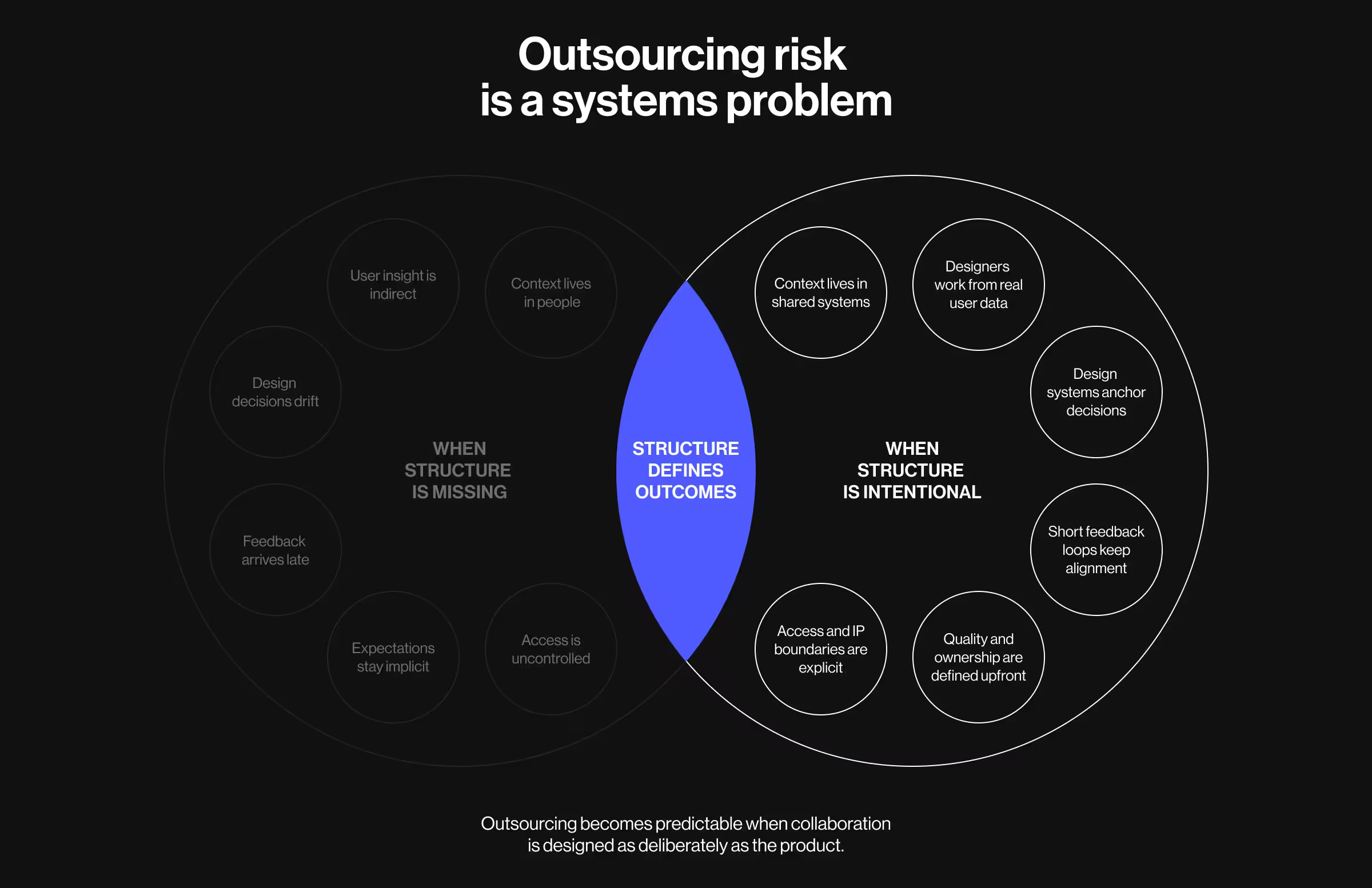
With outsourcing, the most common risks are predictable and preventable if you know what to look for and how to structure collaboration from the start.
Below are the most common pitfalls and practical ways to handle them.
1. Loss of product context
External designers don’t absorb context passively the way internal teams do. Without deliberate effort, they can miss historical decisions and edge cases that shape the product.
✅ How to mitigate it: Anchor product context in shared systems. ERP platforms can serve as a single operational reference point. When your outsourced product team works against the same system of record as internal teams, context remains intact even as collaboration scales.
🔍 Get more insight about how smart ERP design can boost your business by coordinating teams and automating workflows.
2. Shallow understanding of the target audience
When designers operate at a distance from users, assumptions creep in. Personas become abstract, and actual user needs get replaced by secondhand interpretations.
✅ How to mitigate it: Give external designers access to market and user research findings and feedback loops. The closer they are to real user signals, the stronger their design decisions become.
🔍 Learn more about the risks of skipping UX research and practical tips for constructing actionable UX personas.
3. Design inconsistency across the product
When multiple contributors work in parallel, visual language and interaction logic (as well as other technical aspects) can drift. This often happens gradually and goes unnoticed until the product feels fragmented.
✅ How to mitigate it: Pair a shared design system with a product vision board. The design system defines reusable components and patterns, whilst the vision board defines intent. It captures the core business idea, key product principles, behavioral guidelines, examples of acceptable decisions, and boundaries designers should not cross.
🔍 Explore our guide to find out how to build a product vision board.
4. Communication gaps
Different time zones, tools, and fewer informal touchpoints are communication barriers. When collaboration becomes overly transactional, the risk of misalignment increases.
✅ How to mitigate it: Enable direct collaboration with product managers and engineers, and prioritize short, regular check-ins over infrequent, extended updates. Clear outcomes emerge when feedback cycles are regular and well-structured.
5. Misalignment of values and work ethic
Not all teams approach quality, pace, or ownership the same way. When expectations aren’t explicit, frustration builds on both sides.
✅ How to mitigate it: Align early on how decisions are made, how feedback is handled, and what “done” means. Cultural fit matters more than stylistic preference. That’s why the strongest collaborations are grounded in shared standards.
6. Security and data exposure concerns
Outsourcing often involves sharing sensitive information, which raises understandable concerns around data protection and confidentiality.
✅ How to mitigate it: Formalize access boundaries and discuss intellectual property rights. Use NDAs, limit exposure to only what’s necessary, and rely on secure collaboration tools. Transparency and clear protocols go a long way toward handling risk.
When teams account for these risks upfront, outsourcing product design becomes far more predictable. The strongest partnerships know how to manage risk deliberately. That’s how teams benefit from external expertise without losing control of the product’s direction.
How to hire the right outsourced design partner?
“Hiring an outsourced design partner is about finding a fit for where your product is now. Treat outsourcing like a transaction, and you’ll get transactional work. Treat it like a partnership, and design starts pulling real business weight.”
{{Oleksandr Koshytskyi}}
Here’s how to choose an outsourced product design partner for fruitful long-term cooperation.
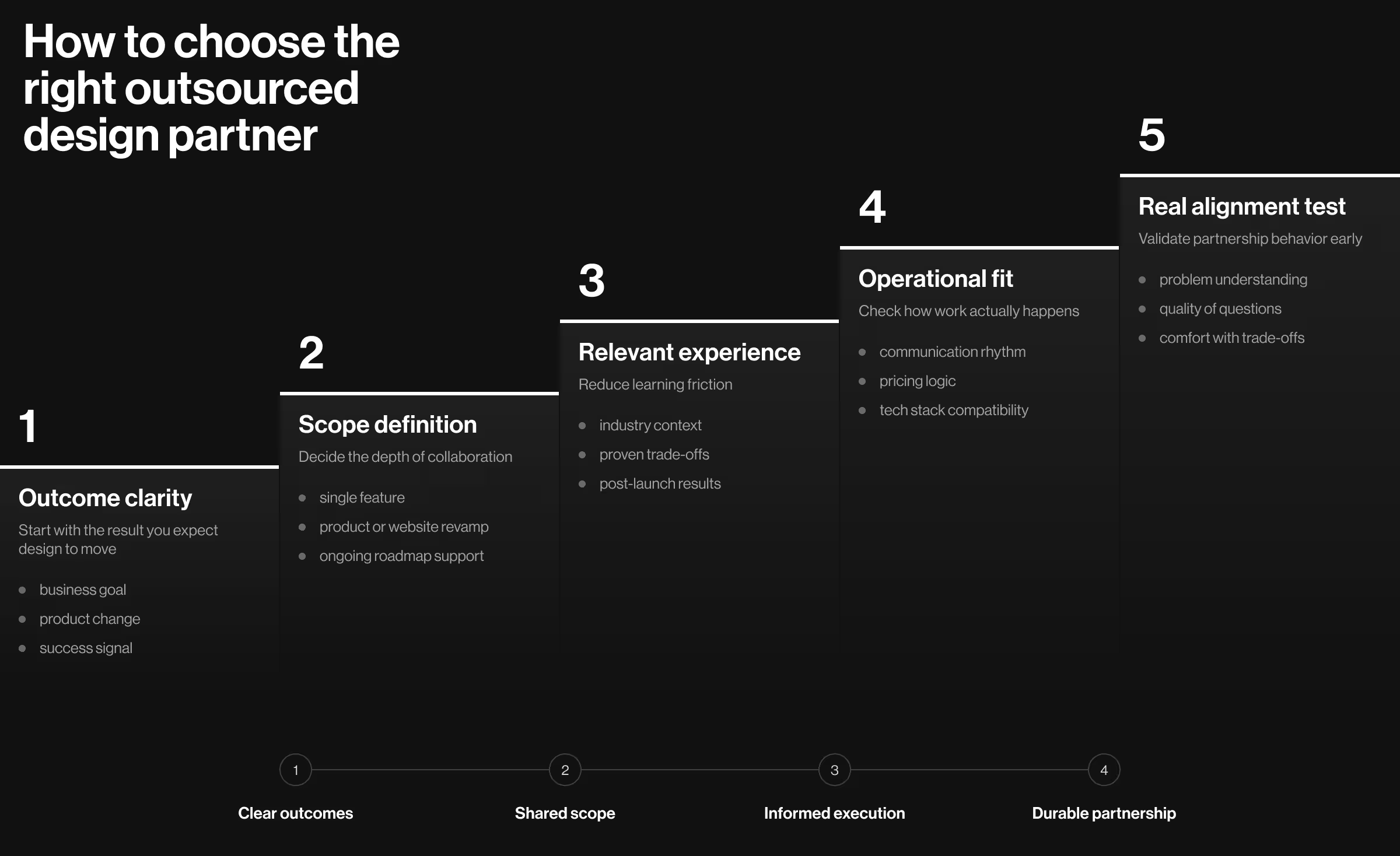
Step 1. Know your why: what outcome are you actually hiring for?
The first step is to get clear on what success looks like for your product. Being boringly meticulous is how great partnerships appear on the horizon.
Define specific outcomes in business and product terms:
- Identify areas for improvement in a key user flow
- Refine the information architecture of your product
- Ignite your SaaS sales funnel
- Prepare the product for a new market or audience
💡 Practical tip from Lazarev.agency: If you can’t explain the desired outcome in one or two sentences, pause the search. Clarity here saves weeks of misaligned work later.
Step 2. Determine the scope of the partnership upfront
Some teams need help redesigning a single feature. Others need a full product or website overhaul. Scope affects everything: team size, timeline, cost, and collaboration depth.
Decide early whether you’re looking for:
- A focused product feature upgrade
- A full website or platform revamp
- Ongoing design support across the roadmap
💡 Practical tip from Lazarev.agency: A well-defined initial scope often reveals whether a deeper partnership makes sense. From our experience, setting specific goals like a mobile-first redesign for Hedonism Wines or a full product rebrand for DragonGC is the first step toward productive collaboration.
Step 3. Shortlist partners with proven industry expertise
Strong design skills transfer across domains. But familiarity with your industry and market demands shortens the learning curve. Besides, partners who understand your space already know the constraints, expectations, and common pitfalls.
Look for:
- Relevant industry case studies
- Independent expert reviews
- Recognition, awards, credible mentions
💡 Practical tip from Lazarev.agency: Look at your potential partner’s case studies from an analytical perspective. What tradeoffs were made, what failed, and what changed after launch?
Step 4. Ensure cross-category fit: communication, pricing, and tech
Even strong designers struggle in mismatched environments. Alignment matters beyond design output.
Double-check:
- Communication style and responsiveness
- Pricing logic and flexibility
- Familiarity with your tech stack and tools
💡 Practical tip from Lazarev.agency: Pay attention to how clearly they explain their process. If collaboration feels confusing now, it won’t improve mid-project.
Step 5. Arrange a consultation to validate alignment
Approach your first consultation as a genuine working session (which it is, btw). Use it to test how the team approaches design problems, challenges assumptions, asks for your feedback, and discusses trade-offs.
During the conversation, pay attention to:
- How well they understand your problem
- Whether they ask thoughtful questions
- How they balance confidence with curiosity
💡 Practical tip from Lazarev.agency: If the conversation feels like a pitch rather than a discussion, keep looking. Strong partnerships start with a partnership mentality.
Let’s make outsourcing product design work for your product
Outsourcing product design is a decision that can either accelerate your product or slow it down.
Teams that win with outsourcing are decisive. They define outcomes early, choose a strategic partner with specialized skills, real product judgment, focus on alignment, and sustainable product development. They don’t outsource to fill gaps. They outsource to move faster and think more sharply.
That’s exactly how we work at Lazarev.agency. Our designers integrate directly into product teams, challenge assumptions, and stay accountable for direction. Whether you’re launching an MVP, rethinking a SaaS funnel, or scaling an AI-driven product, we help teams achieve excellence.
Get in touch and let’s pressure-test your setup, your goals, and the partnership model that fits your product right now.
Outsourcing works best when it’s intentional. We know how to make it count.