
Most SaaS teams believe progress to come from adopting the newest AI flair before competitors do. That assumption sounds logical. Until it succumbs to the reality of digital transformation.
SaaS trends 2026 speak the truth. What determines long-term viability today is alignment with how the industry is restructuring: AI moving into the core, UX carrying commercial responsibility, pricing tied to outcomes, and users deciding value in minutes. Products succeed by coherence.
This article examines the SaaS trends shaping future-ready products in 2026, compiled by Lazarev.agency’s design team based on hands-on work with modern SaaS platforms. Don’t treat these patterns as speculative forecasts, for they are already influencing how SaaS products lead in their respective markets.
Key takeaways
- AI is a gray eminence behind your SaaS product. AI agents are getting the majority of hard work done, forcing SaaS teams to rethink control, trust, and UX from the ground up.
- If your SaaS doesn’t integrate, it disappears. Cloud-native SaaS must earn its place inside crowded ecosystems or get consolidated out.
- Execution speed needs design discipline. MVPs must launch fast and scale cleanly. This is where seasoned SaaS MVP design partners like Lazarev.agency help teams avoid fragile UX decisions.
What’s the current state of SaaS in 2026?
What we’re seeing heading into SaaS trends 2026 is a structural reset. Cloud-first has become the cross-industry baseline, with AI-powered design as foundational infrastructure. Products that cling to rigid UX rules are starting to feel outdated, if not outright out of place.
The SaaS products built for what’s next won’t follow design dogma for the sake of consistency. They’ll evolve, bend interfaces around outcomes, and let AI agents handle intricate stuff while keeping humans firmly in control where judgment matters.
That shift is already visible in the numbers. And they are anything but subtle.
These stats explain why SaaS is changing so aggressively right now.
- According to Fortune Business Insights, the global SaaS market was valued at just over $266 billion in 2024 and is projected to reach $1.13 trillion by 2032.
- McKinsey reports that enterprises spent around $15 billion on generative AI solutions in 2023, pushing gen AI to 2% of the entire enterprise software market in record time. For context, it took SaaS itself four years to reach that same threshold.
- Gartner claims that by 2026, 75% of organizations will adopt digital transformation models built on cloud as the core platform. So if your SaaS product isn’t cloud-native, AI-compatible, and integration-ready, it risks sliding into irrelevance.
The data points to one clear conclusion. The SaaS sector is undergoing an AI transformation and calls for smarter design solutions to stay relevant.
What top SaaS trends define future-ready products?
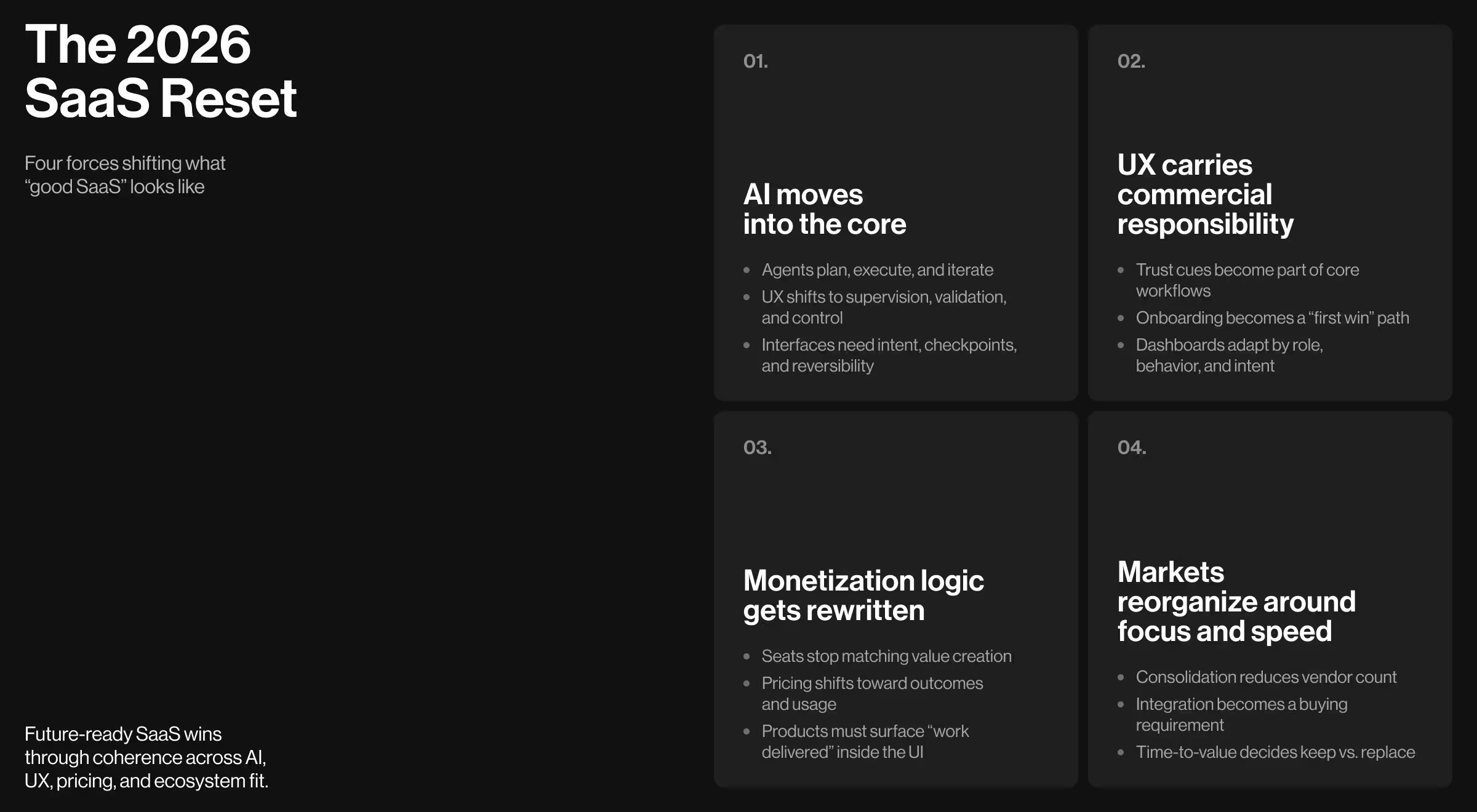
In 2026, winning SaaS products will emerge from deeper structural shifts:
- AI is moving into the core.
- UX is becoming a business lever.
- Monetization logic is being rewritten.
- Markets are reorganizing around focus and speed.
Below are 15 trends shortlisted by Lazarev.agency’s design team based on hands-on work with modern SaaS products across industries.
AI as the operating system
For years, SaaS teams tucked AI into the feature layer. First, it handled repetitive tasks. Then it started predicting outcomes and recommending next steps. Useful, yes. But still rather contained and optional.
That model no longer holds. Today, AI changes how businesses operate. And SaaS products are being rebuilt around that paradigm shift.
This is where things get uncomfortable (in a good way).
When smart agents sit at the core, old boundaries break down. UX can’t be an afterthought. Information architecture can’t be cluttered. And SaaS product design can no longer rely on decade-old conventions.
Here’s exactly how these changes shape the SaaS product design.
1. Agentic AI and autonomous workflows
📢 Change: AI evolved from copilots and prompt-based assistants into autonomous systems that plan, execute, and iterate on workflows with minimal user input.
💻 Impact on product and UX: UX moves from “asking AI questions” to supervising AI agents. Interfaces must support intent setting, progress visibility, intervention points, and outcome validation without forcing users to micromanage.
⏭️ What SaaS teams should do next: Design AI as an operational layer. Replace prompt-heavy interactions with goal-driven flows where agents act and adapt.
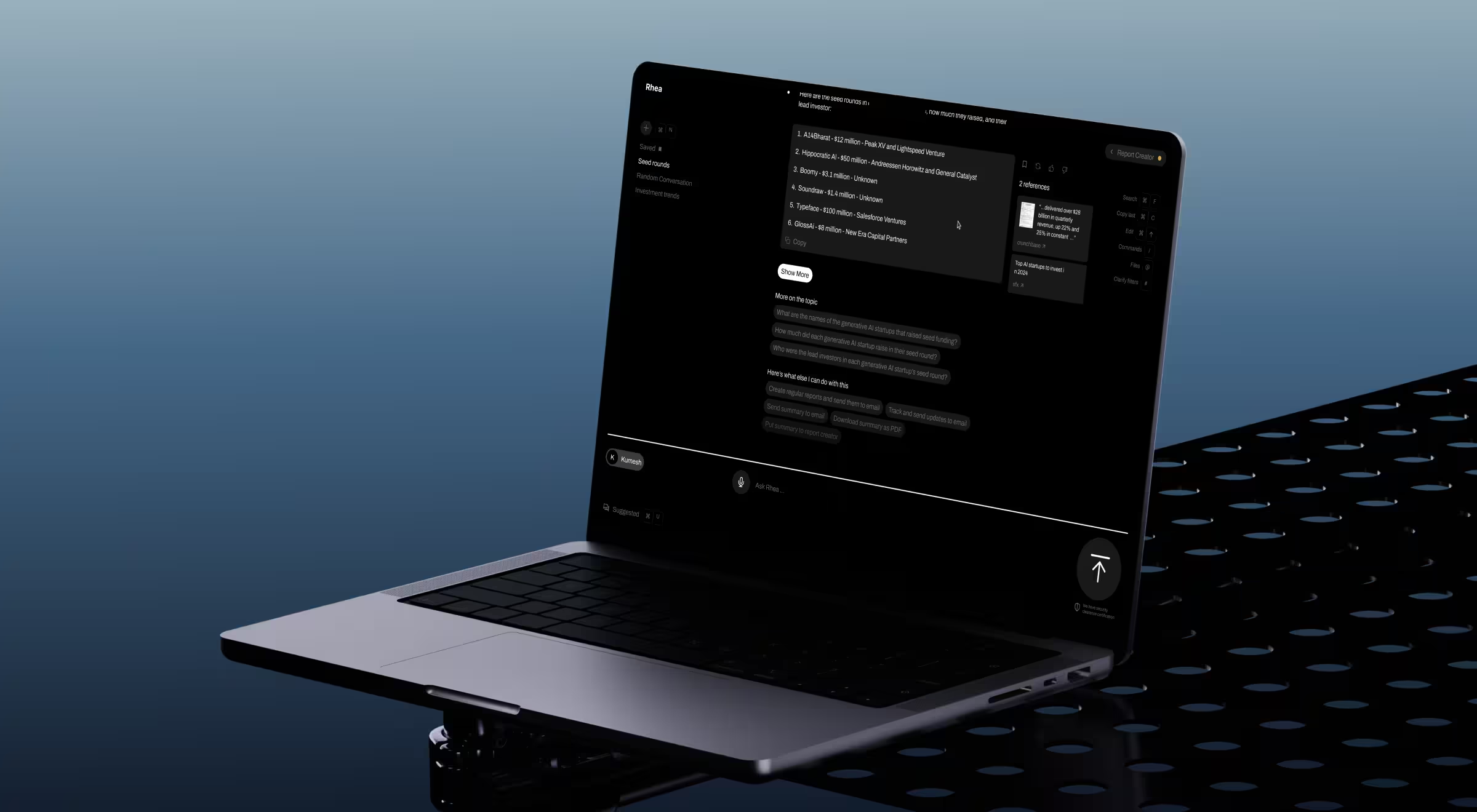
💡 Pro insight from Lazarev.agency: In Accern Rhea, we designed an agentic research system that didn’t stop at answers. The AI gathered data, synthesized insights, built reports, and updated outputs. That shift fueled Accern’s $40M+ fundraising and acquisition while setting UX patterns later adopted by major AI platforms.
2. AI-powered low-code as a default build mode
📢 Change: Low-code and no-code platforms evolved from prototyping tools into production-ready SaaS infrastructure. By 2026, the majority of new SaaS applications will embed low-code or no-code capabilities, often powered by generative AI.
💻 Impact on product and UX: UX shifts from manual configuration to intent-based creation. Users describe what they want to build. Meanwhile, the system generates logic, assembles workflows, and manages integrations.
⏭️ What SaaS teams should do next: Design low-code experiences around outcomes. Strong guardrails outperform unlimited flexibility and prevent fragile systems.
💡 Pro insight from Lazarev.agency: Take a look at how Zapier handles natural-language automation. Users describe what they want to happen, and the system builds the workflow without exposing triggers or application programming interface (API) logic. That’s the benchmark. When low-code optimizes user experience for outcomes, adoption improves.
3. Mandatory human supervision
📢 Change: Fully autonomous AI systems introduce considerable risk in highly regulated (like the fintech industry) and operational contexts.
💻 Impact on product and UX: UX must support review-first workflows. Users need clear checkpoints to validate and adjust AI-driven actions.
⏭️ What SaaS teams should do next: Design approval states, suggested actions, and reversible execution by default.
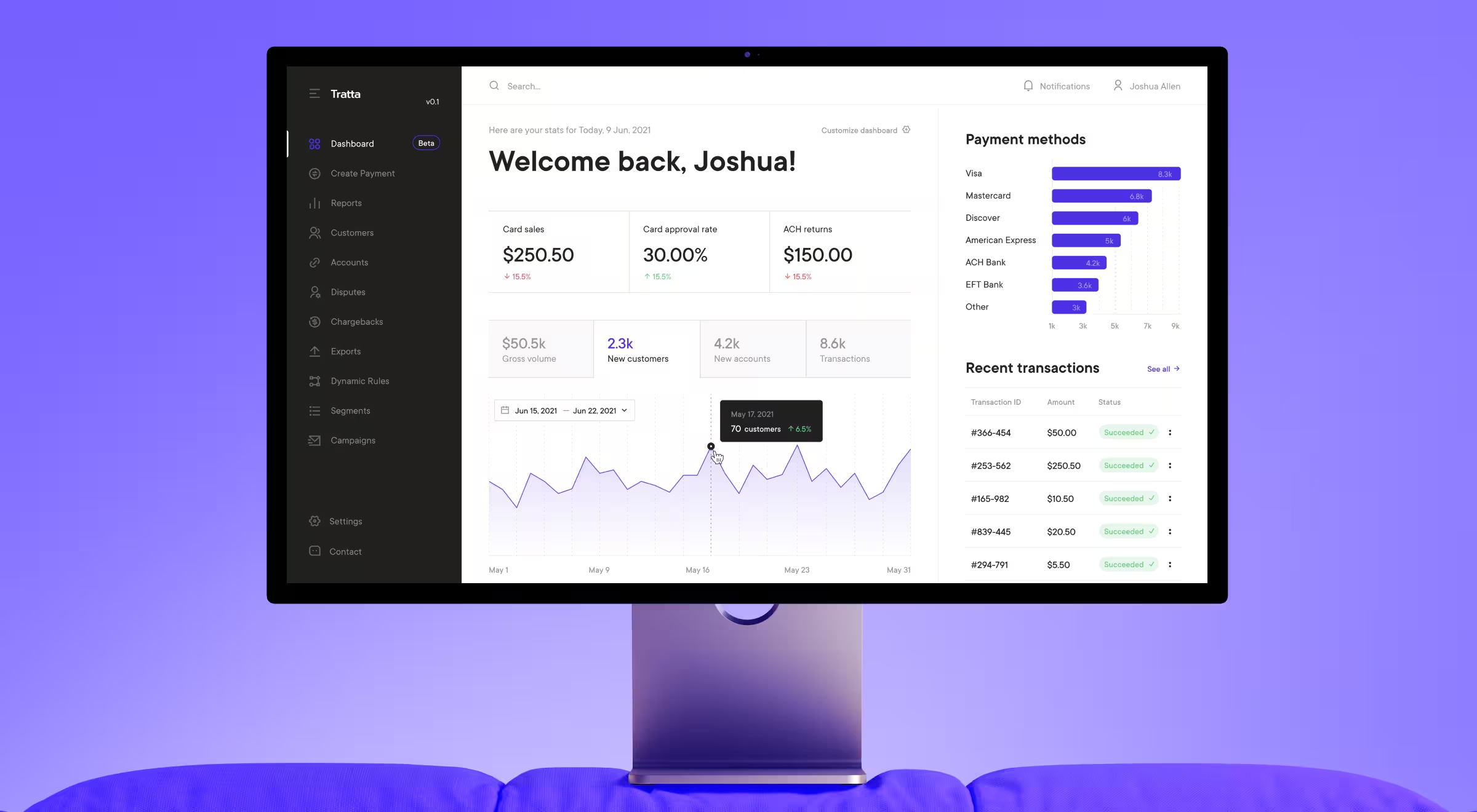
💡 Pro insight from Lazarev.agency: While redesigning Tratta’s debt collection platform, we prioritized user-controlled decision points. Our AI UX design team introduced clear transaction summaries, editable flows, and explicit confirmations as part of the platform revamp.
UX/UI design is a business liability
In 2026, weak UI and UX create real risk for SaaS businesses.
A scalable UX/UI strategy is one of the most reliable ways to reduce customer churn, optimize bounce rates, and compound user engagement over time.
When you look at the numbers, even modest gains matter. Harvard Business Review found that a 5% increase in retention can drive profit up by 25–95%. What often sounds like design talk is, in reality, operational leverage.
“UI design principles, alongside an actionable UX optimization framework, form the connective tissue of any successful digital product. UX defines intent and flow. UI makes that logic visible and usable. Together, they minimize cognitive load and keep users oriented as automation increases.”
{{Ostap Oshurko}}
When done well, UI and UX help users stay longer and trust the product enough to depend on it (in a productive sense). The trends in this cluster show how the strongest SaaS companies treat UI and UX as strategic assets.
4. Trust is the foundation
📢 Change: AI systems are moving from recommendation to independent (and at times fully autonomous) execution. Hence, users no longer judge software by outputs. In regulated domains, like finance and legal tech, users perceive unexplained automation as risk.
💻 Impact on product and UX: Interfaces must explain why actions were taken. Users need to understand why an action was taken, what inputs influenced it, and where responsibility lies if something goes wrong.
⏭️ What SaaS teams should do next: High-performing teams embed trust signals directly into core workflows. This includes contextual explanations, surfaced data sources, confidence indicators, and concise reasoning summaries at the moment decisions are made.
💡 Pro insight from Lazarev.agency: Take a look at Stripe Radar. Instead of silently blocking/approving payments, it shows risk scores and the specific rules behind each decision. That's how merchants understand why an action occurred.
5. Dashboards go adaptive and highly personalized
📢 Change: Static dashboards fail to serve multiple roles, goals, and maturity levels.
💻 Impact on product and UX: Interfaces dynamically adapt to user persona, that is, their role, behavior, and intent.
⏭️ What SaaS teams should do next: Build modular layouts with progressive disclosure. Let interfaces evolve as users gain confidence and take on more responsibility.
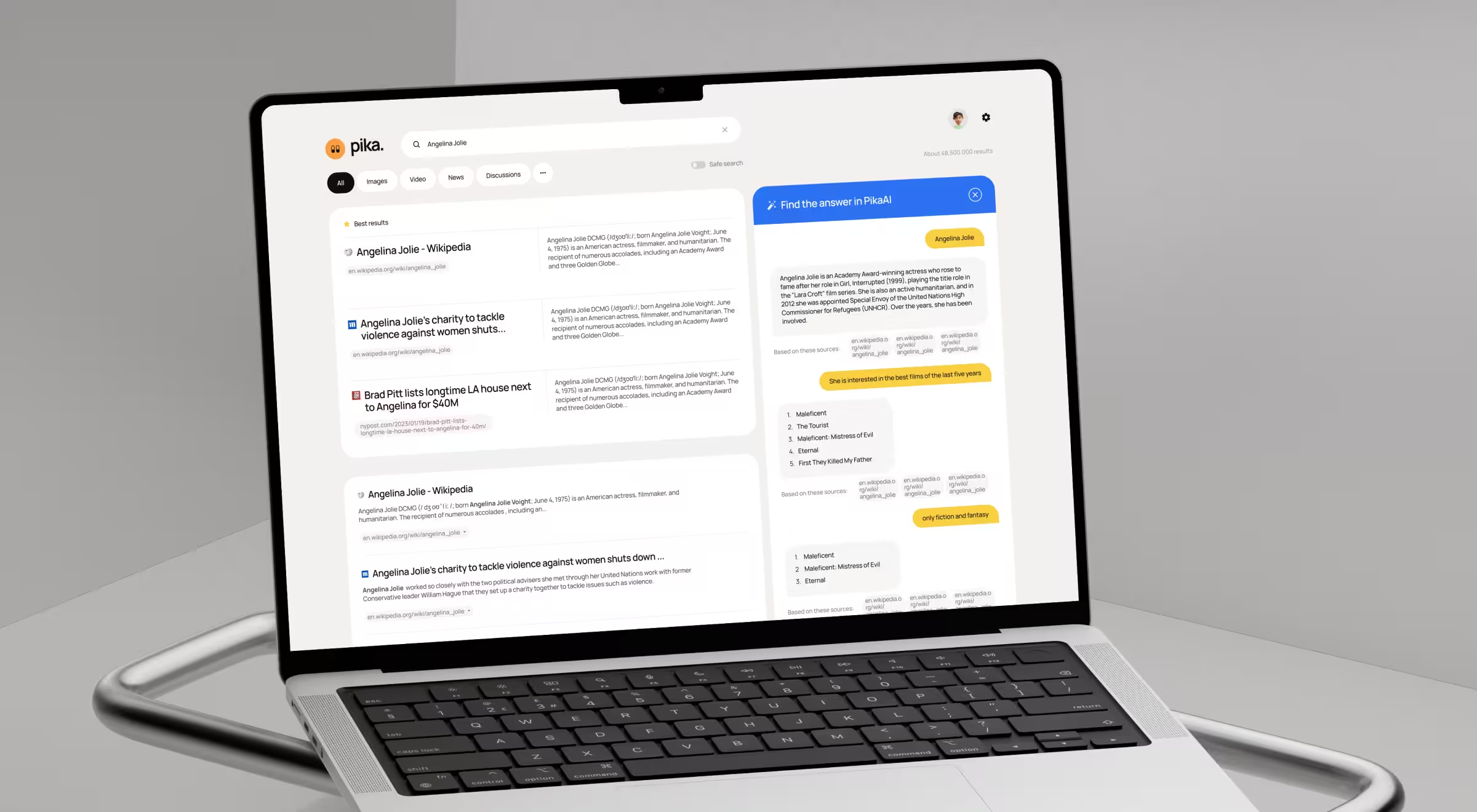
💡 Pro insight from Lazarev.agency: While working on Pika AI, we designed personalization as a structural system. Search results were reassembled in real time. The interface selected and reordered content blocks based on user intent and contextual relevance. Crucially, this personalization followed familiar search patterns (F-pattern layouts, block-based hierarchy) so users felt oriented.
6. SaaS funnel is a strategic UX loop
📢 Change: The traditional, linear SaaS sales funnel is breaking down. We’re shifting toward loop-based SaaS sales funnels, where acquisition, activation, retention, and loyalty are interconnected and continuously influence each other.
💻 Impact on product and UX: Onboarding, in-app guidance, personalization, trust cues, and retention mechanics form a single experience system. Poor UX at any stage silently drains trust across the loop, while strong UX reinforces momentum, confidence, and long-term engagement.
⏭️ What SaaS teams should do next: Design the funnel as a living product. Map every touchpoint, identify friction loops, and optimize UX based on activation, churn, and payback metrics. Explore our guide on how to ignite your SaaS sales funnel.
💡 Pro insight from Lazarev.agency: High-performing SaaS teams redesign user journeys holistically, using UX and AI-driven personalization to turn one-time conversions into recurring engagement.
Monetization is different
SaaS pricing models were built for a pre-AI world. That world is gone.
When one user plus AI can replace an entire team, seat-based pricing collapses. When usage directly triggers cost, barriers to onboarding become expensive overnight.
This cluster explores how monetization is transitioning from access to outcomes and why pricing and perceived value are now inseparable design problems.
7. Seat-based pricing models are obsolete
📢 Change: AI allows one user to perform the work of many, breaking the per-seat pricing model. Cost no longer correlates with headcount.
💻 Impact on product and UX: UX must surface value creation, be it through tasks completed, outputs generated, outcomes achieved, etc. This way, users can understand what they’re paying for.
⏭️ What SaaS teams should do next: Make value legible. The easiest way to think of this is to shift pricing dashboards from “users added” to “work delivered”.
💡 Pro insight from Lazarev.agency: Consider how Intercom transitioned from seat-based pricing toward conversation- and resolution-based models. Instead of charging per agent, Intercom prices based on outcomes such as the number of customer interactions. From a UX standpoint, this initiated a strategic dashboard redesign that surfaced value metrics (conversations resolved, time saved, automation coverage).
8. Product-led growth 2.0
📢 Change: Product-led growth (PLG) has outgrown its original definition. In PLG 2.0, growth comes from guided discovery of the product’s value. AI is a proactive agent. It leads users toward meaningful outcomes rather than waiting for them to figure things out on their own.
💻 Impact on digital product design and UX: Dashboards are onboarding entryways. The product interprets user intent, suggests next best actions, and removes unnecessary setup. PLG UX must be opinionated, directional, and outcome-focused.
⏭️ What SaaS teams should do next: Design onboarding as execution. Replace tours with pre-configured states, smart defaults, and AI-driven prompts that help users achieve a tangible win in their first session.
💡 Pro insight from Lazarev.agency: A strong example of PLG 2.0 is Notion. The platform detects use cases, suggests templates, auto-structures content, and nudges users toward finished systems within minutes.
SaaS market re-segments
The era of “one tool for everyone” has crossed the finish line.
SaaS buyers are cutting their software stacks and favoring tools that speak their industry’s language out of the box. Vertical SaaS, focused micro-tools, and consolidation are reshaping how products compete.
The trends in this section explain how market structure itself is changing and what that means for your product vision and product strategy.
9. Vertical SaaS pulls ahead
📢 Change: Horizontal SaaS products are built to serve many industries at once. Think of CRMs, project management platforms, or analytics dashboards. In parallel, vertical SaaS serves a single industry or a tightly defined market. These products embed industry-specific logic, regulatory constraints, and best-practice workflows directly into the system.
💻 Impact on product and UX: Generic UX patterns fail in regulated and specialized environments. Domain-accurate design is what SaaS players are after.
⏭️ What SaaS teams should do next: Design around domain logic first, UI conventions second.
💡 Pro insight from Lazarev.agency: Platforms like Veeva Systems (life sciences) or Toast (restaurant management) win because their UX adapts to how users already work. These products are highly intentional and shaped by the best practices in the SaaS industry. That’s why vertical SaaS companies convert faster and onboard way smoother.
10. SaaS consolidation accelerates
📢 Change: Companies actively reduce SaaS sprawl to cut costs. Budget pressure, security risk, and operational overhead are forcing teams to reduce vendor count and favor platforms that replace multiple tools.
💻 Impact on product and UX: Standalone tools must prove value immediately or integrate deeply.
⏭️ What SaaS teams should do next: Design with consolidation in mind. Prioritize API-first architecture, native integrations, and clear value narratives.
💡 Pro insight from Lazarev.agency: Platforms like Salesforce or HubSpot survive consolidation because they either replace entire toolchains or connect deeply across them. UX is critical here. Why? Because the easier it is to integrate and demonstrate actual value, the harder it is to remove the SaaS product.
11. API-first architecture is a deal-breaker
📢 Change: The average mid-size company runs 100+ SaaS tools. Buyers increasingly reject platforms that don’t integrate cleanly into their existing stack. API-first design has evolved into a commercial requirement. At the same time, composable SaaS architectures where capabilities are modular and extensible are replacing rigid, monolithic platforms.
💻 Impact on product and UX: APIs shape UX decisions. Integration setup, permissions, and data flow visibility become first-class interface concerns.
⏭️ What SaaS teams should do next: Design integration UX with the same care as core workflows. Assume your product lives inside a larger system.
💡 Pro insight from Lazarev.agency: Take Segment. The tool’s value proposition lies in a clear API layer paired with a UX that makes data flows understandable. Users don’t need to guess which integrations are active or what breaks downstream.
12. Micro-SaaS survives on precision
📢 Change: As we’ve seen from the trends above, SaaS markets mature and consolidate. Small products can compete only by doing one thing exceptionally well. Micro-SaaS succeeds where focus is ruthless, scope is narrow, and value is immediate.
💻 Impact on product and UX: UX must reinforce singular purpose. Over-design and the so-called feature creep dilute value. The strongest micro-SaaS interfaces must feel almost obvious: few screens, optimized user flows, and zero ambiguity about what the product is for.
⏭️ What SaaS teams should do next: Optimize for speed and minimal scope. Remove secondary features.
💡 Pro insight from Lazarev.agency: Products like Plausible and Tally grew by resisting expansion. They took research and strategy to the next level and managed to out-focus their competitors. Their UX makes the value proposition self-evident within seconds.
Speed wins and metrics show it
How fast did I get value?
This single question now defines the entire tone of your users’ feedback.
Time-to-value has overtaken feature depth, roadmap size, and even brand reputation as the primary success metric. MVP cycles are shrinking, and users expect software to complete work.
This cluster focuses on why “getting to the first win” is now the most important UX moment you design.
13. Time-to-value is the key to customer retention
📢 Change: User retention is now decided in the first session. With switching costs low and alternatives abundant, users don’t wait to figure things out. If tangible value doesn’t appear quickly, they leave for good.
💻 Impact on product and UX: Confusing onboarding, empty dashboards, and delayed gratification kill adoption. UX must compress the journey from signup to first meaningful outcome. Speed beats completeness.
⏭️ What SaaS teams should do next: Design guided experiences that lead users to their first win immediately.
💡 Pro insight from Lazarev.agency: Slack reduces time-to-value by dropping users directly into a usable environment. Value comes before explanation, and only then does retention follow.
14. MVP cycles collapse
📢 Change: Twelve-month MVP timelines no longer survive market pressure. SaaS teams are expected to validate, iterate, and launch within 3–4 months while still making decisions that won’t derail the SaaS product roadmap 6 months later.
💻 Impact on product and UX: Early UX decisions shape scalability and technical debt long-term. A rushed interface can lock teams into expensive rewrites later, while a well-designed MVP accelerates every release after.
⏭️ What SaaS teams should do next: Build a scalable SaaS MVP design.
💡 Pro insight from Lazarev.agency: Linear launched with a system-driven UI that grew without redesign. It teaches us a valuable lesson that MVP speed doesn’t excuse sloppy UX. Instead, it demands disciplined UX.
15. Metric-driven strategy for SaaS growth
📢 Change: B2B SaaS teams are moving away from intuition-led decision-making toward benchmark-driven SaaS strategy. Sustainable growth and operational efficiency mean teams have to rely on tightly scoped benchmarks such as average contract value (ACV) and go-to-market motion to understand what “good” means for their business.
💻 Impact on product and UX: Product and UX decisions are now expected to move specific metrics, e.g., net revenue retention, CAC payback, churn, and time-to-value.
⏭️ What SaaS teams should do next: Design journeys directly against benchmark gaps. If net revenue retention (NRR) lags, shorten activation. If CAC payback is long, accelerate first value. Let benchmarks define UX priorities.
💡 Pro insight from Lazarev.agency: Benchmarks determine what your product’s design should focus on. High-performing SaaS teams use data to decide where to intervene and UX to decide how to move that metric.
Design a SaaS product for 2026 and beyond with the right partner
SaaS market growth in 2026 follows three rules. Miss one, and the product stalls.
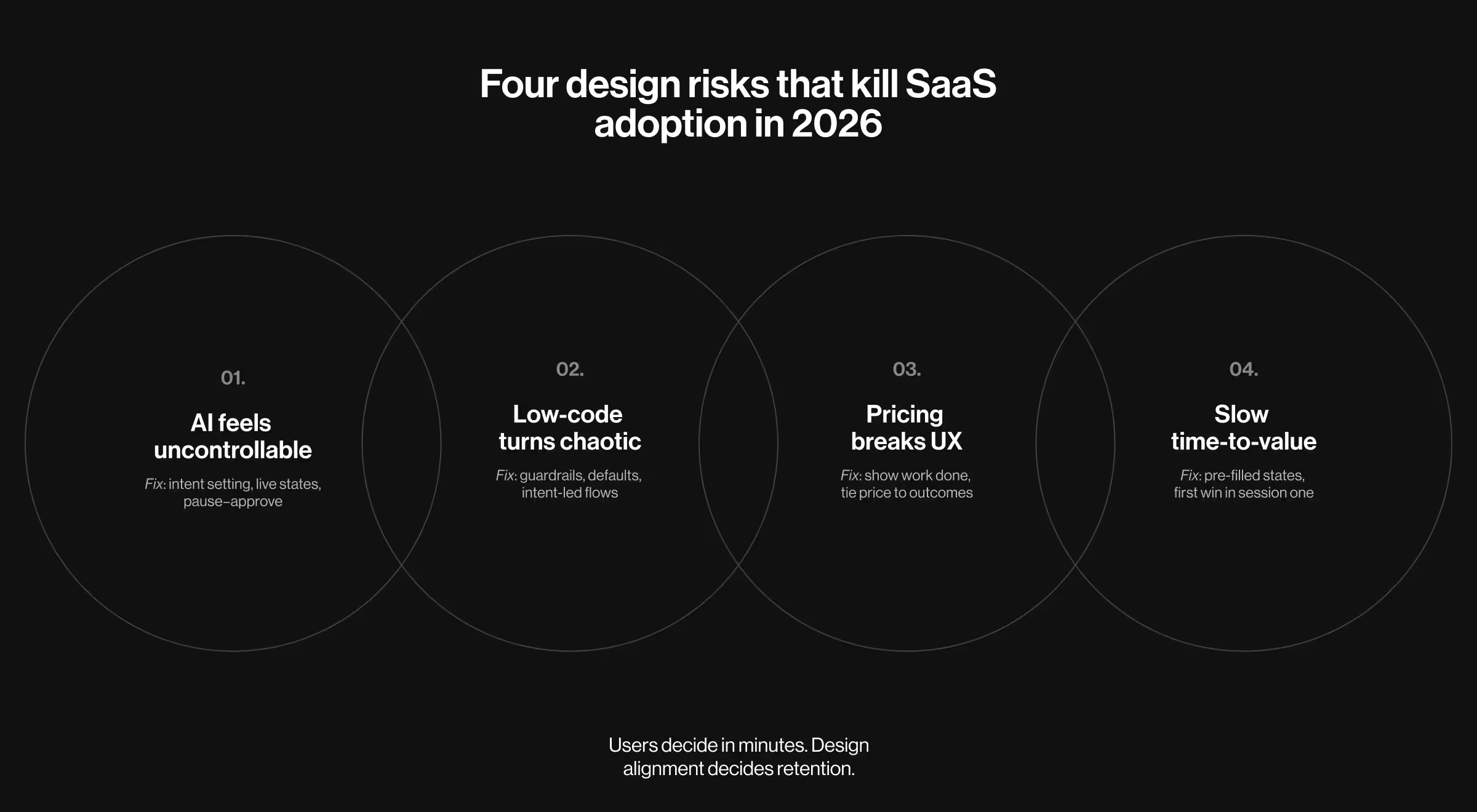
- AI agents now complete work instead of suggesting it. Interfaces must show progress and control, or users won’t trust AI driven automation long enough to rely on it.
- Cloud-native platforms live inside dense SaaS ecosystems. If integration is brittle, the product gets replaced.
- UX systems built around user intent and trust outperform conventional design patterns.
This level of execution is hard to improvise.
That’s where a partnership with a strategic SaaS design agency comes in. At Lazarev.agency, we help teams design AI-native MVPs, growth-ready UX systems, and product experiences resilient to pressure.
Get in touch to see how your SaaS product can outpace the competition in 2026.

.avif)