
Securing a strong partnership with a design agency is one of the most critical decisions a product-driven business can make. Yet many organizations approach agency selection with little structure or strategic thinking.
A rigorous evaluation process entails a few equally important steps. It begins with assessing whether the agency understands the dynamics of your domain. From there, attention shifts to how the agency organizes design work and which specialists will be responsible for your product.
Overlooking any of these steps leads to an ill-fitted partnership that impedes your business growth. In parallel, when the match is right, a design partner becomes a reliable extension of the product team.
In this guide, we look at how experienced product teams assess design partners and what signals indicate a strong fit.
Key takeaways
- The right design partner depends on your product. Freelancers fit short tasks, agencies handle complex product design, and consultancies serve enterprise-scale initiatives. The correct choice depends on scope and operational demands.
- Strong agencies show operational maturity. Evaluate process transparency, team composition, communication discipline, and specialization before committing to a partnership.
- Use a structured selection framework. Lazarev.agency’s framework — Research → RFI → Proposal → Questions → References → Trial → Decision — provides a disciplined way to compare agencies and reduce the risk of an unfitting partnership.
Does having a UX design partner matter?
If you’re actively looking for a design partner, you’ve already acknowledged the impact of UX design (should you not have done that yet — here’s our Lead Designer’s playbook on how to measure the ROI of UX design).
The estimated numbers must have been convincing. Because the market statistics are:
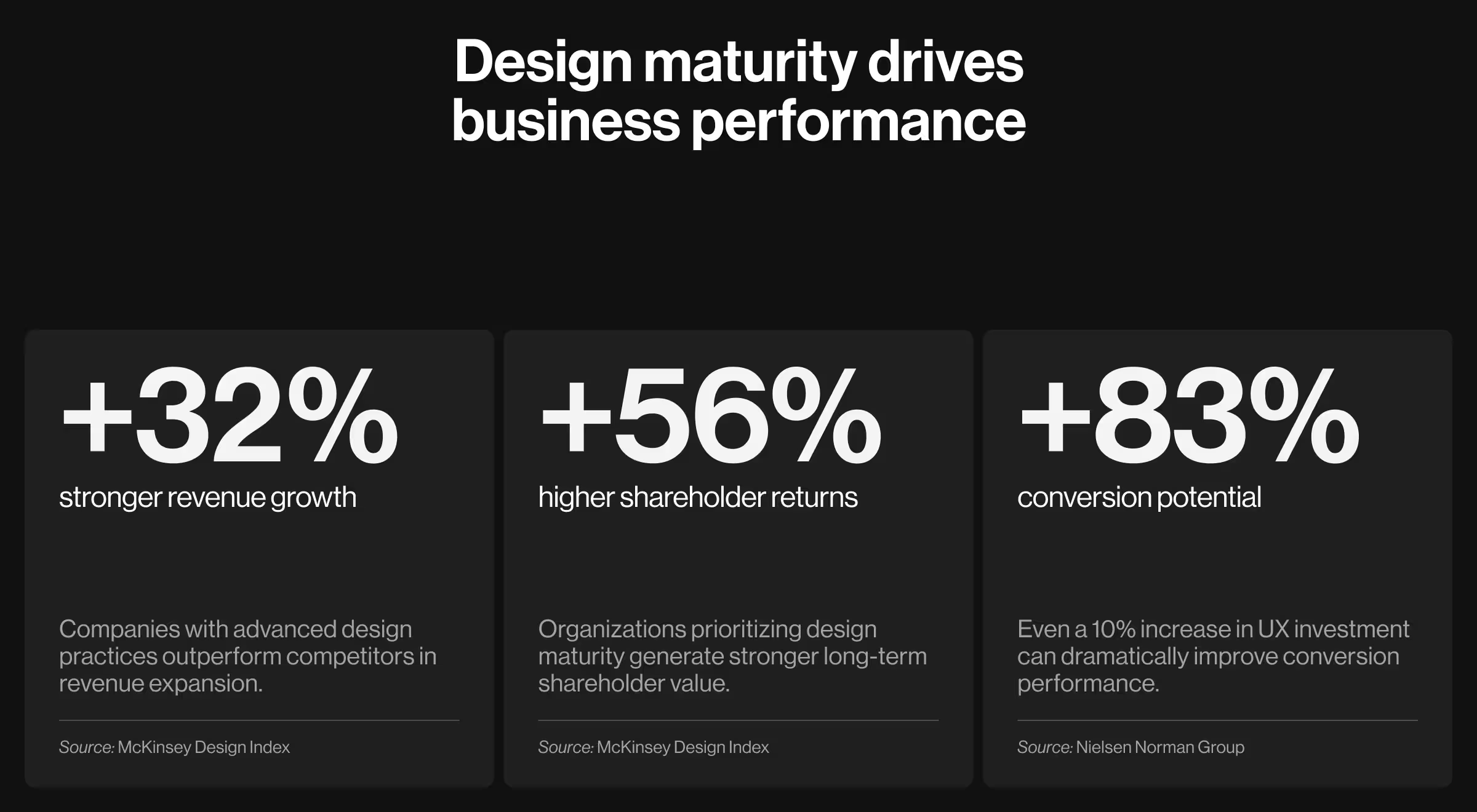
- Design maturity helps outperform competitors. Companies ranking high on McKinsey & Company’s Design Index recorded 32% stronger revenue growth and 56% higher shareholder returns over five years.
- Marginal UX improvements scale considerably. Nielsen Norman Group reports that a modest 10% increase in UX budget can lift conversions by as much as 83%.
If UX carries this level of business impact, how should you resource it? Build in-house? Work with freelancers? Or bring in an agency?
When to hire an agency vs. alternatives
“Design support comes in many forms. We’ve seen companies succeed with in-house teams, freelancers, and agencies. The key question is not which option is ‘best’ (because ‘best’ is contextual), but which one matches the scale and structural complexity of your product.”
{{Kirill Lazarev}}
Different businesses require different levels of design involvement. A founder building a SaaS MVP is probably looking for a swift time to market. A scaling product company needs something else: systems and design operations that perform well under pressure. Enterprise platforms thrive with multidisciplinary teams working side by side with internal stakeholders.
Understanding these strategic variations helps determine what kind of design partner fits your unique product and business context best: an individual contributor, a boutique design agency, or a considerably larger consulting organization.
Here’s what this comparison tells us:
- Early-stage startups often outsource design work to freelancers. However, many acknowledge the benefits of partnering with a boutique agency early on. Agencies provide structured product design expertise that founders need to shape the product foundation more deliberately.
- Scaling product companies frequently find boutique agencies to be one of the most effective partners. At this stage, products require a strategic design system audit and coordinated UX model. These are the services that design agencies deliver, so you don’t have to build a full in-house design team.
- Large enterprises engage with consultancies or specialized agencies when initiatives involve large ecosystems or strategic digital transformation programs.
- In-house teams are invaluable when design work is deeply embedded in the product development cycle.
What to look for in a design agency: 7 criteria worth considering
Let’s assume you’ve already decided to work with a design agency.
The next challenge is choosing one that can support your product beyond the first release.
Not all agencies solve the same problems. Some focus on marketing campaigns, while others specialize in building AI-first digital products. Selecting the right partner means evaluating several dimensions: relevant experience, team composition, process maturity, and collaboration style.
🔍 Explore our hub for the full breakdown of how to hire a design agency like a pro.
Below are 7 criteria experienced product teams consider before committing to a design partner.
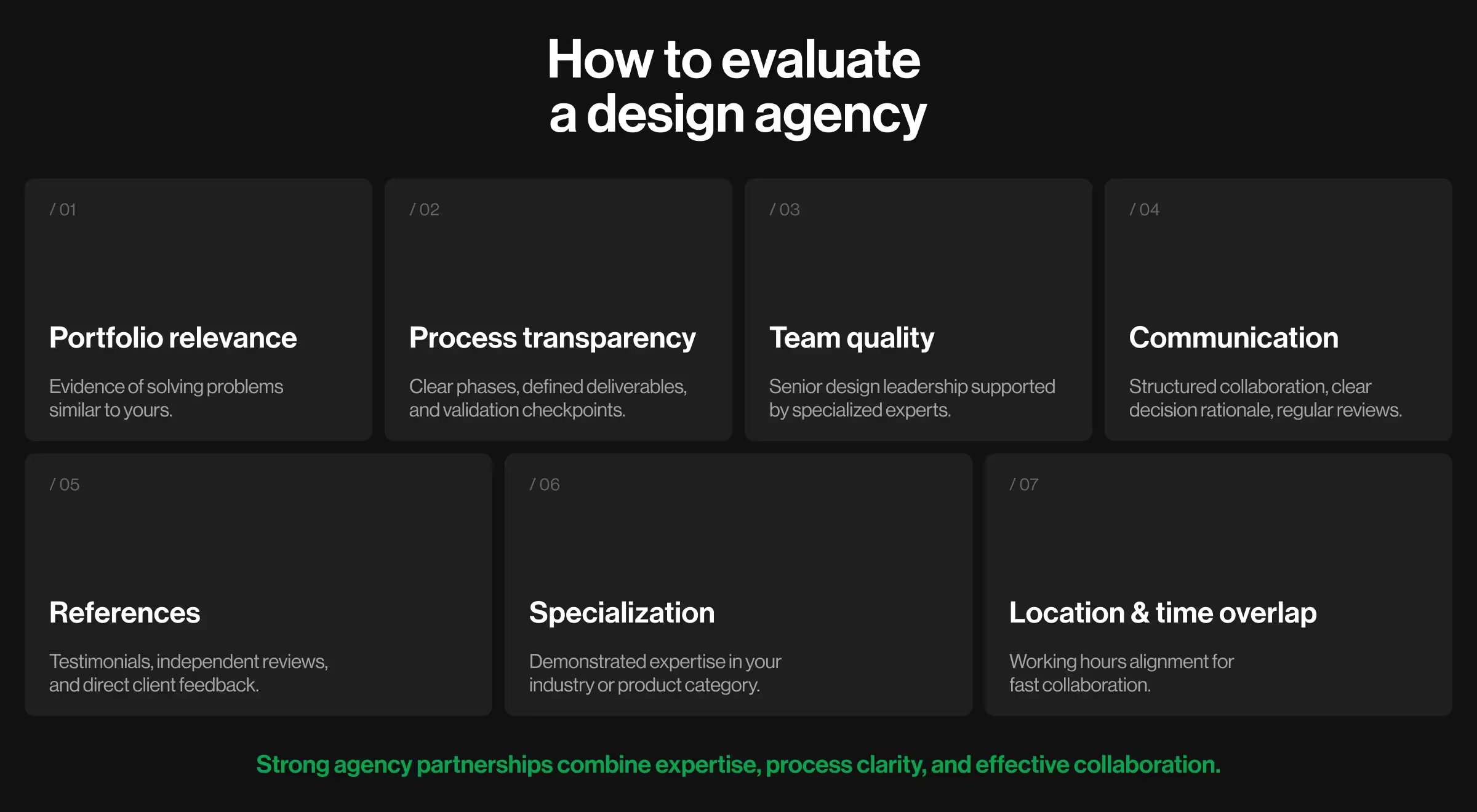
1. Portfolio relevance
A portfolio shows you the types of challenges the agency has handled before. Remember that case studies should reveal more than interface layouts. They should clearly articulate the business challenge, the product context, and the reasoning behind design decisions.
Look for:
- Projects in similar industries or adjacent product categories
- Evidence of solving problems comparable to yours
- Detailed case studies describing product context, selected approach, the rationale behind it, and design impact
2. Process transparency
Design quality depends on how the work is organized. An agency should be able to describe how projects transition from discovery through implementation, and a clear product discovery process is often the strongest signal of mature practice. This includes the methods used for UX research and strategy, concept development, prototyping, and stakeholder collaboration.
Indicators of strong process transparency:
- Clearly defined project phases
- Specific deliverables for each phase
- Defined checkpoints for stakeholder input
- Evidence of iteration and validation
3. Team quality
By and large, design projects are multidimensional. That’s why they call for a combination of strategic direction and detailed execution across distinct design dimensions.
A well-composed team includes seasoned design leadership supported by specialists experienced in interaction design, design systems, and R&D. Agencies should explain who will be involved in your project, why, and what responsibilities each professional will carry.
Pay attention to:
- Seniority of the design lead responsible for the project
- Presence of specialists suited to the scope of the product’s complexity
- Stability of the agency’s core team, including specialized roles such as an AI UX designer, when products lean on AI features
4. Communication
Product design requires constant dialogue between the client team and the agency. Communication during early discussions often predicts how collaboration will look later.
Strong prospects respond promptly to your questions (even encourage transparent Q&A sessions) and establish structured communication routines from the very first interaction.
Signs of effective communication:
- Ability to discuss design decisions in business terms
- Structured meeting cadence and milestone reviews
- Transparent documentation of decisions and progress
5. References
Before choosing a design partner, examine the evidence they leave behind.
Start with public signals: testimonials on the agency’s website and reviews on platforms such as Clutch. While these sources won’t tell you everything, they reveal patterns — how the agency approaches design work, and how it shows up when projects get difficult.
Still, curated praise has limits. Speaking directly with former clients gives a glimpse into real-life partnership dynamics.
When evaluating references, consider the following:
- Website testimonials — look for detailed feedback describing the collaboration.
- Independent review platforms — examine patterns across reviews.
- Case study client quotes — assess whether the feedback displays real product challenges and outcomes.
- Direct conversations with past clients — the most informative method when possible.
6. Specialization
Some agencies operate broadly across many design disciplines. Others focus specifically on a niche design domain.
Specialization often equates to deeper expertise. Agencies that repeatedly work with fintech platforms, SaaS products, or AI systems tend to understand the constraints and expectations associated with those industries.
Indicators of specialization:
- Consistent industry patterns in the portfolio
- Published thinking around particular product categories
- Repeat engagements with similar companies
7. Location
Modern design teams are global by default. Geography is no longer the barrier it once was. Time, however, still is.
When teams share meaningful overlap in working hours, questions get answered immediately, and decisions happen on the same day.
Consider:
- Overlapping work hours for meetings and workshops
- Communication tools and infrastructure for remote collaboration
- Cultural familiarity with international teams
8. Price
Price should reflect the scope of work and the expertise involved. Agencies offering unusually low estimates may lack senior expertise. At the same time, extremely high costs should be justified by the scope of the services provided.
Evaluate pricing through the lens of value rather than simply comparing hourly rates.
Look for:
- Transparent cost breakdowns
- Defined deliverables associated with each phase
- Alignment between pricing and team expertise
Red flags to avoid when committing to a design partnership
Certain behaviors during the evaluation stage signal problematic partnerships. Recognizing these early can prevent disruptions down the line.
The following signals appear before contracts are signed. Paying attention to them reduces the risk of difficult engagements later.
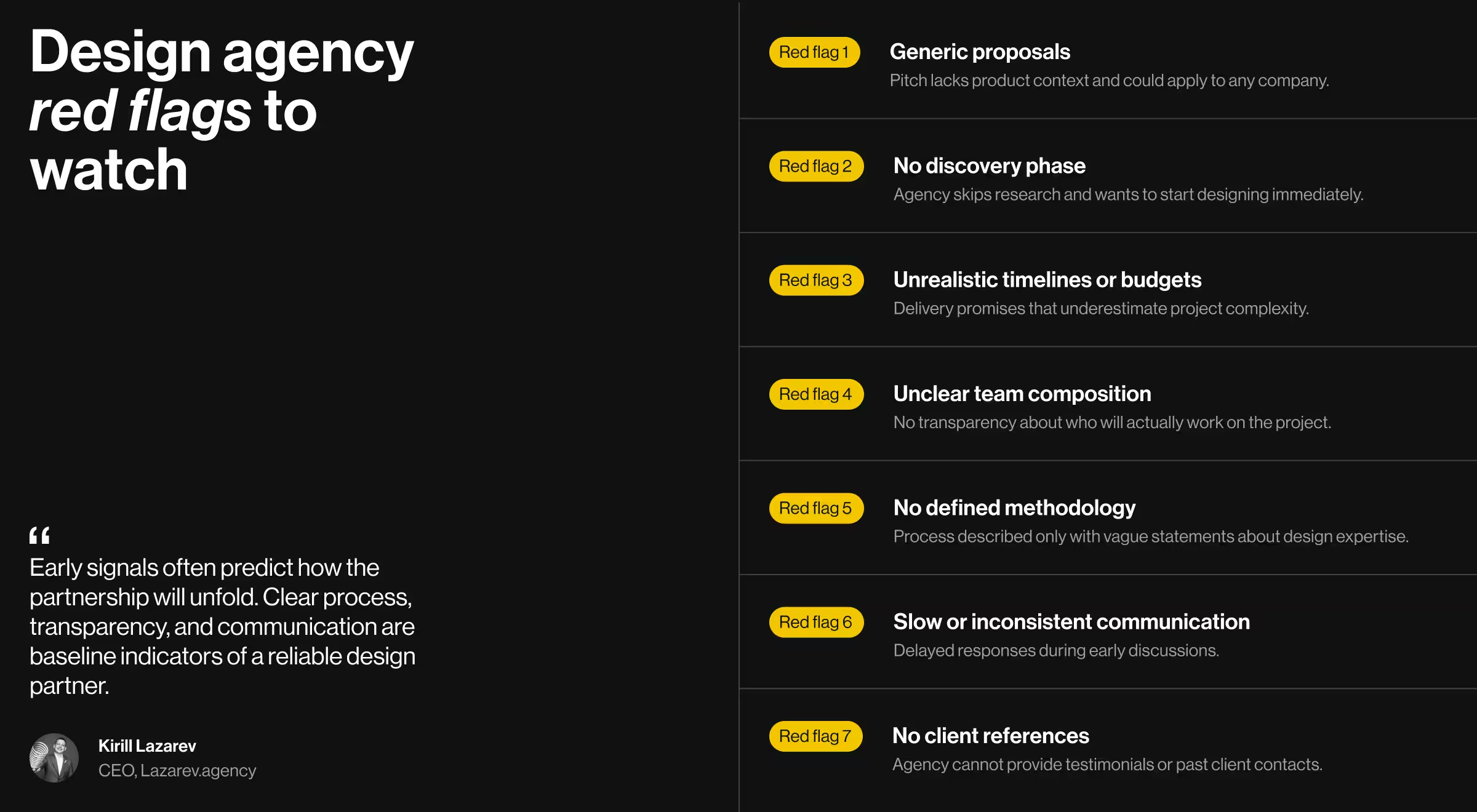
Common warning signs:
- Generic proposals that could apply to any company with minimal reference to your product.
- Refusal to conduct discovery and user research, suggesting the agency intends to begin designing immediately without understanding the context.
- Unrealistic timelines or budgets, indicating underestimation of project complexity.
- Unclear team composition, where the agency avoids specifying who will work on the project.
- Lack of methodology, with explanations limited to general statements about design capability.
- Slow or inconsistent communication during early conversations.
- Inability to provide references from previous clients.
The selection process framework
Choosing a design partner gets significantly easier when the evaluation process follows a clear structure. Without a methodology, companies often rely on subjective impressions or persuasive presentations.
Based on years of collaboration with technology companies, our team recommends the following framework for selecting design partners.
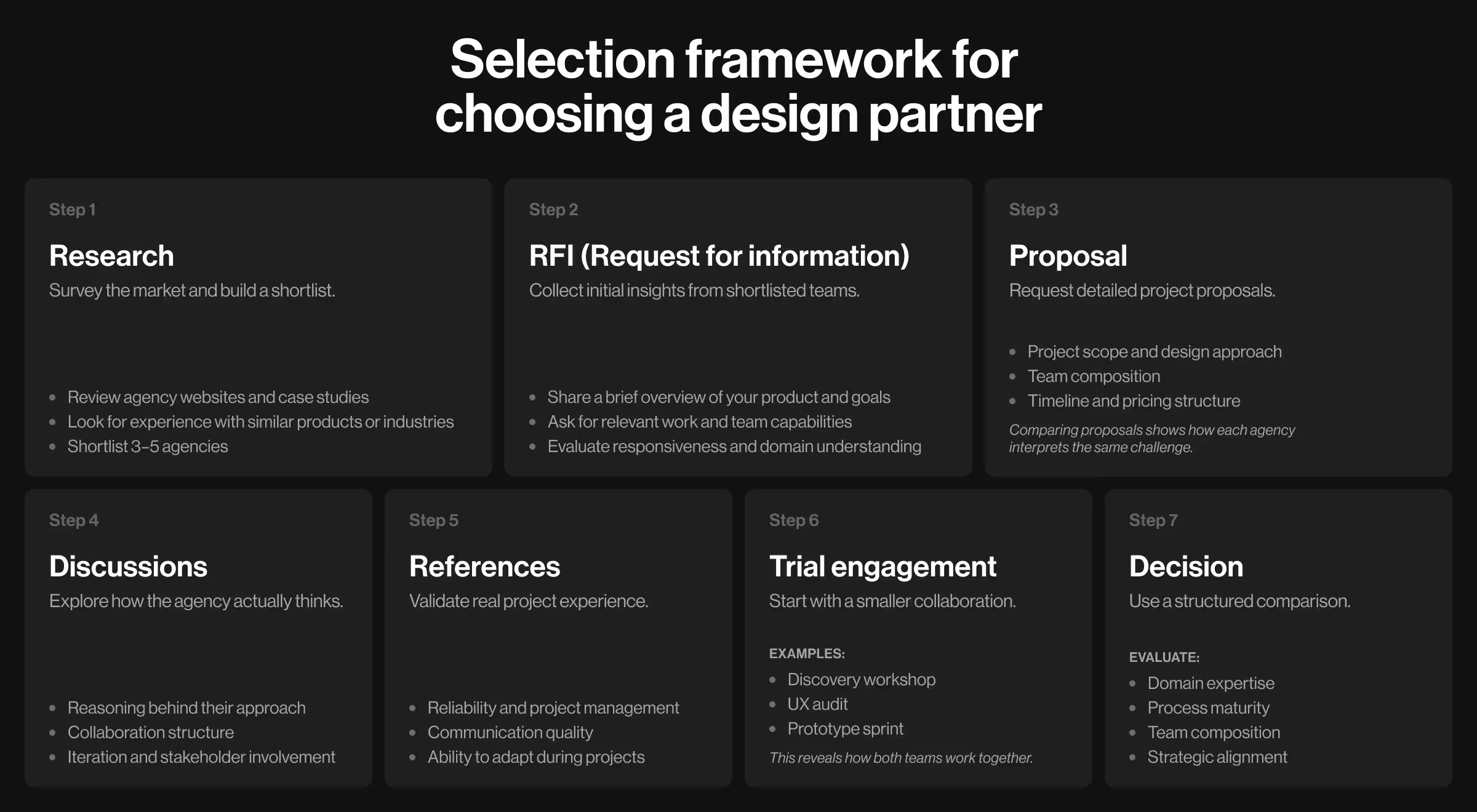
Step 1. Research
Begin by surveying what’s out there.
- Review agency websites and published case studies
- Identify firms working with similar products or industries
- Assemble a shortlist of 3–5 agencies
This stage focuses on filtering the market before initiating conversations.
Step 2. RFI (request for information)
A request for information helps gather initial insights from shortlisted agencies.
- Provide a brief overview of your product and objectives
- Ask agencies to share relevant work and team capabilities
- Evaluate responsiveness and domain understanding
This step identifies which candidates warrant deeper discussions.
Step 3. Proposal
Invite selected agencies to prepare detailed proposals. A well-prepared proposal should include:
- Project scope and design approach
- Description of the team involved
- Timeline and pricing structure
Comparing proposals reveals how each agency interprets the same challenge.
Step 4. Questions
Conduct discussions with each agency to explore their thinking in greater depth. Focus on:
- Their reasoning behind the proposed approach
- How collaboration will be organized
- How they handle iteration and stakeholder input
These conversations often reveal differences that proposals alone cannot show.
Step 5. References
Contact previous clients to understand how the agency operates in practice. Ask about:
- Reliability and project management discipline
- Communication quality
- Ability to adapt to evolving project requirements
References often confirm whether the agency performs consistently under real conditions.
Step 6. Trial or consultation
Before committing to a large engagement, many companies begin with a smaller collaboration. Examples include:
- A paid discovery workshop
- A brief design audit
- A limited prototype engagement
This stage allows both teams to evaluate working dynamics before moving forward.
Step 7. Decision
Finally, compare candidates using a structured evaluation matrix. Consider:
- Domain expertise and process maturity
- Team composition and communication style
- Overall alignment with your product strategy
Questions to ask before hiring a design agency
The success of your design partnership hinges on aligned expectations.
✅ The following questions will help you uncover whether you are on the same wavelength with your prospective partner:
- How do you approach projects similar to mine?
- Can you share references from clients with comparable products or from similar industries?
- How do you handle situations where the project direction changes?
- How do you evaluate the efficacy of the design? What metrics do you pay attention to?
- What are your bullet-proof UX design methods for building effective product strategies?
- Do you provide support after delivery?
- How does your team stay current with developments in digital product design?
Design partnerships deserve the same rigor as product decisions
Strong design partnerships start with a strategic assessment of an agency’s experience and working methodology. Companies that invest time in this process set the foundation for successful collaboration.
Over more than a decade of designing digital products across fintech, adtech, edtech, and AI-first products, our team has seen one consistent pattern: the quality of the partnership often determines the quality of the outcome.
If you are evaluating design partners or preparing for a product initiative, explore the results we delivered to our clients.
Get in touch to discuss how our approaches to digital product design and strategic AI UX collaboration might benefit your digital product.
.avif)