How Dash’s platform redesign helped brokers market listings faster and win more deals
Project:
the project
From scattered marketing tasks to one revenue engine
In real estate, the broker who markets a listing fastest wins the next mandate. But this edge leaks away in logistics: brochures in one folder, floor plans in another, social posts in a third, buyer replies in a fourth. Every hour spent assembling a campaign by hand is an hour a rival listing reaches buyers first.
Dash was conceptualized as an all-in-one proptech platform: gather every property asset, shape it into ready-to-publish campaigns, send it to every channel, and track what performs. The capability was there, but a crowded interface slowed brokers juggling many listings at once.
Dash partnered with Lazarev.agency to fix that. We rebuilt the product to shorten the path from new listing to live campaign, keep deals moving on-platform, and let brokers run a full marketing operation without adding headcount.

The Project’s
Discovery Phase
A consistent interface brokers trust
When the Dash team first reached out to us, the platform’s mismatched layouts and crowded screens slowed users down and cast doubt on the numbers they meant to act on.
We gave Dash a unified design system across both web and mobile: shared navigation, repeatable components, and a clear visual hierarchy with an uncluttered structure.
The platform feels credible and dependable from the first screen, which, in turn, earns the steady daily use a marketing tool needs before it pays off.
10 design system companies behind enterprise-grade UX
A dashboard structured as a centralized marketing control center
When approvals, publishing status, and channel performance live in separate corners of a product, brokers waste the start of every day reconstructing where things stand.
We rebuilt the dashboard as a command center. On one screen, a broker lands on unread messages, live performance across connected channels, counts of active listings and posts already shared, the listings most recently promoted, and the latest documents.
Brokers see what needs attention and take action without hunting, so more listings get worked each day, and fewer campaigns are put on hold.
Dashboard UX design: how to turn raw metrics into clear-cut decisions
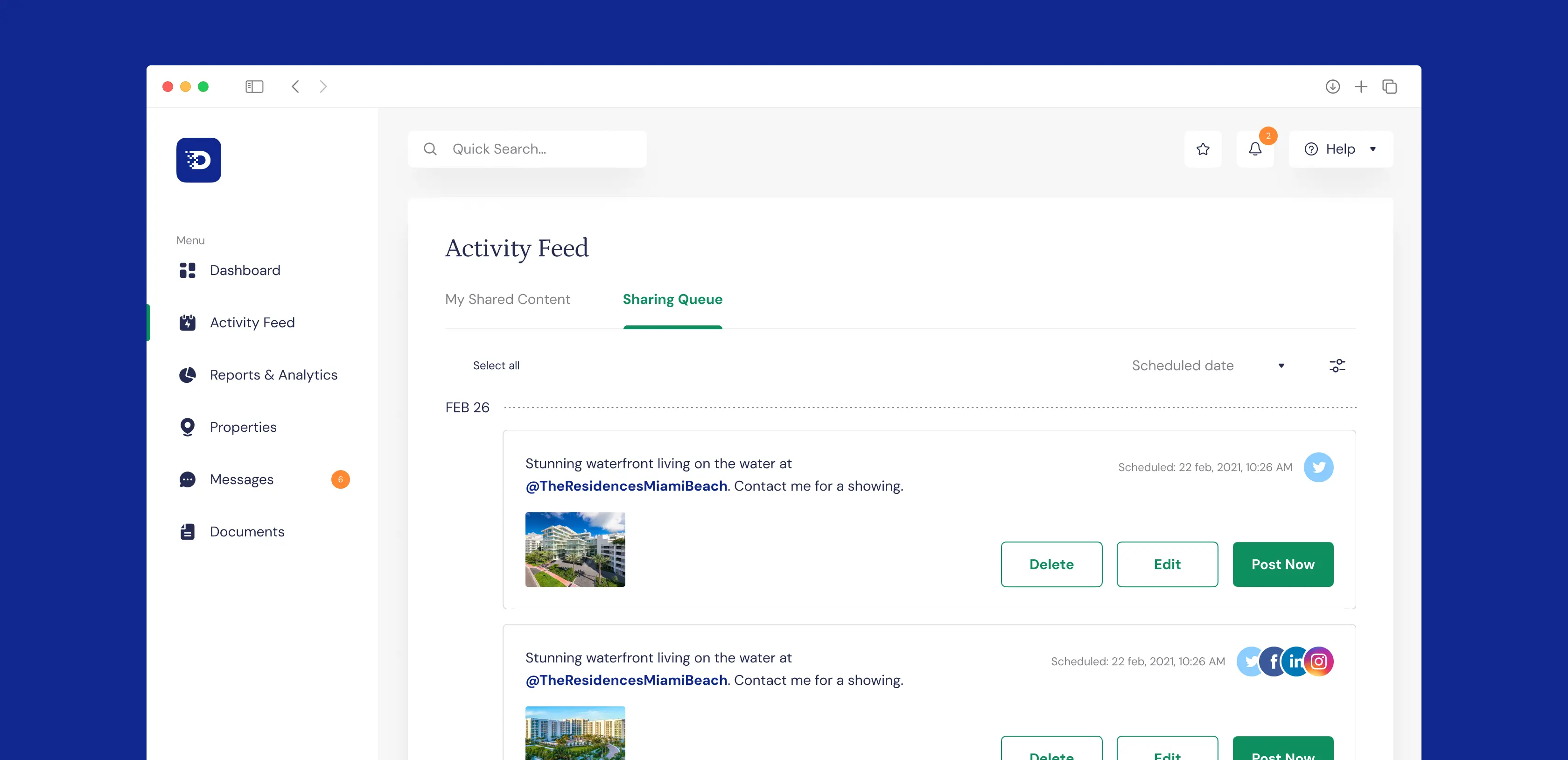
One feed to follow every post from draft to live
Brokers running campaigns across several networks lose track of what is published, what is scheduled, and what is still waiting.
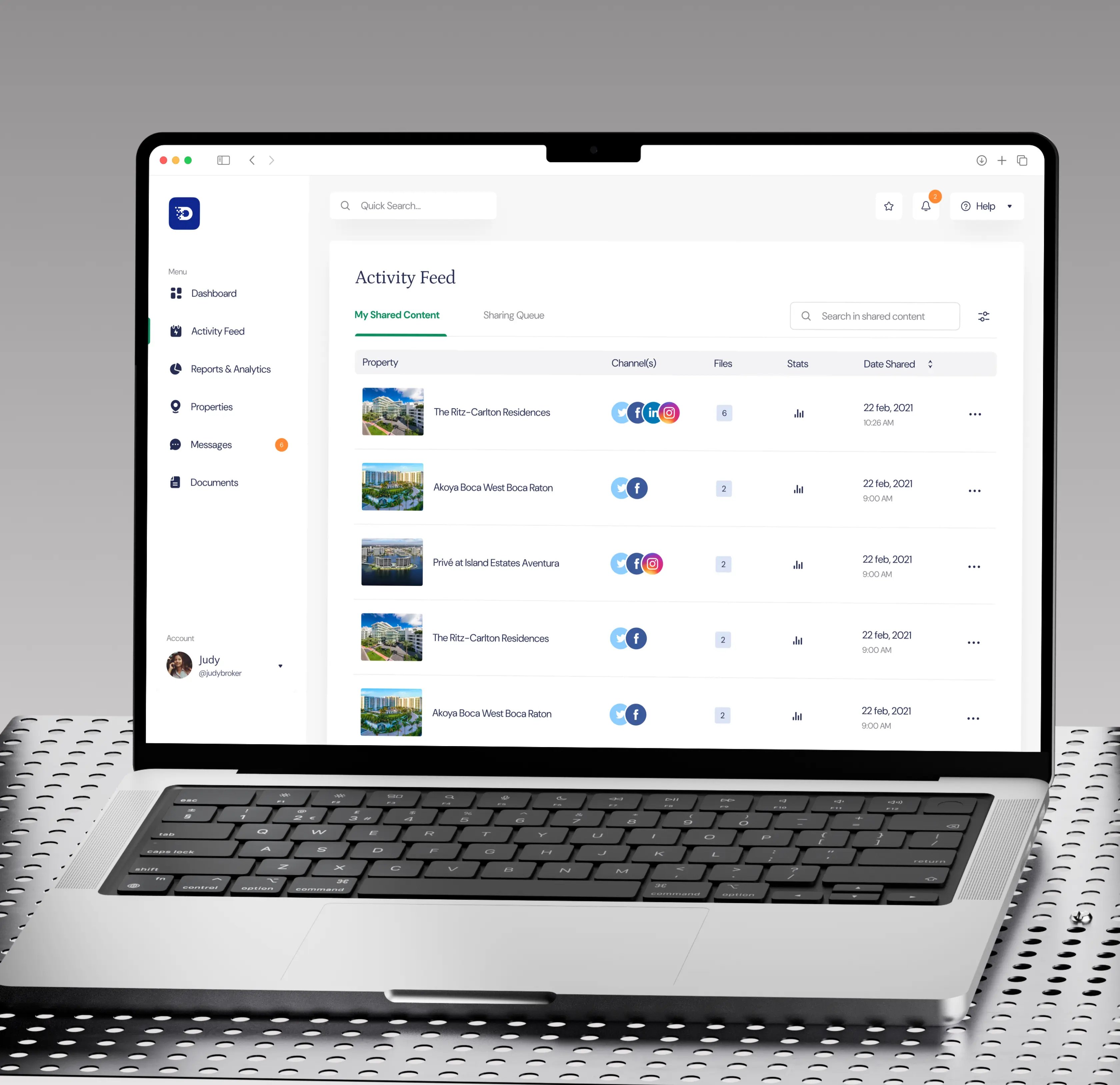
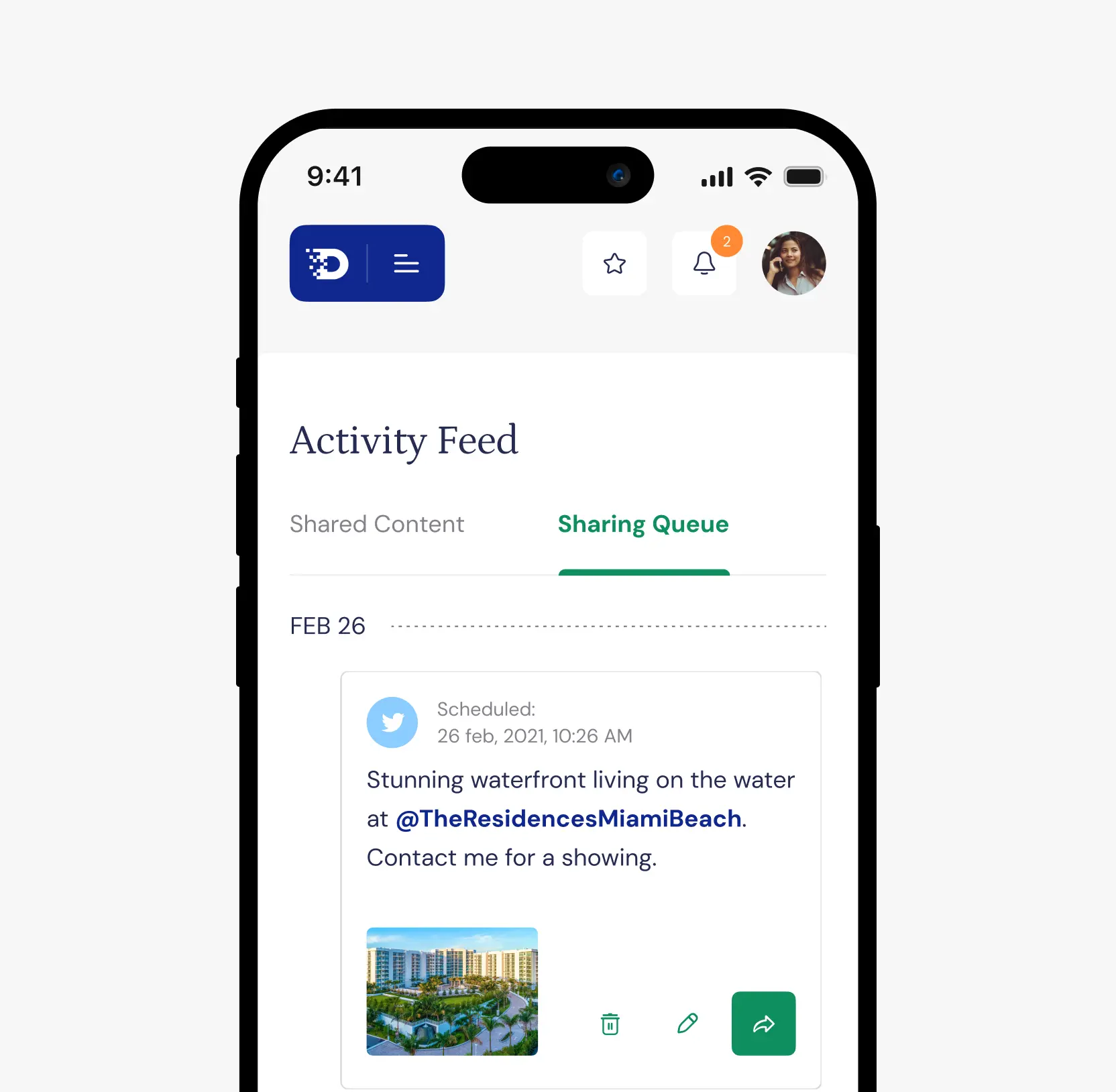
We split the activity feed into shared content and a sharing queue. Each item shows its channels, its scheduled time, and inline controls, with content grouped by state so nothing sits in limbo.
Faster listing setup, fewer idle days
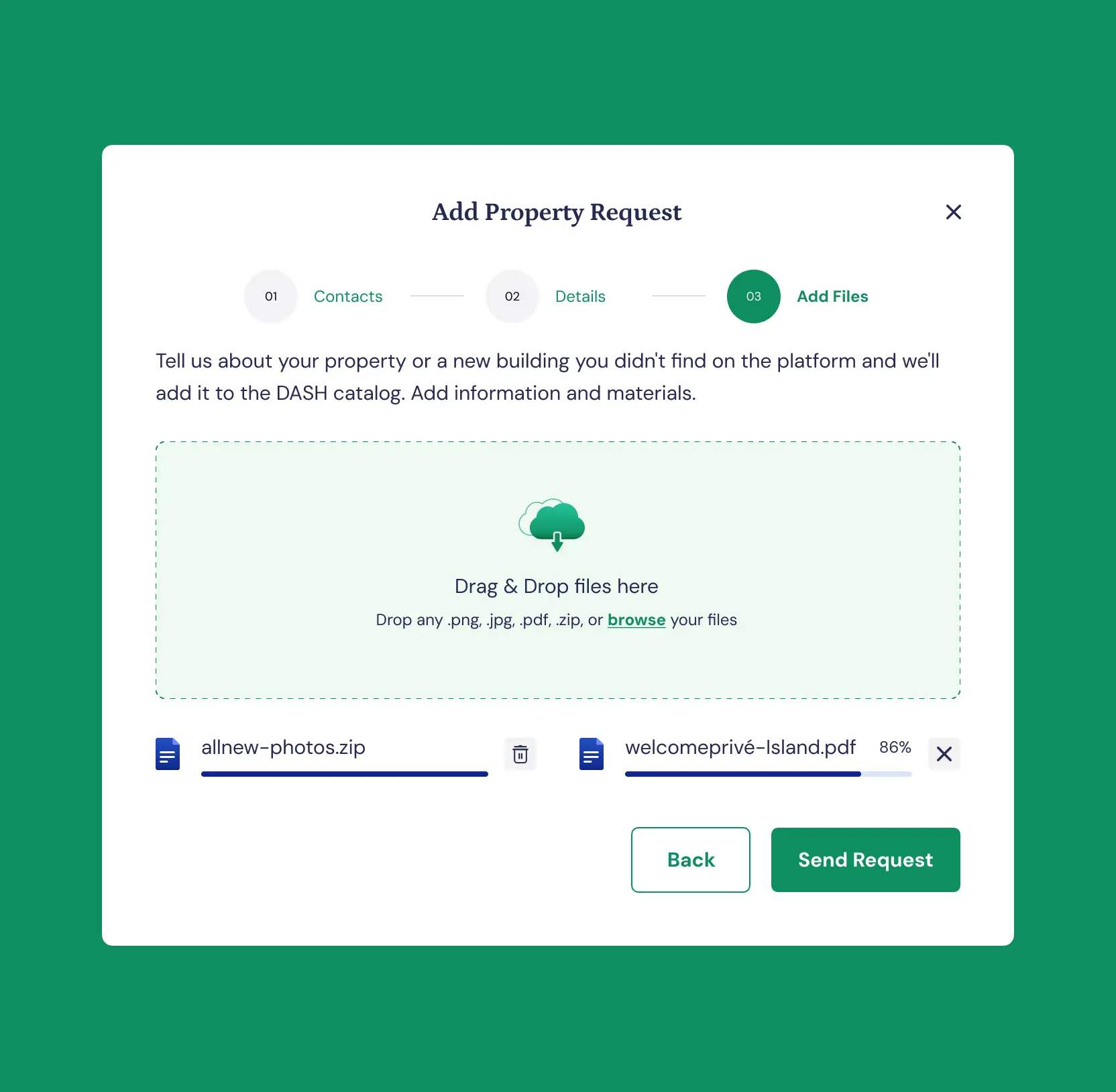
Handling many listings at once is slow when materials are scattered, and slower still when the property is not yet in the catalog. Every day of setup is a day the property earns nothing.
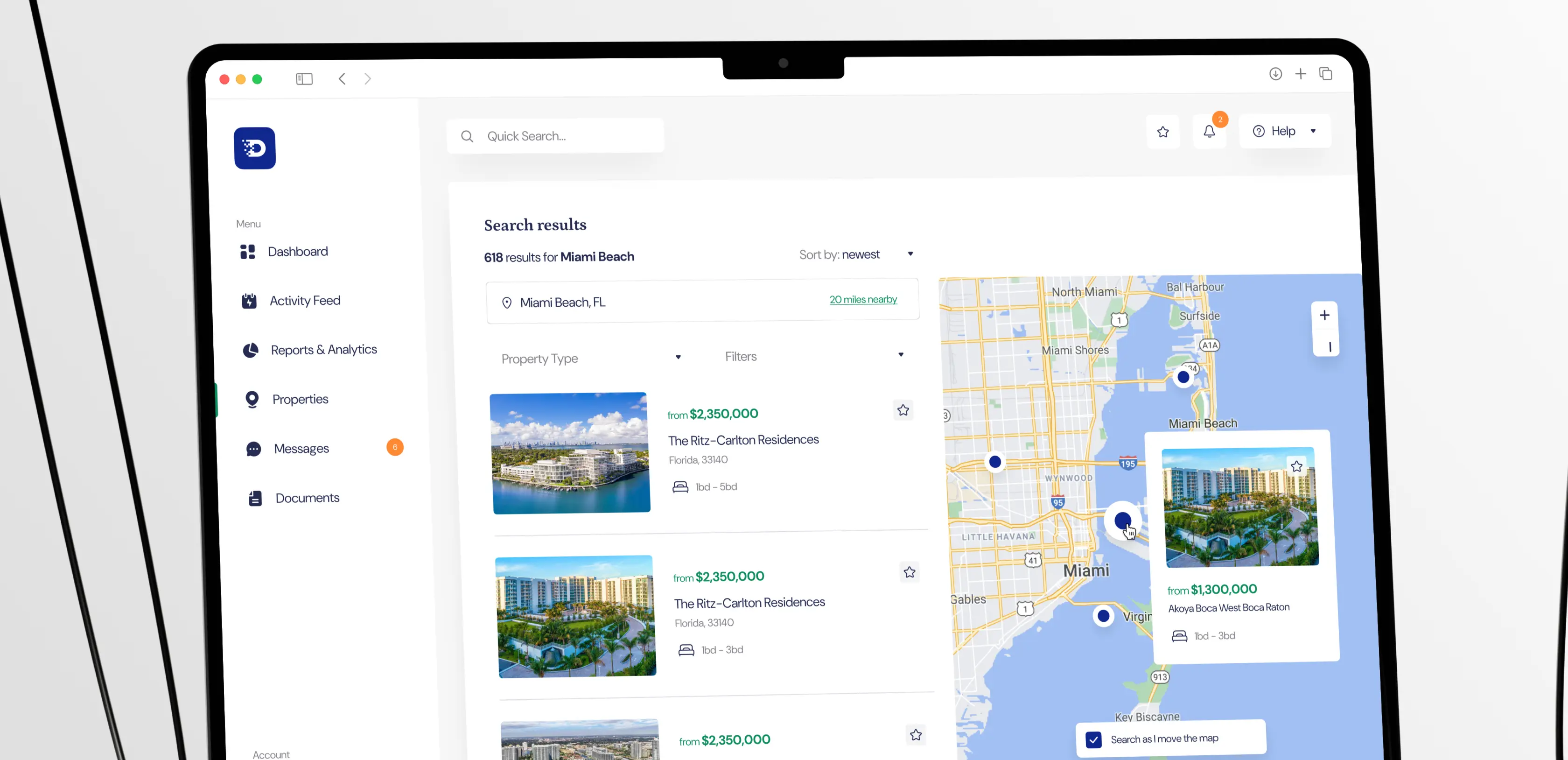
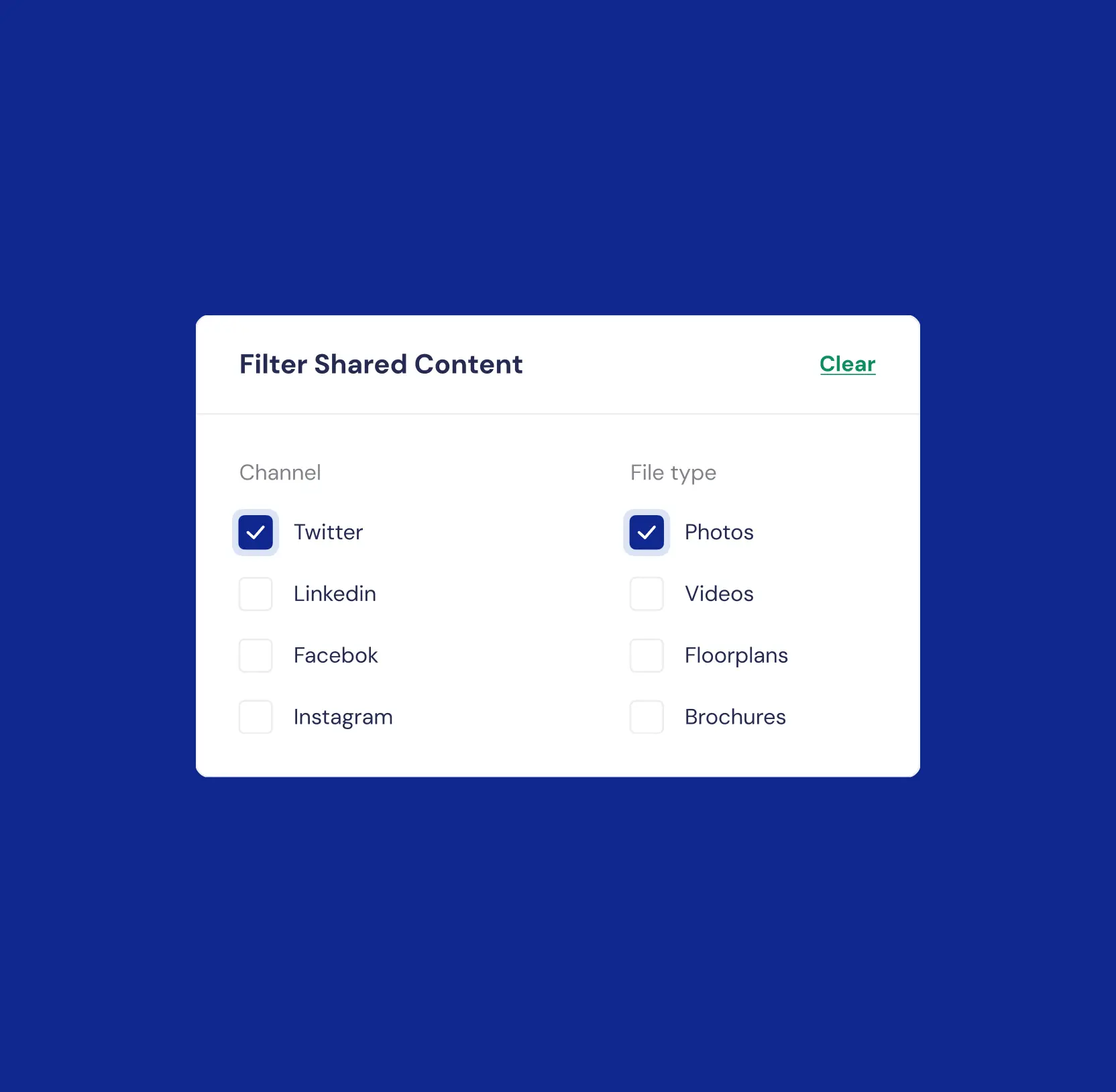
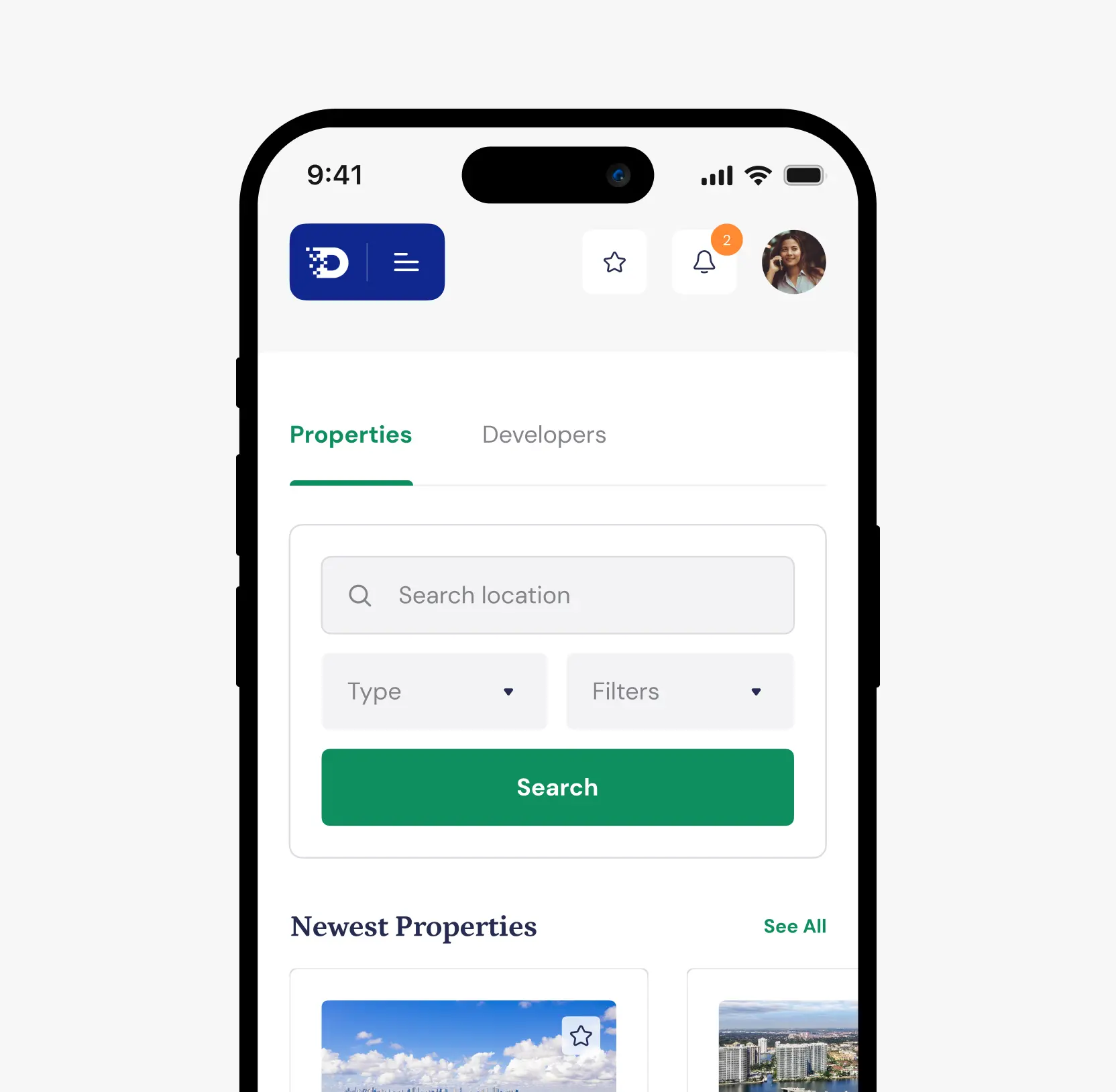
We redesigned the Properties experience with sharper filtering. New listings enter the marketing pipeline sooner, closing the gap between signing a property and getting it in front of buyers.
Analytics pointing to the next promotion
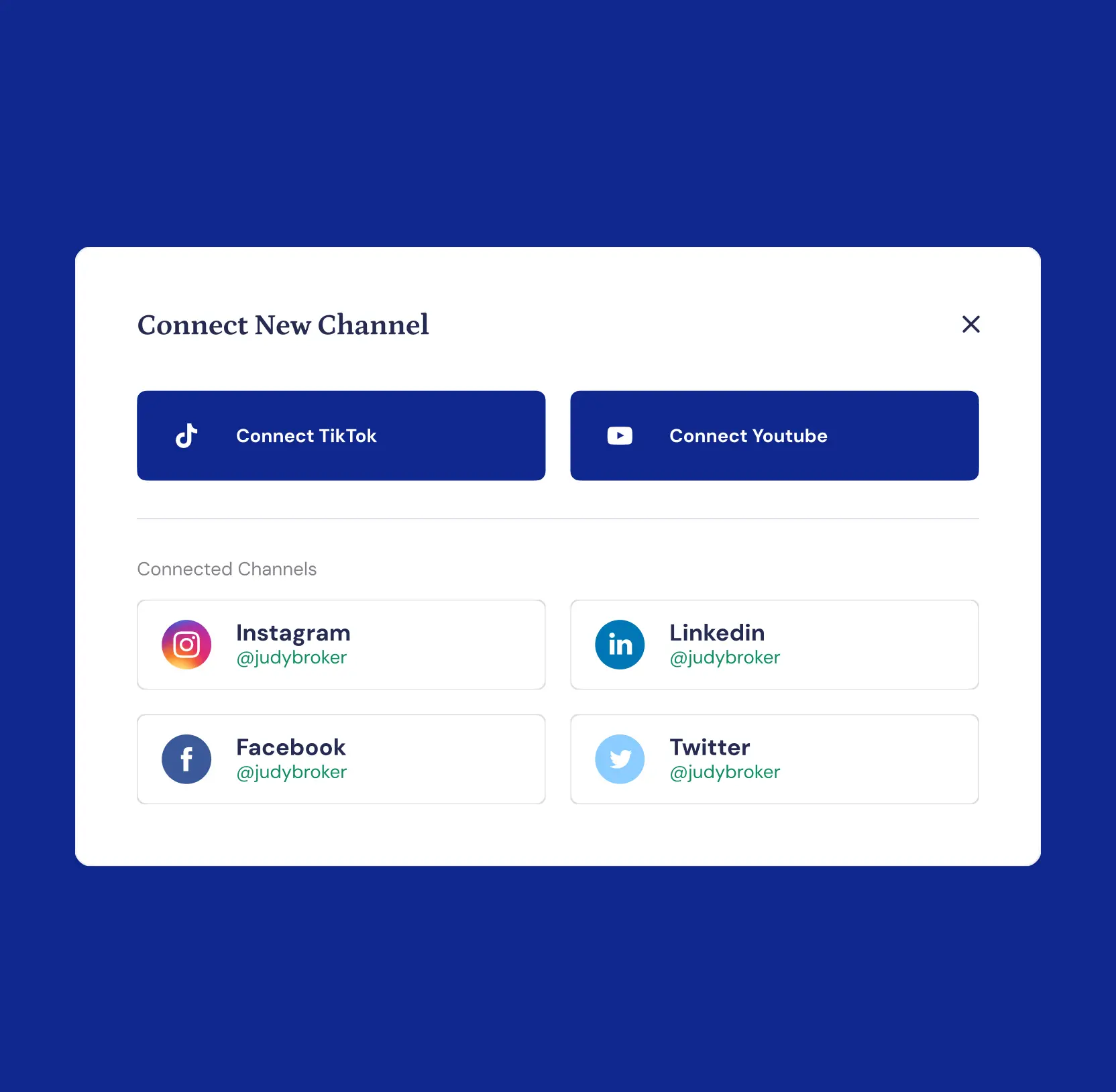
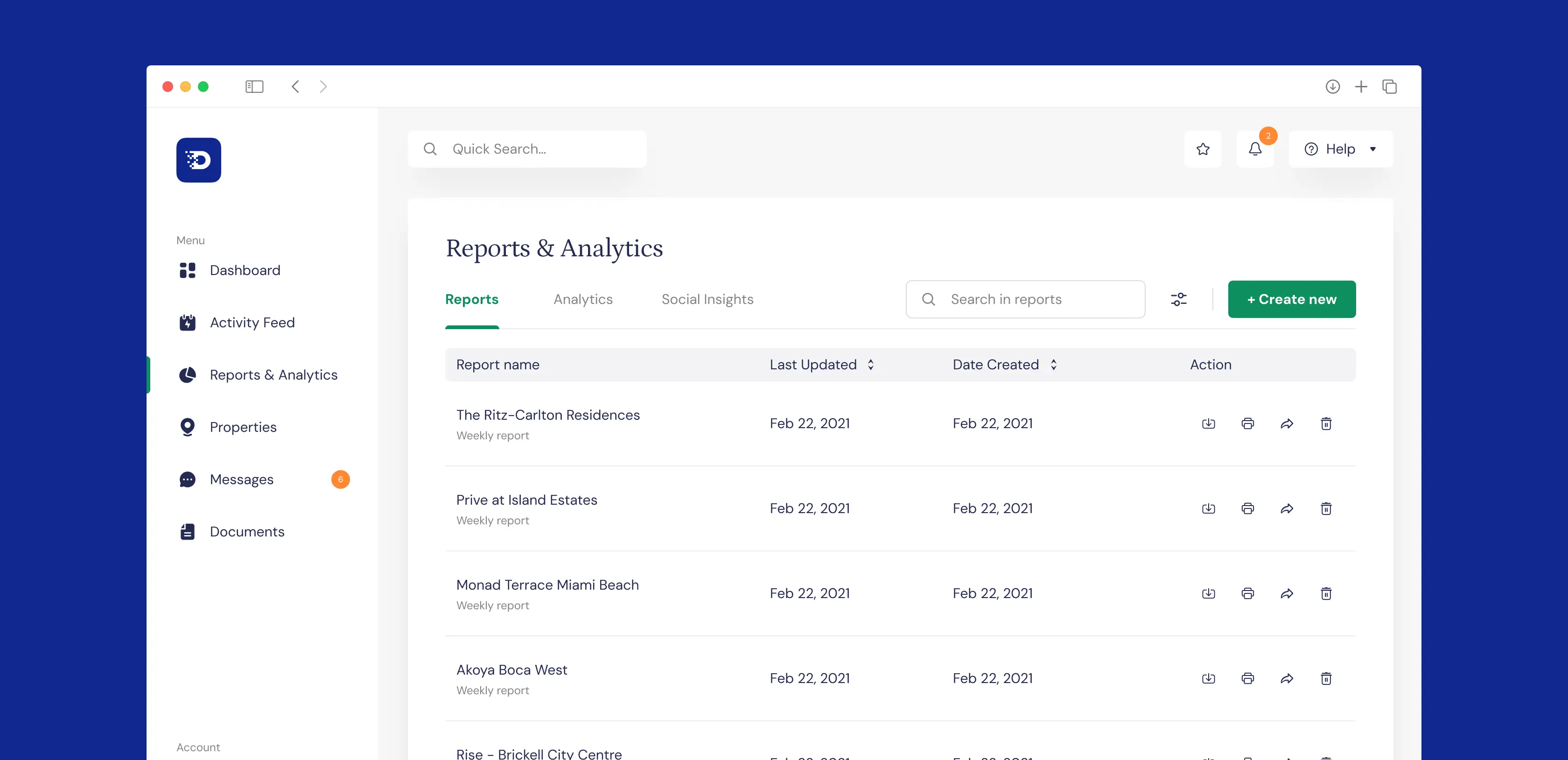
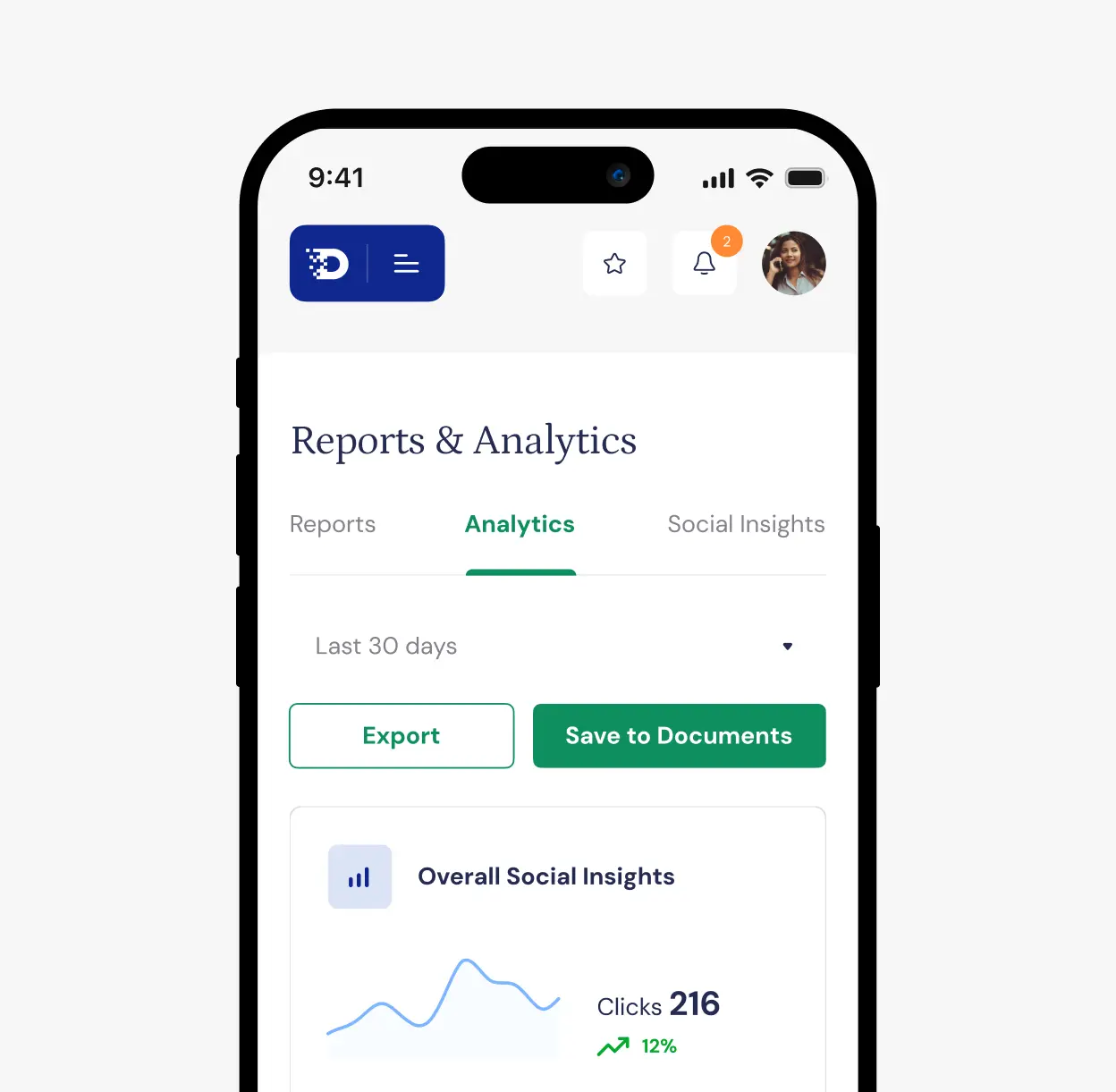
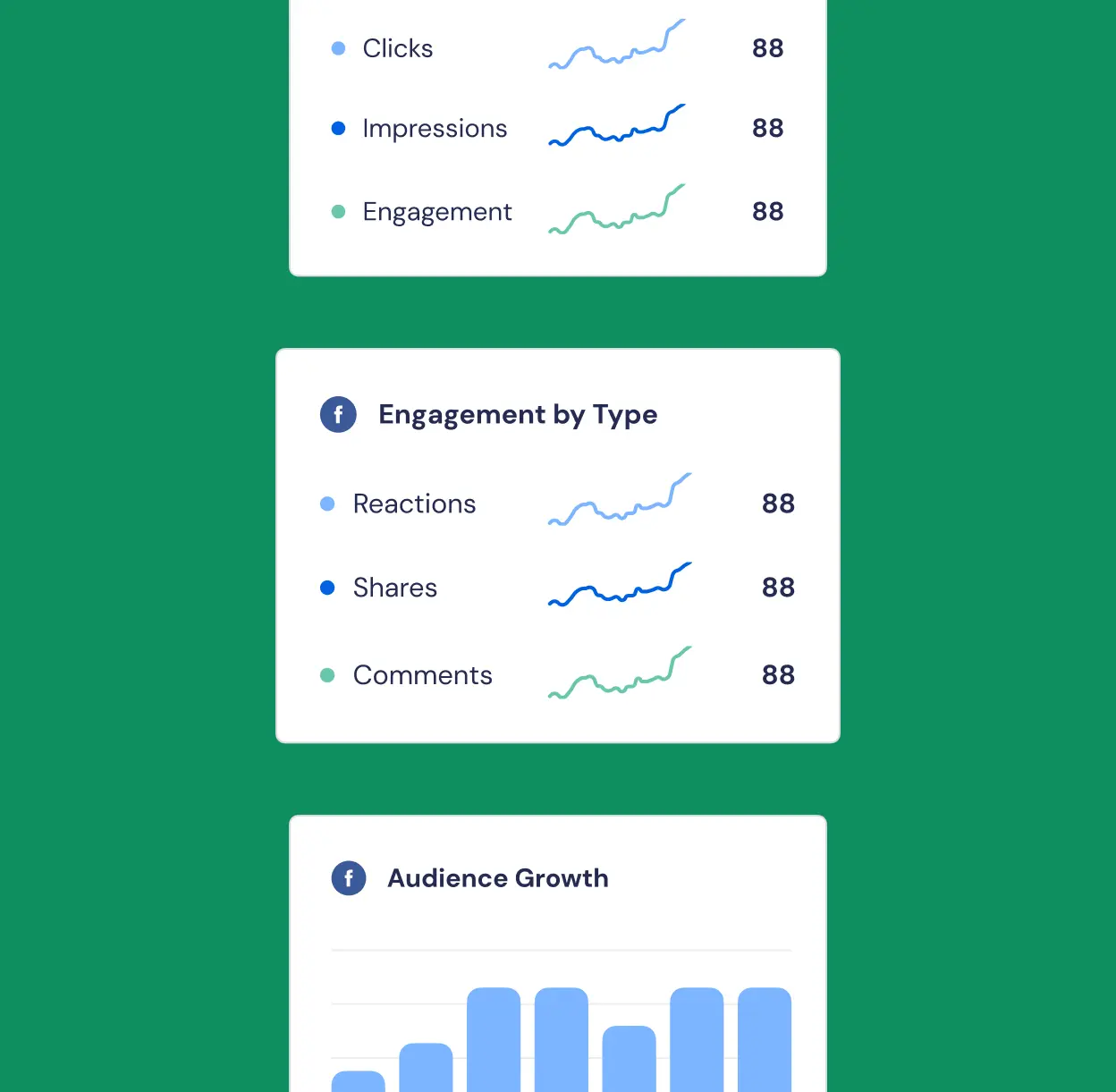
We rebuilt reporting around the measures brokers act on: clicks, engagement, impressions, audience growth, and side-by-side channel performance, with per-property reports a broker can save or hand to a seller.
Brokers spot the listings gaining traction and can shift toward them in an instant. The result is a better return on each campaign, plus hard evidence to show owners their property is being marketed.
Listing assets ready to post in a couple of clicks
Reformatting photos for each network by hand is tedious and error-prone, and the delay means a fresh listing goes quiet on social media just when interest is highest.
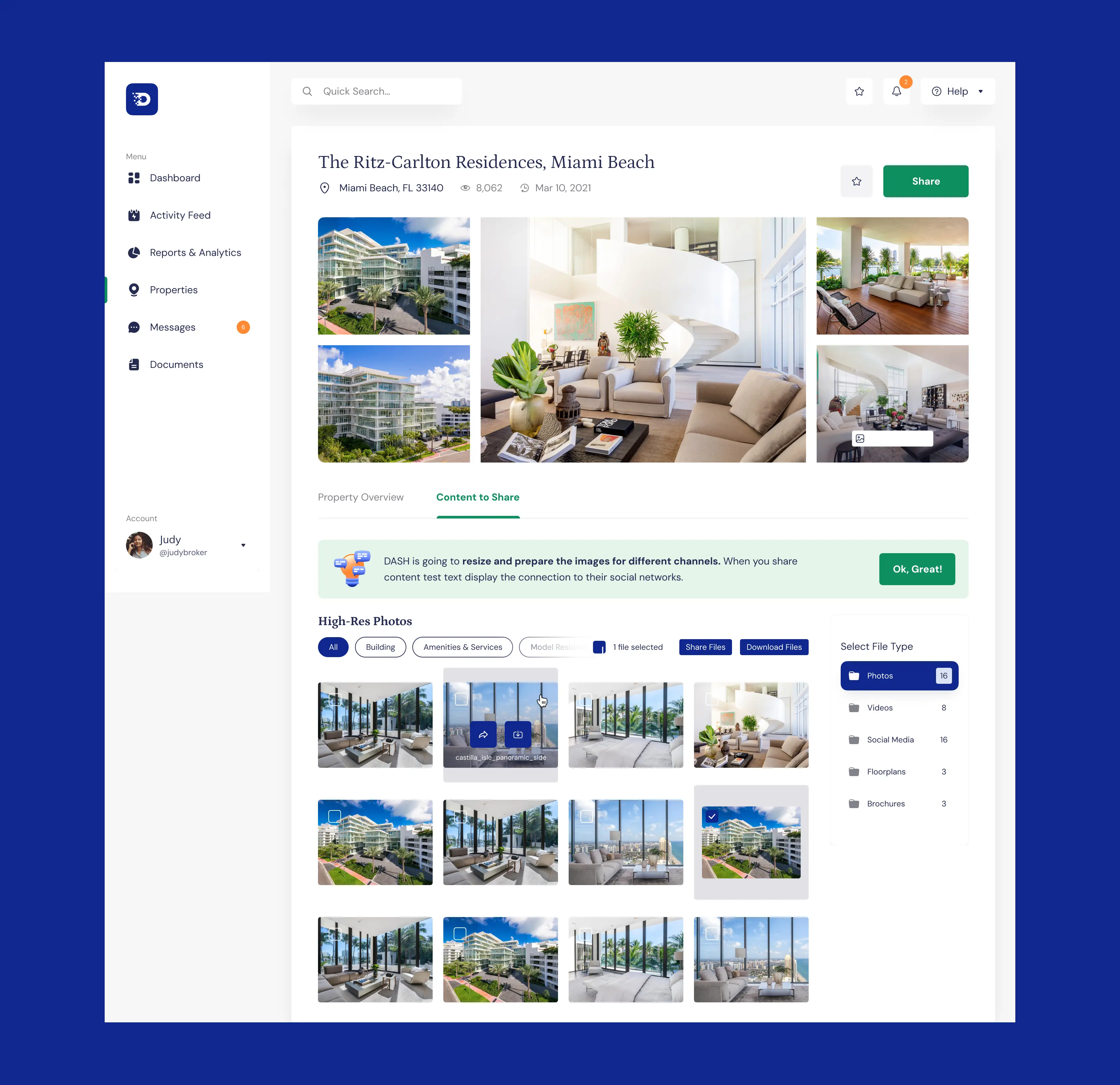
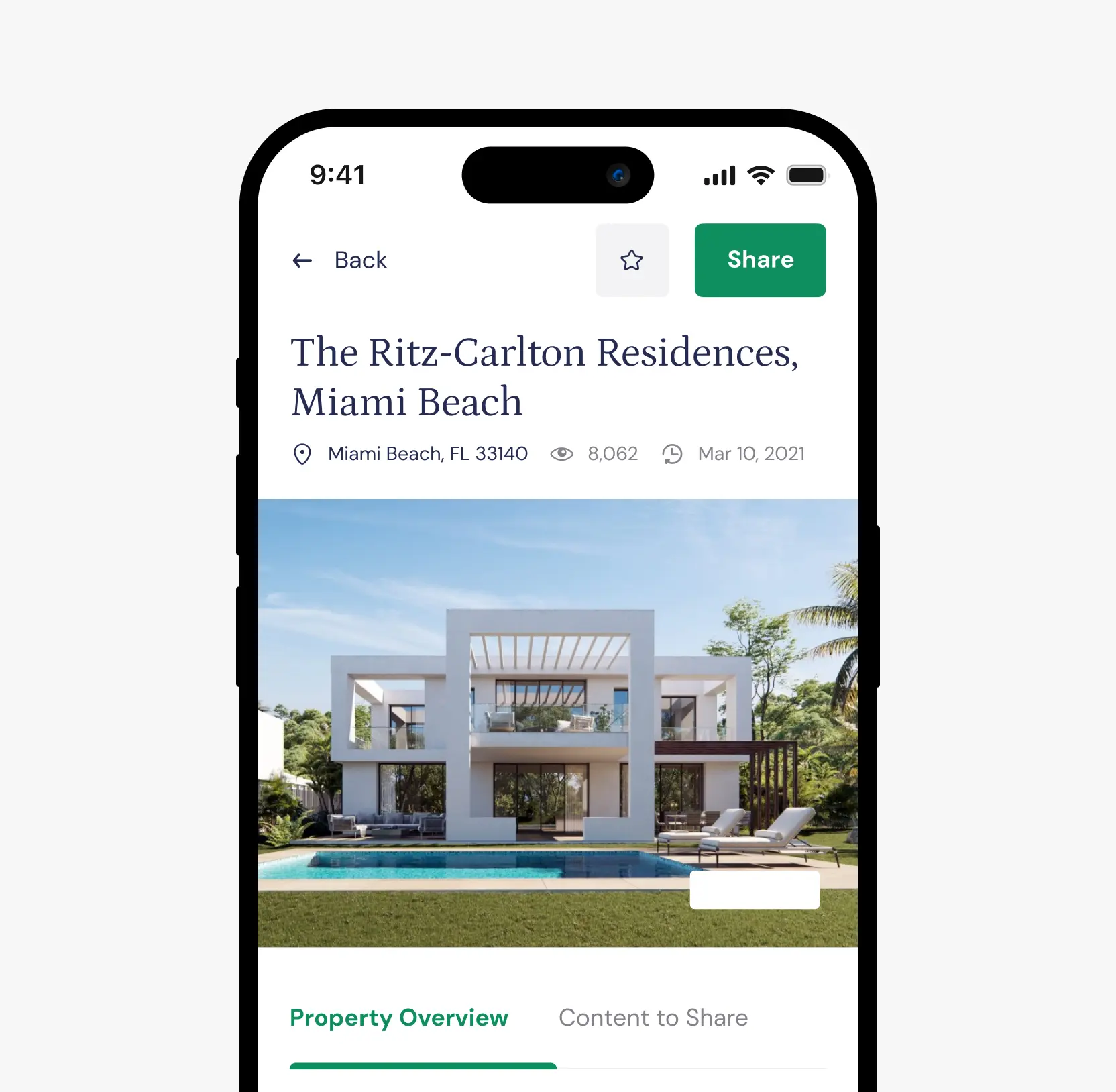
We built each property page around an overview plus a Content to Share library. Dash resizes images for each channel, and a broker can share or download them with a tap.
Brokers go from the listing page to a published, on-format post in moments, keeping marketing consistent and timely across every platform a buyer might be on.
Buyer conversations with context built in
Inbound comments and replies from many channels blur into one undifferentiated stream — a reality many real estate agents know well. When a broker cannot immediately tell where a message came from or what it needs, replies slow down, and warm buyers cool off.
We rebuilt messaging so every conversation carries its context up front, and a broker knows which channel a message arrived on and what kind of reply it calls for before opening the thread.
Real estate
Lazarev. agency offers comprehensive digital design services. Discover our range of related expertise supported by impactful case studies.
More Scaleups Cases
FAQ
How can proptech platform design improve real estate marketing efficiency?
Proptech platform design improves efficiency by centralizing campaign management, analytics, assets, and communication within a single operational system. In this case, restructuring dashboards and workflows reduced time-to-publish and improved listing visibility.
What features are essential in a real estate marketing SaaS platform?
Essential features include a centralized dashboard, advanced property filtering, structured document management, actionable analytics, streamlined messaging, and a responsive mobile experience that supports on-the-go usage.
How do analytics dashboards impact real estate campaign performance?
Clear analytics dashboards enable brokers to evaluate engagement and conversion metrics quickly. Structured data visualization supports faster strategic adjustments and stronger ROI tracking.
How does workflow optimization reduce operational bottlenecks?
By aligning interface design with real broker workflows, friction is minimized and repetitive tasks are streamlined. This reduces preparation time and increases campaign output without expanding team resources.
When should a real estate SaaS platform invest in UX redesign?
UX redesign becomes critical when campaign execution slows, analytics are difficult to interpret, or navigation complexity increases as the product scales. Strategic proptech platform design can unlock measurable productivity gains.
How does cohesive branding influence B2B SaaS adoption?
Cohesive branding reinforces professionalism and reliability. For broker-facing tools, visual consistency and clarity increase trust, supporting adoption and long-term daily usage across teams.