

"In today's era of volatility, there is no other way but to re-invent. The only sustainable advantage you can have over others is agility, that's it." — Jeff Bezos.
Agility, however, isn’t something customers feel in your infrastructure diagrams. They feel it in the experience.
Digital transformation efforts used to mean a technology upgrade. In 2026, it’s a digital transformation customer experience stress test. You can lead in AI, automate half your workflows, and connect every channel, yet still lose customers because the product feels confusing, rigid, or, worst of all, untrustworthy. That’s the trap most transformation initiatives never mention.
Let’s fix that. In this article, our AI UX design team breaks down what digital transformation customer experience looks like when it works, why CX initiatives collapse despite heavy investment, and how AI and automation reshape user expectations.
Key takeaways
- Digital transformation only works when customer experience leads the strategy. Technology without experience design turns scale into risk.
- Artificial intelligence improves customer experience only when it explains itself. Invisible logic and irreversible automation are the fastest ways to lose trust.
- The right digital transformation partner changes the outcome entirely. Leading digital consulting providers like Lazarev.agency emphasize that strategy, UX, and technology must move as one.
What does digital transformation in customer experience mean in 2026?
Digital transformation has emerged as a transformative tidal wave reshaping digital product design as we know it. Every serious company is cloud-based, and most run AI somewhere in the stack.
Yet customer experience is still where things break.
And it’s not because teams lack technology. More often, scaling systems is easier than designing experiences people navigate easily and without any breach of trust.
That gap is where digital transformation challenges start surfacing.
We reviewed data from reputable sources to form the most likely assumptions about where digital transformation is heading.
Here’s what we found.
The statistics below expose the true scope of the CX challenge behind digital transformation. To interpret them as accurately as possible, we asked our Lead AI UX Designer, Anna Demianenko, to provide expert feedback.
- According to Grand View Research, the digital transformation market is set to grow from $1.07 trillion in 2024 to $4.6 trillion by 2030.
“This growth is driven largely by cloud solutions. Think modular services and faster deployment cycles. From a CX standpoint, that means products can change weekly, sometimes daily. When experience design doesn’t keep pace, users face confusion. As a result, cognitive overload is bursting at the seams of CX.”
{{Anna Demianenko}}
- McKinsey reports that 90% of organizations are already undergoing digital transformation.
“ Customers don’t perceive “transformation”, they perceive interactions that are either challenging or intuitive. If a transformed system still feels slow and inconsistent, users experience it as a failure, regardless of how advanced the underlying technology may be.”
{{Anna Demianenko}}
- Gartner emphasizes that 89% of board directors say digital is embedded in growth strategies, but only 35% are on track to achieve their business objectives.
“This gap signals a breakdown between strategic intent and execution. CX is often where that breakdown becomes visible: onboarding that assumes prior knowledge, decision points that lack context, error states that explain… nothing. These moments expose whether the strategy has been translated into usable systems or merely documented.”
{{Anna Demianenko}}
- According to McKinsey research, 88% of organizations now use AI in at least one business function.
“AI reshapes accountability. When recommendations, approvals, or pricing decisions are algorithmic, users look for explanations. Without cues for confidence, rationale, or recourse, trust erodes. In AI-driven products, poor UX amplifies doubt, no more, no less.”
{{Anna Demianenko}}
The key lesson these data driven insights teach us is that digital transformation in customer experience is no longer about adding extra features or claiming intelligence to be the foundation of your digital product.
Instead, a digital transformation strategy with lasting impact centers around designing adaptive and controllable experiences users can understand and recover within in real time.
That conceptual shift changes priorities:
- From speed → clarity.
- From one-way automation → reversible decisions.
- From personalization → predictable logic.
- From “AI-driven” → confidence-building customer interactions.
That said, digital transformation succeeds only when customers feel oriented. If the experience requires training, explanations from customer support channels, or workarounds, the transformation didn’t land, no matter how modern the stack looks on paper.
Does your current digital transformation strategy improve CX?
Let’s raise the bar a little.
If your digital transformation strategy disappeared overnight, would customers complain or just adapt and move on?
Most companies do have a digital transformation strategy. Though it might live in decks and roadmaps, teams justify it by efficiency and openness to the opportunities promised by AI innovation. And on paper, such a framework often looks solid.
The bummer is that a strategy can be digitally mature and experientially poor at the same time — the reason making benefits of digital transformation so challenging to reap.
This is why objective self-assessment matters. Not to validate effort but to test adequacy.
Below, we designed a simple diagnostic to do exactly that. Use this checklist to evaluate the genuine impact of your digital transformation strategy on customer experience.
Experience clarity:
✅ Customers understand why the system makes recommendations or decisions.
✅ Key actions and outcomes are predictable.
✅ Users can explain what just happened without a help article.
User control and recovery:
✅ Automated actions can be paused, reversed, or corrected.
✅ Errors have visible, guided recovery paths.
✅ Customers don’t need support tickets to fix basic mistakes.
Cross-channel continuity:
✅ Context follows users across devices and digital channels.
✅ Customers don’t repeat information to move forward.
✅ Switching channels doesn’t reset progress or intent.
Trust signals:
✅ Data usage and personalization feel transparent.
✅ Permissions and consent are explicit.
✅ AI behavior feels assistive.
Outcome reality check:
✅ Transformation reduced friction.
✅ Customer confidence increased alongside efficiency.
✅ Fewer workarounds, fewer “just call support” moments.
Here’s how to read your results:
- Mostly checked: Your strategy likely improves CX ▶️ refine it.
- Mixed results: You’re digitizing operations faster than experience ▶️ course-correct.
- Mostly unchecked: You don’t have a CX transformation. You have a technology upgrade ▶️ start developing a strategy anew.
Why CX transformations fail, and how to reverse-engineer that?
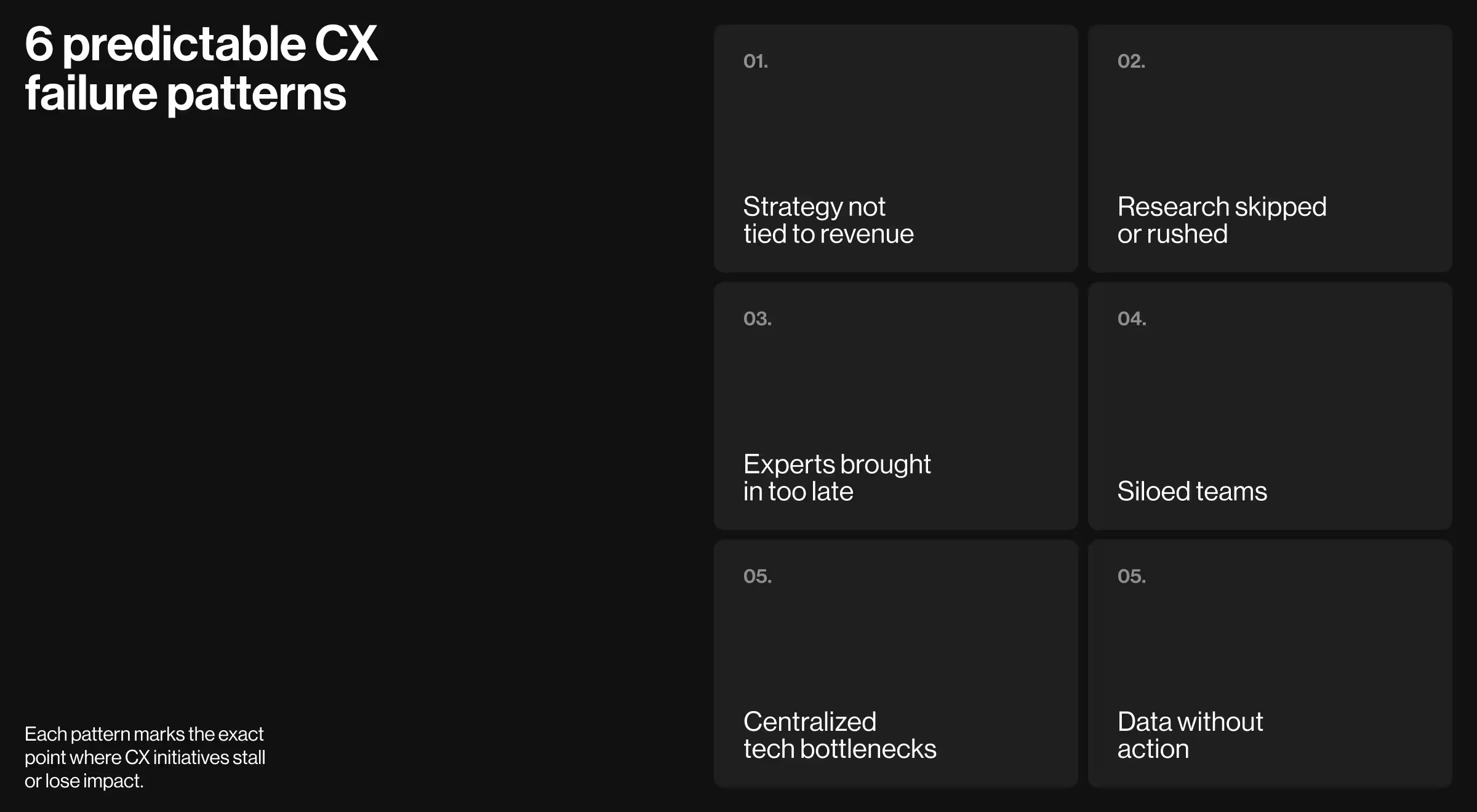
If you want CX to drive revenue, you first need to understand that CX transformations fail when experience is treated as an output instead of a system.
The upside here is that these failure points are predictable and fixable. Each one points directly to a design, strategy, or operating decision you can correct before value leaks out.
Our AI UX design team compiled an insight-driven list of the most common CX transformation failures, when they appear, and most importantly, how to counter them.
1. Strategy lacks focus on business value
⭕ What happens: Digital transformation initiatives try to improve “everything” at once. Effort spreads thin and high-impact customer journeys remain untouched.
📋 Most common when:
- CX goals aren’t tied to revenue or user retention.
- Strategy lives in presentations only.
- Leadership rewards visible activity over outcomes that improve operational efficiency.
✅ How to fix it:
- Anchor CX strategy to specific revenue-critical journeys.
- Define success in business terms first (conversion rate optimization, churn, new customer onboarding).
- Build a roadmap around where experience change creates value fastest.
2. UX research is treated as optional
⭕ What happens: Assumptions replace insight. UX research is rushed or used to validate decisions already made. Teams digitize broken experiences instead of redesigning them.
📋 Most common when:
- Timelines are driven by tooling or vendor rollouts.
- Research is seen as a delay.
- Design maturity is low.
✅ How to fix it:
- Run foundational research before solution design.
- Focus on friction, trust breaks, and recovery moments.
- Nail UX research process by treating it as a decision-making tool.
3. External digital capability is used too late instead of strategically
⭕ What happens: Many CX transformations rely solely on internal momentum. Teams move fast and only bring in outside experts when adoption stalls or customers complain. By then, the costliest decisions regarding information architecture, user flows, and automation are already locked in.
📋 Most common when:
- Internal teams are deep in delivery mode and lack distance.
- Product decisions are driven solely by internal assumptions.
✅ How to fix it:
- Engage specialized digital transformation consulting partners early.
- Hire AI designers to pressure-test assumptions and automation logic and future-proof your product strategy.
- Treat partners as strategic reviewers.
🔍 If you’re looking for the best external assistance from the industry leaders, check out our guide on hiring a design agency like a pro.
4. The operating model doesn’t support cross-functional work
⭕ What happens: Product, design, engineering, and data work in isolation. CX decisions get fragmented, and ownership blurs.
📋 Most common when:
- Teams are structured by function.
- CX accountability isn’t clearly assigned.
- Success is measured locally.
✅ How to fix it:
- Organize teams around a customer journey.
- Establish shared goals and joint UX performance metrics.
- Enable teams to design, build, and learn together.
5. Technology centralization slows experience innovation
⭕ What happens: Every change requires approval. Teams wait for access. CX improvements move at infrastructure speed instead of user speed.
📋 Most common when:
- IT controls all digital platforms and releases.
- APIs and cloud infrastructure are underused.
- Autonomy is treated as a risk.
✅ How to fix it:
- Shift toward distributed, API-driven systems.
- Give teams direct access to data and tooling.
- Automate infrastructure so teams can iterate safely — this is UX optimization done right.
6. Data is abundant but not actionable
⭕ What happens: Data exists across systems but can’t be easily accessed or combined. CX teams operate on partial context. Personalization and user feedback loops break.
📋 Most common when:
- Data ownership is unclear.
- Systems evolved without a shared architecture.
- Governance blocks usage instead of enabling it.
✅ How to fix it
- Treat data as products.
- Design data around CX use cases.
- Balance governance with accessibility.
What role do personalization, automation, and AI play in modern customer experience?
Personalization without AI stagnates. Automation without design destroys trust. AI without a CX strategy amplifies confusion.
Together, and only together, these three elements form the backbone of effective CX digital transformation.
1. Personalized customer journey
Personalization means showing the user what matters to them now. Customers expect systems to recognize context and intent without feeling invasive or random.
What strong personalization delivers:
- Content and recommendations that match what the user is trying to do right now.
- Proactive support driven by anticipatory design logic.
- Consistent experiences across channels (be it web, mobile, email, or support).
- Higher trust and loyalty because the system feels attentive.
- Tangible ROI through improved conversion, retention, and lifetime value.
💡 Pro insight from Lazarev.agency: Pulling this off requires more than data. Businesses need clear rules, transparent recommendations, and strategic ERPs structured around key principles of experience design.
2. Automation
Automation still carries an outdated reputation as a cost-cutting move. Five years ago, fair enough.
Now the strongest SaaS, fintech, and e-commerce players approach AI-powered design as a core experience investment.
What well-designed automation enables:
- Instant responses through AI-driven chatbots and automated workflows.
- Reduced wait times and friction across customer support and service journeys.
- 24/7 availability without degrading the quality of the user experience.
- Self-service for routine tasks, freeing humans for more emotional and high-stakes issues.
💡 Pro insight from Lazarev.agency: The best teams practice empathetic automation. It means AI handles the predictable, all the while humans handle the nuanced.
3. AI-powered assistance
AI is the engine behind adaptive CX, but only when it’s designed as a decision-support layer.
The issue isn’t that customers don’t want AI. They do. What they don’t is AI that acts without explanation. In conversational UI and AI-driven interfaces especially, users expect the system to behave less like an oracle and more like a capable assistant.
What AI brings to modern customer experience:
- Deep analysis of customer behavior, preferences, and expectations.
- Real-time insights that allow businesses to act on customer feedback immediately.
- Personalized recommendations that improve relevance without manual effort.
- Smarter customer support via AI-powered chatbots that resolve issues faster.
💡 Pro insight from Lazarev.agency: AI shouldn’t hide behind the interface like a magic trick you’re not allowed to question. It needs to be visible and give you a way to steer it. Achieving that level of AI-assisted design is way faster with the right digital consulting services in your tech stack.
How digital transformation shapes customer expectations and experience across industries? Insights from Lazarev.agency’s portfolio
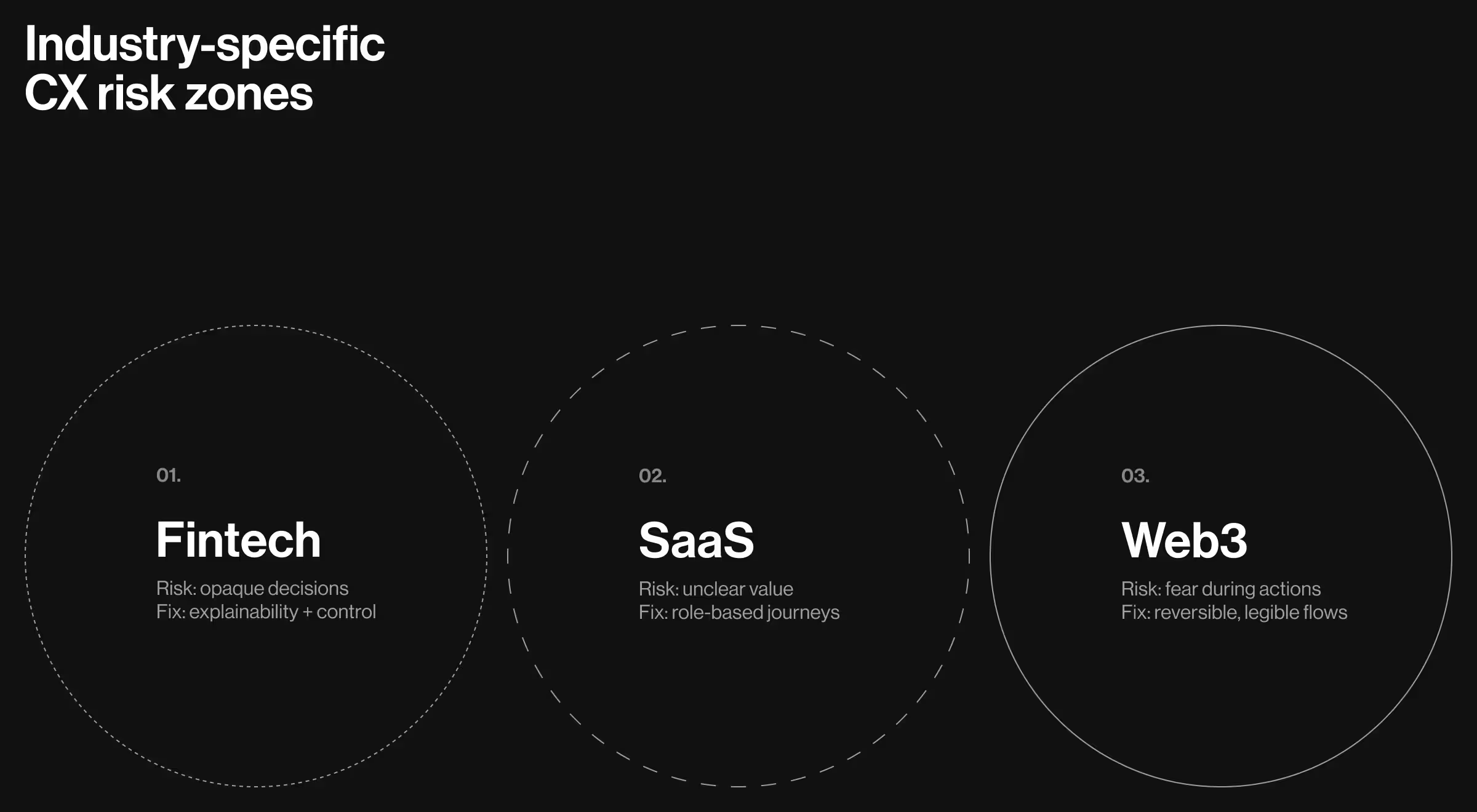
Digital transformation proves its value when you see it working in a real product. That’s why looking at the practical side of transformation matters more than any abstract framework ever will.
One thing is consistent across our work at Lazarev.agency, a top AI UX agency: digital transformation is never universal. It looks different depending on your industry, the scale of your business, your current performance gaps, regulatory pressure, legacy systems, and where users struggle today.
Below are three industry lenses showing how digital transformation reshapes customer experience when UX leads the work, backed by outcomes from our portfolio.
1. Fintech
In fintech, digital transformation makes sense if users trust the interface enough to act on the data. Quantillium case study shows how strategic UX turns backend strength into frontend confidence and drives adoption.

Quantillium provides real-time access to global stock exchange filings via a unified API. The infrastructure was solid. The experience wasn’t.
🔁 What our UX revamp changed:
- Structured product narrative. Complex financial data was reorganized into role-focused flows answering three questions fast: what it does, how it works, and why it matters.
- Visual system that signals trust. A new design system (dark UI, precise typography, geometric layouts) reinforced reliability.
- Attention-guided interactions. Motion and transitions directed focus through key product areas.
- Consistent experience across devices. Desktop, tablet, and mobile were designed deliberately, so credibility held in every context.
🔋 CX results:
- +30% increase in data accessibility
- +32% increase in average session duration
- Faster path from exploration to API usage
- Stronger trust signals among fintech teams and developers
🟩 Fintech takeaway: In finance, adoption happens when the frontend makes that power understandable, trustworthy, and easy to act on.
2. SaaS
In SaaS, digital transformation levels up customer experience only when the funnel helps users understand value before asking for commitment.
Flying Penguins is a corporate learning platform built around DISC-based facilitation. The product had depth, but the experience struggled to serve two distinct audiences, namely facilitators and participants.
🔁 What our UX approach changed:
- Role-specific experience paths. Facilitators and participants were given distinct flows. Each group immediately saw what mattered to them without irrelevant features.
- Timeline-based control for facilitators. A single dashboard consolidated session preparation, live delivery, and follow-ups. This reduced tool switching and shifted focus from setup to outcomes.
- Guided participation instead of feature exposure. DISC journeys were broken into small steps. Pre-session context and guided interactions tackled cognitive overload.
- Conversion through positioning. A lean landing page reframed the product around solving collaboration problems.
🔋 CX outcomes:
- Higher engagement across facilitated sessions
- Smoother onboarding for both user groups
- Improved adoption in enterprise team environments
- Clearer path from first visit to active use
🟩 SaaS takeaway: The ultimate goal of SaaS funnel optimization is to help users recognize themselves and their goals inside the experience. Strategic UX turns SaaS funnels from conversion mechanics into value alignment systems.
3. Web3
In Web3, one unclear step and users are gone. UX that feels risky is to blame here.
EllipX is a European crypto-finance platform. It supports crypto exchange and fiat payments while also serving as a digital wallet (all under strict EU compliance). The product had already been redesigned when they came to us.

And yet, users were still dropping off during onboarding, stalling in verification, abandoning deposits, and hesitating on withdrawals.
Our goal was straightforward: make every high-risk action feel safe, legible, and reversible (treat this as an actionable motto when designing for Web3 platforms).
🔁 What our UX solution changed:
- Confidence-spoken dashboard. We replaced an overloaded screen with a modular dashboard. Key actions surfaced first, so users knew where to look and what to do.
- Transactions without surprises. Deposits and withdrawals were redesigned into intuitive flows with live fees, limits, and confirmations. No hidden math meant fewer mistakes and led to higher completion.
- One place to understand your money. Asset management was consolidated into a single view. Balances, performance, history, and action — our team made every single step visible and controllable.
- Navigation trimmed to what matters. Dual navigation systems were cut. We introduced a top bar and moved advanced settings out of the way, leaving more room for data that assists users’ decision-making.
🔋 CX outcomes:
- Higher deposit and withdrawal completion
- Stronger daily engagement signals
- Noticeably higher user confidence during critical actions
🟩 Web3 takeaway: Users leave crypto platforms because a multi-step interaction with a digital product rarely feels safe. Tackle that, and you’ll win user trust in Web3 once and for all.
🔍 Interested in other ways Web3 players could benefit from strategic digital transformation? Explore our collaboration with CollectorCrypt to see how UX optimization helped the platform attract thousands of users and capitalize $370K.
Secure a winning digital transformation strategy with the right partner
The benefits of digital transformation are powerful. With the right partner, they become decisive.
Why do expert partners matter in digital transformation? Leading digital transformation companies align strategy, UX, and technology into one operating model and prevent costly CX regressions.
At Lazarev.agency, we embrace digital transformation through the lens that matters most: experience under real conditions.
We help companies:
- rethink customer experience before automating it
- design AI-powered systems people trust
- turn digital transformation into a competitive advantage
If you’re planning a digital transformation or questioning whether your current one truly improves customer experience, now is the time to reassess with the right perspective.
Explore our portfolio to see how experience-led transformation works in practice. Get in touch to discuss how to secure an experience-first digital transformation strategy tailored to your users, business processes, and growth objectives.




.webp)