

Design agencies don’t rescue products with more appealing screens. The good ones interrogate the product from within — its user behavior and the logic behind how it creates value. When that conversation happens early, design accelerates business growth.
That’s why the founders who get the most from agencies arrive prepared: they understand the exact product problem to be solved, the market forces around it, and the outcomes they expect design to influence.
In this guide, we explore how to approach that partnership like a seasoned product leader. We’ll look at how to prepare the right brief to evaluate agencies and structure feedback so that design drives your product progress.
Key takeaways
- Preparation sets the foundation for a successful partnership. Founders who define specific product problems, have a clear understanding of user and market dynamics, and set success metrics before briefing agencies create stronger collaborations.
- Strategy-first briefings reveal agency expertise. The way agencies discuss user/market research and key UX/UI success metrics signals how deeply they approach design.
- Evidence beats opinion in design feedback. Actionable feedback tied to user behavior and metrics leads to faster iterations and better long-term outcomes.
The prep you need to do before hiring design partners
“Before reaching out to a design agency, founders need to clarify the business context behind their project. Agencies can shape solutions, but they cannot define the product’s core problem or internal priorities. That work has to happen first.”
{{Kirill Lazarev}}
Preparation decides the fate of your collaboration with a design partner. Research from McKinsey highlights that design investments pay off when they reflect a clear understanding of a product’s brand attributes and strong insight into user motivations. When those elements align, design hooks customers — in a good sense of the word.
For founders, that connection begins before the first conversation with an agency. Answering the following questions helps clarify whether your company is ready to work with external experts. It also makes it far easier to select the right partner and establish a collaboration that supports long-term product development.
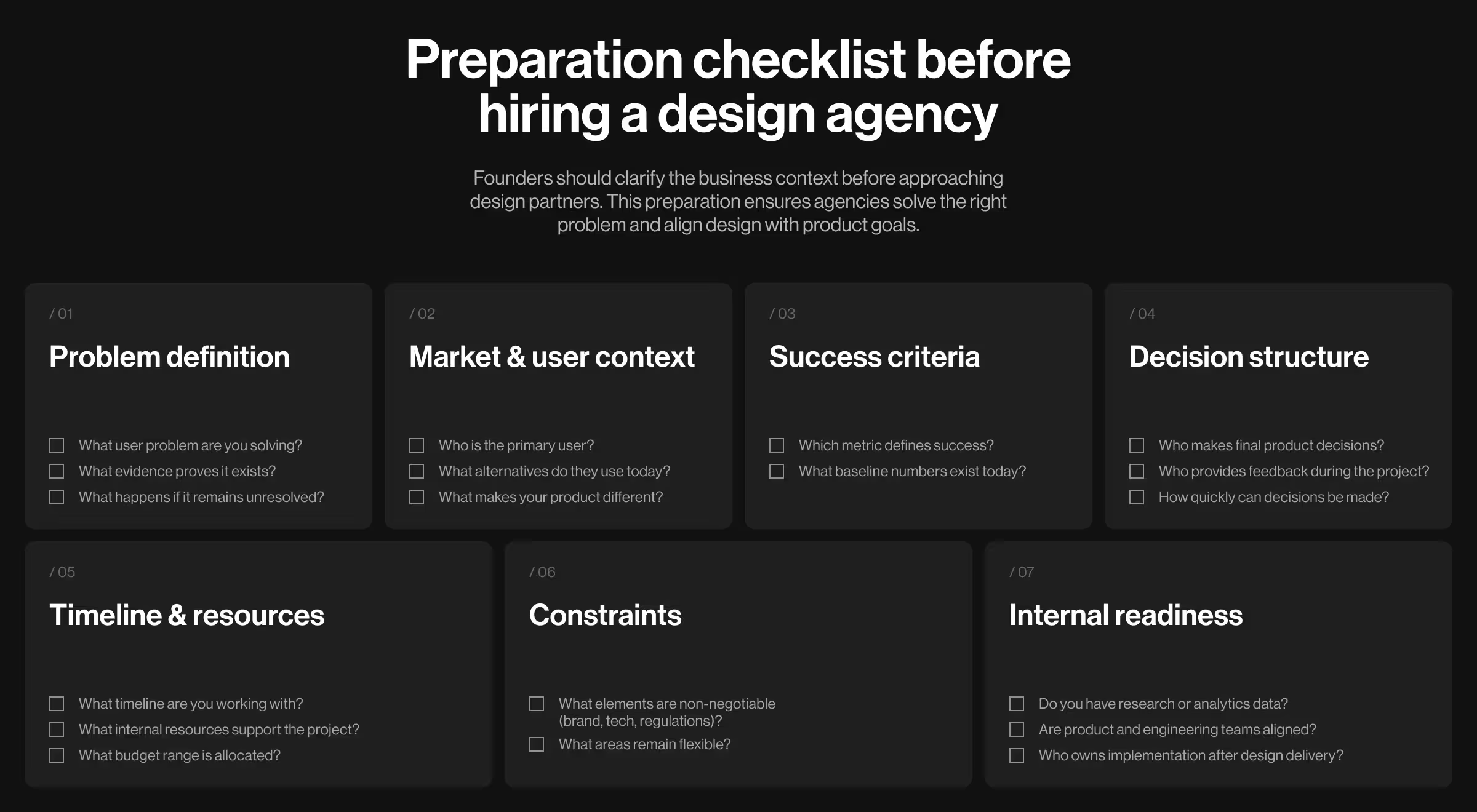
1. Problem statement:
- Describe the user problem in one sentence.
- What evidence supports that the problem exists?
- What happens if the problem remains unsolved?
- Who is the primary user of the product?
- What alternatives do users currently rely on?
- What differentiates your product from those alternatives?
3. Success criteria:
- What metric defines success? Is it revenue, retention, signups, feature adoption, all together, or something else?
- What baseline numbers exist today?
4. Decision-making structure:
- Who makes final decisions on product and design?
- Who provides feedback during the process?
- How quickly can decisions be made?
5. Timeline and resources:
- What timeline are you working with?
- What internal resources support the project?
- What budget range is allocated?
6. Constraints:
- What aspects are non-negotiable? Be clear on brand guidelines, technical limitations, and regulatory requirements.
- What areas remain flexible?
7. Internal readiness:
- Do you have existing research or analytics data?
- Are product and engineering teams aligned with the initiative?
- Who owns implementation after design delivery?
Clear answers to these questions establish the foundation of the partnership. Without them, agencies are forced to wonder about the business context behind design decisions.
The briefing: how to brief an agency
A briefing session sets the trajectory of the collaboration. At this stage, the goal is to test how the agency approaches product thinking, user research, design execution, and collaboration in general.
Below are practical steps founders can follow during briefing conversations.
🔍 It would be beneficial to start by exploring our expert guide on how to hire a design agency like a pro for a broader perspective on the entire process.
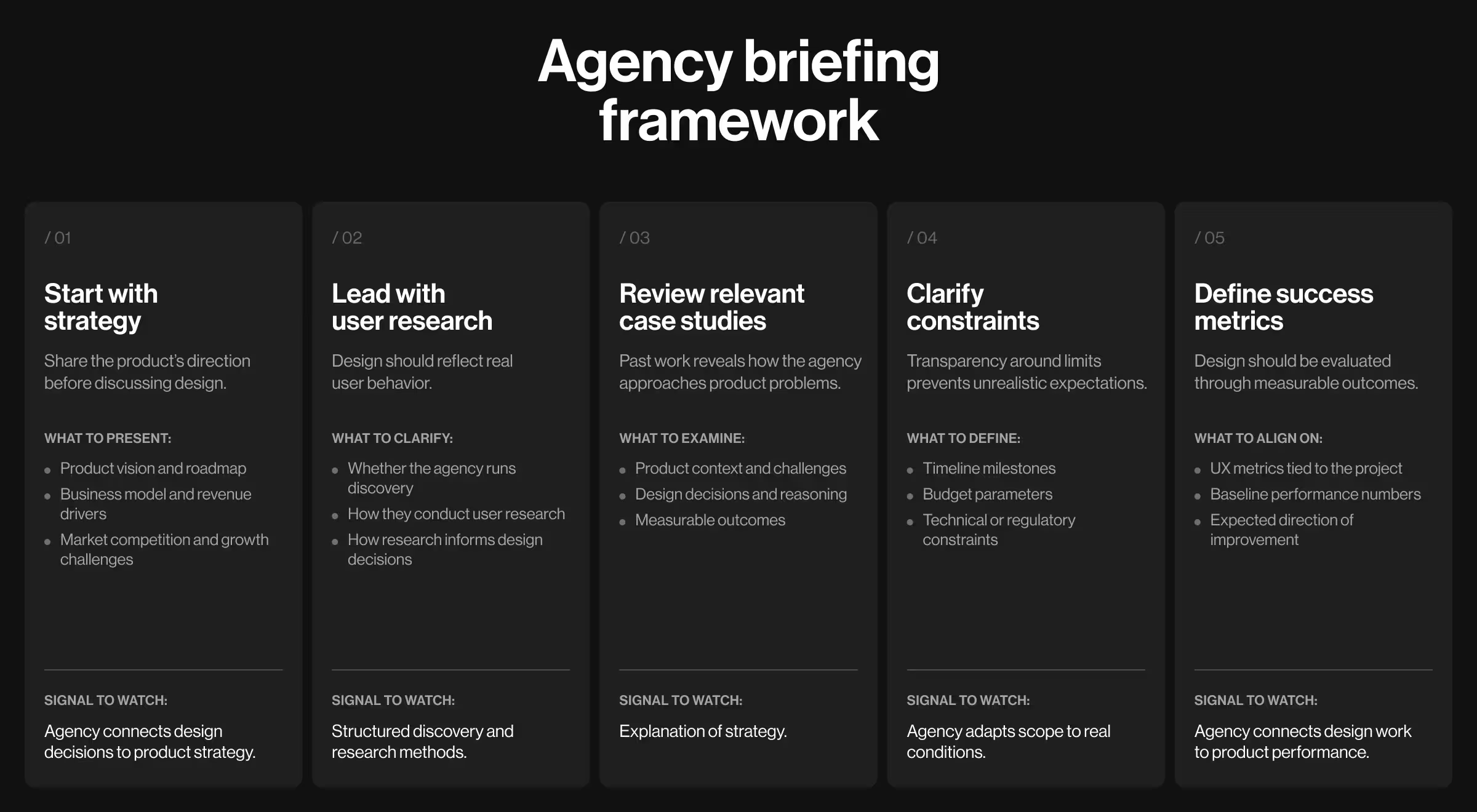
1. Start with a strategy
Design choices depend on product positioning and business goals. Agencies that understand product strategy early can align their work with the company’s direction.
What to share with your prospective partner:
- Product vision and long-term roadmap
- Business model and revenue drivers
- Insights into market competition
- Current growth challenges
🟩 Green flags indicating strategic partners:
- The agency asks questions about market positioning
- They connect design decisions to product strategy
🟥 Red flags to watch out for:
- Immediate focus on visuals without discussing product goals
- No curiosity about the business model
2. Lead with user research
Effective design reflects user behavior. Experienced agencies acknowledge the risks of skipping user research and always use it to inform the design cycle.
What to clarify:
- Whether they run product discovery — explore our Lead Designer’s take on why product discovery must come before design
- How they conduct user research
- How insights influence design decisions
🟩 Green flags indicating strategic partners:
- Structured discovery processes
- Clear examples of research informing interface design
🟥 Red flags to watch out for:
- Reliance on intuition alone
- No explanation of research methodology
3. Ask them to show examples of what works
Past work reveals how an agency thinks and approaches the website development process. It also shows whether they understand products similar to yours.
What to clarify:
- Case studies with business context
- Specific problems addressed in each project
- Design decisions and their rationale
🟩 Green flags indicating strategic partners:
- Detailed explanations of product challenges
- Evidence of strategic problem-solving
🟥 Red flags to watch out for:
- Portfolio limited to visual presentation
- No explanation of product impact
4. Be clear on constraints
Design work has operational limits. And that’s to be expected. Transparency about constraints prevents unrealistic expectations.
What to clarify:
- Timeline milestones
- Budget parameters
- Technical limitations
- Regulatory considerations
🟩 Green flags indicating strategic partners:
- Agencies propose phased approaches when constraints exist
- They adapt the scope based on resources
🟥 Red flags to watch out for:
- Promises without acknowledging existing limitations and potential constraints
5. Define success metrics upfront
Without clear metrics, the process of evaluating design work becomes subjective.
What to clarify:
- Key UX metrics tied to the project
- Baseline numbers before the redesign
- Expected direction of change
🟩 Green flags indicating strategic partners:
- Agencies link design decisions to product performance
- They can pinpoint the most likely causes of why your conversion rates are low and why other metrics are lagging behind
- They suggest proven measurement frameworks
🟥 Red flags to watch out for:
- No discussion of metrics or product impact
🔍 Explore the 10 questions to ask every design agency for a more solid grip on the mechanics of the briefing process.
Why feedback and open communication are key to securing strong design partnerships
Design work is iterative by nature. Concepts evolve through discussion and refinement. When communication is vague or irregular, even strong design teams struggle to align with the product’s priorities.
The following practices help founders structure feedback in a way that leads to better decisions and smoother collaboration.
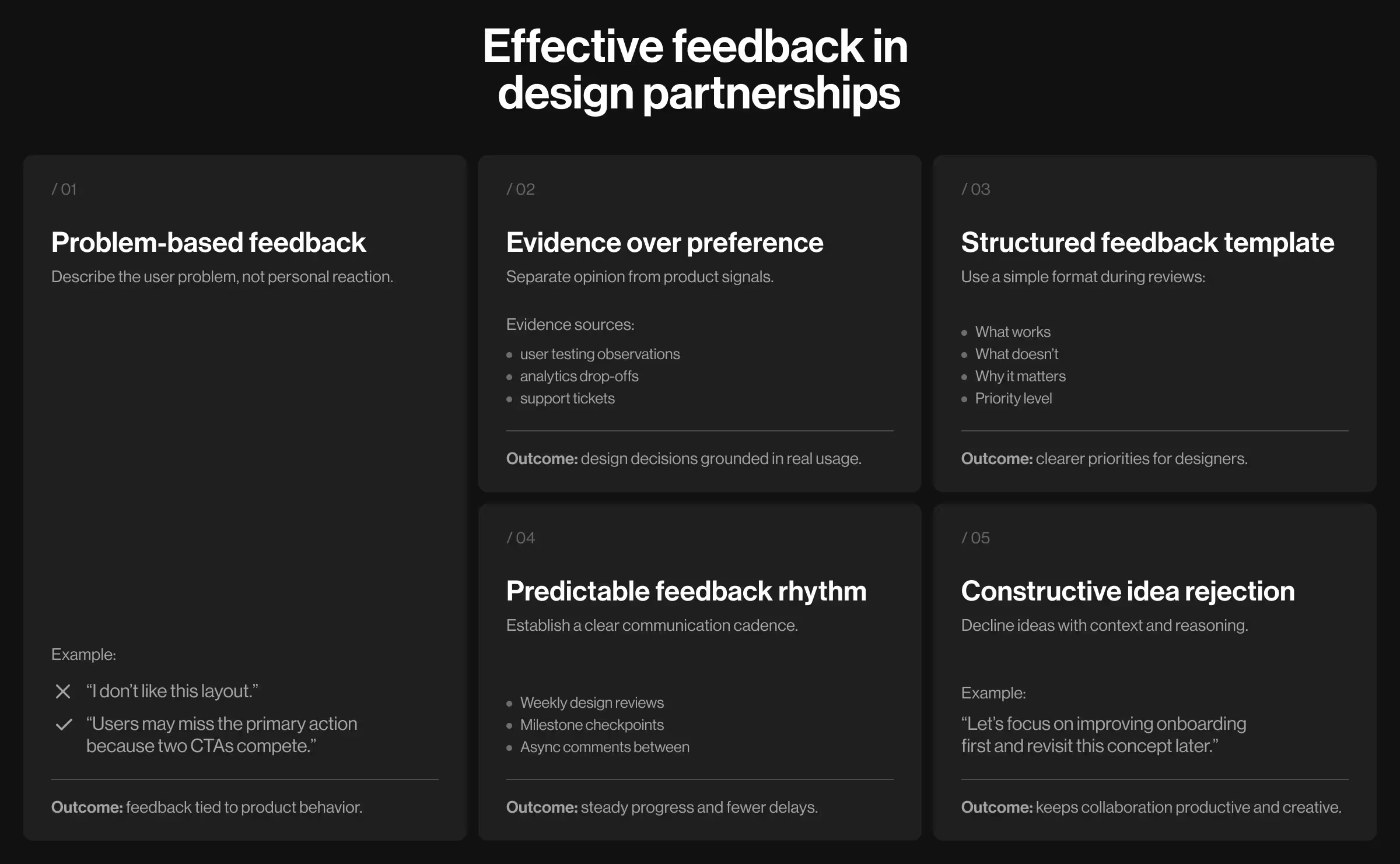
1. Replace subjective reactions with problem-based feedback
The most common feedback founders give is also the least useful: “I don’t like this.”
Design teams cannot act on subjective reactions. They need to understand the product problem behind the comment.
To avoid giving way to excessive subjectivism, describe the underlying issue. Consider the difference:
- Weak feedback: “The layout feels off.”
- Actionable feedback: “Users may struggle to notice the primary CTA because the page has two competing actions.”
This type of feedback directs attention toward the product issue.
💡 Practical insight: When working on the Qore8 enterprise platform redesign, our team discovered that engineers were spending too much time navigating nested menus just to convert drawings or manage transmittals. The issue was the workflow structure. By reorganizing the information architecture and aligning navigation with engineers’ task flows, we reduced document conversion workflow time by 65%.
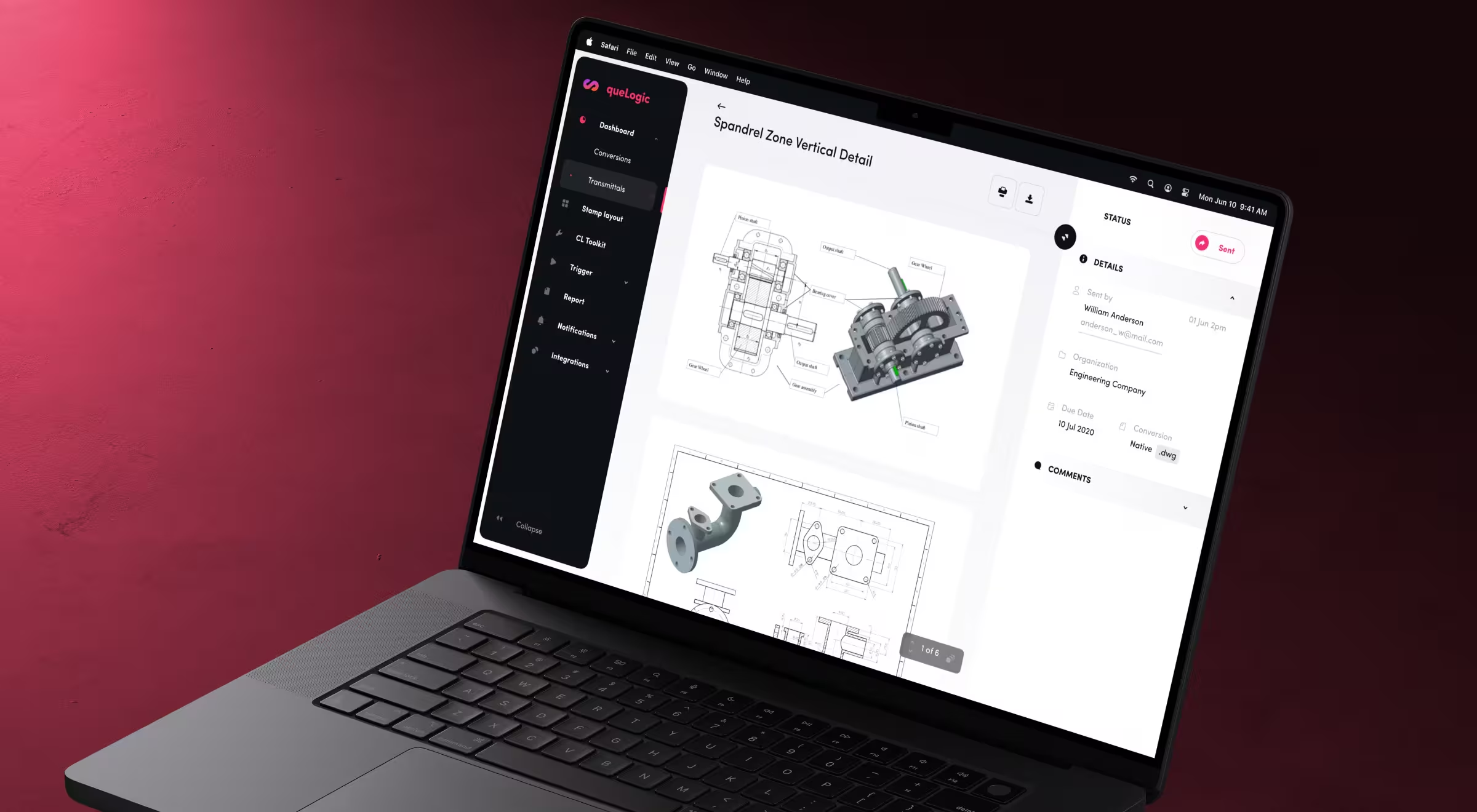
The breakthrough came from identifying the real problem — inefficient workflow navigation — and responding to it strategically.
✅ Implementation tips: During design reviews, structure comments around three questions:
- What user behavior concerns you?
- Which UI element may cause it? Ask your agency about specific UI design principles to address the identified problem.
- Why does this matter for the product objective?
This keeps feedback anchored in product performance.
2. Draw a line between personal taste and product evidence
Even when feedback identifies a clear problem, discussions can lead to no meaningful outcome if decisions are driven chiefly by individual preference. Founders often have strong instincts about their product, but design partnerships work best when decisions are anchored in observable user behavior.
The difference is subtle but important. The previous principle focuses on how feedback is phrased. This one focuses on how decisions are ultimately justified. If every discussion returns to personal taste, design conversations become circular.
During reviews, founders should explicitly distinguish between the two types of comments.
1. Preference-driven input:
- “I prefer the darker version.”
- “This layout feels cleaner to me.”
These reactions are valid but should be treated as exploratory signals rather than final decisions.
2. Evidence-driven input:
- “Users overlooked this action during testing.”
- “Analytics show most users drop off at this step.”
- “Support tickets suggest people struggle to find this feature.”
Evidence-based observations provide a clear direction for improvement.
✅ Implementation tips: When reviewing design work, ask 3 evidence-oriented questions:
- What user behavior does this design support or hinder?
- What data or research informs this observation?
- Which product metric might be affected?
This approach keeps design discussions focused on product performance.
3. Introduce structured feedback templates
Unstructured feedback arrives as scattered messages, Slack comments, disconnected meeting notes, and remarks made during board discussions that no one acts upon. This makes it difficult for design teams to interpret priorities.
As a simple feedback template, for each design review, document:
- What worked: Elements that support the product objective.
- What did not work: Areas that may create confusion or inefficiency.
- Why it matters: The product metric or user behavior affected.
- Priority level: Critical, important, exploratory.
✅ Benefits of such a structure:
- Designers understand which changes matter most
- Teams avoid repeated discussions about the same issue
- Feedback becomes easier to track over time
Consistency in feedback structure reduces ambiguity during design iterations.
4. Establish a predictable feedback rhythm
Timing matters. When feedback appears irregularly, design teams either move forward without guidance or wait unnecessarily for approvals.
Both scenarios slow progress. Effective collaborations define a predictable communication rhythm.
✅ Here’s a recommended structure:
- Weekly design reviews: Discuss ongoing work and immediate questions.
- Milestone reviews: Evaluate major concepts or strategic decisions.
- Asynchronous comments between sessions: Minor clarifications or quick adjustments.
This cadence allows design teams to maintain momentum while still receiving direction from founders.
5. Learn how to decline ideas without limiting exploration
Design agencies often propose ideas that extend beyond the initial scope. Some will be valuable, whereas others won’t align with the product direction.
The way founders reject ideas influences whether agencies continue proposing ambitious concepts. That’s why, instead of shutting ideas down abruptly, explain the reasoning behind the decision.
Consider the difference:
- Weak response: “This doesn’t work for us.”
- Constructive response: “The concept is interesting, but our current priority is improving new customer onboarding. Let’s revisit this approach once activation metrics improve.”
Constructive responses matter because they:
- Preserve creative dialogue
- Encourage alternative solutions
- Maintain strategic alignment
Design teams stay motivated when ideas are evaluated thoughtfully rather than being dismissed.
How to assess your agency's impact
Measuring the impact of your design collaboration helps you understand whether design work substantially improves product performance. Metrics also reveal which areas require further attention.
Tracking these metrics over time provides a more objective view of the agency’s contribution to product development.
Strong design partnerships start with clear foundations
Working with a design agency is most effective when founders approach it strategically. Preparation, defined objectives for the partnership, structured briefing, and clear communication define the quality of the partnership.
Founders who align product goals and decision structures before engaging external partners create the conditions for productive design work.
If you are evaluating design partners or reconsidering how design fits into your product strategy, reach out to discuss how our approach to digital product design could benefit your product.



.webp)