
“Most founders choose a design agency the way people pick a restaurant on a delivery app: scroll a few images, compare prices, and stick with what looks decent. Perfectly reasonable for pizza. A risky strategy for product design.
Design determines how a product explains itself to users and how quickly people understand its value. Get those decisions right, and adoption feels effortless. Get them wrong, and even a powerful product becomes confusing.
So when you hire a design agency, there’s much at stake. You’re about to bring in a team whose judgment will determine how your product works.”
{{Kirill Lazarev}}
The good news is that early conversations with prospective partners tell a lot about how strong the collaboration is likely to be. The questions founders ask and the way agencies respond expose whether the team thinks in terms of product logic or in deliverables.
The ten questions below are designed to surface that difference. Each one helps you understand how an agency approaches product decisions and collaboration. Along the way, we’ll look at what a thoughtful answer sounds like, which responses should raise concern, and how similar situations have played out in real digital products.
Key takeaways
- Great product design begins long before the first screen. The strongest agencies investigate user behavior and product assumptions before working on the interface. Skipping discovery leads to neat solutions for the wrong problem.
- Products capable of growth are designed as systems. Modular architecture, design systems, and developer collaboration determine whether a product can evolve smoothly as features grow.
- The way an agency thinks matters more than the work it shows. Conversations show how agencies reason and challenge assumptions.
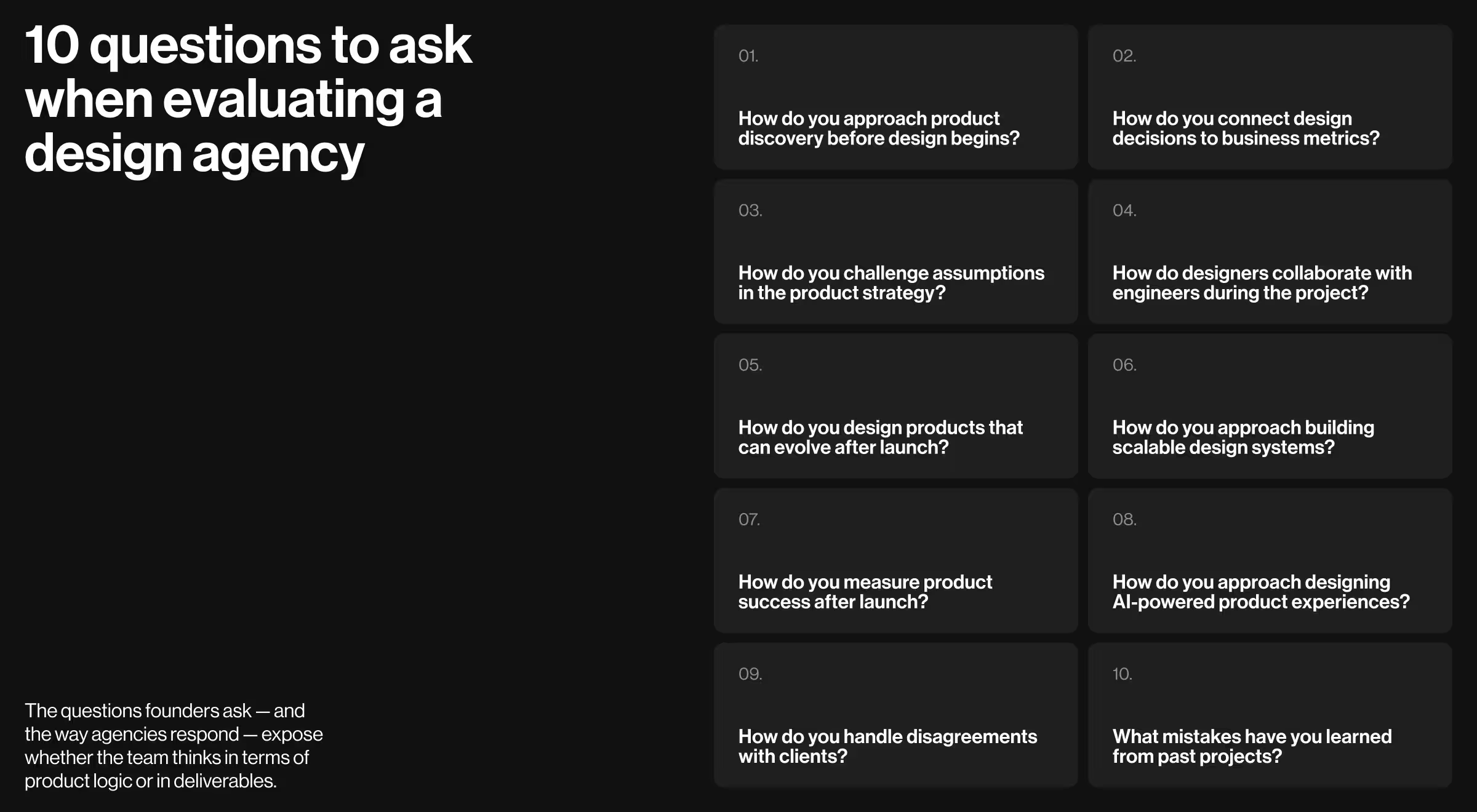
1. How do you approach product discovery before design begins?
Ask how they run discovery workshops. Before any interface-related work, a design agency should understand the problem the product seeks to solve. A sound product discovery process unveils user needs, preferences, product assumptions, and the context in which the product will operate.
Short answer: A strong agency perceives discovery as field research. They acknowledge the risks of skipping user research and suggest an actionable framework for conducting an in-depth design system audit.
Red flags to watch out for:
- Moving directly into UI design
- No discussion of user behavior or product assumptions
- Treating discovery as unnecessary or optional
💻 Product example: Airbnb noticed that many new hosts gave up before finishing their property listings. Research showed that uncertainty about pricing and what to expect from hosting was the main reason. So, rather than just updating the interface, the design team redesigned the onboarding process to guide hosts step by step.
This change tackled the real reasons behind users’ hesitation. The lesson here is straightforward: strong design begins with understanding user behavior.
2. How do you connect design decisions to business metrics?
Design drives performance. Every tweak to the interface steers how users move and whether they stick around.
Short answer: A capable agency connects design decisions to product performance. They define success conditions early on and evaluate design decisions against those indicators.
Red flags to watch out for:
- Discussing design only in visual terms
- Avoiding conversations about product metrics
- Treating success as a subjective preference
🔍 Learn about the key UX performance metrics behind strategic design decisions.
💻 Product example: When DragonGC, an AI-powered legal compliance platform, approached us, the company’s core concern was that its digital presence failed to communicate the product’s value to enterprise buyers. The redesign focused on surfacing the platform’s benefits to demonstrate how the product improves decision-making for legal teams.
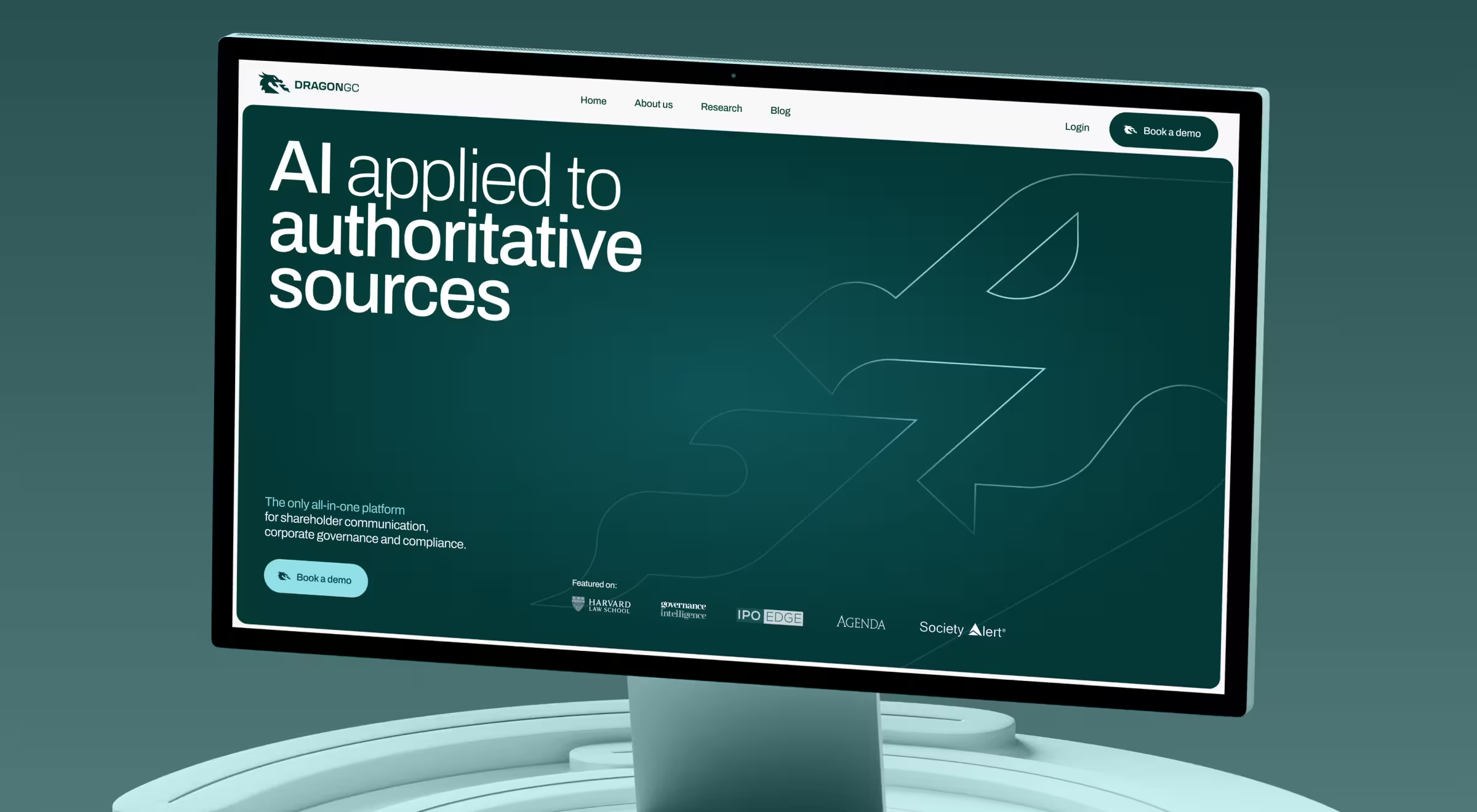
The revamp aligned with the platform’s business objective: acquiring and retaining high-value clients.
🔍 Want a deeper look at how design influences growth? Browse our insights on UX performance metrics and how they shape user engagement, retention, and conversion rates.
3. How do you challenge assumptions in the product strategy?
Founders approach agencies when their product ideas are almost fully defined. A thoughtful design partner examines those ideas carefully (and critically).
Short answer: Experienced agencies evaluate product assumptions and suggest alternatives when needed. They treat design as a way to strengthen product logic.
Red flags to watch out for:
- Agreeing with every request without discussion
- Avoiding questions about product direction
- Treating the brief as a fixed instruction
💻 Product example: Instagram replaced its chronological feed with an algorithm-based one after observing that users were missing a large portion of posts from accounts they followed. The decision challenged a long-standing assumption about how social feeds should work.
The change reflected a willingness to rethink the product’s structure based on user behavior.
4. How do designers collaborate with engineers during the project?
The way design and engineering work together determines whether concepts transition into high-quality products. Collaboration presupposes continuous dialogue where ideas are tested and aligned with technical realities.
Short answer: A capable agency fosters true partnership between designers and engineers. Designers explore technical feasibility from the start, while engineers actively inform and refine design decisions as solutions take shape, ensuring the final product is both innovative and achievable.
Red flags to watch out for:
- Designers working independently from development teams
- Collaboration is limited to the final handoff
- No discussion of technical constraints
💻 Product example: Stripe built its platform through close collaboration between designers and engineers. From the very beginning, designers and engineers worked together to align on user needs and the scope of technical possibilities. The interface, documentation, and APIs were built around a shared structure so that developers would move smoothly between tools.
5. How do you design products that can evolve after launch?
Digital products evolve. New features appear, workflows expand, and user expectations shift. The structure of the interface should support this changing dynamic — the same principle behind a phased product redesign.
Short answer: A thoughtful agency designs products as flexible systems. They discuss modular interaction patterns and product structures that allow new functionality to appear without rebuilding the interface.
Red flags to watch out for:
- Designing isolated screens (overlooking the role of a systematic approach)
- No discussion of long-term product evolution
- Treating launch as the end of design work
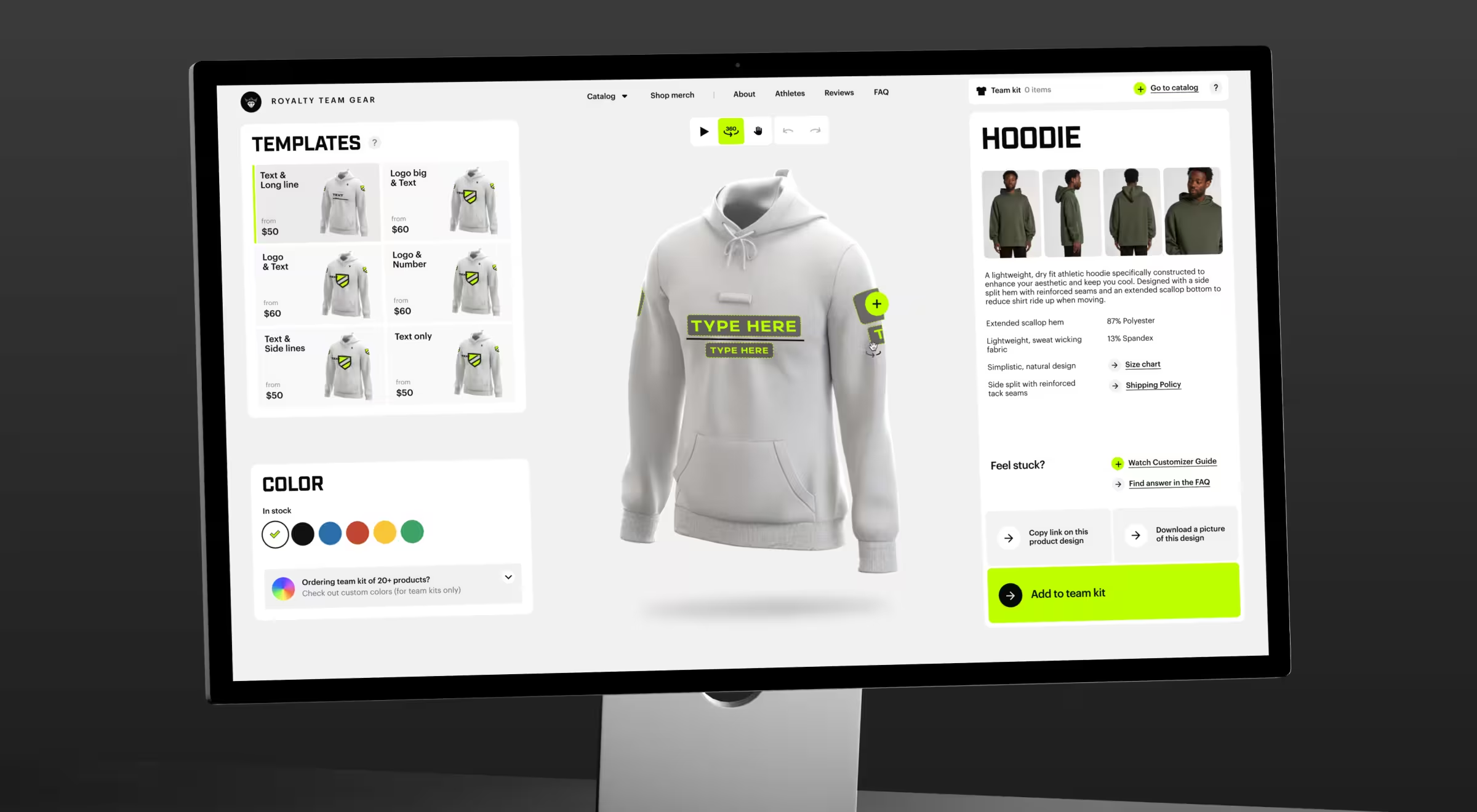
💻 Product example: Royalty Apparel, a sportswear manufacturer serving U.S. college teams, relied on manual order processing through phone and email. At Lazarev.agency, we redesigned the website into a self-service e-commerce platform for team managers to design merchandise and place orders independently.
The redesign accelerated order processing by 8 times and saved over 1,170 hours in product creation.
6. How do you approach building scalable design systems?
As products grow, maintaining consistency gets tougher. A design system establishes shared principles for components and interaction patterns.
Short answer: A strong agency treats the design system as part of the product infrastructure. They build reusable components and define interaction standards that keep the interface coherent as the product expands.
🔍 Not sure when a product needs a design system? Explore our guide explaining why scalable products rely on structured design systems from day one.
Red flags to watch out for:
- No reusable components or patterns
- Inconsistent design across different parts of the product
💻 Product example: Peel, an analytics platform for Shopify merchants, experienced rapid growth that led to cluttered navigation and underused features. Our redesign focused on restructuring the product interface and creating a scalable system.
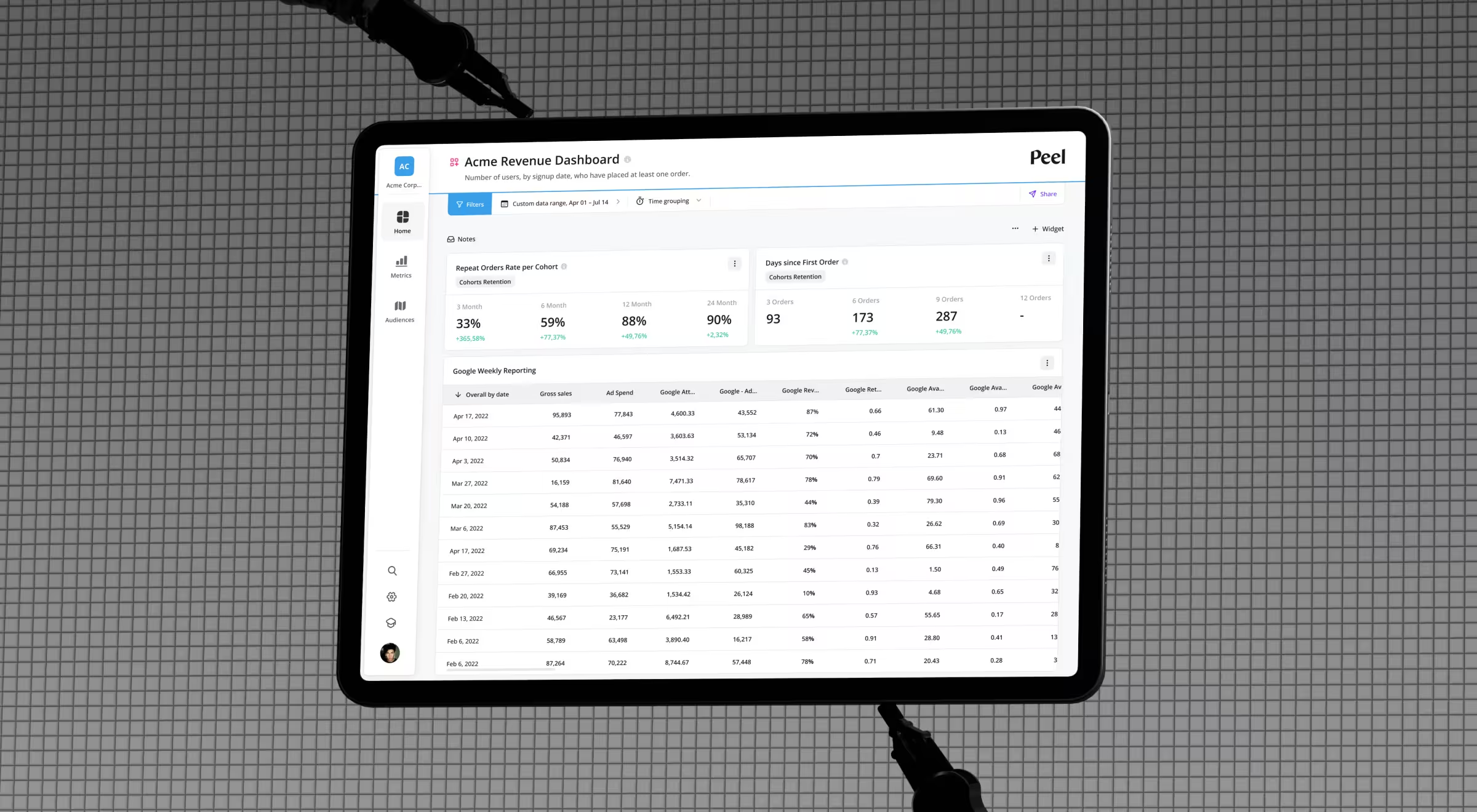
Navigation was reorganized into clearer categories, and data tables were standardized across the product. Additionally, interface components were redesigned using a consistent design system.
Together, these changes made it much easier to discover analytics tools and created a coherent structure capable of supporting the product’s future expansion.
7. How do you measure product success after launch?
Design does not end when a product goes live. Post-launch evaluation shows whether the product supports the behaviors it was designed for.
Short answer: A capable agency discusses analytics, user observation, and ongoing product evaluation. They expect to review how users interact with the product and adjust design decisions accordingly.
Red flags to watch out for:
- No discussion of post-launch evaluation
- Treating design as a completed deliverable
- Ignoring user behavior after release
💻 Product example: Spotify analyzes listening behavior — skips, playlist creation, search patterns, and session length — to refine how users discover music.
Features like Discover Weekly, Daily Mix, and dynamic recommendations were introduced after analyzing patterns in listening habits.
Spotify constantly refines how content is surfaced based on real usage behavior. As a result, users discover tailored music recommendations and spend more time in the product. The lesson is that strong digital products evolve through observation and iteration.
8. How do you approach designing AI-powered product experiences?
AI innovation in UX design introduces new interaction models. That’s why AI-powered interfaces must strike a balance between automation and clarity for users to understand how the system supports their decisions.
Short answer: Top AI design agencies describe how agents and chatbots change interaction patterns. They discuss conversational UI mechanics and the need to make system behavior understandable.
Red flags to watch out for:
- Treating AI as clickbait
- No discussion of interaction models
- Limited understanding of AI-assisted workflows
💻 Product example: When Accern asked us to design Rhea, a research tool for financial analysts and investors, a simple chatbot wouldn’t cut it. That’s why we created a hybrid interface: AI prompts + dynamic widgets that surface charts and datasets in context.
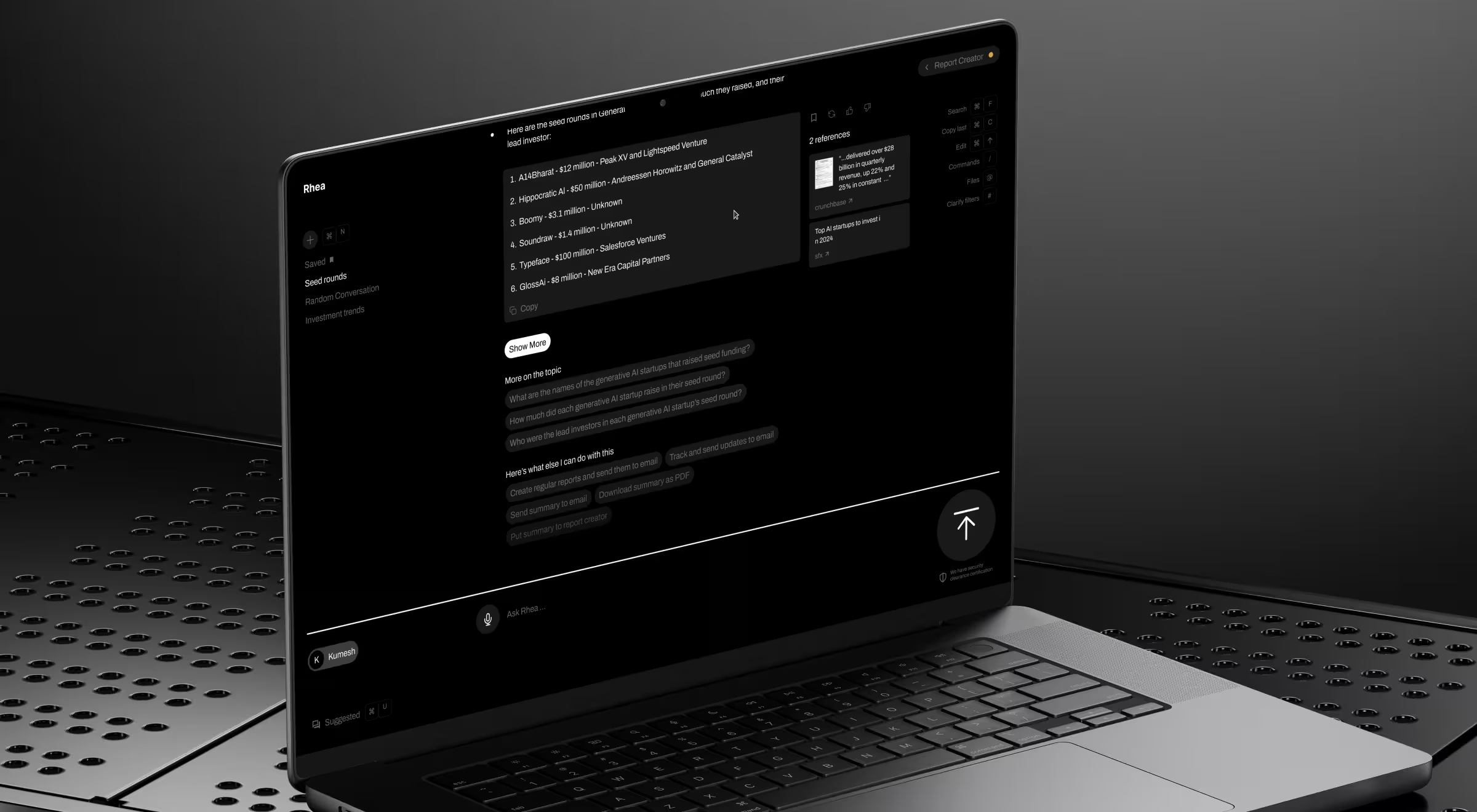
The prompt field became a multi-purpose command line, letting users manage files and automate workflows without leaving the workspace.
Consequently, AI became a smart, adaptive research assistant guiding user workflows and keeping tasks organized.
9. How do you handle disagreements with clients?
Product design thrives on the diversity of opinions. The bummer is that disagreements between in-house product teams and external agencies are inevitable.
Short answer: Experienced agencies handle disagreements through evidence and open discussion. They lean on user research, product analytics, and testing results to evaluate competing ideas. Such an empirical approach ensures decisions are grounded in what actually works for users.
Red flags to watch out for:
- Avoiding difficult discussions
- Agreeing with every request without evaluation
- Presenting design decisions without explanation
💻 Product example: Dropbox tests interface concepts with real users before finalizing designs. When internal debates arise, decisions are guided by objective usability insights. This evidence-based approach ensures that design choices reflect observable user behavior.
10. What mistakes have you learned from past projects?
No design process unfolds perfectly. Agencies that reflect openly on past work demonstrate maturity and awareness.
Short answer: Experienced agencies discuss challenges and lessons from previous projects. They explain how those experiences shaped their current approach.
Red flags to watch out for:
- Claiming that every project proceeded smoothly
- Avoiding discussion of past mistakes
- Blaming clients for unsuccessful outcomes
💻 Product example: Snapchat redesigned its interface in 2018 to separate friend content from media content. Many users struggled to navigate the new layout. That led to public criticism and declining user engagement. The company later adjusted the interface for clearer navigation.
Turn these questions into better product decisions
Hiring a design agency is a decision about how your product will be understood and scaled over time.
The answers to the questions discussed above help elucidate how an agency approaches product thinking. They show whether the agency views design as a collection of screens or as a discipline that shapes how a product works.
If these questions resonate with your business philosophy, reach out to discuss prospective design collaboration. Our work lives at the intersection of interface architecture, product strategy, and real user behavior.